
 Deutschland
 France
 Nederland
 Great Britain
 Sverige
 Norge
Norge Danmark
 Suomi
Suomi Italia
 Polska
 España
VS
BMW X1 vs Nissan Ariya – Which model is better for everyday use?
X1
@ BMW Group Press
Costs and Efficiency:
Price and efficiency are often the first things buyers look at. Here it becomes clear which model has the long-term edge – whether at the pump, the plug, or in purchase price.
Nissan Ariya has a slight advantage in terms of price – it starts at 37300 £, while the BMW X1 costs 38200 £. That’s a price difference of around 951 £.
As for range, the Nissan Ariya performs significantly better – achieving up to 531 km, about 450 km more than the BMW X1.
Ariya
@ Nissan Motor Corporation
Engine and Performance:
Under the bonnet, it becomes clear which model is tuned for sportiness and which one takes the lead when you hit the accelerator.
When it comes to engine power, the Nissan Ariya has a distinct edge – offering 435 HP compared to 326 HP. That’s roughly 109 HP more horsepower.
In acceleration from 0 to 100 km/h, the Nissan Ariya is barely noticeable quicker – completing the sprint in 5 s, while the BMW X1 takes 5.40 s. That’s about 0.40 s faster.
In terms of top speed, the BMW X1 performs slightly better – reaching 250 km/h, while the Nissan Ariya tops out at 200 km/h. The difference is around 50 km/h.
There’s also a difference in torque: Nissan Ariya pulls distinct stronger with 600 Nm compared to 477 Nm. That’s about 123 Nm difference.
X1
@ BMW Group Press
Space and Everyday Use:
Whether family car or daily driver – which one offers more room, flexibility and comfort?
Both vehicles offer seating for 5 people.
In curb weight, BMW X1 is evident lighter – 1575 kg compared to 1980 kg. The difference is around 405 kg.
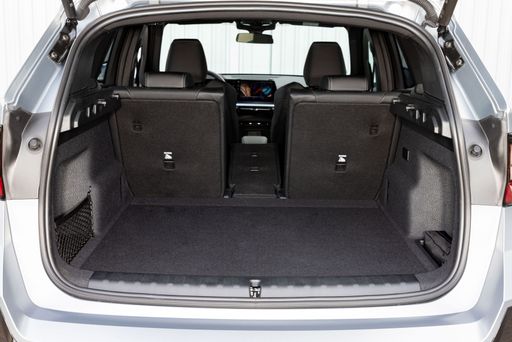
In terms of boot space, the BMW X1 offers slightly more room – 540 L compared to 468 L. That’s a difference of about 72 L.
In maximum load capacity, the BMW X1 performs a bit better – up to 1600 L, which is about 250 L more than the Nissan Ariya.
When it comes to payload, BMW X1 somewhat takes the win – 500 kg compared to 420 kg. That’s a difference of about 80 kg.
Who comes out on top?
Overall, the Nissan Ariya shows itself to be wins the duel decisively and secures the title of DriveDuel Champion.
It convinces with the more balanced overall package and proves to be the more versatile choice for everyday use.
BMW X1
Nissan Ariya
Costs and Consumption
View detailed analysis
View detailed analysis
Engine and Performance
View detailed analysis
View detailed analysis
Dimensions and Body
View detailed analysis
View detailed analysis
from about £37,300
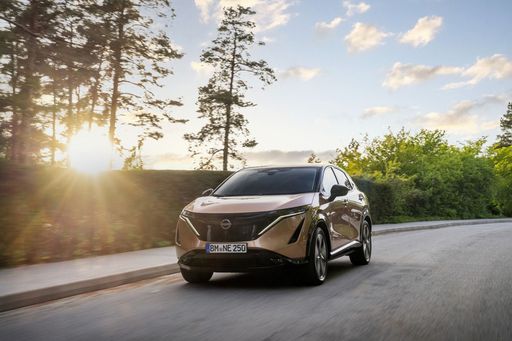 @ Nissan Motor Corporation
Nissan Ariya
BMW X1
3.7 (3 Reviews)
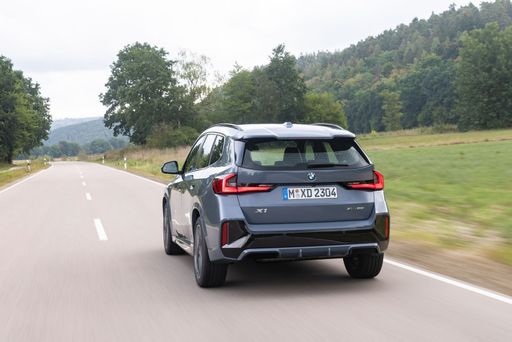
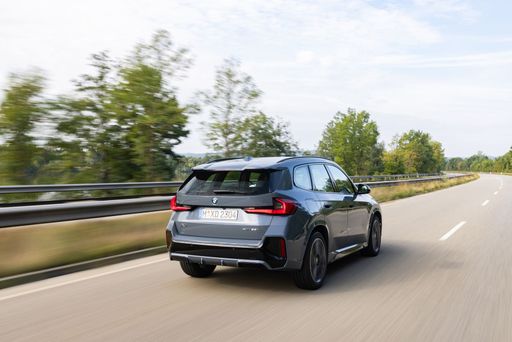
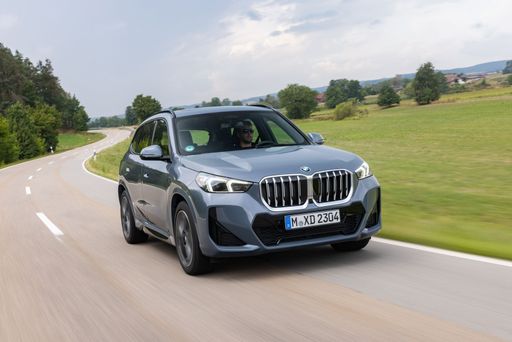
The BMW X1 brings a premium feel to compact crossover life, wrapping practical space and agile handling into a tidy, upscale package. It’s ideal for buyers who want BMW driving dynamics without the bulk, offering everyday comfort and a few clever tricks to keep the commute interesting.
details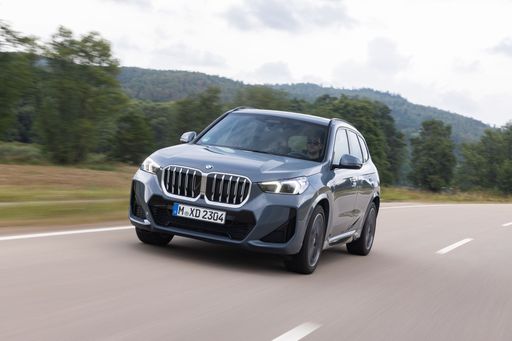 @ BMW Group Press
 @ BMW Group Press
 @ BMW Group Press
 @ BMW Group Press
 @ BMW Group Press
Nissan Ariya
5 (1 Reviews)
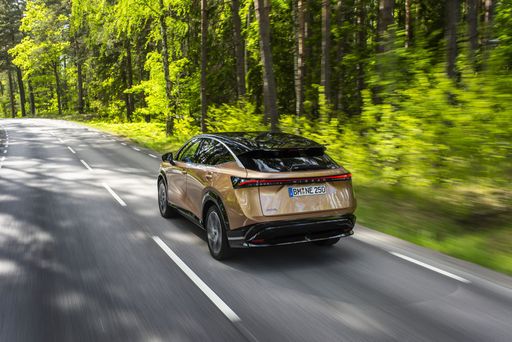
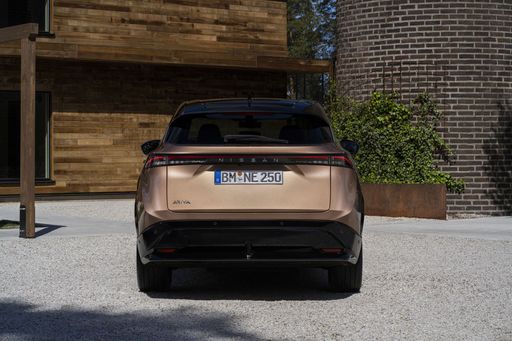
The Nissan Ariya wraps futuristic, sculpted styling around a calm, high-tech cabin, making the switch to electric feel surprisingly easy and grown-up. It’s a comfortable, sensible EV that favors everyday usability and clever packaging over headline-grabbing theatrics — ideal for buyers who want an elegant, low-fuss electric car without the ego.
details
@ Nissan Motor Corporation
 @ Nissan Motor Corporation
 @ Nissan Motor Corporation
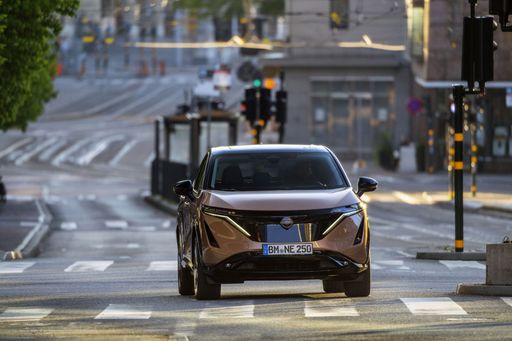 @ Nissan Motor Corporation
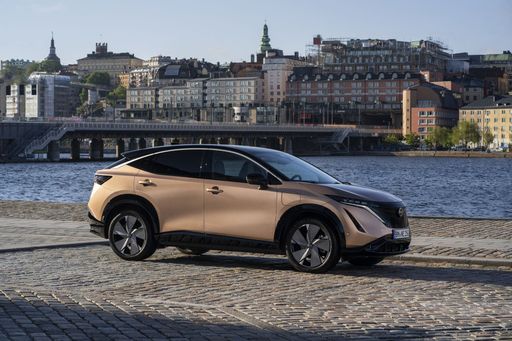 @ Nissan Motor Corporation
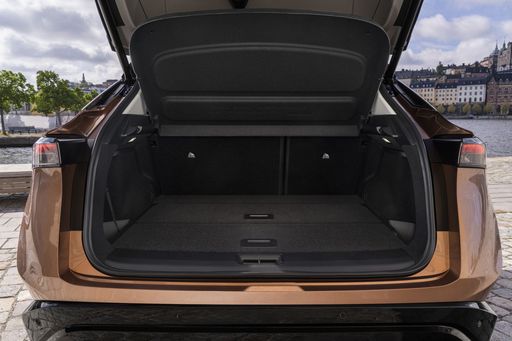 @ Nissan Motor Corporation
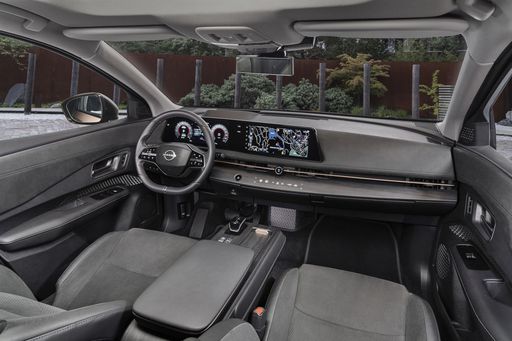 @ Nissan Motor Corporation
BMW X1
Nissan Ariya
|
@ BMW Group Press
|
@ Nissan Motor Corporation
|
|
|
|
Costs and Consumption |
|
|---|---|
|
Price
38200 - 55500 £
|
Price
37300 - 54800 £
|
|
Consumption L/100km
2.5 - 7.7 L
|
Consumption L/100km
-
|
|
Consumption kWh/100km
-
|
Consumption kWh/100km
17.7 - 24.5 kWh
|
|
Electric Range
81 km
|
Electric Range
402 - 531 km
|
|
Battery Capacity
14.20 kWh
|
Battery Capacity
63 - 87 kWh
|
|
co2
57 - 175 g/km
|
co2
0 g/km
|
|
Fuel tank capacity
47 - 54 L
|
Fuel tank capacity
-
|
Dimensions and Body |
|
|---|---|
|
Body Type
SUV
|
Body Type
SUV
|
|
Seats
5
|
Seats
5
|
|
Doors
5
|
Doors
5
|
|
Curb weight
1575 - 1935 kg
|
Curb weight
1980 - 2277 kg
|
|
Trunk capacity
490 - 540 L
|
Trunk capacity
415 - 468 L
|
|
Length
4500 - 4505 mm
|
Length
4595 mm
|
|
Width
1845 mm
|
Width
1850 mm
|
|
Height
1622 - 1642 mm
|
Height
1650 mm
|
|
Max trunk capacity
1495 - 1600 L
|
Max trunk capacity
1280 - 1350 L
|
|
Payload
490 - 500 kg
|
Payload
363 - 420 kg
|
Engine and Performance |
|
|---|---|
|
Engine Type
Diesel MHEV, Petrol MHEV, Petrol, Diesel, Plugin Hybrid
|
Engine Type
Electric
|
|
Transmission
Automatic
|
Transmission
Automatic
|
|
Transmission Detail
Dual-Clutch Automatic
|
Transmission Detail
Reduction Gearbox
|
|
Drive Type
Front-Wheel Drive, All-Wheel Drive
|
Drive Type
Front-Wheel Drive, All-Wheel Drive
|
|
Power HP
136 - 326 HP
|
Power HP
218 - 435 HP
|
|
Acceleration 0-100km/h
5.4 - 9.2 s
|
Acceleration 0-100km/h
5 - 7.6 s
|
|
Max Speed
190 - 250 km/h
|
Max Speed
160 - 200 km/h
|
|
Torque
230 - 477 Nm
|
Torque
300 - 600 Nm
|
|
Number of Cylinders
3 - 4
|
Number of Cylinders
-
|
|
Power kW
100 - 240 kW
|
Power kW
160 - 320 kW
|
|
Engine capacity
1499 - 1998 cm3
|
Engine capacity
-
|
General |
|
|---|---|
|
Model Year
2024 - 2025
|
Model Year
2022 - 2025
|
|
CO2 Efficiency Class
D, E, F, B
|
CO2 Efficiency Class
A
|
|
Brand
BMW
|
Brand
Nissan
|
Is the BMW X1 offered with different drivetrains?
The BMW X1 is offered with Front-Wheel Drive or All-Wheel Drive.
The prices and data displayed are estimates based on German list prices and may vary by country. This information is not legally binding.