VS

BMW X3 vs BMW X5 comparison

Compare performance (398 HP vs 625 HP), boot space and price (51,700 £ vs 77,100 £ ) at a glance. Find out which car is the better choice for you – BMW X3 or BMW X5?

BMW X3 vs BMW X5: Key differences

BMW X3

4.6 (1 Reviews)
rate
  • considerably cheaper
  • barely more efficient
  • somewhat lighter
details

BMW X5

3.6 (1 Reviews)
rate
  • clearly more power
  • moderately more electric range
  • moderately quicker 0–100 km/h
  • somewhat more trunk space
details

All details on performance, efficiency, range and trunk space can be found in the technical comparison below – including user reviews for both models.

By Achim Sedelmaier

X3

Face-Off: BMW X3 vs. BMW X5 - A Battle of Luxury SUVs

The luxury SUV segment is a battleground where BMW showcases its prowess with the X3 and X5 models. These two vehicles, each a member of the celebrated X series, offer a blend of performance, innovation, and style. But how do they stack up against each other? Join us as we delve into a detailed comparison to uncover which might be the better choice for different kinds of drivers.
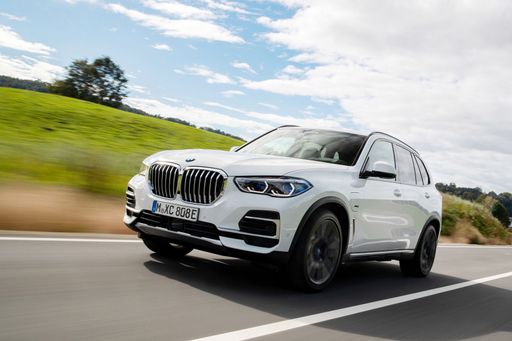
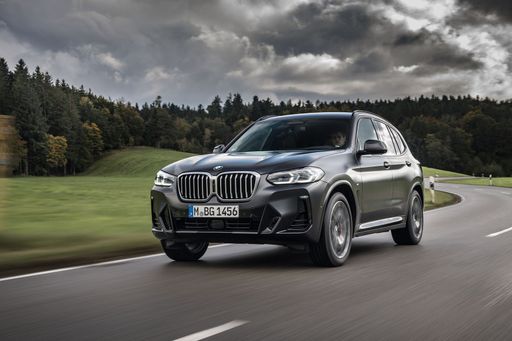
X5

Performance and Power

The BMW X3 offers versatility with a range of engines, from Diesel MHEV to Petrol and Plugin Hybrids, producing power from 184 HP to a robust 510 HP. Notably, it sprints from 0-100 km/h as swiftly as 3.8 seconds, making it a formidable force on the road.

On the other hand, the BMW X5 doesn’t shy away from delivering power. With engine options ranging to 625 HP, the X5 can also accelerate from 0-100 km/h in just 3.9 seconds, thanks to its potent V8 engines. Its broader power band also caters to those seeking an exhilarating driving experience.

X3

Efficiency and Environmental Considerations

For eco-conscious drivers, both SUVs showcase impressive innovations. The X3's Plugin Hybrid variants can achieve consumption rates as low as 2.1 L/100km and offer an electric range of up to 90 km, thanks to a substantial 19.7 kWh battery pack. CO2 emissions are notably low in this configuration, registering at just 21 g/km.

The X5 steps up with its Plugin Hybrid model, which boasts a 97 km electric range on a 25.7 kWh battery, and maintains impressive fuel efficiency at 0.9 L/100km. CO2 efficiency also stands out here with a mere 21 g/km, making it an attractive option for those balancing power with sustainability.

X5

Design and Dimensions

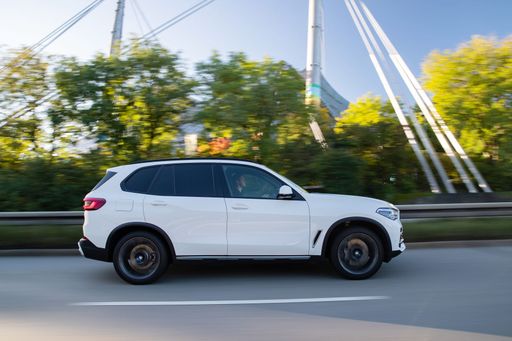
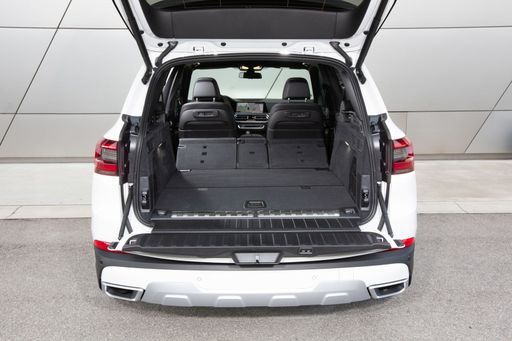
When it comes to size and cargo, the X5 offers a more substantial footprint. Measuring up to 4948 mm in length, it's designed for those needing more cargo space, boasting a 650 L trunk capacity. Its imposing stance is further accentuated with a width of up to 2015 mm and a height of 1765 mm.

The BMW X3, while slightly more compact with a maximum length of 4755 mm, still offers ample space with a trunk capacity of 570 L. It maintains an athletic stance with a width of 1920 mm and a height of 1676 mm, adding agility and practicality to its luxury credentials.

X3

Innovation and Features

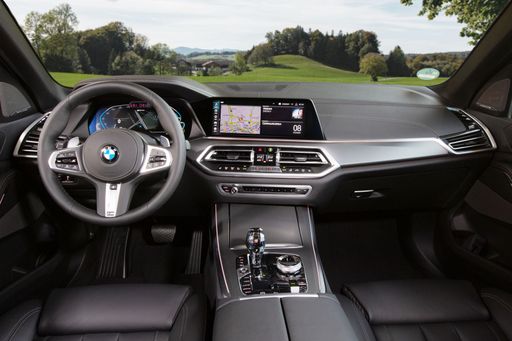
BMW's commitment to innovation is evident in both models. The X3 and X5 are equipped with advanced driving assistance systems and high-quality interiors. The X5 edges ahead with its larger fuel tank capacity of up to 83 L, catering to long journeys with fewer stops.

Both vehicles feature all-wheel drive for enhanced stability and safety, but the X5 caters to those who require higher payload capacities, offering up to 705 kg compared to the X3’s maximum of 585 kg.

X5

Conclusion

Choosing between the BMW X3 and X5 largely depends on your personal driving needs. The X3 might appeal to those who prefer a slightly smaller SUV without compromising on power and efficiency. Conversely, the X5 is ideal for those seeking a more spacious, powerful SUV with features primed for luxury and long-distance travel.

In the end, whatever your choice, both the BMW X3 and X5 uphold the brand's storied tradition of blending performance with style, ensuring that every journey is a pleasure.

Here’s where it gets real: The technical differences in detail

X3

Costs and Efficiency:

When it comes to price and running costs, the biggest differences usually appear. This is often where you see which car fits your budget better in the long run.

BMW X3 is considerably cheaper – starting at 51,700 £ , while the BMW X5 costs 77,100 £ . That’s a price difference of around 25,372 £.

Fuel consumption also shows a difference: the BMW X3 uses 2.8 L/100km and is barely more efficient than the BMW X5 with 3 L/100km. The difference is about 0.2 L/100km.

As for electric range, the BMW X5 offers moderately more range – reaching up to 105 km, about 17 km more than the BMW X3.

X5

Engine and Performance:

Power, torque and acceleration say a lot about how a car feels on the road. This is where you see which model delivers more driving dynamics.

When it comes to engine power, the BMW X5 offers clearly more power – delivering 625 HP compared to 398 HP. That’s roughly 227 HP more horsepower.

When accelerating from 0 to 100 km/h, the BMW X5 is moderately quicker – completing the sprint in 3.9 s, while the BMW X3 takes 4.6 s. That’s about 0.7 s quicker.

There’s also a difference in torque: the BMW X5 delivers moderately more torque with 750 Nm compared to 670 Nm. That’s about 80 Nm more.

X3

Space and Everyday Use:

Whether family car or daily driver – which one offers more room, flexibility and comfort?

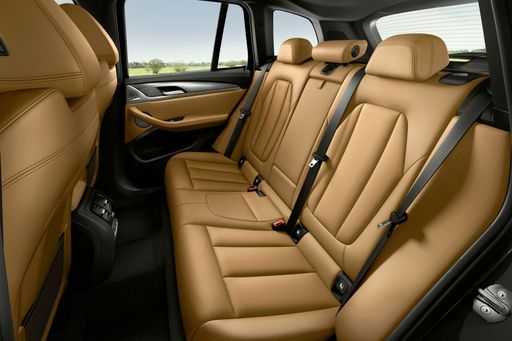
Both vehicles offer seating for 5 people.

In terms of curb weight, BMW X3 is somewhat lighter – 1,930 kg compared to 2,240 kg. The difference is around 310 kg.

Looking at boot space, the BMW X5 offers somewhat more boot space – 650 L compared to 570 L. That’s a difference of about 80 L.

When it comes to payload, the BMW X5 carries moderately more – 705 kg compared to 570 kg. That’s a difference of about 135 kg.

Who wins the race in the data check?

The BMW X5 is far ahead overall in the objective data comparison.
This result only shows which model scores more points on paper – not which of the two cars feels right for you.

from £77,100
X5

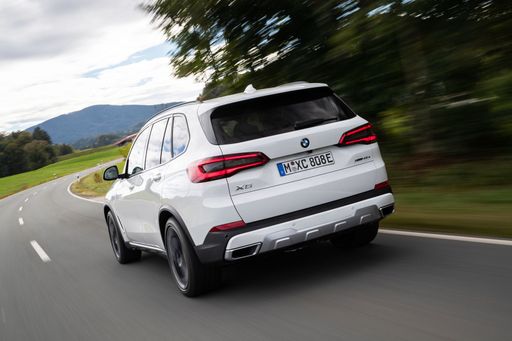
BMW X5

  • Engine Type : Petrol MHEV, Diesel MHEV, Plugin Hybrid
  • Transmission : Automatic
  • Drive Type : All-Wheel Drive
  • Power HP : 298 - 625 HP
  • Consumption L/100km : 3 - 12.8 L/100km
  • Electric Range : 105 km
BMW X3
BMW X5

Costs and Consumption

View detailed analysis

Engine and Performance

View detailed analysis

Dimensions and Body

View detailed analysis

BMW X3

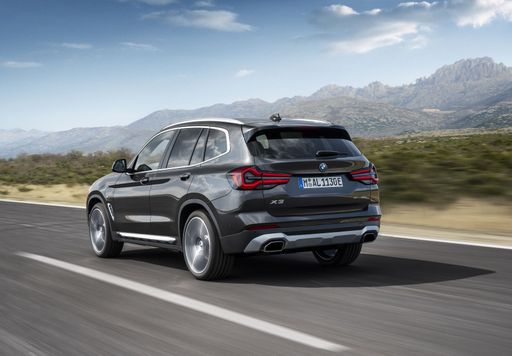
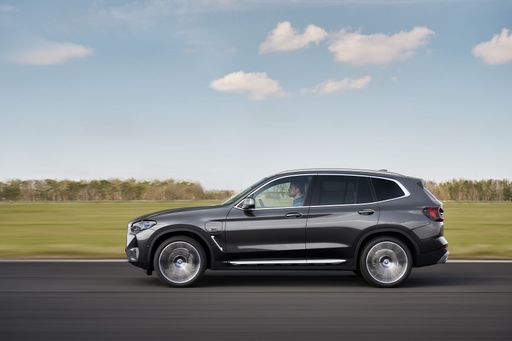
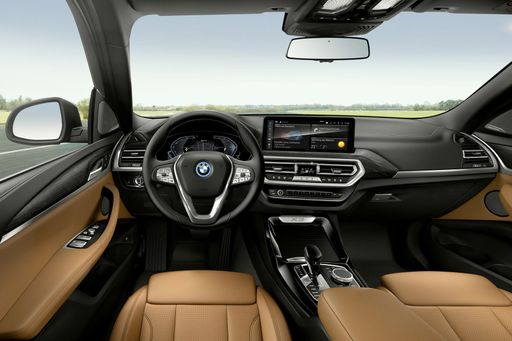
The BMW X3 blends sporty handling with premium comfort, making it a strong choice for drivers who want an engaging everyday SUV. Its well-appointed interior and confident road manners give it broad appeal for families and commuters who value style and versatility.

details

BMW X5

The BMW X5 blends athletic handling with a roomy, premium interior, feeling equally at home on twisty country roads and the school-run car park. Its executive-lounge cabin and confident road presence make it a tempting choice for buyers who want comfort, capability and just a little bit of bragging rights.

details
BMW X3
BMW X5

Costs and Consumption

Price
51,700 - 73,000 £
Price
77,100 - 143,500 £
Consumption L/100km
2.8 - 7.7 L/100km
Consumption L/100km
3 - 12.8 L/100km
Consumption kWh/100km
-
Consumption kWh/100km
-
Electric Range
88 km
Electric Range
105 km
Battery Capacity
-
Battery Capacity
-
co2
64 - 175 g/km
co2
68 - 289 g/km
Fuel tank capacity
-
Fuel tank capacity
-

Dimensions and Body

Body Type
SUV
Body Type
SUV
Seats
5
Seats
5
Doors
-
Doors
-
Curb weight
1,930 - 2,140 kg
Curb weight
2,240 - 2,495 kg
Trunk capacity
460 - 570 L
Trunk capacity
500 - 650 L
Length
-
Length
-
Width
1,920 mm
Width
2,004 - 2,015 mm
Height
-
Height
-
Max trunk capacity
-
Max trunk capacity
-
Payload
570 kg
Payload
565 - 705 kg

Engine and Performance

Engine Type
Petrol MHEV, Diesel MHEV, Plugin Hybrid
Engine Type
Petrol MHEV, Diesel MHEV, Plugin Hybrid
Transmission
Automatic
Transmission
Automatic
Transmission Detail
Automatic Gearbox
Transmission Detail
Automatic Gearbox
Drive Type
All-Wheel Drive
Drive Type
All-Wheel Drive
Power HP
197 - 398 HP
Power HP
298 - 625 HP
Acceleration 0-100km/h
4.6 - 7.8 s
Acceleration 0-100km/h
3.9 - 6.1 s
Max Speed
-
Max Speed
-
Torque
330 - 670 Nm
Torque
540 - 750 Nm
Number of Cylinders
4 - 6
Number of Cylinders
6 - 8
Power kW
145 - 293 kW
Power kW
219 - 460 kW
Engine capacity
1,995 - 2,998 cm3
Engine capacity
2,993 - 4,395 cm3

General

Model Year
2,024 - 2,025
Model Year
2025
CO2 Efficiency Class
F, E, B
CO2 Efficiency Class
G, B
Brand
BMW
Brand
BMW
DriveDuel uses data analysis and artificial intelligence to evaluate vehicle data and create content. Content is regularly reviewed and improved. The displayed prices are estimates based on German list prices, adjusted to the respective country’s VAT. Country-specific registration taxes are not included. This information is not legally binding.