VS

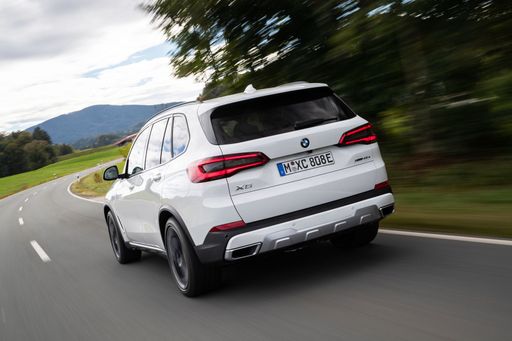
BMW X5 vs Mazda CX-60 comparison

Compare performance (625 HP vs 327 HP), boot space and price (77,100 £ vs 43,700 £ ) at a glance. Find out which car is the better choice for you – BMW X5 or Mazda CX-60?

BMW X5 vs Mazda CX-60: Key differences

BMW X5

3.6 (1 Reviews)
rate
  • clearly more power
  • visibly more efficient
  • visibly more electric range
  • substantially quicker 0–100 km/h
  • somewhat more trunk space
details

Mazda CX-60

4.7 (8 Reviews)
rate
  • significantly cheaper
  • somewhat lighter
details

All details on performance, efficiency, range and trunk space can be found in the technical comparison below – including user reviews for both models.

By Achim Sedelmaier

X5

The SUV Showdown: BMW X5 vs. Mazda CX-60

In the dynamic world of modern SUVs, the BMW X5 and the Mazda CX-60 stand out as compelling choices. Both models come packed with an array of technical innovations and features designed to provide a superior driving experience. Here, we delve into a detailed comparison to determine which SUV emerges on top.
CX-60

Performance and Powertrain Options

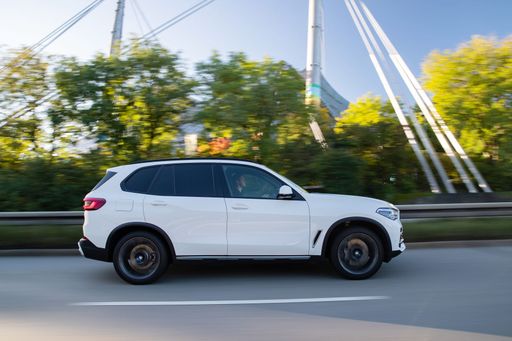
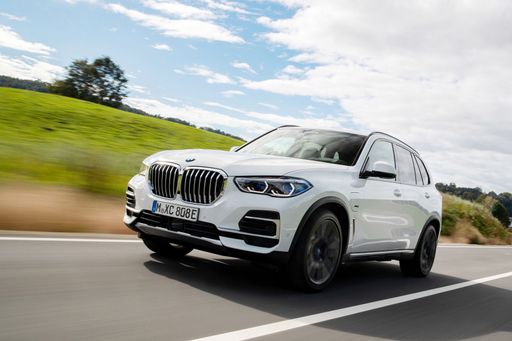
The BMW X5 offers a varied lineup with diesel, petrol, and plug-in hybrid engines, all coupled with an automatic gearbox. Its most powerful variant churns out an impressive 625 HP with a 4395 cm3 engine, accelerating from 0-100 km/h in a staggering 3.9 seconds. This beast of a vehicle also boasts an electric range of up to 97 km, thanks to its 25.7 kWh battery.

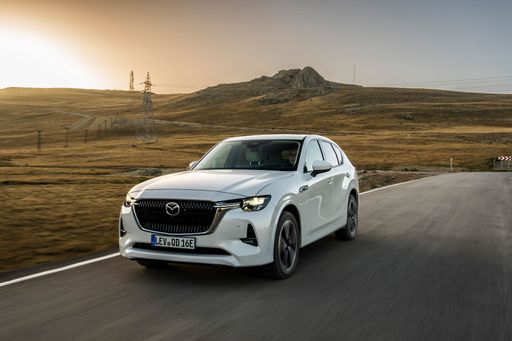
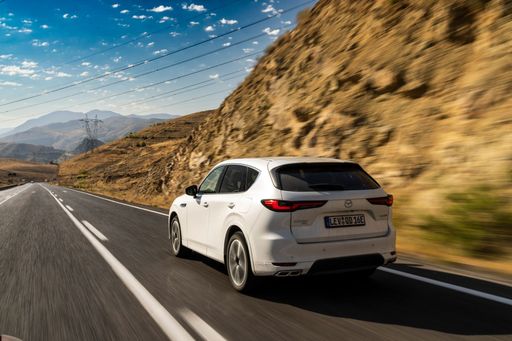
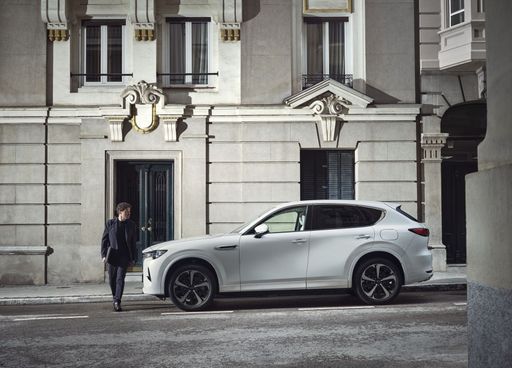
The Mazda CX-60, on the other hand, brings an engaging mix of plug-in hybrid and diesel MHEV engines. Its top-tier plug-in hybrid engine offers 327 HP and accelerates to 100 km/h in just 5.8 seconds, complemented by an electric range of 64 km. With a maximum speed of 219 km/h, the CX-60 provides a balanced blend of performance and efficiency.

X5

Fuel Efficiency and Environmental Impact

BMW's extensive powertrain lineup showcases a diverse range of fuel consumption figures. The plug-in hybrid variant shines with a consumption of just 0.9 L/100 km and CO2 emissions of 21 g/km. The diesel models, however, still provide commendable efficiency with around 7.4 to 7.6 L/100 km.

The Mazda CX-60 delivers impressive fuel efficiency with its plug-in hybrid model consuming merely 1.4 L/100 km and CO2 emissions of 32 g/km. Even the diesel variant presents an attractive option with a consumption of 5.4 L/100 km, making the CX-60 a prudent choice for eco-conscious buyers.

CX-60

Interior and Cargo Space

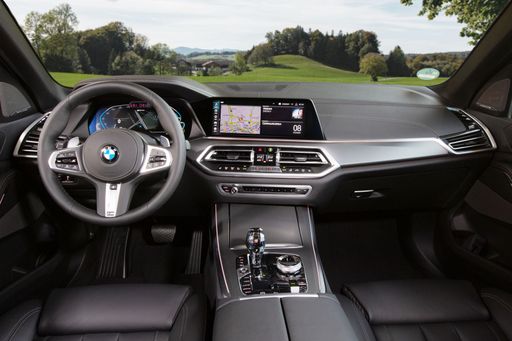
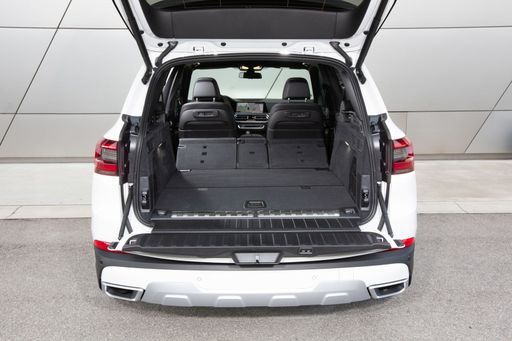
Space is a critical factor when choosing a family SUV. The BMW X5, with its slightly larger dimensions, offers a trunk capacity of 650 liters, allowing ample room for luggage and gear. The luxurious interior accommodations make it a splendid choice for comfortable journeys.

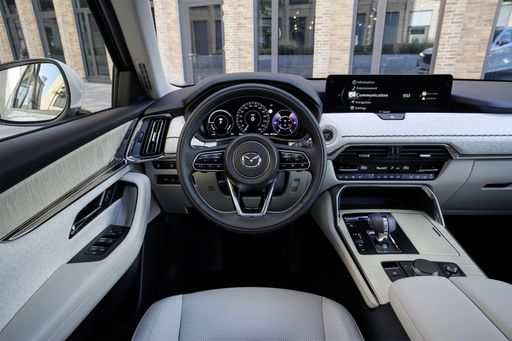
Mazda's CX-60, while slightly more compact, still provides a generous 570-liter trunk and a well-appointed cabin. Mazda's flair for elegant, driver-focused displays ensures a premium feel throughout, despite its smaller stance compared to the BMW X5.

X5

Final Verdict: Tailored Choices for Discerning Drivers

Ultimately, the choice between the BMW X5 and the Mazda CX-60 will hinge on individual priorities. The BMW X5 caters to drivers seeking peak performance and a more extensive array of powerful engines with a decidedly premium touch. In contrast, the Mazda CX-60 provides a balanced blend of efficiency and practicality, appealing to environmentally conscious drivers who also value style.

Both the BMW X5 and Mazda CX-60 exhibit compelling strengths, demonstrating how innovation and design cater to diverse driving needs. Whichever path you choose, both SUVs promise to deliver remarkable driving experiences that resonate with today's automotive enthusiasts.

Here’s where it gets real: The technical differences in detail

X5

Costs and Efficiency:

Price and efficiency are often the first things buyers look at. Here it becomes clear which model has the long-term edge – whether at the pump, the plug, or in purchase price.

Mazda CX-60 is significantly cheaper – starting at 43,700 £ , while the BMW X5 costs 77,100 £ . That’s a price difference of around 33,386 £.

Fuel consumption also shows a difference: the BMW X5 uses 3 L/100km and is visibly more efficient than the Mazda CX-60 with 3.8 L/100km. The difference is about 0.8 L/100km.

As for electric range, the BMW X5 offers visibly more range – reaching up to 105 km, about 42 km more than the Mazda CX-60.

CX-60

Engine and Performance:

Power, torque and acceleration are the classic benchmarks for car enthusiasts – and here, some clear differences start to show.

When it comes to engine power, the BMW X5 offers clearly more power – delivering 625 HP compared to 327 HP. That’s roughly 298 HP more horsepower.

When accelerating from 0 to 100 km/h, the BMW X5 is substantially quicker – completing the sprint in 3.9 s, while the Mazda CX-60 takes 5.8 s. That’s about 1.9 s quicker.

There’s also a difference in torque: the BMW X5 delivers markedly more torque with 750 Nm compared to 550 Nm. That’s about 200 Nm more.

X5

Space and Everyday Use:

Whether family car or daily driver – which one offers more room, flexibility and comfort?

Both vehicles offer seating for 5 people.

In terms of curb weight, Mazda CX-60 is somewhat lighter – 1,890 kg compared to 2,240 kg. The difference is around 350 kg.

Looking at boot space, the BMW X5 offers somewhat more boot space – 650 L compared to 570 L. That’s a difference of about 80 L.

When it comes to payload, the BMW X5 carries slightly more – 705 kg compared to 612 kg. That’s a difference of about 93 kg.

Who wins the race in the data check?

The BMW X5 stands well ahead of its rival in the objective data comparison.
This result only shows which model scores more points on paper – not which of the two cars feels right for you.

from £77,100
X5

BMW X5

  • Engine Type : Petrol MHEV, Diesel MHEV, Plugin Hybrid
  • Transmission : Automatic
  • Drive Type : All-Wheel Drive
  • Power HP : 298 - 625 HP
  • Consumption L/100km : 3 - 12.8 L/100km
  • Electric Range : 105 km
BMW X5
Mazda CX-60

Costs and Consumption

View detailed analysis

Engine and Performance

View detailed analysis

Dimensions and Body

View detailed analysis

BMW X5

The BMW X5 blends athletic handling with a roomy, premium interior, feeling equally at home on twisty country roads and the school-run car park. Its executive-lounge cabin and confident road presence make it a tempting choice for buyers who want comfort, capability and just a little bit of bragging rights.

details

Mazda CX-60

The Mazda CX-60 pairs sculpted, understated looks with poised handling and a cabin that punches above its class, making long drives feel unexpectedly civilized. For buyers who want a premium feel without the showroom swagger, it's the sort of car that earns respect quietly — and still manages a wink when you push on.

details
BMW X5
Mazda CX-60

Costs and Consumption

Price
77,100 - 143,500 £
Price
43,700 - 57,900 £
Consumption L/100km
3 - 12.8 L/100km
Consumption L/100km
3.8 - 5.2 L/100km
Consumption kWh/100km
-
Consumption kWh/100km
-
Electric Range
105 km
Electric Range
63 km
Battery Capacity
25.7 kWh
Battery Capacity
-
co2
68 - 289 g/km
co2
85 - 137 g/km
Fuel tank capacity
69 - 83 L
Fuel tank capacity
-

Dimensions and Body

Body Type
SUV
Body Type
SUV
Seats
5
Seats
5
Doors
5
Doors
-
Curb weight
2,240 - 2,495 kg
Curb weight
1,890 - 2,055 kg
Trunk capacity
500 - 650 L
Trunk capacity
570 L
Length
4,935 mm
Length
-
Width
2,004 - 2,015 mm
Width
1,890 mm
Height
1,755 - 1,765 mm
Height
-
Max trunk capacity
1,720 - 1,870 L
Max trunk capacity
-
Payload
565 - 705 kg
Payload
581 - 612 kg

Engine and Performance

Engine Type
Petrol MHEV, Diesel MHEV, Plugin Hybrid
Engine Type
Plugin Hybrid, Diesel MHEV
Transmission
Automatic
Transmission
Automatic
Transmission Detail
Automatic Gearbox
Transmission Detail
Automatic Gearbox
Drive Type
All-Wheel Drive
Drive Type
All-Wheel Drive, Rear-Wheel Drive
Power HP
298 - 625 HP
Power HP
200 - 327 HP
Acceleration 0-100km/h
3.9 - 6.1 s
Acceleration 0-100km/h
5.8 - 8.4 s
Max Speed
250 km/h
Max Speed
-
Torque
540 - 750 Nm
Torque
450 - 550 Nm
Number of Cylinders
6 - 8
Number of Cylinders
4 - 6
Power kW
219 - 460 kW
Power kW
147 - 241 kW
Engine capacity
2,993 - 4,395 cm3
Engine capacity
2,488 - 3,283 cm3

General

Model Year
2025
Model Year
2025
CO2 Efficiency Class
G, B
CO2 Efficiency Class
B, D, E
Brand
BMW
Brand
Mazda
DriveDuel uses data analysis and artificial intelligence to evaluate vehicle data and create content. Content is regularly reviewed and improved. The displayed prices are estimates based on German list prices, adjusted to the respective country’s VAT. Country-specific registration taxes are not included. This information is not legally binding.