VS

Kia Sportage vs Mazda CX-60 comparison

Compare performance (288 HP vs 327 HP), boot space and price (29,100 £ vs 43,700 £ ) at a glance. Find out which car is the better choice for you – Kia Sportage or Mazda CX-60?

Kia Sportage vs Mazda CX-60: Key differences

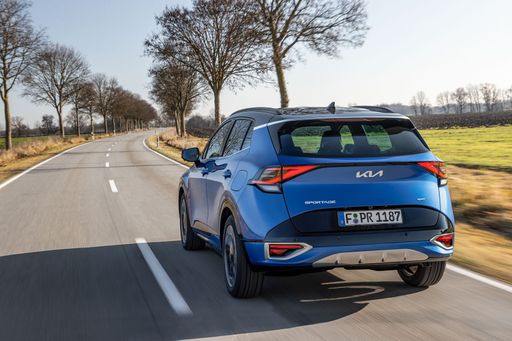
Kia Sportage

5 (4 Reviews)
rate
  • considerably cheaper
  • markedly more efficient
  • marginally more electric range
  • visibly lighter
  • only slightly more trunk space
details

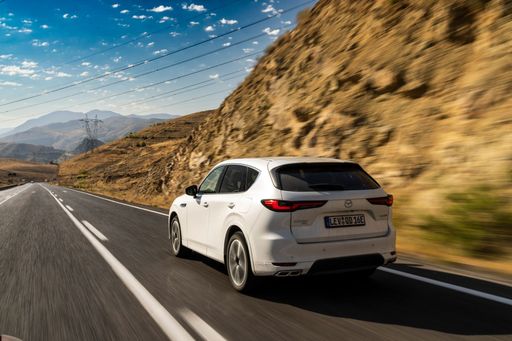
Mazda CX-60

4.5 (12 Reviews)
rate
  • slightly more power
  • visibly quicker 0–100 km/h
details

All details on performance, efficiency, range and trunk space can be found in the technical comparison below – including user reviews for both models.

Sportage

Quick take: Kia Sportage VS Mazda CX-60

Kia Sportage VS Mazda CX-60 sets up a clash between roomy, comfort-focused pragmatism and restrained, semi‑premium refinement. The Kia Sportage arrives with a clear emphasis on usable space, soft long‑distance manners and a buyer-friendly value package. The Mazda CX‑60 pitches higher perceived quality, stronger drivetrain options and a more composed, linear power delivery for long runs or towing. Choosing between them is about deciding whether everyday usability or a more premium driving proposition matters more to you. Below we walk through how those philosophical differences play out in real life.
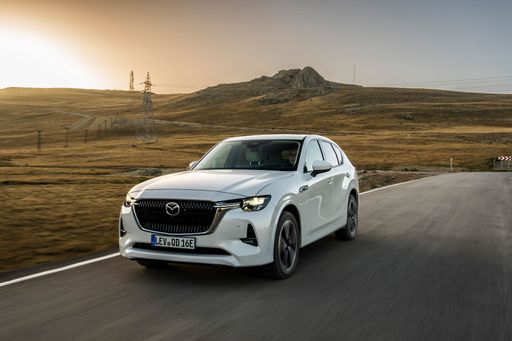
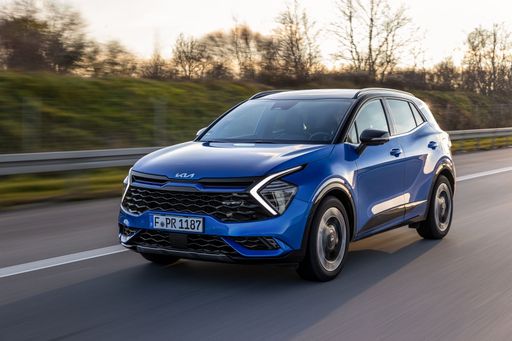
CX-60

Character and driving feel

The Kia Sportage feels like a calm, confidence‑inspiring companion: suspension tuned toward comfort, gentle steering and a relaxed throttle that soothes city and motorway miles. The Mazda CX‑60, by contrast, carries a deliberately weightier persona — firmer underbody tuning, heavier steering and a stronger sense of momentum from its larger engines that reward steady inputs. Where the Sportage masks rough surfaces and invites relaxed cruising, the CX‑60 communicates more road and drivetrain detail, which some drivers read as quality and control while others find less forgiving. If you want floaty comfort and an uncomplicated drive, the Sportage leans that way; if you prefer an engineered, substantial feel and stronger forward thrust, the CX‑60 delivers it.

Sportage

Comfort and long‑distance behavior

On long trips the Kia Sportage impresses with cushioned seats, a composed cabin and reassuring noise isolation that keeps fatigue low over hours behind the wheel. The Mazda CX‑60 is also excellent at high‑speed calm — its engines are refined and motorway manners are confident — but the suspension bias is firmer, so poor surfaces can unsettle passengers more than in the Sportage. Cabin materials in the CX‑60 feel a notch more premium, which translates to a nicer tactile experience over long journeys, whereas the Sportage wins when it comes to outright space and rear-seat comfort. For motorway devotees who prize quiet efficiency and a solid, premium touch, the CX‑60 is compelling; for families and comfort‑first buyers who want a plush, forgiving cruiser, the Sportage is the more natural choice.

CX-60

Practicality and family usability

The Kia Sportage is built around everyday practicality: more rear legroom, a thoughtful 40:20:40 split rear bench and a cleverly configured boot that makes loading and organising luggage straightforward. The Mazda CX‑60 also offers a large, easy‑to‑use boot and clever underfloor space, but its rear seating is a touch tighter and the middle position less hospitable on longer runs. Where the CX‑60 stands apart is towing capability and load‑carrying confidence — it’s the better pick if you regularly pull a trailer or need extra grunt. In short, families who prioritise passenger space and flexible luggage arrangements will prefer the Sportage, while buyers needing towing ability and a very usable cargo floor will lean toward the CX‑60.

Sportage

City manners and daily usability

In town the Kia Sportage feels more forgiving: lighter low‑speed steering, intuitive controls and numerous storage points that make daily errands easier. The Mazda CX‑60’s heavier steering and broader stance demand more attention in tight spaces, and its firmer ride can feel choppy over city surfaces. Infotainment and controls diverge too: the Sportage’s pared‑back touch surfaces look modern but sometimes require fiddling, whereas Mazda’s rotary control is slower but less distracting on the move. If your routine is urban driving with frequent stops, the Sportage is the more pragmatic daily companion; if you value a quieter cabin at low revs and a more crafted interior even at the cost of slightly tougher manoeuvring, the CX‑60 still makes sense.

CX-60

Who should choose which — buyer fit and trade‑offs

Pick the Kia Sportage if you want maximum rear‑seat comfort, easy practicality, a softer long‑distance ride and a strong value proposition with everyday usability. Choose the Mazda CX‑60 if you prioritise a premium cabin feel, stronger drivetrain performance for long runs or towing, and a denser, engineered driving character that rewards steady highway work. The trade‑off is clear: Sportage trades some dynamic drama for usable space and ease of life; CX‑60 trades a bit of urban comfort for torque, refinement and perceived quality. Read on to the technical comparison for how those real‑world differences map to engines, weight, drivetrain layout and fuel/electric systems so you can match numbers to the behaviour you care about most.

Here’s where it gets real: The technical differences in detail

Sportage

Costs and Efficiency:

Price and efficiency are often the first things buyers look at. Here it becomes clear which model has the long-term edge – whether at the pump, the plug, or in purchase price.

Kia Sportage is considerably cheaper – starting at 29,100 £ , while the Mazda CX-60 costs 43,700 £ . That’s a price difference of around 14,537 £.

Fuel consumption also shows a difference: the Kia Sportage uses 2.9 L/100km and is markedly more efficient than the Mazda CX-60 with 3.8 L/100km. The difference is about 0.9 L/100km.

As for electric range, the Kia Sportage offers marginally more range – reaching up to 66 km, about 3 km more than the Mazda CX-60.

CX-60

Engine and Performance:

Power, torque and acceleration say a lot about how a car feels on the road. This is where you see which model delivers more driving dynamics.

When it comes to engine power, the Mazda CX-60 offers slightly more power – delivering 327 HP compared to 288 HP. That’s roughly 39 HP more horsepower.

When accelerating from 0 to 100 km/h, the Mazda CX-60 is visibly quicker – completing the sprint in 5.8 s, while the Kia Sportage takes 7.5 s. That’s about 1.7 s quicker.

There’s also a difference in torque: the Mazda CX-60 delivers visibly more torque with 550 Nm compared to 380 Nm. That’s about 170 Nm more.

Sportage

Space and Everyday Use:

Beyond pure performance, interior space and usability matter most in daily life. This is where you see which car is more practical and versatile.

Both vehicles offer seating for 5 people.

In terms of curb weight, Kia Sportage is visibly lighter – 1,552 kg compared to 1,890 kg. The difference is around 338 kg.

Looking at boot space, the Kia Sportage offers only slightly more boot space – 587 L compared to 570 L. That’s a difference of about 17 L.

When it comes to payload, the Mazda CX-60 carries marginally more – 612 kg compared to 580 kg. That’s a difference of about 32 kg.

Who wins the race in the data check?

The Mazda CX-60 comes out modestly ahead in the objective data comparison.
This result only shows which model scores more points on paper – not which of the two cars feels right for you.

from £43,700
CX-60

Mazda CX-60

  • Engine Type Plug-in Hybrid, Diesel MHEV
  • Transmission Automatic
  • Drive Type All-Wheel Drive, Rear-Wheel Drive
  • Power HP 200 - 327 HP
  • Consumption L/100km 3.8 - 5.2 L/100km
  • Electric Range 63 km
Kia Sportage
Mazda CX-60

Costs and Consumption

View detailed analysis

Engine and Performance

View detailed analysis

Dimensions and Body

View detailed analysis

Kia Sportage

The Kia Sportage is a roomy, well-equipped compact SUV that balances comfort and practicality for daily driving. It delivers a modern interior, composed ride, and strong value for buyers who want versatility without fuss.

details

Mazda CX-60

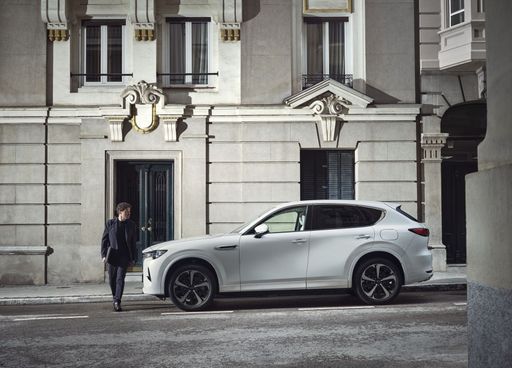
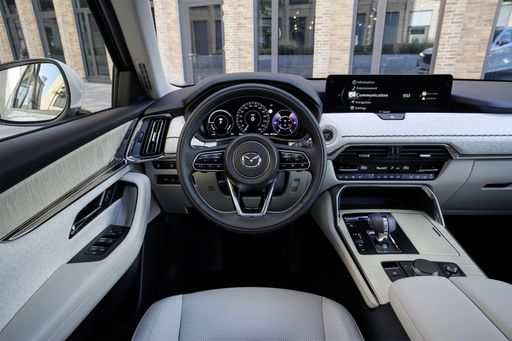
The Mazda CX-60 pairs sculpted, understated looks with poised handling and a cabin that punches above its class, making long drives feel unexpectedly civilized. For buyers who want a premium feel without the showroom swagger, it's the sort of car that earns respect quietly — and still manages a wink when you push on.

details
Kia Sportage
Mazda CX-60

Costs and Consumption

Price
29,100 - 47,100 £
Price
43,700 - 57,900 £
Consumption L/100km
2.9 - 7.8 L/100km
Consumption L/100km
3.8 - 5.2 L/100km
Consumption kWh/100km
-
Consumption kWh/100km
-
Electric Range
63 - 66 km
Electric Range
63 km
Battery Capacity
-
Battery Capacity
-
co2
67 - 177 g/km
co2
85 - 137 g/km
Fuel tank capacity
-
Fuel tank capacity
-

Dimensions and Body

Body Type
SUV
Body Type
SUV
Seats
5
Seats
5
Doors
-
Doors
-
Curb weight
1,552 - 1,896 kg
Curb weight
1,890 - 2,055 kg
Trunk capacity
526 - 587 L
Trunk capacity
570 L
Length
-
Length
-
Width
1,865 mm
Width
1,890 mm
Height
-
Height
-
Max trunk capacity
-
Max trunk capacity
-
Payload
533 - 580 kg
Payload
581 - 612 kg

Engine and Performance

Engine Type
Petrol, Full Hybrid, Diesel MHEV, Plug-in Hybrid
Engine Type
Plug-in Hybrid, Diesel MHEV
Transmission
Manual, Automatic
Transmission
Automatic
Transmission Detail
Manual Gearbox, Dual-Clutch Automatic, Automatic Gearbox
Transmission Detail
Automatic Gearbox
Drive Type
Front-Wheel Drive, All-Wheel Drive
Drive Type
All-Wheel Drive, Rear-Wheel Drive
Power HP
136 - 288 HP
Power HP
200 - 327 HP
Acceleration 0-100km/h
7.5 - 11.6 s
Acceleration 0-100km/h
5.8 - 8.4 s
Max Speed
-
Max Speed
-
Torque
250 - 380 Nm
Torque
450 - 550 Nm
Number of Cylinders
4
Number of Cylinders
4 - 6
Power kW
100 - 212 kW
Power kW
147 - 241 kW
Engine capacity
1,598 cm3
Engine capacity
2,488 - 3,283 cm3

General

Model Year
2,025 - 2,026
Model Year
2025
CO2 Efficiency Class
F, D, E, G, B
CO2 Efficiency Class
B, D, E
Brand
Kia
Brand
Mazda
DriveDuel uses data analysis and artificial intelligence to evaluate vehicle data and create content. Content is regularly reviewed and improved. The displayed prices are estimates based on German list prices, adjusted to the respective country’s VAT. Country-specific registration taxes are not included. This information is not legally binding.