VS

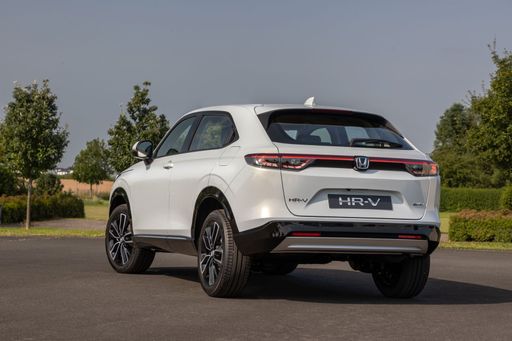
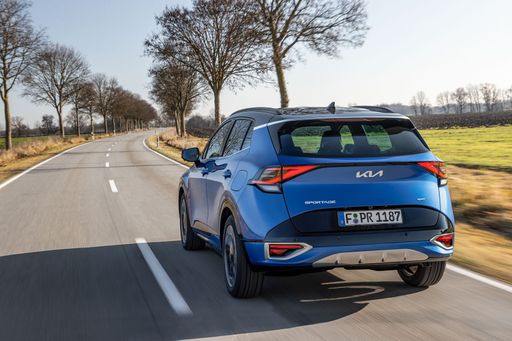
Honda HR-V vs Kia Sportage comparison

Compare performance (131 HP vs 288 HP), boot space and price (29,100 £ vs 29,100 £ ) at a glance. Find out which car is the better choice for you – Honda HR-V or Kia Sportage?

Honda HR-V vs Kia Sportage: Key differences

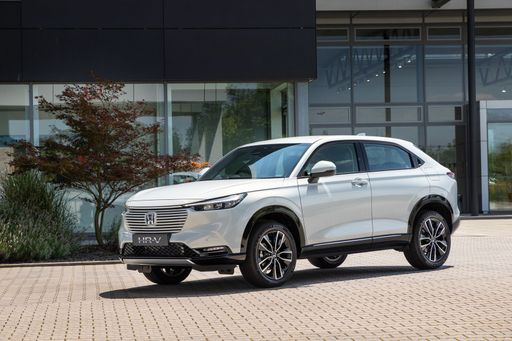
Honda HR-V

4.3 (22 Reviews)
rate
  • only slightly cheaper
  • marginally lighter
details

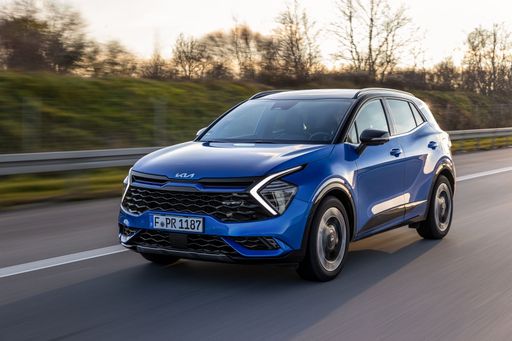
Kia Sportage

5 (4 Reviews)
rate
  • clearly more power
  • considerably more efficient
  • clearly quicker 0–100 km/h
  • substantially more trunk space
details

All details on performance, efficiency, range and trunk space can be found in the technical comparison below – including user reviews for both models.

HR-V

Honda HR-V VS Kia Sportage: concise first look

The Honda HR-V and the Kia Sportage sit on opposite sides of the compact‑SUV trade-off between clever city engineering and outright space. The Honda HR-V presents itself as a nimble, efficiency‑focused choice with very practical seat packaging that rewards everyday urban and suburban life. The Kia Sportage answers with noticeably more room, a calmer long‑distance demeanor and a broad set of family‑friendly details that simplify vacations and longer trips. Buyers repeatedly praise the HR‑V for low running costs around town, while Sportage owners highlight its roomy cabin and reassuring motorway manners. Read on to see which of those strengths matters most for how you actually live and drive.
Sportage

Character and driving feel

The Honda HR-V feels tuned toward light, predictable city driving, where its hybrid system and compact footprint mask everyday traffic stresses and make parking and tight manoeuvres easy. The Kia Sportage drives with more composure at higher speeds and a stronger shove when you ask for it, so overtaking and motorway cruising feel more effortless. Neither car is aimed at enthusiastic road‑holding, but the HR‑V’s setup prioritises comfort and low consumption in mixed use while the Sportage trades some agility for mid‑range punch and a settled highway attitude. If you want crisp town responses and economical commuting, the HR‑V leans into that; if you want relaxed, confident acceleration and stability on motorways, the Sportage is the safer bet. The real choice here is whether you value urban livability over long‑distance assurance.

HR-V

Comfort and long‑distance behaviour

The Honda HR-V offers a supple, forgiving ride around town and generous rear legroom for its size, making daily school runs and shopping trips comfortable for most occupants. On longer journeys the HR‑V’s engine character becomes more obvious and some buyers report it can feel strained under sustained high‑speed demands, which affects perceived refinement. The Kia Sportage, by contrast, tends to feel quieter and more relaxed on extended trips, with seats and cabin space that support grown‑ups for hours without complaint. For motorway miles and holiday runs the Sportage’s composure gives it a clear advantage, while the HR‑V keeps the edge on short to medium trips where its hybrid system and suspension shine. Choose based on how many long trips you do and how important low‑noise cruising is to you.

Sportage

Practicality and everyday usability

The Honda HR-V’s headline trick is interior versatility: its clever rear seating can transform the small boot into a flat load bay or create odd‑shaped storage for longer items, which makes urban households surprisingly flexible. The Kia Sportage delivers a more conventional but much larger load area and a split‑folding rear bench that accommodates family luggage and practical modularity without contortions. If your life regularly needs maximum luggage or if you carry full‑size strollers and sports gear, the Sportage reduces packing compromises; if you value inventive interior solutions and compact external dimensions for city streets, the HR‑V wins on day‑to‑day adaptability. Both have family‑oriented touches, but the trade‑off is cleverness and compactness versus straightforward volume and ease. That difference becomes very tangible on weekend trips versus daily grocery runs.

HR-V

Cabin feel, tech and perceived quality

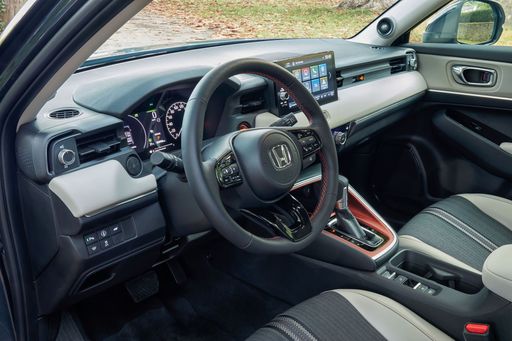
The Honda HR-V’s cabin leans functional: clear, tactile controls and a robust, no‑nonsense layout that feels durable and is easy to operate without hunting through menus. The Kia Sportage aims higher on perceived quality with broader soft‑touch surfaces and sharper displays that give a more upmarket first impression, but some of its touch‑sensitive controls demand concentration while driving. Tech‑minded buyers will like the Sportage’s screen presence and creature comforts, while control purists will appreciate the HR‑V’s physical knobs and straightforward ergonomics. Both cars show solid build quality, but the emotional effect differs — the HR‑V reassures with practicality, the Sportage impresses with space and finish. Think about whether you prefer uncomplicated operation or a more modern, premium cabin experience.

Sportage

Who should choose which — buyer fit and next steps

Put simply: the Honda HR‑V suits urban and suburban families or pragmatic owners who prioritise everyday economy, easy controls and clever interior packaging over outright luggage room or motorway refinement. The Kia Sportage is better matched to buyers who need generous rear space, large‑case practicality and a relaxed, quieter long‑distance companion, and who value a more premium cabin feel and warranty peace of mind. Recurring owner praise and common gripes reinforce those fits — HR‑V buyers celebrate low running costs and clever seats, Sportage owners highlight space and cruising comfort but note learning curves with touch controls. If you’re undecided, use your test drive to replicate your typical week: load both with the kit you actually carry, spend a motorway hour in each, and then compare how the cabins and controls feel — the technical section that follows will help you translate those impressions into the specific performance, consumption and cargo figures that matter for your decision.

Here’s where it gets real: The technical differences in detail

HR-V

Costs and Efficiency:

Price and efficiency are often the first things buyers look at. Here it becomes clear which model has the long-term edge – whether at the pump, the plug, or in purchase price.

Honda HR-V is only slightly cheaper – starting at 29,100 £ , while the Kia Sportage costs 29,100 £ . That’s a price difference of around 77 £.

Fuel consumption also shows a difference: the Kia Sportage uses 2.9 L/100km and is considerably more efficient than the Honda HR-V with 5.4 L/100km. The difference is about 2.5 L/100km.

Sportage

Engine and Performance:

Under the bonnet, it becomes clear which model is tuned for sportiness and which one takes the lead when you hit the accelerator.

When it comes to engine power, the Kia Sportage offers clearly more power – delivering 288 HP compared to 131 HP. That’s roughly 157 HP more horsepower.

When accelerating from 0 to 100 km/h, the Kia Sportage is clearly quicker – completing the sprint in 7.5 s, while the Honda HR-V takes 10.6 s. That’s about 3.1 s quicker.

There’s also a difference in torque: the Kia Sportage delivers clearly more torque with 380 Nm compared to 253 Nm. That’s about 127 Nm more.

HR-V

Space and Everyday Use:

Cabin size, boot volume and payload all play a role in everyday practicality. Here, comfort and flexibility make the difference.

Both vehicles offer seating for 5 people.

In terms of curb weight, Honda HR-V is marginally lighter – 1,452 kg compared to 1,552 kg. The difference is around 100 kg.

Looking at boot space, the Kia Sportage offers substantially more boot space – 587 L compared to 319 L. That’s a difference of about 268 L.

When it comes to payload, the Kia Sportage carries markedly more – 580 kg compared to 418 kg. That’s a difference of about 162 kg.

Who wins the race in the data check?

The Kia Sportage stands well ahead of its rival in the objective data comparison.
This result only shows which model scores more points on paper – not which of the two cars feels right for you.

from £29,100
Sportage

Kia Sportage

  • Engine Type Petrol, Full Hybrid, Diesel MHEV, Plug-in Hybrid
  • Transmission Manual, Automatic
  • Drive Type Front-Wheel Drive, All-Wheel Drive
  • Power HP 136 - 288 HP
  • Consumption L/100km 2.9 - 7.8 L/100km
  • Electric Range 63 - 66 km
Honda HR-V
Kia Sportage

Costs and Consumption

View detailed analysis

Engine and Performance

View detailed analysis

Dimensions and Body

View detailed analysis

Honda HR-V

The Honda HR-V is a compact crossover that blends practical versatility with a comfortable, refined cabin, making it a strong choice for daily driving and weekend trips. Its clever packaging and easy-to-use features give owners flexible cargo space and a confidence-inspiring driving experience without feeling fussy.

details

Kia Sportage

The Kia Sportage is a roomy, well-equipped compact SUV that balances comfort and practicality for daily driving. It delivers a modern interior, composed ride, and strong value for buyers who want versatility without fuss.

details
Honda HR-V
Kia Sportage

Costs and Consumption

Price
29,100 - 34,700 £
Price
29,100 - 47,100 £
Consumption L/100km
5.4 L/100km
Consumption L/100km
2.9 - 7.8 L/100km
Consumption kWh/100km
-
Consumption kWh/100km
-
Electric Range
-
Electric Range
63 - 66 km
Battery Capacity
-
Battery Capacity
-
co2
122 g/km
co2
67 - 177 g/km
Fuel tank capacity
-
Fuel tank capacity
-

Dimensions and Body

Body Type
SUV
Body Type
SUV
Seats
5
Seats
5
Doors
-
Doors
-
Curb weight
1,452 kg
Curb weight
1,552 - 1,896 kg
Trunk capacity
319 L
Trunk capacity
526 - 587 L
Length
-
Length
-
Width
1,866 mm
Width
1,865 mm
Height
-
Height
-
Max trunk capacity
-
Max trunk capacity
-
Payload
418 kg
Payload
533 - 580 kg

Engine and Performance

Engine Type
Full Hybrid
Engine Type
Petrol, Full Hybrid, Diesel MHEV, Plug-in Hybrid
Transmission
Automatic
Transmission
Manual, Automatic
Transmission Detail
Automatic Gearbox
Transmission Detail
Manual Gearbox, Dual-Clutch Automatic, Automatic Gearbox
Drive Type
Front-Wheel Drive
Drive Type
Front-Wheel Drive, All-Wheel Drive
Power HP
131 HP
Power HP
136 - 288 HP
Acceleration 0-100km/h
10.6 - 10.8 s
Acceleration 0-100km/h
7.5 - 11.6 s
Max Speed
-
Max Speed
-
Torque
253 Nm
Torque
250 - 380 Nm
Number of Cylinders
4
Number of Cylinders
4
Power kW
96 kW
Power kW
100 - 212 kW
Engine capacity
1,498 cm3
Engine capacity
1,598 cm3

General

Model Year
2025
Model Year
2,025 - 2,026
CO2 Efficiency Class
D
CO2 Efficiency Class
F, D, E, G, B
Brand
Honda
Brand
Kia
DriveDuel uses data analysis and artificial intelligence to evaluate vehicle data and create content. Content is regularly reviewed and improved. The displayed prices are estimates based on German list prices, adjusted to the respective country’s VAT. Country-specific registration taxes are not included. This information is not legally binding.