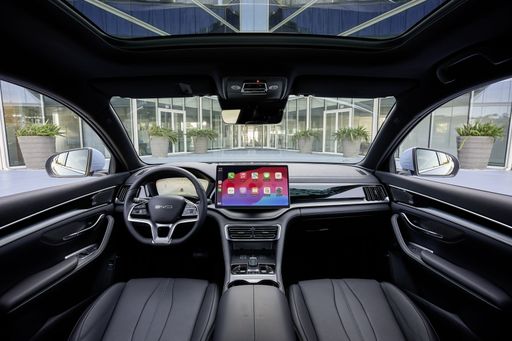
@ BYD Auto / BYD Global Media
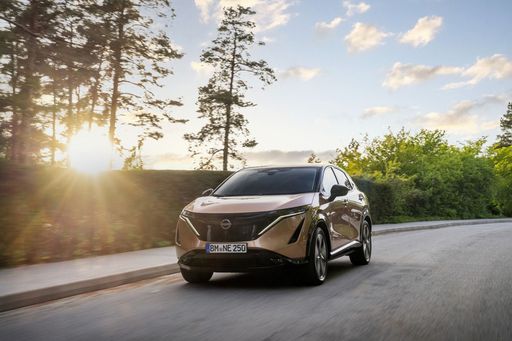
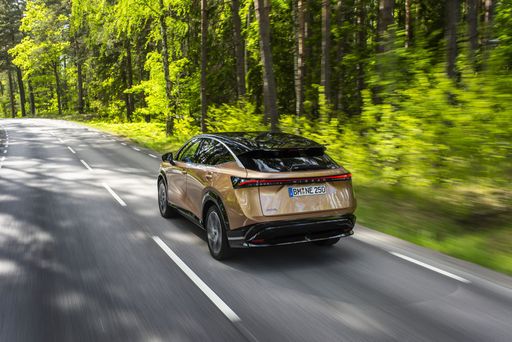
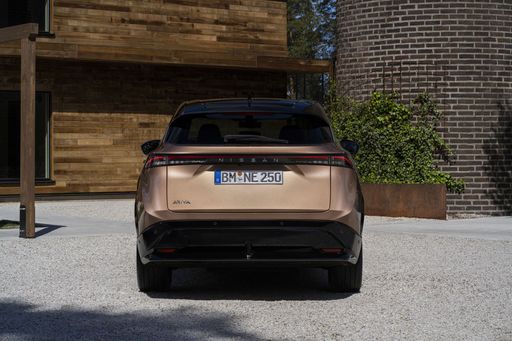
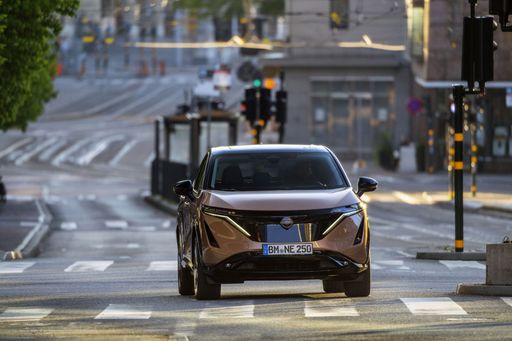
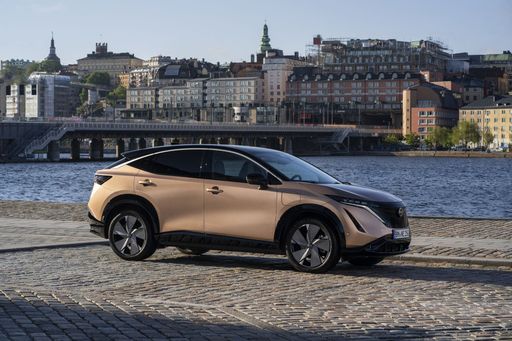
@ Nissan Motor Corporation
VS

BYD Seal U vs Nissan Ariya – Which one offers the better deal?

Both models have their strengths – but which one suits you more?
Compare performance, efficiency, price and space directly: BYD Seal U or Nissan Ariya?

BYD Seal U

5 (2 Reviews)
rate

Nissan Ariya

5 (1 Reviews)
rate
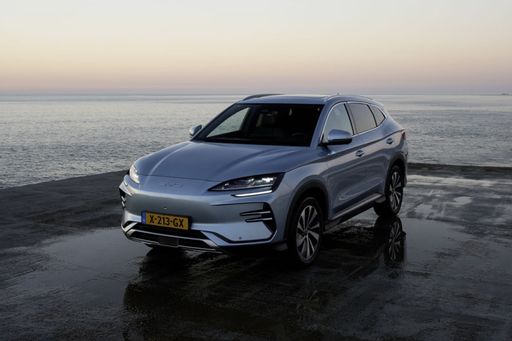
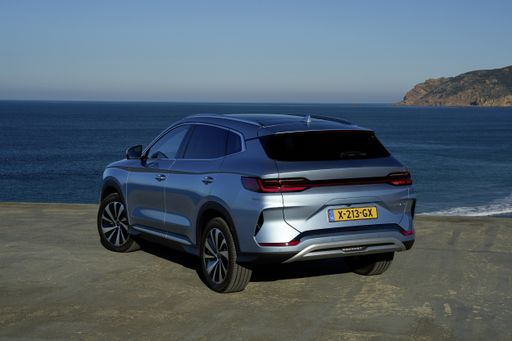
Seal U @ BYD Auto / BYD Global Media

BYD Seal U vs. Nissan Ariya: Electric Powerhouses Battle it Out

In an automotive landscape that's quickly shifting towards electrification, the BYD Seal U and Nissan Ariya stand out as exemplary SUVs making waves in the electric and hybrid realms. Both models showcase cutting-edge technology and impressive performance metrics, but how do they truly compare against each other? Let's delve into the technical aspects and innovations of these two automotive marvels.
Ariya @ Nissan Motor Corporation

Design and Build

Both the BYD Seal U and Nissan Ariya wear the SUV badge with pride. The Seal U appears slightly larger with a length ranging around 4780 mm, whereas the Ariya measures in at 4595 mm. Width and height are comparable, with both models standing tall and wide, offering that commanding SUV presence on the road.

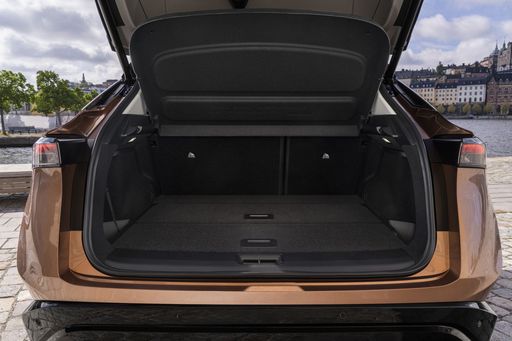
The trunk capacity of the Seal U ranges from 425 to 552 liters, allowing for flexible storage options. The Ariya competes closely with trunk capacities between 415 and 468 liters, providing ample space for family adventures and long road trips.

Seal U @ BYD Auto / BYD Global Media

Powertrain and Performance

The BYD Seal U offers a versatile range of powertrains, including plug-in hybrid and electric variants. Horsepower ratings on these models go from 218 to a formidable 324 HP, with torque figures reaching up to 550 Nm. This versatility extends to acceleration, with the car achieving 0-100 km/h in times ranging from a nippy 5.9 seconds to a leisurely 9.6 seconds, depending on the configuration. Its top speed caps between 170 to 180 km/h, ensuring brisk travel.

The Nissan Ariya, solely an electric pioneer, matches up well with power outputs ranging from 218 HP to an impressive 435 HP in the top-spec variant. With torque peaks at 600 Nm, the Ariya manages a swift 0-100 km/h sprint in as little as 5 seconds, with a restrained top speed stretching up to 200 km/h.

Ariya @ Nissan Motor Corporation

Range and Efficiency

For those focused on extended range, both models offer compelling numbers. BYD Seal U's electric range varies broadly from 70 to 500 kilometers depending on the setup, paired with energy consumption figures between 19.9 and 20.5 kWh/100 km. For hybrid enthusiasts, fuel consumption rests between 0.9 to 1.2 L/100 km, with CO2 emissions remarkably low due to the hybrid nature.

The Ariya delivers a robust electric only range between 402 km to 531 km, with energy consumption kept efficiently between 17.7 and 24.5 kWh/100 km. Its zero CO2 emissions align perfectly with the sustainability ethos driving the electric movement.

Seal U @ BYD Auto / BYD Global Media

Innovations and Technology

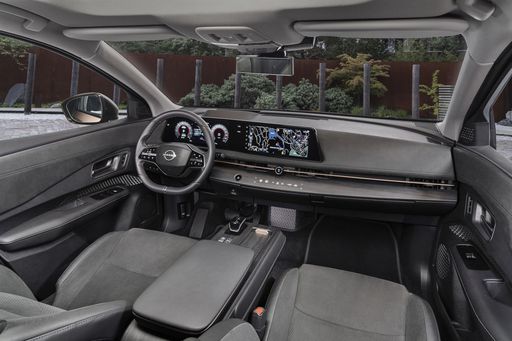
The BYD Seal U's notable innovation is its hybrid technology, combining electric efficiency with conventional propulsion versatility. Complemented by spacious seating for five and a modern automatic transmission system, it fits well into modern lifestyles.

Nissan's Ariya, however, pushes the frontier by being an all-electric vehicle. Available with both front-wheel and all-wheel drive options and varying battery capacities at 63 and 87 kWh, it presents a dynamic and forward-thinking option for prospective EV owners.

Ariya @ Nissan Motor Corporation

Conclusion

In the showdown between BYD Seal U and Nissan Ariya, the choice boils down to personal preference and lifestyle needs. The Seal U offers versatility with its hybrid variant, making it ideal for those not quite ready to make a full leap to electric. Meanwhile, the Ariya shines as a purist electric SUV with impressive performance and range capabilities.

No matter the choice, both the BYD Seal U and Nissan Ariya represent the forefront of automotive innovation, each setting benchmarks in their respective categories while contributing to a cleaner, greener future in transportation.

Here’s where it gets real: The technical differences in detail

Costs and Efficiency:

Looking at overall running costs, both models reveal some interesting differences in everyday economy.

BYD Seal U has a minimal advantage in terms of price – it starts at 34300 £, while the Nissan Ariya costs 37300 £. That’s a price difference of around 3000 £.

In terms of energy consumption, the advantage goes to the Nissan Ariya: with 17.70 kWh per 100 km, it’s a bit more efficient than the BYD Seal U with 19.90 kWh. That’s a difference of about 2.20 kWh.

As for range, the Nissan Ariya performs barely noticeable better – achieving up to 531 km, about 31 km more than the BYD Seal U.

Engine and Performance:

Power, torque and acceleration are the classic benchmarks for car enthusiasts – and here, some clear differences start to show.

When it comes to engine power, the Nissan Ariya has a evident edge – offering 435 HP compared to 324 HP. That’s roughly 111 HP more horsepower.

In acceleration from 0 to 100 km/h, the Nissan Ariya is somewhat quicker – completing the sprint in 5 s, while the BYD Seal U takes 5.90 s. That’s about 0.90 s faster.

In terms of top speed, the Nissan Ariya performs minimal better – reaching 200 km/h, while the BYD Seal U tops out at 180 km/h. The difference is around 20 km/h.

There’s also a difference in torque: Nissan Ariya pulls barely noticeable stronger with 600 Nm compared to 550 Nm. That’s about 50 Nm difference.

Space and Everyday Use:

Whether family car or daily driver – which one offers more room, flexibility and comfort?

Both vehicles offer seating for 5 people.

In curb weight, BYD Seal U is minimal lighter – 1940 kg compared to 1980 kg. The difference is around 40 kg.

In terms of boot space, the BYD Seal U offers somewhat more room – 552 L compared to 468 L. That’s a difference of about 84 L.

In maximum load capacity, the BYD Seal U performs barely noticeable better – up to 1465 L, which is about 115 L more than the Nissan Ariya.

When it comes to payload, Nissan Ariya minimal takes the win – 420 kg compared to 410 kg. That’s a difference of about 10 kg.

Who wins the race?

The Nissan Ariya proves to be is largely superior and therefore becomes our DriveDuel Champion!
Nissan Ariya is the better all-rounder in this comparison.

BYD Seal U
Nissan Ariya

Costs and Consumption

View detailed analysis

Engine and Performance

View detailed analysis

Dimensions and Body

View detailed analysis
from about £37,300
Ariya @ Nissan Motor Corporation

Nissan Ariya

  • Engine Type : Electric
  • Transmission : Automatic
  • Drive Type : Front-Wheel Drive, All-Wheel Drive
  • Power HP : 218 - 435 HP
  • Consumption kWh/100km : 17.7 - 24.5 kWh
  • Electric Range : 402 - 531 km

BYD Seal U

5 (2 Reviews)
rate

The BYD Seal U pairs a sleek fastback silhouette with a surprisingly roomy, tech-rich cabin, giving electric chic without the showroom pretension. It's a smart pick for buyers after confident handling, sensible practicality and standout value — all wrapped up with a cheeky grin when you put your foot down.

details

Nissan Ariya

5 (1 Reviews)
rate

The Nissan Ariya wraps futuristic, sculpted styling around a calm, high-tech cabin, making the switch to electric feel surprisingly easy and grown-up. It’s a comfortable, sensible EV that favors everyday usability and clever packaging over headline-grabbing theatrics — ideal for buyers who want an elegant, low-fuss electric car without the ego.

details
BYD Seal U
Nissan Ariya
Seal U @ BYD Auto / BYD Global Media
Ariya @ Nissan Motor Corporation

Costs and Consumption

Price
34300 - 39800 £
Price
37300 - 54800 £
Consumption L/100km
0.4 - 1.2 L
Consumption L/100km
-
Consumption kWh/100km
19.9 - 20.5 kWh
Consumption kWh/100km
17.7 - 24.5 kWh
Electric Range
70 - 500 km
Electric Range
402 - 531 km
Battery Capacity
-
Battery Capacity
63 - 87 kWh
co2
0 - 26 g/km
co2
0 g/km
Fuel tank capacity
60 L
Fuel tank capacity
-

Dimensions and Body

Body Type
SUV
Body Type
SUV
Seats
5
Seats
5
Doors
5
Doors
5
Curb weight
1940 - 2147 kg
Curb weight
1980 - 2277 kg
Trunk capacity
425 - 552 L
Trunk capacity
415 - 468 L
Length
4775 - 4785 mm
Length
4595 mm
Width
1890 mm
Width
1850 mm
Height
1668 - 1670 mm
Height
1650 mm
Max trunk capacity
1440 - 1465 L
Max trunk capacity
1280 - 1350 L
Payload
410 kg
Payload
363 - 420 kg

Engine and Performance

Engine Type
Plugin Hybrid, Electric
Engine Type
Electric
Transmission
Automatic
Transmission
Automatic
Transmission Detail
CVT, Reduction Gearbox
Transmission Detail
Reduction Gearbox
Drive Type
Front-Wheel Drive, All-Wheel Drive
Drive Type
Front-Wheel Drive, All-Wheel Drive
Power HP
218 - 324 HP
Power HP
218 - 435 HP
Acceleration 0-100km/h
5.9 - 9.6 s
Acceleration 0-100km/h
5 - 7.6 s
Max Speed
170 - 180 km/h
Max Speed
160 - 200 km/h
Torque
300 - 550 Nm
Torque
300 - 600 Nm
Number of Cylinders
4
Number of Cylinders
-
Power kW
160 - 238 kW
Power kW
160 - 320 kW
Engine capacity
1497 - 1498 cm3
Engine capacity
-

General

Model Year
2024
Model Year
2022 - 2025
CO2 Efficiency Class
B, A
CO2 Efficiency Class
A
Brand
BYD
Brand
Nissan
What drive types are available for the BYD Seal U?

The BYD Seal U is available as Front-Wheel Drive or All-Wheel Drive.

The prices and data displayed are estimates based on German list prices and may vary by country. This information is not legally binding.

do not click