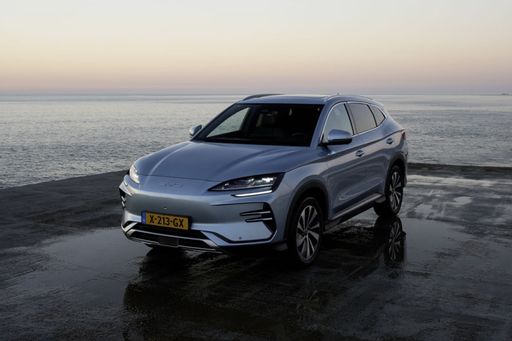
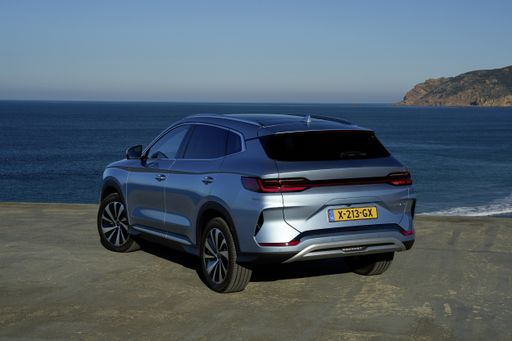
@ BYD Auto / BYD Global Media
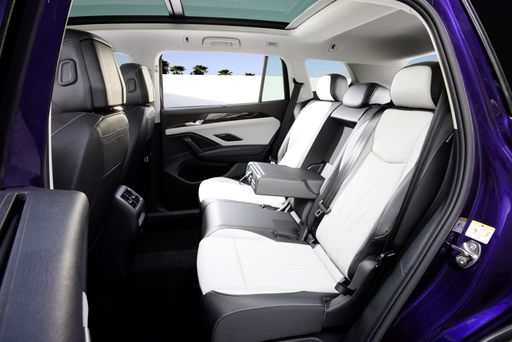
@ Volkswagen AG / VW Media
VS

BYD Seal U vs VW Tayron - Differences and prices compared

Compare performance (324 HP vs 272 HP), boot space and price (34300 £ vs 39600 £) at a glance. Find out which car is the better choice for you – BYD Seal U or VW Tayron?

BYD Seal U

5 (2 Reviews)
rate

VW Tayron

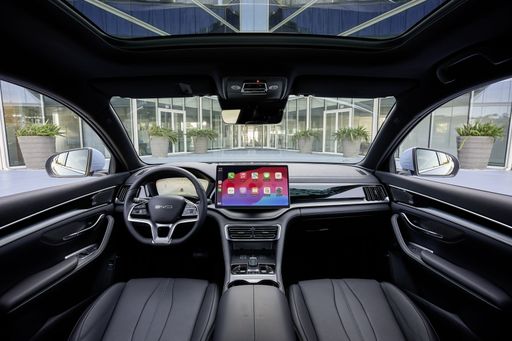
Seal U @ BYD Auto / BYD Global Media

Breaking Down the Future of SUVs: BYD Seal U vs. VW Tayron

In the realm of modern SUVs, the competition is fierce, as automakers strive to deliver innovative solutions that cater to consumer demands for efficiency, performance, and comfort. The BYD Seal U and VW Tayron stand as prime examples of cutting-edge vehicular technology. Let's explore these models in depth, examining their technical prowess and innovations.
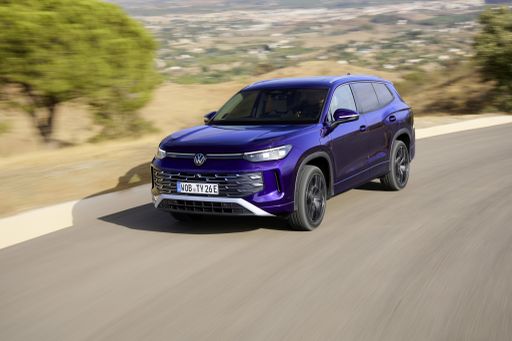
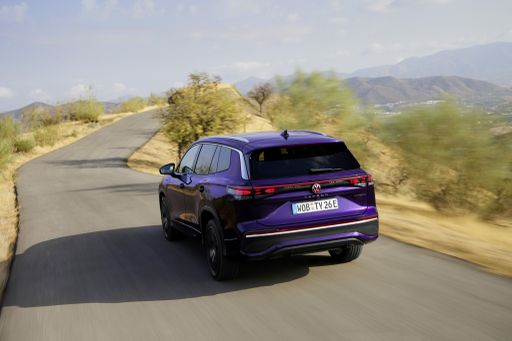
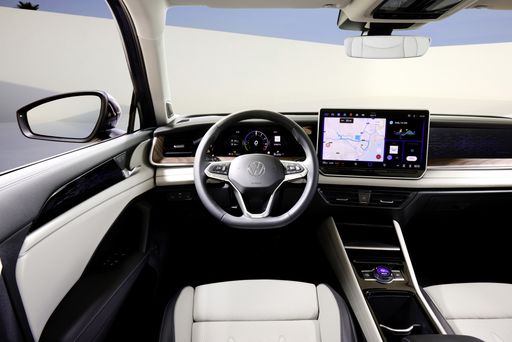
Tayron @ Volkswagen AG / VW Media

Performance and Powertrain: A Closer Look

The BYD Seal U is available with both plugin hybrid and pure electric powertrains, showcasing a significant push towards green technology. Engine options include power outputs ranging up to 324 HP with a torque of 550 Nm—ensuring an exhilarating driving experience. The Seal U can accelerate from 0-100 km/h in a brisk 5.9 seconds, making it a compelling choice for speed enthusiasts.

In contrast, the VW Tayron provides a versatile range of engine types, including petrol, diesel, and plugin hybrid options, offering power outputs up to 272 HP and a torque of 400 Nm. The Tayron achieves a quick 0-100 km/h acceleration in 6.1 seconds, closely competing with the Seal U's performance metrics. The availability of a hybrid variant further highlights the Tayron’s focus on blending performance with environmental considerations.

Seal U @ BYD Auto / BYD Global Media

Fuel Efficiency and Range

When it comes to efficiency, the Seal U offers an impressive electric range between 80 to 500 km, depending on the model, and maintains an exemplary consumption rate of 19.9 kWh/100 km for its electric versions. As a plugin hybrid, it boasts consumption rates as low as 0.9 L/100km, underscoring its commitment to reducing carbon footprints.

The Tayron also plays its part in the eco-friendly race, offering an electric range of up to 126 km in its plugin hybrid variant. However, fuel consumption for traditional engines varies from 5.4 to 7.8 L/100km, depending on the selected model, showcasing a spectrum from sustainability to high-powered motoring.

Tayron @ Volkswagen AG / VW Media

Design and Dimensions

The BYD Seal U is an imposing presence on the road with lengths up to 4785 mm, widths of 1890 mm, and heights approximating 1670 mm, providing a solid stance and spacious interior. It seats five, with a trunk capacity that stretches up to 552 liters—sufficient for family adventures.

The VW Tayron sits slightly longer at 4792 mm and narrower at a width of 1866 mm, with a similar height of 1668 mm. Its trunk capacity is notably generous at 885 liters, catering to those who prioritize storage for longer journeys. Both models sport a five-door configuration, ensuring easy access to cabin areas.

Seal U @ BYD Auto / BYD Global Media

Technological Innovations

The technology incorporated in both the BYD Seal U and VW Tayron revolves around enhanced safety, connected driving, and user convenience. The Seal U emphasizes state-of-the-art safety systems accompanied by a sleek interface that integrates with its electric drivetrain for seamless operation.

The Tayron is equipped with VW’s latest infotainment systems and driver assistance features that elevate the driving experience. Its adaptability to various engine types and emphasis on hybrid technology showcases VW’s dedication to a sustainable future without compromising performance and luxury.

Tayron @ Volkswagen AG / VW Media

Conclusion

Choosing between the BYD Seal U and VW Tayron boils down to personal preferences. Whether it is the cutting-edge electric technology of the Seal U or the versatile engine offerings of the Tayron, both models deliver a blend of power and efficiency. As the automotive landscape continues to evolve, these vehicles are at the forefront, merging traditional performance benchmarks with future-ready technology.

Here’s where it gets real: The technical differences in detail

Costs and Efficiency:

Price and efficiency are often the first things buyers look at. Here it becomes clear which model has the long-term edge – whether at the pump, the plug, or in purchase price.

BYD Seal U has a to a small extent advantage in terms of price – it starts at 34300 £, while the VW Tayron costs 39600 £. That’s a price difference of around 5335 £.

Fuel consumption also shows a difference: BYD Seal U manages with 0.40 L and is therefore significantly more efficient than the VW Tayron with 1.50 L. The difference is about 1.10 L per 100 km.

As for range, the BYD Seal U performs convincingly better – achieving up to 500 km, about 377 km more than the VW Tayron.

Engine and Performance:

Power, torque and acceleration say a lot about how a car feels on the road. This is where you see which model delivers more driving dynamics.

When it comes to engine power, the BYD Seal U has a somewhat edge – offering 324 HP compared to 272 HP. That’s roughly 52 HP more horsepower.

In acceleration from 0 to 100 km/h, the BYD Seal U is minimal quicker – completing the sprint in 5.90 s, while the VW Tayron takes 6.10 s. That’s about 0.20 s faster.

In terms of top speed, the VW Tayron performs clearly perceptible better – reaching 240 km/h, while the BYD Seal U tops out at 180 km/h. The difference is around 60 km/h.

There’s also a difference in torque: BYD Seal U pulls noticeable stronger with 550 Nm compared to 400 Nm. That’s about 150 Nm difference.

Space and Everyday Use:

Beyond pure performance, interior space and usability matter most in daily life. This is where you see which car is more practical and versatile.

Seats: offers more seating capacity – vs .

In curb weight, VW Tayron is somewhat lighter – 1682 kg compared to 1940 kg. The difference is around 258 kg.

In terms of boot space, the VW Tayron offers evident more room – 885 L compared to 552 L. That’s a difference of about 333 L.

In maximum load capacity, the VW Tayron performs noticeable better – up to 2090 L, which is about 625 L more than the BYD Seal U.

When it comes to payload, VW Tayron clearly perceptible takes the win – 566 kg compared to 410 kg. That’s a difference of about 156 kg.

Who comes out on top?

Overall, the BYD Seal U shows itself to be dominates this comparison and secures the title of DriveDuel Champion.
It convinces with the more balanced overall package and proves to be the more versatile choice for everyday use.

from about £34,300
Seal U @ BYD Auto / BYD Global Media

BYD Seal U

  • Engine Type : Plugin Hybrid, Electric
  • Transmission : Automatic
  • Drive Type : Front-Wheel Drive, All-Wheel Drive
  • Power HP : 218 - 324 HP
  • Consumption L/100km : 0.4 - 1.2 L
  • Consumption kWh/100km : 19.9 - 20.5 kWh
  • Electric Range : 70 - 500 km
BYD Seal U
VW Tayron

Costs and Consumption

View detailed analysis

Engine and Performance

View detailed analysis

Dimensions and Body

View detailed analysis

BYD Seal U

5 (2 Reviews)
rate

The BYD Seal U pairs a sleek fastback silhouette with a surprisingly roomy, tech-rich cabin, giving electric chic without the showroom pretension. It's a smart pick for buyers after confident handling, sensible practicality and standout value — all wrapped up with a cheeky grin when you put your foot down.

details

VW Tayron

The VW Tayron is Volkswagen's roomy, no-nonsense SUV that pairs clean, familiar styling with a practical cabin built for families and everyday use. It rides comfortably, packs sensible tech and creature comforts, and feels like the sensible sweater of SUVs for buyers who prefer steady value over headline-grabbing drama.

details
BYD Seal U
VW Tayron
Seal U @ BYD Auto / BYD Global Media
Tayron @ Volkswagen AG / VW Media

Costs and Consumption

Price
34300 - 39800 £
Price
39600 - 53300 £
Consumption L/100km
0.4 - 1.2 L
Consumption L/100km
1.5 - 8.5 L
Consumption kWh/100km
19.9 - 20.5 kWh
Consumption kWh/100km
-
Electric Range
70 - 500 km
Electric Range
116 - 123 km
Battery Capacity
-
Battery Capacity
19.70 kWh
co2
0 - 26 g/km
co2
33 - 192 g/km
Fuel tank capacity
60 L
Fuel tank capacity
45 - 58 L

Dimensions and Body

Body Type
SUV
Body Type
SUV
Seats
5
Seats
5
Doors
5
Doors
5
Curb weight
1940 - 2147 kg
Curb weight
1682 - 1948 kg
Trunk capacity
425 - 552 L
Trunk capacity
705 - 885 L
Length
4775 - 4785 mm
Length
4792 mm
Width
1890 mm
Width
1853 - 1866 mm
Height
1668 - 1670 mm
Height
1666 - 1668 mm
Max trunk capacity
1440 - 1465 L
Max trunk capacity
1915 - 2090 L
Payload
410 kg
Payload
489 - 566 kg

Engine and Performance

Engine Type
Plugin Hybrid, Electric
Engine Type
Petrol MHEV, Diesel, Petrol, Plugin Hybrid
Transmission
Automatic
Transmission
Automatic
Transmission Detail
CVT, Reduction Gearbox
Transmission Detail
Dual-Clutch Automatic
Drive Type
Front-Wheel Drive, All-Wheel Drive
Drive Type
Front-Wheel Drive, All-Wheel Drive
Power HP
218 - 324 HP
Power HP
150 - 272 HP
Acceleration 0-100km/h
5.9 - 9.6 s
Acceleration 0-100km/h
6.1 - 9.7 s
Max Speed
170 - 180 km/h
Max Speed
204 - 240 km/h
Torque
300 - 550 Nm
Torque
250 - 400 Nm
Number of Cylinders
4
Number of Cylinders
4
Power kW
160 - 238 kW
Power kW
110 - 200 kW
Engine capacity
1497 - 1498 cm3
Engine capacity
1498 - 1984 cm3

General

Model Year
2024
Model Year
2025
CO2 Efficiency Class
B, A
CO2 Efficiency Class
E, F, G, B
Brand
BYD
Brand
VW
What drive types are available for the BYD Seal U?

The BYD Seal U is available as Front-Wheel Drive or All-Wheel Drive.

The prices and data displayed are estimates based on German list prices and may vary by country. This information is not legally binding.