VS

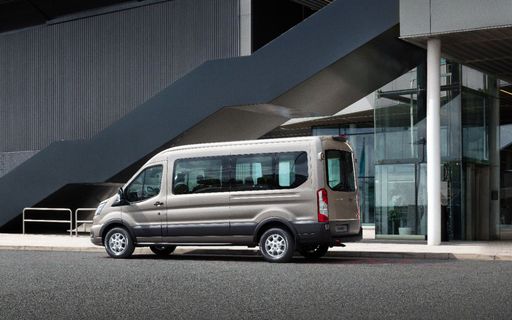
Citroen Jumpy Transporter vs Ford Transit Custom Transporter comparison

Compare performance (180 HP vs 286 HP), boot space and price (32,100 £ vs 49,700 £ ) at a glance. Find out which car is the better choice for you – Citroen Jumpy Transporter or Ford Transit Custom Transporter?

Citroen Jumpy Transporter vs Ford Transit Custom Transporter: Key differences

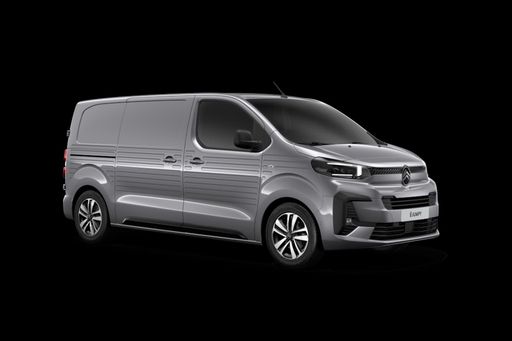
Citroen Jumpy Transporter

  • substantially cheaper
details

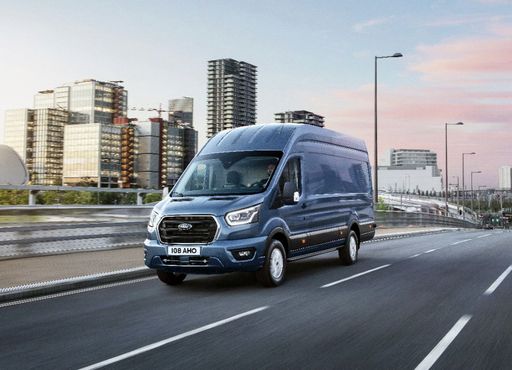
Ford Transit Custom Transporter

  • markedly more power
details

By Achim Sedelmaier

Jumpy Transporter

Citroen Jumpy Transporter vs Ford Transit Custom Transporter: Battle of the Vans

When it comes to cargo vans, the choices are vast, but the Citroen Jumpy Transporter and the Ford Transit Custom Transporter stand out as solid contenders. Tailored for businesses desiring reliability, flexibility, and performance, each has unique attributes that appeal to different customer needs. Here, we delve into their technical aspects and innovations to help you make an informed decision.
Transit Custom Transporter

Engine Variants and Power

The Citroen Jumpy Transporter offers a variety of engine types, including diesel and electric. With power outputs ranging from 120 to 177 horsepower (HP), the Jumpy Transporter provides a versatile spectrum for different driving preferences. It offers a torque range of 260 to 400 Nm, enabling robust performance for heavy-duty applications.

On the other hand, the Ford Transit Custom Transporter exhibits a more diverse engine lineup, including electric, diesel, and plug-in hybrid options. Its power spectrum stretches from 110 to 286 HP, and its torque figures range from 310 to 415 Nm, highlighting its adaptability for various transport requirements.

Transmission and Drivetrain

The Citroen Jumpy comes with both manual and automatic transmissions in addition to a reduction gearbox, with a front-wheel-drive system, ensuring effective power delivery and handling in various conditions.

The Transit Custom complements its power-packed engines with automatic, manual, and continuously variable transmissions (CVT), supporting rear-wheel, front-wheel, and all-wheel drive. This variety in drivetrain options offers flexibility for different terrains and business needs.

Energy Efficiency and Range

Highlighting its efficiency, the Jumpy Transporter's electric variant achieves ranges between 222 to 328 km per charge with consumption figures ranging from 23.6 to 24.7 kWh/100km. The diesel versions offer consumption figures ranging from 6.6 to 7.7 L/100km.

The Ford Transit Custom also proves competitive with electric ranges stretching from 56 to 327 km depending on engine type, with energy consumption rates between 22.4 to 24.5 kWh/100km. Hybrid models boast a notable efficiency with consumption at 1.6 L/100km.

Dimensions and Payload Capacity

The Jumpy Transporter ranges in length from 4959 mm to 5309 mm, with a width of 1920 mm and heights between 1895 mm and 1935 mm. Payload capacities range from 875 to 1333 kg, reflecting its versatility in cargo handling.

In contrast, the Transit Custom provides lengths of 5050 mm and 5450 mm, with a width of 2032 mm and heights around 1958 mm. It carries payloads from 802 to 1332 kg, showing its capacity to accommodate diverse business needs.

Environmental Considerations

The Citroen Jumpy’s CO2 emissions sit in a wide range depending on the model, with some electric options boasting zero emissions, placing them in efficiency classes from A to G.

The Transit Custom stands out with low CO2 emissions, with some models also achieving zero emissions status, contributing to a cleaner and more sustainable environment. Its CO2 efficiency classes range from A to B.

Conclusion

Both the Citroen Jumpy Transporter and the Ford Transit Custom Transporter lead in several areas, providing robust options to meet the needs of modern businesses. Whether you prioritize power and performance, energy efficiency, or environmental sustainability, these versatile transporters have plenty to offer. With their varied configurations and performance metrics, choosing between them comes down to aligning these features with your operational demands.

Here’s where it gets real: The technical differences in detail

Jumpy Transporter

Costs and Efficiency:

Price and efficiency are key factors when choosing a car – and this is often where the real differences emerge.

Citroen Jumpy Transporter is substantially cheaper – starting at 32,100 £ , while the Ford Transit Custom Transporter costs 49,700 £ . That’s a price difference of around 17,544 £.

Transit Custom Transporter

Engine and Performance:

Power, torque and acceleration are the classic benchmarks for car enthusiasts – and here, some clear differences start to show.

When it comes to engine power, the Ford Transit Custom Transporter offers markedly more power – delivering 286 HP compared to 180 HP. That’s roughly 106 HP more horsepower.

There’s also a difference in torque: the Ford Transit Custom Transporter delivers visibly more torque with 630 Nm compared to 400 Nm. That’s about 230 Nm more.

Space and Everyday Use:

Whether family car or daily driver – which one offers more room, flexibility and comfort?

Both vehicles offer seating for 6 people.

Who wins the race in the data check?

The Ford Transit Custom Transporter is clearly ahead overall in the objective data comparison.
This result only shows which model scores more points on paper – not which of the two cars feels right for you.

from £49,700
Transit Custom Transporter

Ford Transit Custom Transporter

  • Engine Type Electric
  • Transmission Automatic
  • Drive Type Rear-Wheel Drive, All-Wheel Drive
  • Power HP 136 - 286 HP
Citroen Jumpy Transporter
Ford Transit Custom Transporter

Costs and Consumption

View detailed analysis

Engine and Performance

View detailed analysis

Dimensions and Body

View detailed analysis

Citroen Jumpy Transporter

The Citroën Dispatch is a steady, no-nonsense transporter that swallows workday demands with quiet confidence while keeping drivers comfortable on long runs. Practical, economical and unfussy, it’s the kind of van that won’t steal the show but will make sure your business runs smoother — and that’s often exactly what you want.

details

Ford Transit Custom Transporter

The Transit Custom is a clever, no-nonsense workhorse that blends roomy practicality with surprisingly car-like driving manners, so your workday feels less like a chore and more like efficient transport. With a sensible interior, smart storage and tidy handling, it’s the kind of van that makes owners smile while they get on with the job — reliable, unfussy and built to keep moving.

details
Citroen Jumpy Transporter
Ford Transit Custom Transporter

Costs and Consumption

Price
32,100 - 52,000 £
Price
49,700 - 77,400 £
Consumption L/100km
6.2 - 6.5 L/100km
Consumption L/100km
-
Consumption kWh/100km
23.6 - 24.7 kWh/100km
Consumption kWh/100km
-
Electric Range
222 - 328 km
Electric Range
-
Battery Capacity
-
Battery Capacity
-
co2
0 - 199 g/km
co2
0 g/km
Fuel tank capacity
-
Fuel tank capacity
-

Dimensions and Body

Body Type
Cargo Van
Body Type
Cargo Van
Seats
3 - 6
Seats
3 - 6
Doors
-
Doors
-
Curb weight
1,722 - 2,188 kg
Curb weight
-
Trunk capacity
-
Trunk capacity
-
Length
-
Length
-
Width
1,920 mm
Width
2,032 mm
Height
-
Height
-
Max trunk capacity
-
Max trunk capacity
-
Payload
881 - 1,226 kg
Payload
-

Engine and Performance

Engine Type
Electric, Diesel
Engine Type
Electric
Transmission
Automatic, Manuel
Transmission
Automatic
Transmission Detail
Reduction Gearbox, Manual Gearbox, Automatic Gearbox
Transmission Detail
Reduction Gearbox
Drive Type
Front-Wheel Drive
Drive Type
Rear-Wheel Drive, All-Wheel Drive
Power HP
120 - 180 HP
Power HP
136 - 286 HP
Acceleration 0-100km/h
12.1 - 13.3 s
Acceleration 0-100km/h
-
Max Speed
-
Max Speed
-
Torque
260 - 400 Nm
Torque
415 - 630 Nm
Number of Cylinders
4
Number of Cylinders
-
Power kW
88 - 132 kW
Power kW
100 - 210 kW
Engine capacity
1,499 - 2,184 cm3
Engine capacity
-

General

Model Year
2,024 - 2,025
Model Year
2025
CO2 Efficiency Class
A, F, G
CO2 Efficiency Class
A
Brand
Citroen
Brand
Ford
DriveDuel uses data analysis and artificial intelligence to evaluate vehicle data and create content. Content is regularly reviewed and improved. The displayed prices are estimates based on German list prices, adjusted to the respective country’s VAT. Country-specific registration taxes are not included. This information is not legally binding.