VS

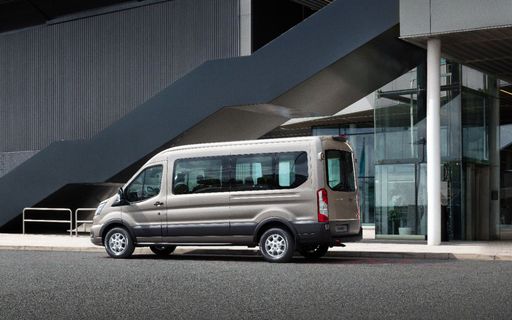
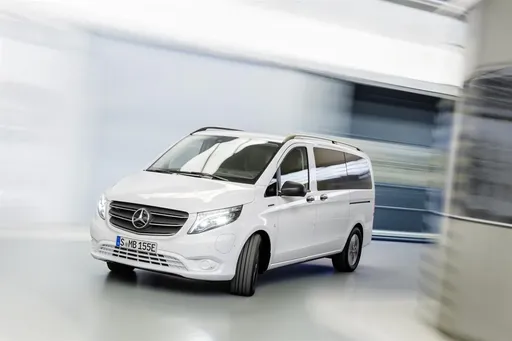
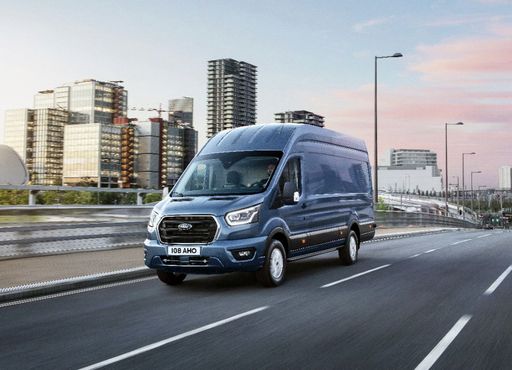
Ford Transit Custom Transporter vs Mercedes Vito Bus comparison

Compare performance (286 HP vs 237 HP), boot space and price (49,700 £ vs 36,300 £ ) at a glance. Find out which car is the better choice for you – Ford Transit Custom Transporter or Mercedes Vito Bus?

Ford Transit Custom Transporter vs Mercedes Vito Bus: Key differences

Ford Transit Custom Transporter

  • moderately more power
details

Mercedes Vito Bus

5 (1 Reviews)
rate
  • clearly cheaper
details

All details on performance, efficiency, range and trunk space can be found in the technical comparison below – including user reviews for both models.

By Achim Sedelmaier

Transit Custom Transporter

The Ultimate Van Face-Off: Ford Transit Custom Transporter vs. Mercedes Vito Bus

In the world of commercial vehicles, two brands stand out for their reliability and innovation: the Ford Transit Custom Transporter and the Mercedes Vito Bus. Both options symbolize flexibility and advanced engineering, appealing to diverse business needs. From urban deliveries to comfortable passenger transport, here's how these two models compare in terms of technical specifications and innovations.
Vito Bus

Power and Performance

The Ford Transit Custom Transporter offers a varied engine lineup including electric, diesel, and even a plug-in hybrid variant, providing plenty of flexibility for different driving needs. Its power output ranges from 136 HP to an impressive 286 HP, catering to both speed enthusiasts and efficiency-minded drivers. Torque figures go up to 415 Nm, providing a robust pulling power.

On the other hand, the Mercedes Vito Bus's powertrain options include diesel and electric engines. Power outputs range from 136 HP to 237 HP, ensuring that it competes closely with the Transit. Torque maxes out at 500 Nm, making the Vito Bus a powerful contender for heavy-duty tasks.

Transit Custom Transporter

Fuel Efficiency and Electric Range

The Transit Custom Transporter stands out with its wide range of fuel consumption figures from 1.6 L/100km for hybrids to electric consumption between 22.4 and 24.5 kWh/100km. Its electric range peaks at 327 km, thanks to a battery capacity that extends up to 64 kWh.

Meanwhile, the Vito Bus demonstrates solid efficiency as well, with diesel consumption figures between 6.7 and 7.8 L/100km. The electric variant offers a range of up to 371 km, matching well with its 90 kWh battery capacity. This efficiency positions the Vito Bus as an excellent long-distance travel option.

Dimension and Capacity

Discussing dimensions, the Ford Transit Custom Transporter stretches from 5,050 mm to 5,450 mm in length, presenting a versatile choice for different cargo and passenger needs. The payload capacity spans from 802 kg to a massive 1,332 kg, accommodating a variety of commercial demands.

The Mercedes Vito Bus ranges from 4,895 mm to 5,370 mm in length. It provides a maximum payload of 1,017 kg, along with a generous trunk capacity of up to 1,390 L, perfect for businesses requiring ample storage and passenger seating.

Drive Flexibility and Innovation

Ford's Transit Custom Transporter offers multiple drive types: rear-wheel, front-wheel, and all-wheel drive. The capability is further enhanced by various transmission options, including automatic, manual, and CVT.

Similarly, the Vito Bus features a solid variety of drivetrain choices: rear-wheel, all-wheel, and front-wheel drive. Mercedes also complements these with manual and automatic transmission options.

Comfort and Efficiency Class

Both vans offer similar comfort levels with the Transit seating up to 6 passengers and Vito providing room for 8. However, the Transit boasts a stronger emphasis on emissions efficiency, with its CO2 efficiency class ranging between A and B, whereas the Vito's CO2 ratings fall primarily within the G to A categories.

The Verdict

In this face-off of innovation and practicality, both the Ford Transit Custom Transporter and the Mercedes Vito Bus offer top-notch features tailored for specific needs. The Transit Custom shines with higher payloads and innovative hybrid options, while the Vito excels in passenger comfort and long-distance range capabilities. Both are superbly engineered vans that promise reliability and performance for any business requirement.

Here’s where it gets real: The technical differences in detail

Transit Custom Transporter

Costs and Efficiency:

Looking at overall running costs, both models reveal some interesting differences in everyday economy.

Mercedes Vito Bus is clearly cheaper – starting at 36,300 £ , while the Ford Transit Custom Transporter costs 49,700 £ . That’s a price difference of around 13,344 £.

Vito Bus

Engine and Performance:

Under the bonnet, it becomes clear which model is tuned for sportiness and which one takes the lead when you hit the accelerator.

When it comes to engine power, the Ford Transit Custom Transporter offers moderately more power – delivering 286 HP compared to 237 HP. That’s roughly 49 HP more horsepower.

There’s also a difference in torque: the Ford Transit Custom Transporter delivers markedly more torque with 630 Nm compared to 500 Nm. That’s about 130 Nm more.

Transit Custom Transporter

Space and Everyday Use:

Beyond pure performance, interior space and usability matter most in daily life. This is where you see which car is more practical and versatile.

Seats: Mercedes Vito Bus offers more seats – 8 vs 6.

Who wins the race in the data check?

The Mercedes Vito Bus is barely ahead in the objective data comparison.
This result only shows which model scores more points on paper – not which of the two cars feels right for you.

from £36,300
Vito Bus

Mercedes Vito Bus

  • Engine Type Diesel, Electric, Petrol
  • Transmission Automatic
  • Drive Type Rear-Wheel Drive, All-Wheel Drive, Front-Wheel Drive
  • Power HP 136 - 237 HP
  • Consumption L/100km 6.7 - 10 L/100km
  • Consumption kWh/100km 26.7 - 26.9 kWh/100km
  • Electric Range 248 - 370 km
Ford Transit Custom Transporter
Mercedes Vito Bus

Costs and Consumption

View detailed analysis

Engine and Performance

View detailed analysis

Dimensions and Body

View detailed analysis

Ford Transit Custom Transporter

The Transit Custom is a clever, no-nonsense workhorse that blends roomy practicality with surprisingly car-like driving manners, so your workday feels less like a chore and more like efficient transport. With a sensible interior, smart storage and tidy handling, it’s the kind of van that makes owners smile while they get on with the job — reliable, unfussy and built to keep moving.

details

Mercedes Vito Bus

The Mercedes Vito is a sturdy, no-nonsense people carrier that blends commercial practicality with a surprisingly civilised cabin, making long shuttles feel less like a chore. If you need a dependable transporter that swallows luggage, forgives hard use and still looks a touch more premium than a plain van, the Vito is an easy, sensible pick.

details
Ford Transit Custom Transporter
Mercedes Vito Bus

Costs and Consumption

Price
49,700 - 77,400 £
Price
36,300 - 55,900 £
Consumption L/100km
-
Consumption L/100km
6.7 - 10 L/100km
Consumption kWh/100km
-
Consumption kWh/100km
26.7 - 26.9 kWh/100km
Electric Range
-
Electric Range
248 - 370 km
Battery Capacity
-
Battery Capacity
60 - 90 kWh
co2
0 g/km
co2
0 - 228 g/km
Fuel tank capacity
-
Fuel tank capacity
57 - 70 L

Dimensions and Body

Body Type
Cargo Van
Body Type
Bus
Seats
3 - 6
Seats
8
Doors
-
Doors
4
Curb weight
-
Curb weight
2,023 - 2,739 kg
Trunk capacity
-
Trunk capacity
580 - 1,390 L
Length
-
Length
4,895 - 5,370 mm
Width
2,032 mm
Width
1,928 mm
Height
-
Height
1,890 mm
Max trunk capacity
-
Max trunk capacity
4,190 - 4,990 L
Payload
-
Payload
726 - 1,077 kg

Engine and Performance

Engine Type
Electric
Engine Type
Diesel, Electric, Petrol
Transmission
Automatic
Transmission
Automatic
Transmission Detail
Reduction Gearbox
Transmission Detail
Automatic Gearbox, Reduction Gearbox
Drive Type
Rear-Wheel Drive, All-Wheel Drive
Drive Type
Rear-Wheel Drive, All-Wheel Drive, Front-Wheel Drive
Power HP
136 - 286 HP
Power HP
136 - 237 HP
Acceleration 0-100km/h
-
Acceleration 0-100km/h
-
Max Speed
-
Max Speed
140 km/h
Torque
415 - 630 Nm
Torque
330 - 500 Nm
Number of Cylinders
-
Number of Cylinders
4
Power kW
100 - 210 kW
Power kW
100 - 174 kW
Engine capacity
-
Engine capacity
1,950 - 1,999 cm3

General

Model Year
2025
Model Year
2024
CO2 Efficiency Class
A
CO2 Efficiency Class
G, A
Brand
Ford
Brand
Mercedes-Benz
DriveDuel uses data analysis and artificial intelligence to evaluate vehicle data and create content. Content is regularly reviewed and improved. The displayed prices are estimates based on German list prices, adjusted to the respective country’s VAT. Country-specific registration taxes are not included. This information is not legally binding.