VS

CUPRA Born vs Skoda Elroq comparison

Compare performance (326 HP vs 340 HP), boot space and price (34,700 £ vs 37,900 £ ) at a glance. Find out which car is the better choice for you – CUPRA Born or Skoda Elroq?

CUPRA Born vs Skoda Elroq: Key differences

CUPRA Born

  • very slightly cheaper
  • only slightly more efficient
  • barely more electric range
  • a bit lighter

Skoda Elroq

4.5 (4 Reviews)
rate
  • very slightly more power
  • only slightly quicker 0–100 km/h
  • slightly more trunk space

All details on performance, efficiency, range and trunk space can be found in the technical comparison below – including user reviews for both models.

Born

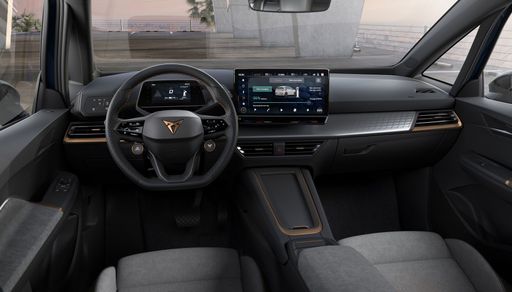
As electric vehicles continue to gain traction in the automotive market, two exciting contenders are making waves: the CUPRA Born and the Skoda Elroq. While both models are offered by prominent manufacturers pushing the limits of electric vehicle technology, they are designed for different audiences and purposes. In this comparison, we will dissect the key features, technical specifications, and innovations of each model to see how they stack up against one another.

Elroq

Design and Body Type

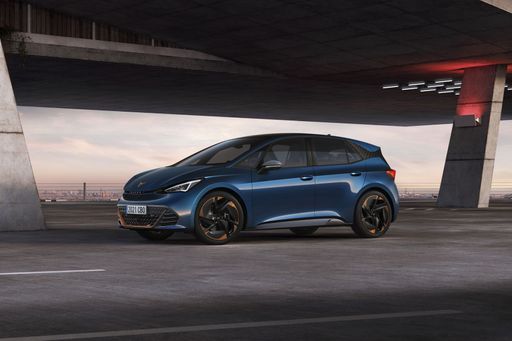
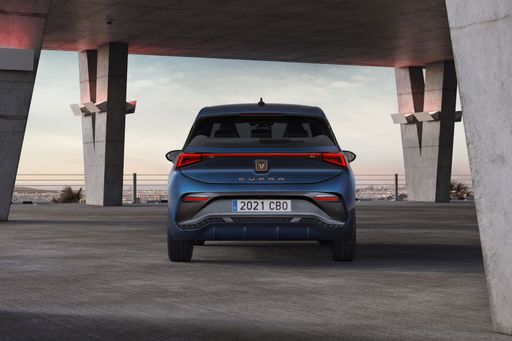
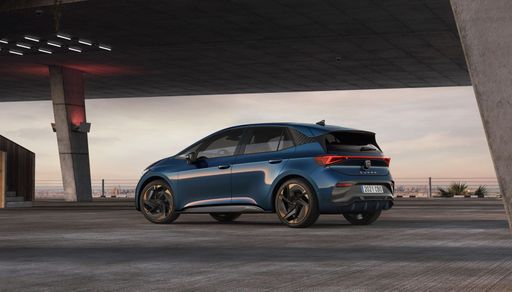
The CUPRA Born is crafted as a sporty hatchback, emphasizing performance and agility. With a length of 4324 mm, a width of 1809 mm, and a height of 1540 mm, it exudes a dynamic and agile stance. The sleek lines and aggressive styling elements capture the attention of anyone who sees it, making it a standout in the EV segment.

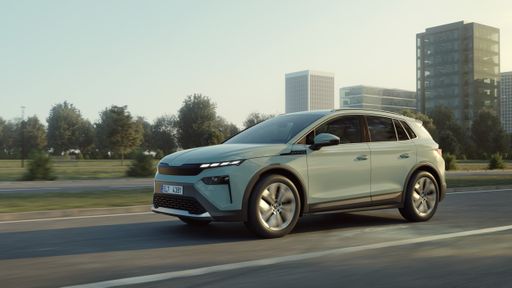
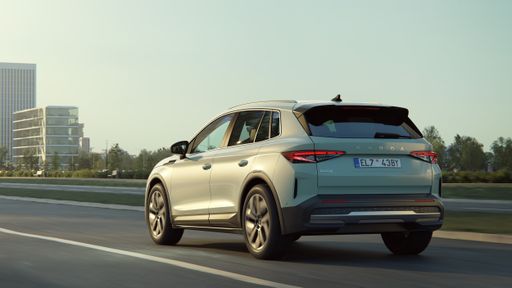
On the other hand, the Skoda Elroq is an accentuated SUV, measuring 4488 mm in length, 1884 mm in width, and 1625 mm in height. This model caters to a family-friendly audience, offering ample space and a commanding presence on the road. With a more robust shape, the Elroq is the ideal choice for outdoor adventures and everyday practicality.

Born

Powertrains and Performance

When it comes to performance, the CUPRA Born offers two powerful configurations, with options of 231 HP and a top-tier choice of 326 HP. Its 0-100 km/h acceleration comes in at a blistering 5.6 seconds for the quicker variant. The rear-wheel-drive setup, coupled with an electric range of 427 km to 555 km depending on the battery variant (60 kWh to 77 kWh), makes the Born a compelling choice for those prioritizing performance.

In comparison, the Skoda Elroq presents a slightly lower power range, featuring outputs of 170 HP and up to 285 HP. Its acceleration time is less impressive, reaching 100 km/h in 6.6 seconds for the high-end model. The Elroq also provides a solid electric range between 375 km and 580 km, thanks to its battery options (52 kWh to 77 kWh). What stands out is that both models have a torque rating of 310 Nm and 545 Nm for their performance versions, providing substantial pulling power.

Elroq

Efficiency and Consumption

Efficiency is a critical factor for electric vehicles, and both the CUPRA Born and Skoda Elroq deliver commendable figures. The Born claims a consumption peak of 14.9 kWh/100 km for the most efficient variant, while the Elroq's consumption peaks at 15.2 kWh/100 km. These figures highlight their ability to conserve energy while delivering performance.

Born

Interior and Cargo Space

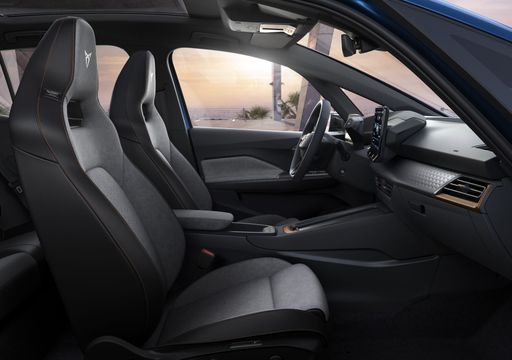
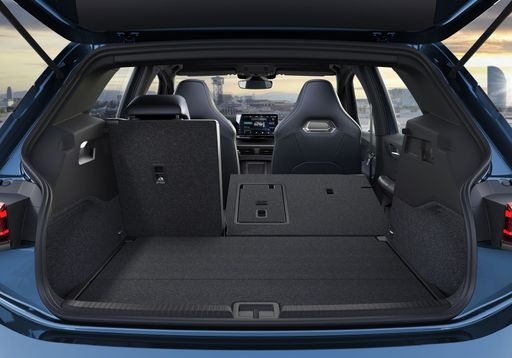
Inside, both vehicles cater to five passengers, with the CUPRA Born offering a trunk capacity of 385 liters. This space is ample for daily shopping and smaller luggage needs. Conversely, the Skoda Elroq raises the bar with a more capacious trunk space of 470 liters, making it more suitable for families or those who require additional cargo capacity during trips.

Elroq

Technology and Innovations

Both models integrate modern technology and infotainment systems. The CUPRA Born is equipped with state-of-the-art connectivity options and a user-friendly interface, aimed at the tech-savvy driver. Innovations in charging capabilities and smart EV features ensure that drivers can enjoy electric performance without hassles.

The Skoda Elroq follows suit, focusing on user-friendly technology, robust safety features, and practicalities for driving experiences. Both models are leading the charge in their segments with advanced driver-assistance systems and infotainment setups.

Born

Conclusion: Choosing Between Performance and Practicality

Ultimately, the choice between the CUPRA Born and the Skoda Elroq boils down to personal preferences and intended use. The Born is the ideal choice for drivers focused on sporty performance and agility, while the Elroq caters to those who value practicality, ample space, and a commanding presence on the road. Regardless of the choice, both models underline the automotive industry's commitment to sustainability through innovative electric vehicle technologies.

Video - Skoda Elroq

Video Thumbnail

Here’s where it gets real: The technical differences in detail

Born

Costs and Efficiency:

Price and efficiency are often the first things buyers look at. Here it becomes clear which model has the long-term edge – whether at the pump, the plug, or in purchase price.

CUPRA Born is very slightly cheaper – starting at 34,700 £ , while the Skoda Elroq costs 37,900 £ . That’s a price difference of around 3,197 £.

In terms of energy consumption, the CUPRA Born is only slightly more efficient: consuming 14.9 kWh/100km compared to 15.2 kWh/100km for the Skoda Elroq. That’s a difference of about 0.3 kWh/100km.

As for electric range, the CUPRA Born offers barely more range – reaching up to 594 km, about 21 km more than the Skoda Elroq.

Elroq

Engine and Performance:

Under the bonnet, it becomes clear which model is tuned for sportiness and which one takes the lead when you hit the accelerator.

When it comes to engine power, the Skoda Elroq offers very slightly more power – delivering 340 HP compared to 326 HP. That’s roughly 14 HP more horsepower.

When accelerating from 0 to 100 km/h, the Skoda Elroq is only slightly quicker – completing the sprint in 5.4 s, while the CUPRA Born takes 5.6 s. That’s about 0.2 s quicker.

Looking at top speed, the CUPRA Born is only slightly faster – reaching 200 km/h, while the Skoda Elroq tops out at 180 km/h. The difference is around 20 km/h.

There’s also a difference in torque: the Skoda Elroq delivers a bit more torque with 679 Nm compared to 545 Nm. That’s about 134 Nm more.

Born

Space and Everyday Use:

Whether family car or daily driver – which one offers more room, flexibility and comfort?

Both vehicles offer seating for 5 people.

In terms of curb weight, CUPRA Born is a bit lighter – 1,828 kg compared to 2,133 kg. The difference is around 305 kg.

Looking at boot space, the Skoda Elroq offers slightly more boot space – 470 L compared to 385 L. That’s a difference of about 85 L.

For maximum load capacity, the Skoda Elroq offers moderately more capacity – up to 1,580 L, about 313 L more than the CUPRA Born.

When it comes to payload, the Skoda Elroq carries somewhat more – 517 kg compared to 452 kg. That’s a difference of about 65 kg.

Who wins the race in the data check?

The Skoda Elroq holds a solid overall lead in the objective data comparison.
This result only shows which model scores more points on paper – not which of the two cars feels right for you.

from £37,900
Elroq

Skoda Elroq

  • Engine Type : Electric
  • Transmission : Automatic
  • Drive Type : Rear-Wheel Drive, All-Wheel Drive
  • Power HP : 286 - 340 HP
  • Consumption kWh/100km : 15.2 - 16.5 kWh/100km
  • Electric Range : 529 - 573 km
CUPRA Born
Skoda Elroq

Costs and Consumption

View detailed analysis

Engine and Performance

View detailed analysis

Dimensions and Body

View detailed analysis

CUPRA Born

The CUPRA Born blends sharp, athletic styling with a playful electric character, delivering hatchback agility and hot-hatch attitude whether you're darting through the city or cruising the open road. Inside, the cabin punches above its weight with smart materials and practical space, making it a compelling pick for buyers who want electric motoring without surrendering the grin.

details

Skoda Elroq

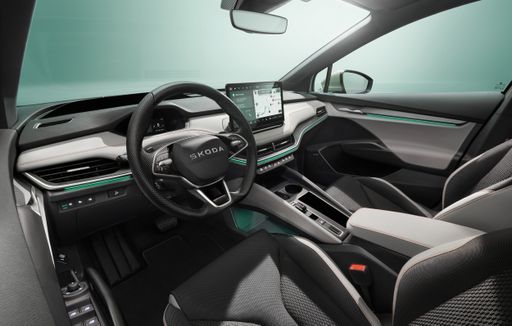
The Skoda Elroq is a cleverly packaged family SUV that mixes roomy practicality with sharp, modern looks, making it an easy pick for buyers who prefer common sense over flash. On the road it's composed and user-friendly, with thoughtful interior details that turn everyday driving into something pleasantly efficient — a sensible companion with a wink.

details
CUPRA Born
Skoda Elroq

Costs and Consumption

Price
34,700 - 45,300 £
Price
37,900 - 45,500 £
Consumption L/100km
-
Consumption L/100km
-
Consumption kWh/100km
14.9 - 16 kWh/100km
Consumption kWh/100km
15.2 - 16.5 kWh/100km
Electric Range
428 - 594 km
Electric Range
529 - 573 km
Battery Capacity
79 kWh
Battery Capacity
77 - 79 kWh
co2
0 g/km
co2
0 g/km
Fuel tank capacity
-
Fuel tank capacity
-

Dimensions and Body

Body Type
Hatchback
Body Type
SUV
Seats
5
Seats
5
Doors
5
Doors
5
Curb weight
1,828 - 1,999 kg
Curb weight
2,133 - 2,268 kg
Trunk capacity
385 L
Trunk capacity
470 L
Length
4,324 mm
Length
4,488 mm
Width
1,809 mm
Width
1,884 mm
Height
1,540 mm
Height
1,608 - 1,625 mm
Max trunk capacity
1,267 L
Max trunk capacity
1,580 L
Payload
431 - 452 kg
Payload
470 - 517 kg

Engine and Performance

Engine Type
Electric
Engine Type
Electric
Transmission
Automatic
Transmission
Automatic
Transmission Detail
Reduction Gearbox
Transmission Detail
Reduction Gearbox
Drive Type
Rear-Wheel Drive
Drive Type
Rear-Wheel Drive, All-Wheel Drive
Power HP
204 - 326 HP
Power HP
286 - 340 HP
Acceleration 0-100km/h
5.6 - 7.7 s
Acceleration 0-100km/h
5.4 - 6.6 s
Max Speed
200 km/h
Max Speed
180 km/h
Torque
265 - 545 Nm
Torque
545 - 679 Nm
Number of Cylinders
-
Number of Cylinders
-
Power kW
150 - 240 kW
Power kW
210 - 250 kW
Engine capacity
-
Engine capacity
-

General

Model Year
2,024 - 2,025
Model Year
2,025
CO2 Efficiency Class
A
CO2 Efficiency Class
A
Brand
CUPRA
Brand
Skoda
DriveDuel uses data analysis and artificial intelligence to evaluate vehicle data and create content. Content is regularly reviewed and improved. The displayed prices are estimates based on German list prices, adjusted to the respective country’s VAT. Country-specific registration taxes are not included. This information is not legally binding.