VS

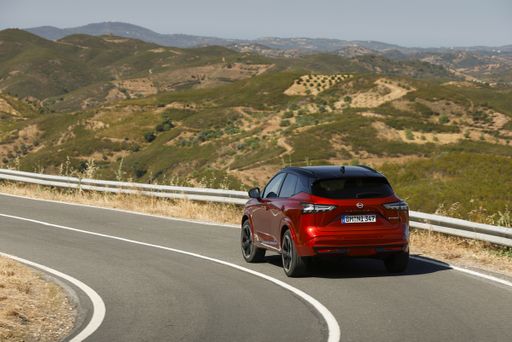
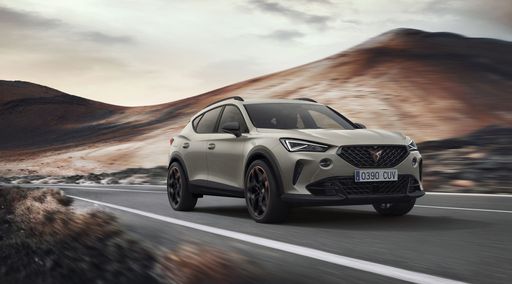
CUPRA Formentor vs Nissan Qashqai comparison

Compare performance (390 HP vs 205 HP), boot space and price (35,200 £ vs 29,600 £ ) at a glance. Find out which car is the better choice for you – CUPRA Formentor or Nissan Qashqai?

CUPRA Formentor vs Nissan Qashqai: Key differences

CUPRA Formentor

4.9 (2 Reviews)
rate
  • clearly more power
  • considerably more efficient
  • significantly quicker 0–100 km/h

Nissan Qashqai

4.9 (3 Reviews)
rate
  • somewhat cheaper
  • marginally lighter
  • moderately more trunk space

All details on performance, efficiency, range and trunk space can be found in the technical comparison below – including user reviews for both models.

Formentor

Introducing the Contenders: CUPRA Formentor vs. Nissan Qashqai

In the competitive landscape of compact SUVs, the CUPRA Formentor and Nissan Qashqai stand out with their unique characteristics and advanced technology. Both models promise a blend of performance, comfort, and practicality. Let’s delve into the details and see how these two powerhouses stack up against each other.
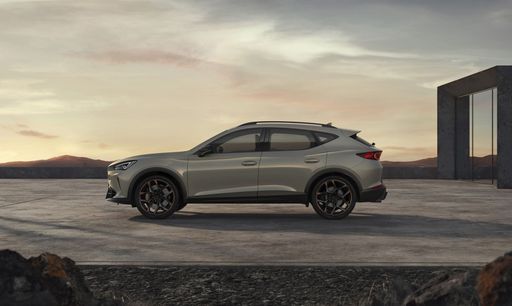
Qashqai

Powertrains and Performance

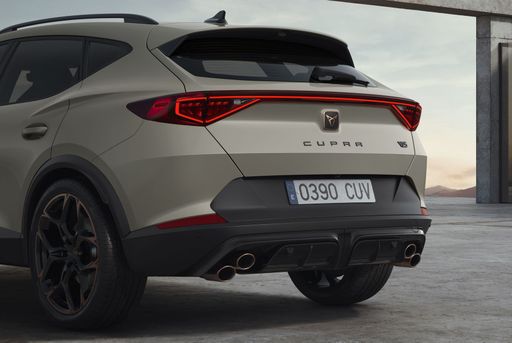
The CUPRA Formentor boasts an impressive range of engine options, including petrol, plug-in hybrid, MHEV, and diesel configurations. With power outputs ranging from 150 to a staggering 333 HP, it promises an exhilarating driving experience. Notably, the Formentor's top-tier model can achieve 0-100 km/h in just 4.8 seconds, showcasing its sporty credentials.

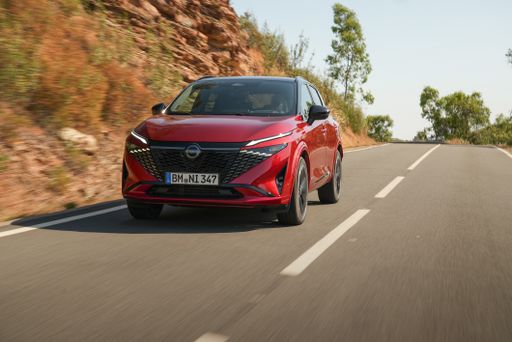
On the other hand, the Nissan Qashqai features petrol MHEV and full hybrid engines, offering power outputs between 140 and 190 HP. While slightly less powerful than its CUPRA rival, the Qashqai is competitive in its own right, achieving a 0-100 km/h time as low as 7.9 seconds. This makes it a robust option for everyday driving, balancing performance with efficiency.

Formentor

Technical Specifications and Innovations

Let's break down the technical specifications. The CUPRA Formentor has a striking acceleration capability, particularly with its petrol variants that include a range of configurations. Combined with a peak torque of up to 420 Nm and various drive types (both front and all-wheel drive), the Formentor is designed for drivers seeking a dynamic road experience.

In contrast, the Nissan Qashqai, while not as powerful, showcases its technical prowess with efficient fuel consumption rates. The Qashqai ranges from 5.1 to 6.8 L/100km, depending on the variant, which is commendable for a vehicle of its size. Its engines also utilize advanced hybrid technology, enhancing fuel efficiency and reducing emissions, making it a choice for eco-conscious consumers.

Qashqai

Dimensions and Practicality

When considering practicality, the Formentor measures 4451 mm in length, 1839 mm in width, and varies in height up to 1520 mm. It offers a trunk capacity of 450 liters, providing ample space for luggage or other cargo. The Formentor can comfortably seat five passengers, and its robust design ensures a spacious interior.

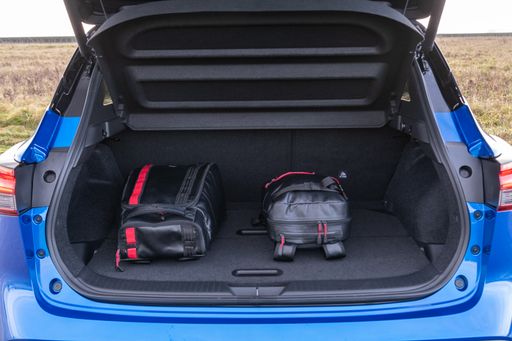
The Nissan Qashqai, slightly shorter at 4425 mm, has a similar width of 1835 mm and stands taller at 1625 mm. It surpasses the Formentor with a trunk capacity ranging from 479 to 504 liters, making it a practical choice for families and those needing extra storage. Both vehicles are equipped with five doors, enhancing accessibility for passengers.

Formentor

Interior Quality and Technology

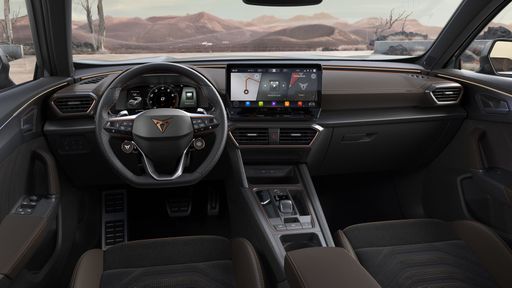
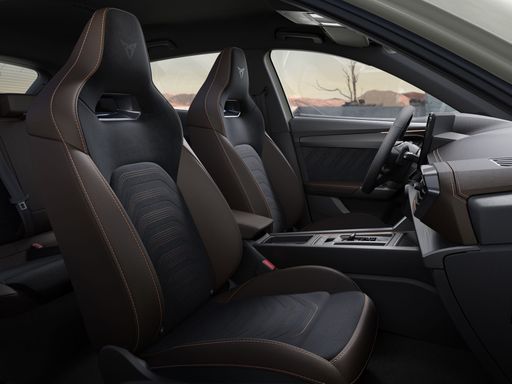
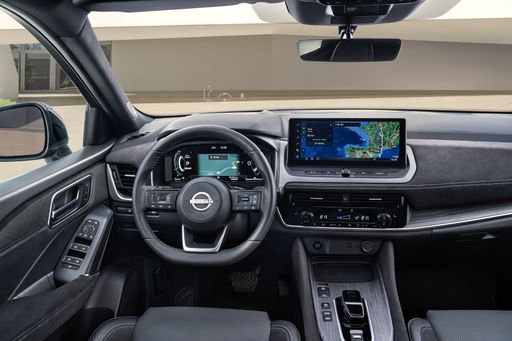
Inside, the CUPRA Formentor comes equipped with a driver-focused cockpit, featuring premium materials and advanced infotainment systems. The integration of smart technology allows for seamless connectivity, ensuring that modern drivers have access to all necessary features at their fingertips.

Meanwhile, the Nissan Qashqai incorporates a user-friendly layout with quality materials, providing a comfortable ride. Its infotainment system boasts various connectivity options and is designed to cater to tech-savvy individuals. Both vehicles prioritize driver and passenger comfort, but the Formentor leans more towards a sportier ambiance.

Qashqai

Conclusion: Which One to Choose?

The choice between the CUPRA Formentor and the Nissan Qashqai ultimately depends on what you value most in a compact SUV. If you prioritize performance and sporty design with multiple engine options, the CUPRA Formentor is the one for you. However, if practicality, efficiency, and advanced hybrid technology are your top concerns, the Nissan Qashqai stands strong. With both vehicles delivering on innovation and user experience, buyers are left with two compelling options that cater to a variety of driving needs.

In the end, it's about striking a balance between exhilaration and everyday usability. Happy driving!

Here’s where it gets real: The technical differences in detail

Formentor

Costs and Efficiency:

Price and efficiency are key factors when choosing a car – and this is often where the real differences emerge.

Nissan Qashqai is somewhat cheaper – starting at 29,600 £ , while the CUPRA Formentor costs 35,200 £ . That’s a price difference of around 5,636 £.

Fuel consumption also shows a difference: the CUPRA Formentor uses 1.4 L/100km and is considerably more efficient than the Nissan Qashqai with 4.5 L/100km. The difference is about 3.1 L/100km.

Qashqai

Engine and Performance:

Power, torque and acceleration are the classic benchmarks for car enthusiasts – and here, some clear differences start to show.

When it comes to engine power, the CUPRA Formentor offers clearly more power – delivering 390 HP compared to 205 HP. That’s roughly 185 HP more horsepower.

When accelerating from 0 to 100 km/h, the CUPRA Formentor is significantly quicker – completing the sprint in 4.2 s, while the Nissan Qashqai takes 7.6 s. That’s about 3.4 s quicker.

Looking at top speed, the CUPRA Formentor is a bit faster – reaching 250 km/h, while the Nissan Qashqai tops out at 206 km/h. The difference is around 44 km/h.

There’s also a difference in torque: the CUPRA Formentor delivers noticeably more torque with 480 Nm compared to 330 Nm. That’s about 150 Nm more.

Formentor

Space and Everyday Use:

Beyond pure performance, interior space and usability matter most in daily life. This is where you see which car is more practical and versatile.

Both vehicles offer seating for 5 people.

In terms of curb weight, Nissan Qashqai is marginally lighter – 1,420 kg compared to 1,434 kg. The difference is around 14 kg.

Looking at boot space, the Nissan Qashqai offers moderately more boot space – 504 L compared to 450 L. That’s a difference of about 54 L.

For maximum load capacity, the CUPRA Formentor offers marginally more capacity – up to 1,505 L, about 58 L more than the Nissan Qashqai.

When it comes to payload, the CUPRA Formentor carries marginally more – 526 kg compared to 520 kg. That’s a difference of about 6 kg.

Who wins the race in the data check?

The CUPRA Formentor is far ahead overall in the objective data comparison.
This result only shows which model scores more points on paper – not which of the two cars feels right for you.

from £35,200
Formentor

CUPRA Formentor

  • Engine Type : Petrol, Petrol MHEV, Diesel, Plugin Hybrid
  • Transmission : Automatic, Manuel
  • Drive Type : All-Wheel Drive, Front-Wheel Drive
  • Power HP : 150 - 390 HP
  • Consumption L/100km : 1.4 - 10.1 L/100km
  • Electric Range : 117 - 126 km
CUPRA Formentor
Nissan Qashqai

Costs and Consumption

View detailed analysis

Engine and Performance

View detailed analysis

Dimensions and Body

View detailed analysis

CUPRA Formentor

With coupe-like lines and a muscular stance the Cupra Formentor blends sporty drama with everyday sense, so it looks like it’s in motion even at a standstill. Inside and out it’s tuned for drivers who want engaging handling and a grown-up cabin — practical enough for daily life, playful enough to make the commute feel like a short track session.

details

Nissan Qashqai

The Nissan Qashqai blends practical, family-friendly packaging with SUV styling that refuses to shout, making it a sensible and dependable choice for everyday life. It’s comfortable to live with, economical on the road, and neatly equipped enough to feel modern without ever feeling precious — perfect if you want crossover versatility without the drama.

details
CUPRA Formentor
Nissan Qashqai

Costs and Consumption

Price
35,200 - 62,500 £
Price
29,600 - 39,900 £
Consumption L/100km
1.4 - 10.1 L/100km
Consumption L/100km
4.5 - 6.8 L/100km
Consumption kWh/100km
-
Consumption kWh/100km
-
Electric Range
117 - 126 km
Electric Range
-
Battery Capacity
19.7 kWh
Battery Capacity
-
co2
32 - 229 g/km
co2
102 - 154 g/km
Fuel tank capacity
40 - 55 L
Fuel tank capacity
55 L

Dimensions and Body

Body Type
SUV
Body Type
SUV
Seats
5
Seats
5
Doors
5
Doors
5
Curb weight
1,434 - 1,742 kg
Curb weight
1,420 - 1,665 kg
Trunk capacity
345 - 450 L
Trunk capacity
479 - 504 L
Length
4,451 mm
Length
4,425 mm
Width
1,839 - 1,852 mm
Width
1,835 mm
Height
1,511 - 1,537 mm
Height
1,625 mm
Max trunk capacity
1,415 - 1,505 L
Max trunk capacity
1,422 - 1,447 L
Payload
439 - 526 kg
Payload
466 - 520 kg

Engine and Performance

Engine Type
Petrol, Petrol MHEV, Diesel, Plugin Hybrid
Engine Type
Petrol MHEV, Full Hybrid
Transmission
Automatic, Manuel
Transmission
Manuel, Automatic
Transmission Detail
Dual-Clutch Automatic, Manual Gearbox
Transmission Detail
Manual Gearbox, CVT, Reduction Gearbox
Drive Type
All-Wheel Drive, Front-Wheel Drive
Drive Type
Front-Wheel Drive, All-Wheel Drive
Power HP
150 - 390 HP
Power HP
140 - 205 HP
Acceleration 0-100km/h
4.2 - 9 s
Acceleration 0-100km/h
7.6 - 10.2 s
Max Speed
210 - 250 km/h
Max Speed
170 - 206 km/h
Torque
250 - 480 Nm
Torque
240 - 330 Nm
Number of Cylinders
4 - 5
Number of Cylinders
3 - 4
Power kW
110 - 287 kW
Power kW
103 - 151 kW
Engine capacity
1,498 - 2,480 cm3
Engine capacity
1,332 - 1,498 cm3

General

Model Year
2,024 - 2,026
Model Year
2,025 - 2,026
CO2 Efficiency Class
G, E, D, F, B
CO2 Efficiency Class
E, C
Brand
CUPRA
Brand
Nissan
DriveDuel uses data analysis and artificial intelligence to evaluate vehicle data and create content. Content is regularly reviewed and improved. The displayed prices are estimates based on German list prices, adjusted to the respective country’s VAT. Country-specific registration taxes are not included. This information is not legally binding.