VS

CUPRA Terramar vs Mazda CX-5 comparison

Compare performance (272 HP vs 141 HP), boot space and price (36,900 £ vs 30,000 £ ) at a glance. Find out which car is the better choice for you – CUPRA Terramar or Mazda CX-5?

CUPRA Terramar vs Mazda CX-5: Key differences

CUPRA Terramar

5 (5 Reviews)
rate
  • substantially more power
  • significantly more efficient
  • substantially quicker 0–100 km/h
details

Mazda CX-5

4.7 (8 Reviews)
rate
  • noticeably cheaper
  • only slightly lighter
  • only slightly more trunk space
details

All details on performance, efficiency, range and trunk space can be found in the technical comparison below – including user reviews for both models.

By Achim Sedelmaier

Terramar

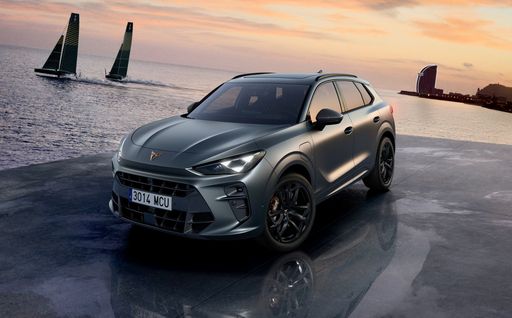
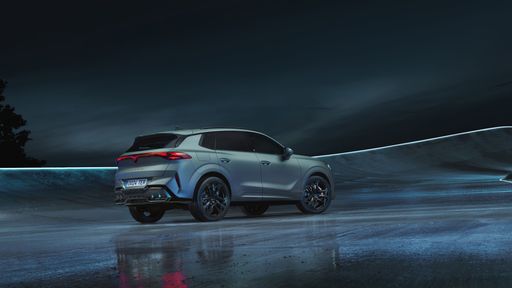
When it comes to functional elegance and performance, two notable contenders in the compact SUV segment are the CUPRA Terramar and the Mazda CX-5. Each vehicle presents unique aspects that cater to different preferences, and this comparison will delve into the technical specifications and innovations that define these two formidable SUVs.
CX-5

Design and Dimensions

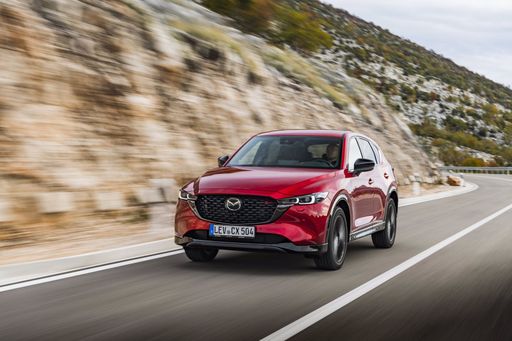
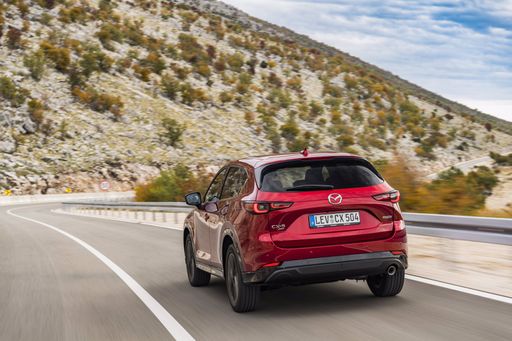
The CUPRA Terramar, with its sleek lines and athletic stance, measures 4519 mm in length, 1869 mm in width, and stands 1586 mm tall. This dimensions allow for a spacious interior while retaining a sporty profile. On the other hand, the Mazda CX-5 is slightly longer at 4575 mm, wider at 1845 mm, and taller at 1680 mm, which contributes to its commanding presence on the road.

Terramar

Power and Performance

Under the hood, the CUPRA Terramar offers multiple engine choices including a 272 HP Plug-in Hybrid, a Petrol MHEV producing 150 HP, and a conventional petrol engine with 265 HP. The hybrid version boasts an impressive electric range of 120 km and a battery capacity of 19.7 kWh, making it an eco-friendly option for those conscious of their carbon footprint. With a 0-100 km/h acceleration time as low as 5.3 seconds, the performance is undeniably exhilarating.

On the other hand, the Mazda CX-5 features a lineup that includes petrol MHEV options ranging from 165 HP to 194 HP and a diesel variant boasting up to 184 HP. While it doesn't offer a hybrid option, it maintains a competitive edge with a fuel consumption of 5.6 to 7.6 L/100km, depending on the engine choice. The CX-5's acceleration figures range from 9.2 to 10.7 seconds, which is respectable within its class.

CX-5

Transmission and Drive Type

The CUPRA Terramar comes exclusively with automatic transmission, utilizing a dual-clutch automatic for a seamless driving experience. Front-wheel drive and all-wheel drive configurations enhance versatility across different driving conditions. In contrast, the Mazda CX-5 provides a choice of manual and automatic transmissions, offering a wider appeal to those who prefer a traditional driving experience. Both models feature all-wheel-drive options, fortifying their credentials as capable SUVs.

Terramar

Interior and Technology

Interior comfort is paramount in both vehicles. The CUPRA Terramar is designed to accommodate five occupants with a generous trunk capacity of 450 liters, which can be expanded for larger cargo needs. Concurrently, the Mazda CX-5 slightly surpasses this with a trunk capacity of 522 liters, translating to more space for longer road trips.

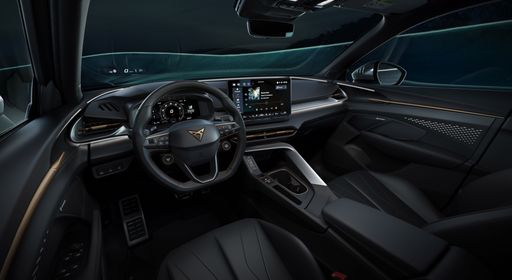
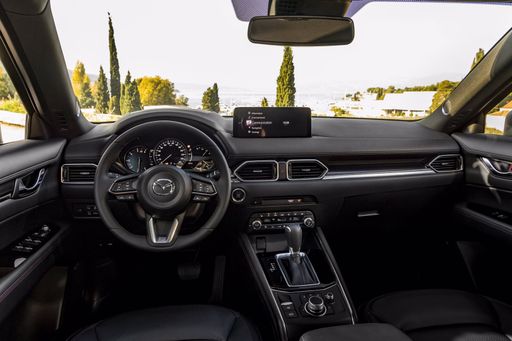
Both models come equipped with a range of technological innovations. The CUPRA Terramar emphasizes a sporty interior with high-quality materials, digital infotainment systems, and advanced connectivity options. It aims to deliver a premium driving experience filled with modern conveniences. Meanwhile, the Mazda CX-5 is also known for its stylish interior ambiance, featuring a user-friendly infotainment system and a focus on driver-centric layouts.

CX-5

Safety Features and Ratings

Safety is another critical factor for shoppers in the SUV segment. The CUPRA brand is recognized for incorporating advanced safety features and driver assistance technology in its vehicles, ensuring peace of mind on the road. While specific safety ratings for the Terramar are still forthcoming, the brand's reputation suggests robust protective features.

The Mazda CX-5 has consistently shown strong performance in safety ratings, showcasing its commitment to passenger protection with a suite of advanced safety features including adaptive cruise control, lane-keeping assist, and blind-spot monitoring. Mazda's dedication to safety is evidently a priority that appeals to family-oriented consumers.

Conclusion: Which SUV is Right for You?

The CUPRA Terramar presents itself as a groundbreaking contender in the SUV market, particularly for those gravitating towards hybrid technology and a sportier drive. Meanwhile, the Mazda CX-5 remains a classic choice that balances style, performance, and practicality, appealing broadly to a diverse range of drivers.

Ultimately, the decision between the two will depend on individual preferences; whether you prioritize innovative hybrid performance or a reputable legacy of reliability and comfort, both SUVs are commendable choices that promise to elevate your driving experience.

Here’s where it gets real: The technical differences in detail

Terramar

Costs and Efficiency:

Price and efficiency are often the first things buyers look at. Here it becomes clear which model has the long-term edge – whether at the pump, the plug, or in purchase price.

Mazda CX-5 is noticeably cheaper – starting at 30,000 £ , while the CUPRA Terramar costs 36,900 £ . That’s a price difference of around 6,883 £.

Fuel consumption also shows a difference: the CUPRA Terramar uses 1.6 L/100km and is significantly more efficient than the Mazda CX-5 with 7 L/100km. The difference is about 5.4 L/100km.

CX-5

Engine and Performance:

Power, torque and acceleration are the classic benchmarks for car enthusiasts – and here, some clear differences start to show.

When it comes to engine power, the CUPRA Terramar offers substantially more power – delivering 272 HP compared to 141 HP. That’s roughly 131 HP more horsepower.

When accelerating from 0 to 100 km/h, the CUPRA Terramar is substantially quicker – completing the sprint in 5.9 s, while the Mazda CX-5 takes 10.5 s. That’s about 4.6 s quicker.

Looking at top speed, the CUPRA Terramar is moderately faster – reaching 243 km/h, while the Mazda CX-5 tops out at 195 km/h. The difference is around 48 km/h.

There’s also a difference in torque: the CUPRA Terramar delivers substantially more torque with 400 Nm compared to 238 Nm. That’s about 162 Nm more.

Terramar

Space and Everyday Use:

Cabin size, boot volume and payload all play a role in everyday practicality. Here, comfort and flexibility make the difference.

Both vehicles offer seating for 5 people.

In terms of curb weight, Mazda CX-5 is only slightly lighter – 1,629 kg compared to 1,638 kg. The difference is around 9 kg.

Looking at boot space, the Mazda CX-5 offers only slightly more boot space – 583 L compared to 540 L. That’s a difference of about 43 L.

When it comes to payload, the Mazda CX-5 carries very slightly more – 601 kg compared to 542 kg. That’s a difference of about 59 kg.

Who wins the race in the data check?

The CUPRA Terramar is far ahead overall in the objective data comparison.
This result only shows which model scores more points on paper – not which of the two cars feels right for you.

from £36,900
Terramar

CUPRA Terramar

  • Engine Type : Petrol MHEV, Petrol, Plugin Hybrid
  • Transmission : Automatic
  • Drive Type : Front-Wheel Drive, All-Wheel Drive
  • Power HP : 150 - 272 HP
  • Consumption L/100km : 1.6 - 8.4 L/100km
  • Electric Range : 118 km
CUPRA Terramar
Mazda CX-5

Costs and Consumption

View detailed analysis

Engine and Performance

View detailed analysis

Dimensions and Body

View detailed analysis

CUPRA Terramar

The CUPRA Terramar is a sharply styled, sporty SUV that brings athletic handling and bold design to buyers who want performance with everyday usability. Inside, premium finishes meet driver-focused flair and family-friendly practicality, making it a tempting pick for anyone who wants thrills without turning their daily routine into a chore.

details

Mazda CX-5

The Mazda CX-5 blends elegant, athletic styling with a surprisingly engaging driving character, turning routine trips into small, satisfying adventures. Inside it feels thoughtfully built and comfortable, offering sensible practicality and a premium feel that punches above its price.

details
CUPRA Terramar
Mazda CX-5

Costs and Consumption

Price
36,900 - 50,600 £
Price
30,000 - 39,500 £
Consumption L/100km
1.6 - 8.4 L/100km
Consumption L/100km
7 - 7.4 L/100km
Consumption kWh/100km
-
Consumption kWh/100km
-
Electric Range
118 km
Electric Range
-
Battery Capacity
-
Battery Capacity
-
co2
36 - 191 g/km
co2
157 - 168 g/km
Fuel tank capacity
55 - 60 L
Fuel tank capacity
56 - 58 L

Dimensions and Body

Body Type
SUV
Body Type
SUV
Seats
5
Seats
5
Doors
5
Doors
5
Curb weight
1,638 - 1,904 kg
Curb weight
1,629 - 1,671 kg
Trunk capacity
450 - 540 L
Trunk capacity
466 - 583 L
Length
4,519 mm
Length
4,690 mm
Width
1,869 mm
Width
1,860 mm
Height
1,586 mm
Height
1,695 mm
Max trunk capacity
-
Max trunk capacity
2,019 L
Payload
512 - 542 kg
Payload
601 kg

Engine and Performance

Engine Type
Petrol MHEV, Petrol, Plugin Hybrid
Engine Type
Petrol MHEV
Transmission
Automatic
Transmission
Automatic
Transmission Detail
Dual-Clutch Automatic
Transmission Detail
Automatic Gearbox
Drive Type
Front-Wheel Drive, All-Wheel Drive
Drive Type
Front-Wheel Drive, All-Wheel Drive
Power HP
150 - 272 HP
Power HP
141 HP
Acceleration 0-100km/h
5.9 - 9.3 s
Acceleration 0-100km/h
10.5 - 10.9 s
Max Speed
205 - 243 km/h
Max Speed
195 km/h
Torque
250 - 400 Nm
Torque
238 Nm
Number of Cylinders
4
Number of Cylinders
4
Power kW
110 - 200 kW
Power kW
104 kW
Engine capacity
1,498 - 1,984 cm3
Engine capacity
2,488 cm3

General

Model Year
2,024 - 2,025
Model Year
2025
CO2 Efficiency Class
E, G, F, B
CO2 Efficiency Class
F
Brand
CUPRA
Brand
Mazda
DriveDuel uses data analysis and artificial intelligence to evaluate vehicle data and create content. Content is regularly reviewed and improved. The displayed prices are estimates based on German list prices, adjusted to the respective country’s VAT. Country-specific registration taxes are not included. This information is not legally binding.