VS

Dacia Duster vs Honda CR-V comparison

Compare performance (158 HP vs 184 HP), boot space and price (16,300 £ vs 42,800 £ ) at a glance. Find out which car is the better choice for you – Dacia Duster or Honda CR-V?

Dacia Duster vs Honda CR-V: Key differences

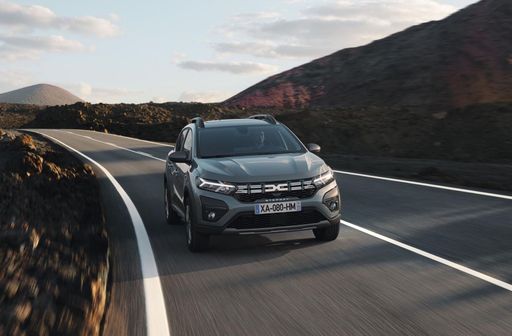
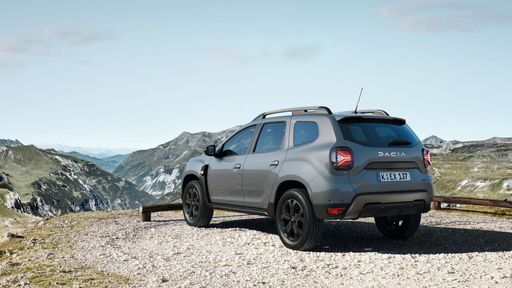
Dacia Duster

4.8 (3 Reviews)
rate
  • substantially cheaper
  • visibly lighter
details

Honda CR-V

4.9 (4 Reviews)
rate
  • somewhat more power
  • clearly more efficient
  • very slightly quicker 0–100 km/h
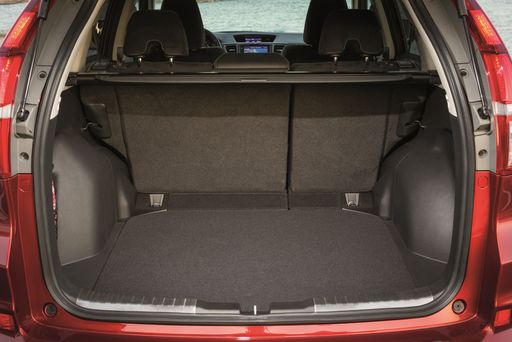
  • slightly more trunk space
details

All details on performance, efficiency, range and trunk space can be found in the technical comparison below – including user reviews for both models.

By Achim Sedelmaier

Duster

Battle of the SUVs: Dacia Duster vs. Honda CR-V

In the thriving landscape of compact SUVs, the Dacia Duster and the Honda CR-V have carved out commendable niches for themselves. With the 2024 model year offering fresh updates in technology and design, these vehicles promise a unique blend of performance, economy, and appeal. Dive into this comparison to see which one aligns with your driving aspirations.
CR-V

Performance & Efficiency: Power or Practicality?

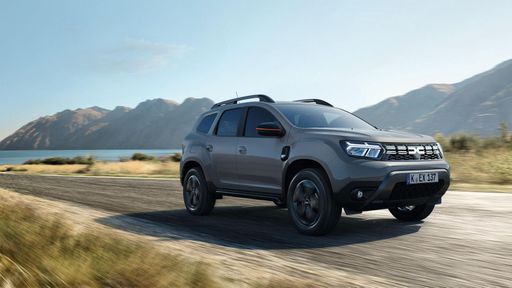
The Dacia Duster presents a diverse range of engine options including LPG, Full Hybrid, and Petrol MHEV, catering to different needs. Its engines deliver power outputs ranging from 91 to 140 HP. Coupled with front-wheel and all-wheel drive variants, the Duster positions itself as a versatile performer for urban commutes and off-road adventures. Interestingly, the Duster’s full hybrid option provides a competitive consumption rate of 5 L/100km, ensuring fewer pit stops.

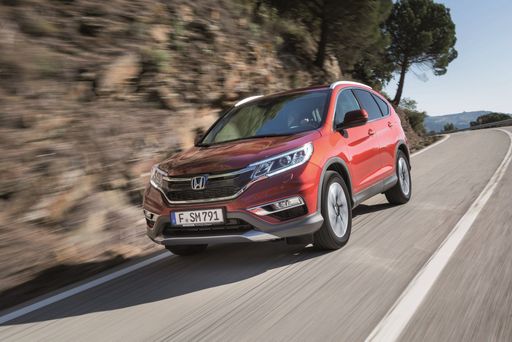
On the contrary, the Honda CR-V focuses heavily on hybrid technology. With full hybrid and plug-in hybrid powertrains available, its engine delivers a robust 184 HP. Despite its superior power, the CR-V maintains impressive fuel efficiency, consuming as little as 0.8 L/100km in its plug-in hybrid mode—a boon for eco-conscious drivers.

Duster

Dimensions & Comfort: Space Meets Functionality

Size is a crucial factor in the SUV segment, and both models deliver generous dimensions. The CR-V stands larger at a length of 4706 mm, compared to the more compact Duster at 4343 mm. This increased space benefits passengers and luggage alike, with the CR-V climbing to a roomy 617 liters in trunk capacity. Meanwhile, the Duster, with up to 517 liters of storage, doesn’t lag far behind, all while offering a lighter curb weight, adding to its agility.

Both models accommodate five passengers comfortably, but the CR-V's additional interior room may appeal more to those who prioritize space. Moreover, the CR-V’s trunk capacity coupled with a generous payload is perfect for family trips or hauling gear.

CR-V

Technological Marvels: Innovations on the Road

Technological advancements in the automotive world are pivotal, and both vehicles come equipped with noteworthy features. The Dacia Duster offers a straightforward yet effective blend of manual and automated manual transmission options. With a top speed reaching up to 180 km/h, driving enthusiasts will appreciate its enthusiasm on open roads.

Honda CR-V, with its continuously variable transmission (CVT), provides a smoother and quieter ride alongside its all-wheel drive technology, offering enhanced traction in varied weather conditions. Its hybrid capabilities, especially the electric range of 79 km, spotlight Honda's commitment to the future of sustainable driving.

Duster

Conclusion: Which SUV Suits Your Needs?

Choosing an SUV often boils down to personal priorities. If seeking a vehicle with ample space, advanced hybrid technology, and comfort, the Honda CR-V is undeniably enticing. It excels in hybrid efficiency and offers sophisticated driving dynamics with its CVT and all-wheel drive options.

Alternatively, the Dacia Duster shines with its affordability, adaptable powertrains, and lighter build. It is ideal for drivers valuing a practical, no-frills vehicle that still offers off-road capabilities and manageable fuel consumption.

Ultimately, whether you lean towards the Dacia Duster's practicality or the Honda CR-V's advanced hybrid luxury, both 2024 models offer remarkable propositions in the SUV market.

Here’s where it gets real: The technical differences in detail

Duster

Costs and Efficiency:

Price and efficiency are often the first things buyers look at. Here it becomes clear which model has the long-term edge – whether at the pump, the plug, or in purchase price.

Dacia Duster is substantially cheaper – starting at 16,300 £ , while the Honda CR-V costs 42,800 £ . That’s a price difference of around 26,494 £.

Fuel consumption also shows a difference: the Honda CR-V uses 2.6 L/100km and is clearly more efficient than the Dacia Duster with 4.7 L/100km. The difference is about 2.1 L/100km.

CR-V

Engine and Performance:

Under the bonnet, it becomes clear which model is tuned for sportiness and which one takes the lead when you hit the accelerator.

When it comes to engine power, the Honda CR-V offers somewhat more power – delivering 184 HP compared to 158 HP. That’s roughly 26 HP more horsepower.

When accelerating from 0 to 100 km/h, the Honda CR-V is very slightly quicker – completing the sprint in 9 s, while the Dacia Duster takes 9.4 s. That’s about 0.4 s quicker.

There’s also a difference in torque: the Honda CR-V delivers clearly more torque with 335 Nm compared to 230 Nm. That’s about 105 Nm more.

Duster

Space and Everyday Use:

Beyond pure performance, interior space and usability matter most in daily life. This is where you see which car is more practical and versatile.

Both vehicles offer seating for 5 people.

In terms of curb weight, Dacia Duster is visibly lighter – 1,377 kg compared to 1,821 kg. The difference is around 444 kg.

Looking at boot space, the Honda CR-V offers slightly more boot space – 617 L compared to 517 L. That’s a difference of about 100 L.

When it comes to payload, the Honda CR-V carries only slightly more – 475 kg compared to 453 kg. That’s a difference of about 22 kg.

Who wins the race in the data check?

The Honda CR-V stands well ahead of its rival in the objective data comparison.
This result only shows which model scores more points on paper – not which of the two cars feels right for you.

from £42,800
CR-V

Honda CR-V

  • Engine Type : Full Hybrid, Plugin Hybrid
  • Transmission : Automatic
  • Drive Type : Front-Wheel Drive, All-Wheel Drive
  • Power HP : 184 HP
  • Consumption L/100km : 2.6 - 6.7 L/100km
  • Electric Range : 78 km
Dacia Duster
Honda CR-V

Costs and Consumption

View detailed analysis

Engine and Performance

View detailed analysis

Dimensions and Body

View detailed analysis

Dacia Duster

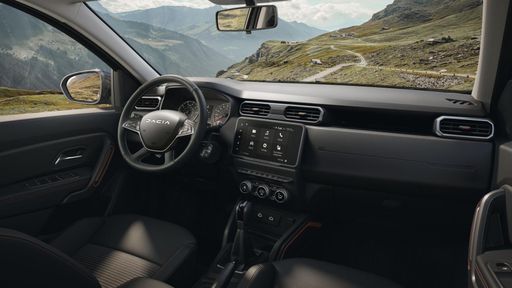
The Dacia Duster is a straightforward, budget-friendly SUV that prioritizes practicality and value over flashy features. Its rugged styling and simple, roomy interior make it a sensible choice for buyers who want capable everyday transport without paying for extras they won’t use.

details

Honda CR-V

The Honda CR-V blends sensible practicality with a polished feel, offering roomy interiors and a confident ride that keeps commutes and weekend escapes equally comfortable. Its unshowy styling and reliable reputation make it a smart, low‑drama choice for buyers who want versatility without fuss — the kind of car that quietly makes everyday life a little easier.

details
Dacia Duster
Honda CR-V

Costs and Consumption

Price
16,300 - 24,900 £
Price
42,800 - 52,100 £
Consumption L/100km
4.7 - 7.6 L/100km
Consumption L/100km
2.6 - 6.7 L/100km
Consumption kWh/100km
-
Consumption kWh/100km
-
Electric Range
-
Electric Range
78 km
Battery Capacity
-
Battery Capacity
-
co2
107 - 140 g/km
co2
59 - 152 g/km
Fuel tank capacity
-
Fuel tank capacity
-

Dimensions and Body

Body Type
SUV
Body Type
SUV
Seats
5
Seats
5
Doors
-
Doors
-
Curb weight
1,377 - 1,559 kg
Curb weight
1,821 - 1,988 kg
Trunk capacity
348 - 517 L
Trunk capacity
579 - 617 L
Length
-
Length
-
Width
1,813 mm
Width
1,866 mm
Height
-
Height
-
Max trunk capacity
-
Max trunk capacity
-
Payload
402 - 453 kg
Payload
439 - 475 kg

Engine and Performance

Engine Type
Petrol MHEV, Full Hybrid, LPG
Engine Type
Full Hybrid, Plugin Hybrid
Transmission
Manuel, Automatic
Transmission
Automatic
Transmission Detail
Manual Gearbox, Automated Manual, Dual-Clutch Automatic
Transmission Detail
CVT
Drive Type
Front-Wheel Drive, All-Wheel Drive
Drive Type
Front-Wheel Drive, All-Wheel Drive
Power HP
115 - 158 HP
Power HP
184 HP
Acceleration 0-100km/h
9.4 - 11.7 s
Acceleration 0-100km/h
9 - 9.5 s
Max Speed
-
Max Speed
-
Torque
190 - 230 Nm
Torque
335 Nm
Number of Cylinders
3 - 4
Number of Cylinders
4
Power kW
84 - 116 kW
Power kW
135 kW
Engine capacity
1,199 - 1,789 cm3
Engine capacity
1,993 cm3

General

Model Year
2,025 - 2,026
Model Year
2025
CO2 Efficiency Class
D, C
CO2 Efficiency Class
D, E, B
Brand
Dacia
Brand
Honda
DriveDuel uses data analysis and artificial intelligence to evaluate vehicle data and create content. Content is regularly reviewed and improved. The displayed prices are estimates based on German list prices, adjusted to the respective country’s VAT. Country-specific registration taxes are not included. This information is not legally binding.