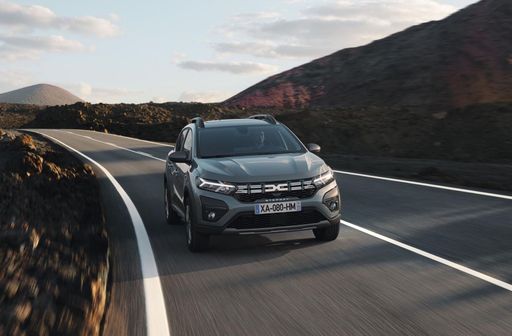
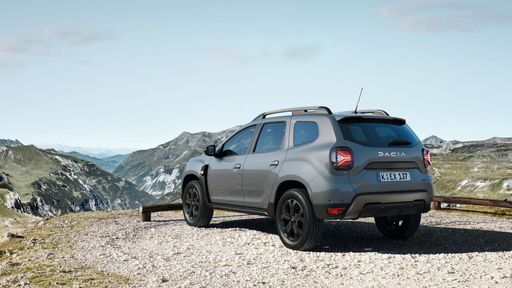
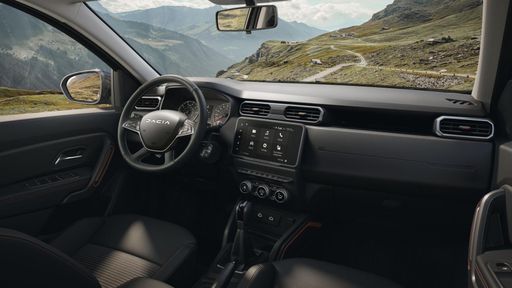
@ Dacia / Renault Group Media
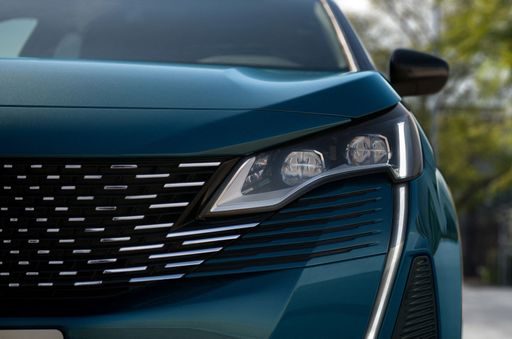
@ Peugeot / Stellantis Media
VS

Dacia Duster vs Peugeot 5008 – Which model is better for everyday use?

Both models have their strengths – but which one suits you more?
Compare performance, efficiency, price and space directly: Dacia Duster or Peugeot 5008?

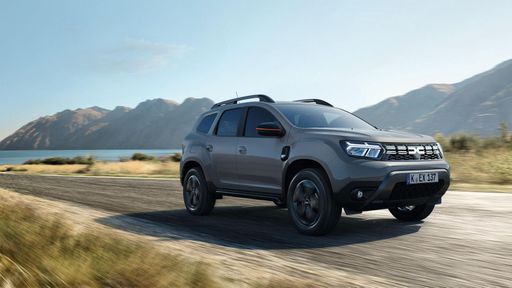
Duster @ Dacia / Renault Group Media

A Clash of Versatility: Dacia Duster vs. Peugeot 5008

In the world of compact SUVs, the Dacia Duster and Peugeot 5008 stand out for their unique blend of practicality, features, and driving experience. Both vehicles are appealing options for families and adventure seekers alike, yet they bring distinct characteristics to the table. This comparison delves into the technical aspects and innovations offered by each model, helping you decide which SUV fits your lifestyle best.
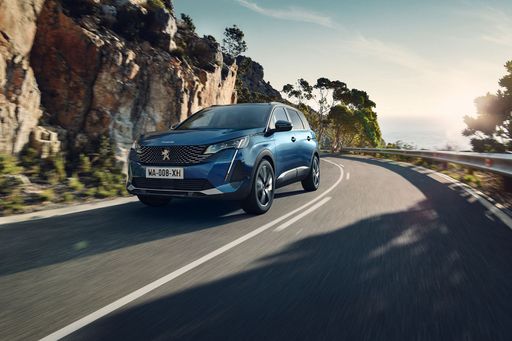
5008 @ Peugeot / Stellantis Media

Design & Dimensions

The Dacia Duster is a robust, compact SUV, measuring 4343 mm in length and 1813 mm in width. Its height ranges from 1656 mm to 1661 mm, providing a commanding view of the road while maintaining a compact footprint that’s easy to maneuver. In contrast, the Peugeot 5008 stretches longer at 4791 mm and wider at 1895 mm, and its height of 1694 mm enhances its road presence and interior spaciousness.

Duster @ Dacia / Renault Group Media

Powertrain Options

Under the hood, the Duster offers a range of engine types including LPG, full hybrid, and petrol MHEV options. Power outputs range from 91 to 140 HP with torque figures reaching up to 230 Nm, delivering a commendable driving experience. Transmission choices include both manual and automated gearboxes, with consumption figures as efficient as 5 liters per 100 km.

On the other hand, the Peugeot 5008 takes performance up a notch with its powerful petrol MHEV, plug-in hybrid, and electric options. Power outputs start at 136 HP and can soar up to 231 HP, with impressive torque reaching up to 345 Nm. The 5008 features an automatic transmission and delivers outstanding fuel efficiency, hitting as low as 1 liter per 100 km in hybrid mode.

5008 @ Peugeot / Stellantis Media

Acceleration & Speed

The Dacia Duster is capable of accelerating from 0-100 km/h in as little as 9.9 seconds, underlining its efficient engineering. It also boasts a top speed of 180 km/h, making it suitable for highway adventures. In comparison, the Peugeot 5008 shines with acceleration times as quick as 8.8 seconds, with top speeds ranging between 170 km/h and 220 km/h, depending on the engine configuration.

Duster @ Dacia / Renault Group Media

Interior Space & Comfort

Comfort is vital for family travel, and the Dacia Duster offers a practical interior with a max trunk capacity of 517 liters. It seats five, allowing plenty of room for passengers and cargo alike. However, the Peugeot 5008 takes the lead with a flexible seating configuration for up to seven passengers and an expansive trunk capacity of 748 liters, catering to both family and leisure needs seamlessly.

5008 @ Peugeot / Stellantis Media

Innovative Features & Technology

Both SUVs come equipped with modern amenities, yet the Peugeot 5008 might edge out the Duster when it comes to innovations. The 5008 is fitted with advanced driver-assistance systems, touchscreen infotainment, and high-grade interior materials that enhance comfort and connectivity. Furthermore, its hybrid and electric versions feature substantial battery capacities, with electric ranges reaching up to 664 km.

The Duster, while simpler, does not fall short in offering practical features such as keyless entry, cruise control, and a user-friendly infotainment system, making it an excellent option for budget-conscious buyers seeking functionality without excess.

Duster @ Dacia / Renault Group Media

Efficiency & Emissions

Fuel efficiency is another important aspect to consider. The Duster's engine lineup offers impressive consumption rates, with the most efficient variants consuming just 5 liters per 100 km, along with CO2 emissions as low as 114 g/km. The Peugeot 5008 shines in this department with its hybrid and electric variants; the electric model emits zero emissions, while hybrid versions can achieve CO2 outputs as low as 23 g/km, reflecting a continual shift towards more sustainable practices.

5008 @ Peugeot / Stellantis Media

The Verdict

Choosing between the Dacia Duster and the Peugeot 5008 ultimately comes down to individual needs and preferences. If practicality, efficiency, and budget-friendly features are your primary concerns, the Duster serves as a robust option. However, if you're in the market for a spacious, feature-rich family vehicle with advanced technological innovations and hybrid capabilities, the Peugeot 5008 might be worth the investment.

Whichever you choose, both vehicles embody the spirit of adventure and versatility in the SUV segment, ensuring you’re well-equipped for any journey ahead.

Here’s where it gets real: The technical differences in detail

Costs and Efficiency:

Price and efficiency are key factors when choosing a car – and this is often where the real differences emerge.

Dacia Duster has a decisively advantage in terms of price – it starts at 16300 £, while the Peugeot 5008 costs 37600 £. That’s a price difference of around 21317 £.

Fuel consumption also shows a difference: Peugeot 5008 manages with 2.70 L and is therefore decisively more efficient than the Dacia Duster with 4.70 L. The difference is about 2 L per 100 km.

Engine and Performance:

Power, torque and acceleration are the classic benchmarks for car enthusiasts – and here, some clear differences start to show.

When it comes to engine power, the Peugeot 5008 has a significantly edge – offering 325 HP compared to 158 HP. That’s roughly 167 HP more horsepower.

In acceleration from 0 to 100 km/h, the Peugeot 5008 is convincingly quicker – completing the sprint in 6.50 s, while the Dacia Duster takes 9.40 s. That’s about 2.90 s faster.

In terms of top speed, the Peugeot 5008 performs to a small extent better – reaching 220 km/h, while the Dacia Duster tops out at 180 km/h. The difference is around 40 km/h.

There’s also a difference in torque: Peugeot 5008 pulls significantly stronger with 511 Nm compared to 230 Nm. That’s about 281 Nm difference.

Space and Everyday Use:

Beyond pure performance, interior space and usability matter most in daily life. This is where you see which car is more practical and versatile.

Seats: Peugeot 5008 offers distinct more seating capacity – 7 vs 5.

In curb weight, Dacia Duster is clearly perceptible lighter – 1377 kg compared to 1700 kg. The difference is around 323 kg.

In terms of boot space, the Dacia Duster offers distinct more room – 517 L compared to 348 L. That’s a difference of about 169 L.

In maximum load capacity, the Peugeot 5008 performs distinct better – up to 2232 L, which is about 623 L more than the Dacia Duster.

When it comes to payload, Peugeot 5008 distinct takes the win – 640 kg compared to 453 kg. That’s a difference of about 187 kg.

Who wins the race?

The Peugeot 5008 proves to be outperforms in nearly all aspects and therefore becomes our DriveDuel Champion!
Peugeot 5008 is the better all-rounder in this comparison.

from about £37,600
5008 @ Peugeot / Stellantis Media

Peugeot 5008

  • Engine Type : Electric, Petrol MHEV, Plugin Hybrid
  • Transmission : Automatic
  • Drive Type : Front-Wheel Drive, All-Wheel Drive
  • Power HP : 145 - 325 HP
  • Consumption L/100km : 2.7 - 5.6 L
  • Consumption kWh/100km : 17.8 - 18.6 kWh
  • Electric Range : 78 - 669 km

Dacia Duster

5 (1)
rate

The Dacia Duster is a no-nonsense compact SUV that delivers rugged practicality and surprisingly comfortable everyday driving without fuss. It might not win any beauty contests, but its honest design, easy-to-live-with cabin and tough attitude make it a smart pick for buyers who want reliable transport without luxury frills.

details

Peugeot 5008

The Peugeot 5008 blends Peugeot's sharp design with the space and versatility families actually need, wrapping clever packaging and a premium-feeling cabin in a crisp, SUV-like silhouette. It drives with more poise than you'd expect from a people carrier, serves up practical touches and flexible seating for everyday chaos, and still looks good when parked outside the school gates.

details
Dacia Duster
Peugeot 5008
Duster @ Dacia / Renault Group Media
5008 @ Peugeot / Stellantis Media

Costs and Consumption

Price
16300 - 24900 £
Price
37600 - 54200 £
Consumption L/100km
4.7 - 7.5 L
Consumption L/100km
2.7 - 5.6 L
Consumption kWh/100km
-
Consumption kWh/100km
17.8 - 18.6 kWh
Electric Range
-
Electric Range
78 - 669 km
Battery Capacity
0.60 kWh
Battery Capacity
0.4 - 96.9 kWh
co2
107 - 124 g/km
co2
0 - 127 g/km
Fuel tank capacity
50 L
Fuel tank capacity
55 L

Dimensions and Body

Body Type
SUV
Body Type
SUV
Seats
5
Seats
7
Doors
5
Doors
5
Curb weight
1377 - 1455 kg
Curb weight
1700 - 2344 kg
Trunk capacity
348 - 517 L
Trunk capacity
294 - 348 L
Length
4343 mm
Length
4791 mm
Width
1813 mm
Width
1895 mm
Height
1656 - 1659 mm
Height
1694 mm
Max trunk capacity
1414 - 1609 L
Max trunk capacity
2178 - 2232 L
Payload
450 - 453 kg
Payload
596 - 640 kg

Engine and Performance

Engine Type
Petrol MHEV, Full Hybrid, LPG
Engine Type
Electric, Petrol MHEV, Plugin Hybrid
Transmission
Manuel, Automatic
Transmission
Automatic
Transmission Detail
Manual Gearbox, Automated Manual, Dual-Clutch Automatic
Transmission Detail
Reduction Gearbox, Dual-Clutch Automatic
Drive Type
Front-Wheel Drive, All-Wheel Drive
Drive Type
Front-Wheel Drive, All-Wheel Drive
Power HP
115 - 158 HP
Power HP
145 - 325 HP
Acceleration 0-100km/h
9.4 - 11.6 s
Acceleration 0-100km/h
6.5 - 10.2 s
Max Speed
180 km/h
Max Speed
170 - 220 km/h
Torque
190 - 230 Nm
Torque
230 - 511 Nm
Number of Cylinders
3 - 4
Number of Cylinders
3 - 4
Power kW
84 - 116 kW
Power kW
107 - 239 kW
Engine capacity
1199 - 1789 cm3
Engine capacity
1199 - 1598 cm3

General

Model Year
2025
Model Year
2024 - 2025
CO2 Efficiency Class
D, C
CO2 Efficiency Class
A, D, B
Brand
Dacia
Brand
Peugeot
What drivetrain options does the Dacia Duster have?

The Dacia Duster is offered with Front-Wheel Drive or All-Wheel Drive.

The prices and data displayed are estimates based on German list prices and may vary by country. This information is not legally binding.