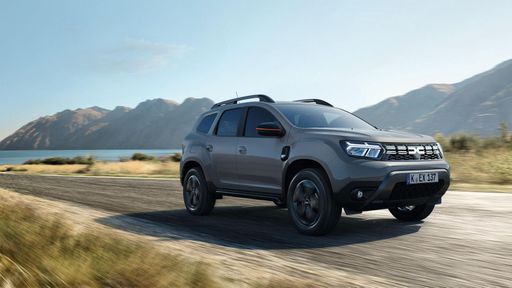
@ Dacia / Renault Group Media
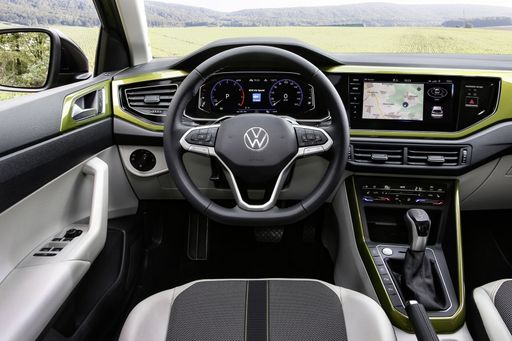
@ Volkswagen AG / VW Media
VS

Dacia Duster vs VW Taigo – Which one offers the better deal?

Two cars, one duel: Dacia Duster meets VW Taigo.
Which one wins in performance, efficiency and value for money? Find out now!

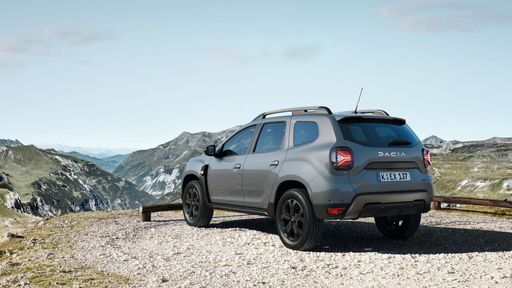
Duster @ Dacia / Renault Group Media

Street Swagger vs. Rugged Charm

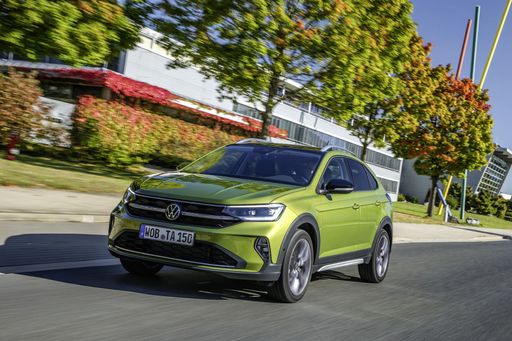
The visual argument between the two is immediate: the Dacia Duster wears its rough-and-ready persona like a badge of honesty, while the VW Taigo opts for a sleeker, city-friendly silhouette that leans into modern style. One feels built to shrug off scratches and weekend adventures, the other to look good in the office carpark and on a designer coffee run. Both have presence, but they speak to different kinds of pride of ownership.
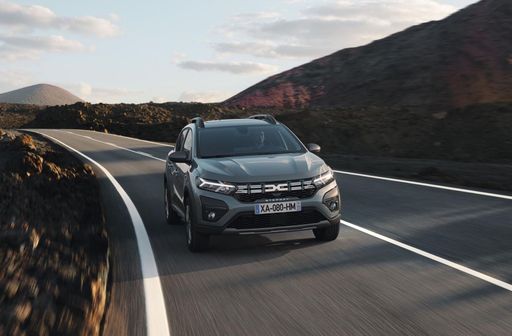
Taigo @ Volkswagen AG / VW Media

Daily Commuter Comfort

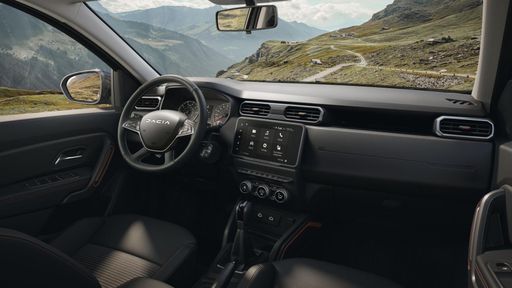
Get behind the wheel and the differences become practical: one prioritises simple, straightforward ergonomics and easy serviceability, the other favours a refined driving position and more considered switchgear. Visibility, seat comfort and ease of use matter most in the weekday grind, and each car makes sensible compromises to keep you sane during rush hour. Pick the cabin vibe that matches your commute and weekly routine.

Duster @ Dacia / Renault Group Media

Family Duties and Load-Lugging

When the weekend calls for bags, bikes or overflowing shopping, cargo flexibility shows its value: one model presents a rugged, no-nonsense approach to hauling, while the other arranges its space with a neater, more urban-minded layout. Rear-seat comfort and packaging are adequate in both, but families who juggle strollers and sports gear will notice how each car’s layout influences day-to-day ease. It’s about how quickly you can transform the interior to suit a spontaneous plan.

Taigo @ Volkswagen AG / VW Media

On the Move: Character and Composure

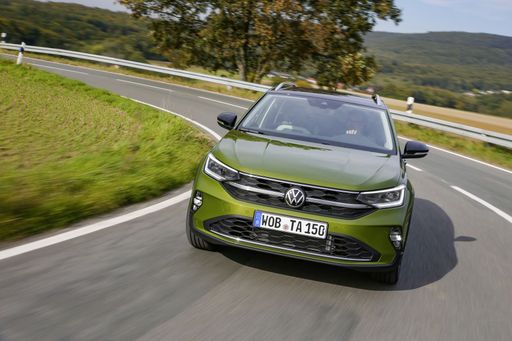
The way these cars behave on roads tells their true stories: the Duster tends to feel planted and willing to soak up less-than-perfect surfaces, whereas the Taigo leans toward composed handling and a more buttoned-up highway demeanour. Steering weight, body control and ride tuning create distinct personalities — one rough-and-ready, the other tailored and a touch urbane. Choose the temperament that suits your favourite routes.

Duster @ Dacia / Renault Group Media

Cabin Life and Practical Luxury

Inside, material choices and technology set the mood: one cabin favours durability and straightforward menus, the other layers in softer surfaces and a more modern infotainment layout that feels a step up in refinement. Both will get you comfortably from A to B, but the perceived quality and noise levels differ enough to influence long runs and how tired you feel at the end of the day. Small details like seat bolstering and tactile feedback become surprisingly persuasive over time.

Taigo @ Volkswagen AG / VW Media

Ownership: Value, Running and Peace of Mind

Beyond the brochure, ownership boils down to service networks, expected durability and how much you’re willing to trade for brand cachet. One choice makes clever compromises to keep running costs predictable and servicing straightforward, while the other leans on a more premium image that can translate into a different ownership experience. Your wallet and patience will determine which route feels smarter over the long haul.

Duster @ Dacia / Renault Group Media

Who Should Drive Which?

If your life includes gravel tracks, DIY projects and a healthy dose of practicality, you’ll appreciate the Duster’s straightforward honesty; if your priorities tilt toward urban elegance, a quieter cabin and sharper street manners, the Taigo slots neatly into that slot. Commuters, small families and style-conscious buyers will each find clear reasons to lean one way or the other, depending on what daily habits they prioritise. In short, match the car’s character to your lifestyle and the choice stops feeling difficult.

Taigo @ Volkswagen AG / VW Media

Ready for the Verdict?

We’ve peeled back styling, usability, comfort and ownership to give you a true sense of what living with each car is like — now it’s time to see which one takes the crown in our full DriveDuel write-up. Keep reading to find out which model will be crowned the DriveDuel Champion afterwards.

Here’s where it gets real: The technical differences in detail

Costs and Efficiency:

Price and efficiency are often the first things buyers look at. Here it becomes clear which model has the long-term edge – whether at the pump, the plug, or in purchase price.

Dacia Duster has a clearly perceptible advantage in terms of price – it starts at 16300 £, while the VW Taigo costs 19600 £. That’s a price difference of around 3347 £.

Fuel consumption also shows a difference: Dacia Duster manages with 4.70 L and is therefore to a small extent more efficient than the VW Taigo with 5.30 L. The difference is about 0.60 L per 100 km.

Engine and Performance:

Power, torque and acceleration are the classic benchmarks for car enthusiasts – and here, some clear differences start to show.

When it comes to engine power, the Dacia Duster has a barely noticeable edge – offering 158 HP compared to 150 HP. That’s roughly 8 HP more horsepower.

In acceleration from 0 to 100 km/h, the VW Taigo is slightly quicker – completing the sprint in 8.20 s, while the Dacia Duster takes 9.40 s. That’s about 1.20 s faster.

In terms of top speed, the VW Taigo performs slightly better – reaching 212 km/h, while the Dacia Duster tops out at 180 km/h. The difference is around 32 km/h.

There’s also a difference in torque: VW Taigo pulls hardly perceptible stronger with 250 Nm compared to 230 Nm. That’s about 20 Nm difference.

Space and Everyday Use:

Whether family car or daily driver – which one offers more room, flexibility and comfort?

Both vehicles offer seating for 5 people.

In curb weight, VW Taigo is slightly lighter – 1229 kg compared to 1377 kg. The difference is around 148 kg.

In terms of boot space, the Dacia Duster offers somewhat more room – 517 L compared to 440 L. That’s a difference of about 77 L.

In maximum load capacity, the Dacia Duster performs clearly perceptible better – up to 1609 L, which is about 387 L more than the VW Taigo.

When it comes to payload, VW Taigo hardly perceptible takes the win – 457 kg compared to 453 kg. That’s a difference of about 4 kg.

Who wins the race?

The Dacia Duster proves to be dominates this comparison and therefore becomes our DriveDuel Champion!
Dacia Duster is the better all-rounder in this comparison.

from about £16,300
Duster @ Dacia / Renault Group Media

Dacia Duster

  • Engine Type : Petrol MHEV, Full Hybrid, LPG
  • Transmission : Manuel, Automatic
  • Drive Type : Front-Wheel Drive, All-Wheel Drive
  • Power HP : 115 - 158 HP
  • Consumption L/100km : 4.7 - 7.5 L

Dacia Duster

5 (1)
rate

The Dacia Duster is a no-nonsense compact SUV that delivers rugged practicality and surprisingly comfortable everyday driving without fuss. It might not win any beauty contests, but its honest design, easy-to-live-with cabin and tough attitude make it a smart pick for buyers who want reliable transport without luxury frills.

details

VW Taigo

5 (1)
rate

The VW Taigo brings coupe-like flair to the compact crossover scene with sharp styling and an interior that punches above its price, feeling smarter than you’d expect. It’s an easygoing daily companion that balances comfort and practicality with a playful wink, perfect for city drivers who want something livelier than a regular hatchback.

details
Dacia Duster
VW Taigo
Duster @ Dacia / Renault Group Media
Taigo @ Volkswagen AG / VW Media

Costs and Consumption

Price
16300 - 24900 £
Price
19600 - 31300 £
Consumption L/100km
4.7 - 7.5 L
Consumption L/100km
5.3 - 5.8 L
Consumption kWh/100km
-
Consumption kWh/100km
-
Electric Range
-
Electric Range
-
Battery Capacity
0.60 kWh
Battery Capacity
-
co2
107 - 124 g/km
co2
120 - 132 g/km
Fuel tank capacity
50 L
Fuel tank capacity
40 L

Dimensions and Body

Body Type
SUV
Body Type
SUV
Seats
5
Seats
5
Doors
5
Doors
5
Curb weight
1377 - 1455 kg
Curb weight
1229 - 1302 kg
Trunk capacity
348 - 517 L
Trunk capacity
440 L
Length
4343 mm
Length
4266 mm
Width
1813 mm
Width
1757 mm
Height
1656 - 1659 mm
Height
1518 mm
Max trunk capacity
1414 - 1609 L
Max trunk capacity
1222 L
Payload
450 - 453 kg
Payload
448 - 457 kg

Engine and Performance

Engine Type
Petrol MHEV, Full Hybrid, LPG
Engine Type
Petrol
Transmission
Manuel, Automatic
Transmission
Manuel, Automatic
Transmission Detail
Manual Gearbox, Automated Manual, Dual-Clutch Automatic
Transmission Detail
Manual Gearbox, Dual-Clutch Automatic
Drive Type
Front-Wheel Drive, All-Wheel Drive
Drive Type
Front-Wheel Drive
Power HP
115 - 158 HP
Power HP
95 - 150 HP
Acceleration 0-100km/h
9.4 - 11.6 s
Acceleration 0-100km/h
8.2 - 11.1 s
Max Speed
180 km/h
Max Speed
184 - 212 km/h
Torque
190 - 230 Nm
Torque
175 - 250 Nm
Number of Cylinders
3 - 4
Number of Cylinders
3 - 4
Power kW
84 - 116 kW
Power kW
70 - 110 kW
Engine capacity
1199 - 1789 cm3
Engine capacity
999 - 1498 cm3

General

Model Year
2025
Model Year
2024 - 2025
CO2 Efficiency Class
D, C
CO2 Efficiency Class
D
Brand
Dacia
Brand
VW
What drivetrain options does the Dacia Duster have?

The Dacia Duster is offered with Front-Wheel Drive or All-Wheel Drive.

The prices and data displayed are estimates based on German list prices and may vary by country. This information is not legally binding.