VS

Dacia Jogger vs Citroen Berlingo comparison

Compare performance (158 HP vs 136 HP), boot space and price (15,400 £ vs 20,300 £ ) at a glance. Find out which car is the better choice for you – Dacia Jogger or Citroen Berlingo?

Dacia Jogger vs Citroen Berlingo: Key differences

Dacia Jogger

4.4 (2 Reviews)
rate
  • noticeably cheaper
  • a bit more power
  • slightly more efficient
  • markedly quicker 0–100 km/h
  • a bit lighter
details

Citroen Berlingo

  • clearly more trunk space
details

All details on performance, efficiency, range and trunk space can be found in the technical comparison below – including user reviews for both models.

By Achim Sedelmaier

Jogger

The automotive market is ever-evolving, and when it comes to practicality and affordability, few vehicles stand out quite like the Citroën Berlingo and Dacia Jogger. Both models showcase a blend of functionality, comfort, and technology, appealing to families and businesses alike. This comparison delves into their technical specifications, innovations, and overall performance to see how they measure against each other.

Berlingo

Design and Dimensions

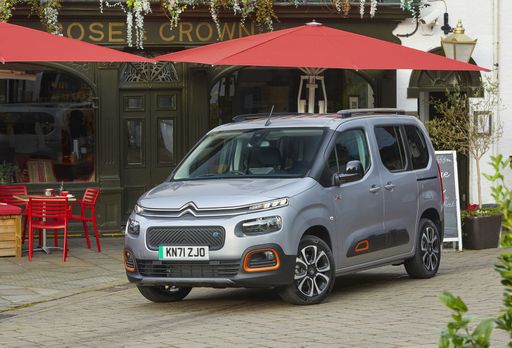
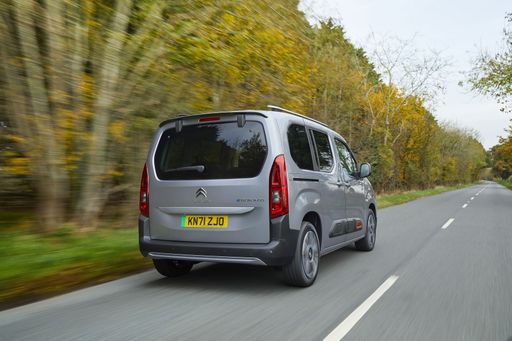
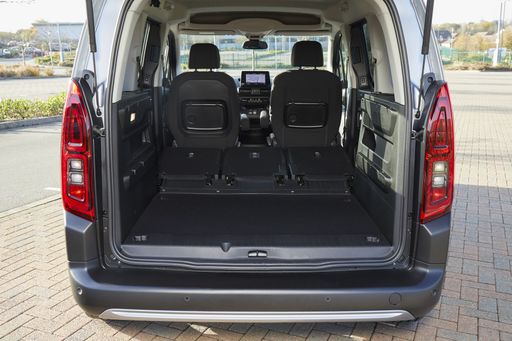
The Citroën Berlingo boasts a high roof wagon body style, providing ample headroom and a spacious interior. With a length that can reach up to 4753 mm, a width of 1848 mm, and a height of 1849 mm, the Berlingo is designed for versatility, offering a trunk capacity ranging from 775 to 1050 liters.

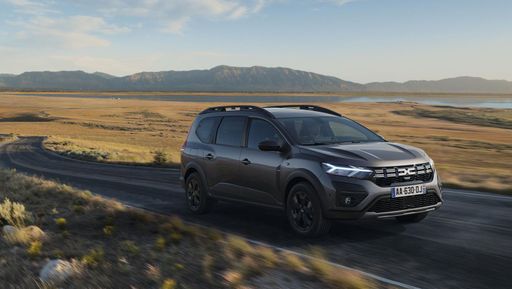
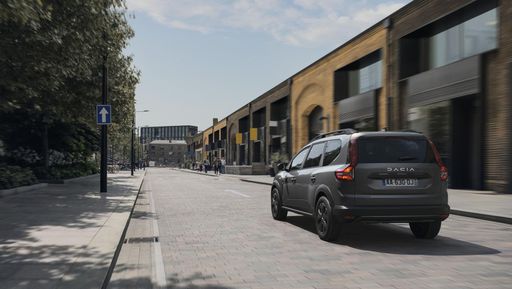
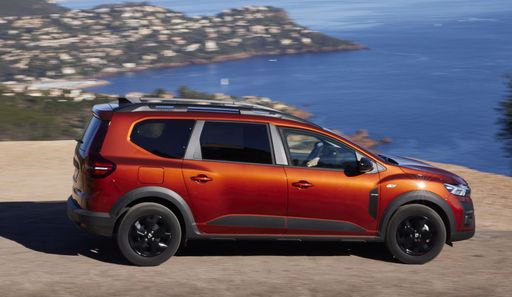
On the other hand, the Dacia Jogger features a more compact MPV design with a length of 4547 mm, a width of 1784 mm, and a height of 1674 mm. Its trunk capacity is more modest, ranging between 607 to 160 liters, but it can accommodate 5 or 7 seats, making it ideal for larger families.

Jogger

Engine Options and Performance

The Citroën Berlingo offers a diverse range of engine types, including diesel, petrol, and electric options. The petrol engines provide power outputs ranging from 102 to 136 HP, while the electric variant can cover an impressive range of up to 345 km with a battery capacity of 46 kWh. The consumption ranges from 5.3 to 6.9 L/100km for fossil fuels, with an electric consumption of 18 kWh/100km.

Conversely, the Dacia Jogger also offers a variety of engines, including full hybrid, LPG, and petrol units. The power figures range from 91 to 140 HP, giving it a competitive edge in terms of power-to-weight ratio. Its fuel consumption is noteworthy, with figures between 4.7 and 7.7 L/100km, which may appeal to eco-conscious consumers.

Berlingo

Transmission and Drivetrain

Both vehicles focus on front-wheel drive systems, ensuring stability and efficiency. The Citroën Berlingo is equipped with manual and automatic transmission options, including a reduction gearbox for better traction and control. This feature can be particularly useful for businesses requiring heavy loads or families embarking on adventures that necessitate a robust vehicle.

The Dacia Jogger, while also offering manual and automatic gearboxes, leans towards a simpler setup with efficient power delivery, making it an attractive option for those seeking a no-fuss driving experience.

Jogger

Innovative Features and Technology

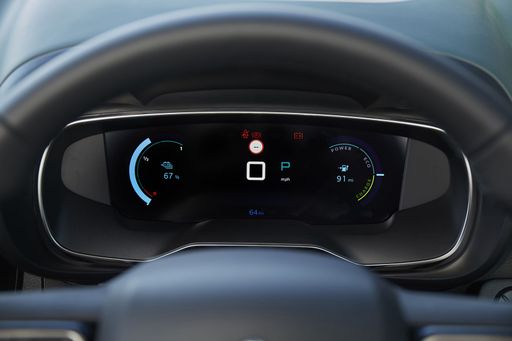
When it comes to innovation, both models impress. The Citroën Berlingo integrates various high-tech features, including a touchscreen infotainment system with smartphone connectivity, multiple USB ports, and a host of driver-assistance systems designed to enhance safety.

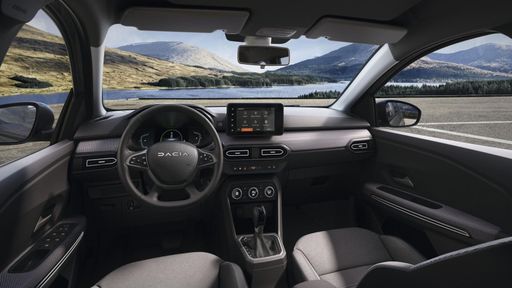
In comparison, the Dacia Jogger doesn’t lag behind, presenting its own lineup of tech-savvy features such as a digital dashboard, smartphone integration, and effective safety measures. Its intuitive layout ensures that both drivers and passengers remain comfortable and connected.

Berlingo

Environmental Impact

The Citroën Berlingo shows a commitment to reducing its carbon footprint, achieving CO2 emissions as low as 138 g/km for petrol variants and offering an electric option that produces zero emissions. The Berlingo ranges into efficiency classes E and A depending on the engine choice, appealing to a variety of consumers.

The Dacia Jogger takes environmental responsibility seriously, with CO2 emissions ranging from 105 to 137 g/km for its petrol and LPG variants, situating itself within classes C and D. With its emphasis on fuel efficiency, the Jogger provides a compelling choice for buyers looking to minimize their ecological impact.

Jogger

Final Thoughts

In conclusion, both the Citroën Berlingo and Dacia Jogger offer their unique advantages. The Berlingo stands out with its diverse engine range, spacious interior, and advanced tech features, making it a potential leader for those needing maximum versatility. Meanwhile, the Dacia Jogger shines through its fuel efficiency, affordability, and practicality, appealing more to budget-conscious families or individuals.

Your choice will ultimately depend on your specific needs—whether it's the spaciousness and flexibility of the Berlingo or the practicality and efficiency of the Jogger, both models promise to deliver on their core promise of comfort and utility.

Here’s where it gets real: The technical differences in detail

Jogger

Costs and Efficiency:

Price and efficiency are key factors when choosing a car – and this is often where the real differences emerge.

Dacia Jogger is noticeably cheaper – starting at 15,400 £ , while the Citroen Berlingo costs 20,300 £ . That’s a price difference of around 4,842 £.

Fuel consumption also shows a difference: the Dacia Jogger uses 4.5 L/100km and is slightly more efficient than the Citroen Berlingo with 5.3 L/100km. The difference is about 0.8 L/100km.

Berlingo

Engine and Performance:

Under the bonnet, it becomes clear which model is tuned for sportiness and which one takes the lead when you hit the accelerator.

When it comes to engine power, the Dacia Jogger offers a bit more power – delivering 158 HP compared to 136 HP. That’s roughly 22 HP more horsepower.

When accelerating from 0 to 100 km/h, the Dacia Jogger is markedly quicker – completing the sprint in 8.9 s, while the Citroen Berlingo takes 11.2 s. That’s about 2.3 s quicker.

There’s also a difference in torque: the Citroen Berlingo delivers markedly more torque with 300 Nm compared to 200 Nm. That’s about 100 Nm more.

Jogger

Space and Everyday Use:

Beyond pure performance, interior space and usability matter most in daily life. This is where you see which car is more practical and versatile.

Both vehicles offer seating for 7 people.

In terms of curb weight, Dacia Jogger is a bit lighter – 1,268 kg compared to 1,476 kg. The difference is around 208 kg.

Looking at boot space, the Citroen Berlingo offers clearly more boot space – 1,050 L compared to 607 L. That’s a difference of about 443 L.

When it comes to payload, the Citroen Berlingo carries markedly more – 840 kg compared to 559 kg. That’s a difference of about 281 kg.

Who wins the race in the data check?

The Citroen Berlingo holds a decisive overall lead in the objective data comparison.
This result only shows which model scores more points on paper – not which of the two cars feels right for you.

from £20,300
Berlingo

Citroen Berlingo

  • Engine Type : Electric, Diesel, Petrol
  • Transmission : Automatic, Manuel
  • Drive Type : Front-Wheel Drive
  • Power HP : 102 - 136 HP
  • Consumption L/100km : 5.3 - 6.3 L/100km
  • Consumption kWh/100km : 18 - 18.7 kWh/100km
  • Electric Range : 334 - 343 km
Dacia Jogger
Citroen Berlingo

Costs and Consumption

View detailed analysis

Engine and Performance

View detailed analysis

Dimensions and Body

View detailed analysis

Dacia Jogger

The Dacia Jogger is a no-nonsense family mover that stretches the idea of value with cavernous practicality and flexible space, perfect for buyers who need a sensible, everyday Swiss Army knife on wheels. It doesn’t try to be glamorous — instead it wins hearts with cheerful thrift, durable materials and honest engineering, giving you useful transport without the pretence.

details

Citroen Berlingo

The Citroën Berlingo is a charming, practical MPV that blends everyday versatility with a comfy ride and clever storage tricks that make life easier for families and small businesses. It won’t star in a sports-car ad, but its sensible layout, enormous load flexibility and friendly demeanor mean it often wins on plain common sense — perfect for school runs, weekend escapes and the odd IKEA mission.

details
Dacia Jogger
Citroen Berlingo

Costs and Consumption

Price
15,400 - 23,500 £
Price
20,300 - 34,900 £
Consumption L/100km
4.5 - 7.6 L/100km
Consumption L/100km
5.3 - 6.3 L/100km
Consumption kWh/100km
-
Consumption kWh/100km
18 - 18.7 kWh/100km
Electric Range
-
Electric Range
334 - 343 km
Battery Capacity
-
Battery Capacity
-
co2
103 - 138 g/km
co2
0 - 151 g/km
Fuel tank capacity
-
Fuel tank capacity
-

Dimensions and Body

Body Type
MPV
Body Type
High Roof Estate
Seats
5 - 7
Seats
5 - 7
Doors
-
Doors
-
Curb weight
1,268 - 1,463 kg
Curb weight
1,476 - 1,922 kg
Trunk capacity
160 - 607 L
Trunk capacity
775 - 1,050 L
Length
-
Length
-
Width
1,784 mm
Width
1,848 mm
Height
-
Height
-
Max trunk capacity
-
Max trunk capacity
-
Payload
384 - 559 kg
Payload
509 - 840 kg

Engine and Performance

Engine Type
Petrol, Full Hybrid, LPG
Engine Type
Electric, Diesel, Petrol
Transmission
Manuel, Automatic
Transmission
Automatic, Manuel
Transmission Detail
Manual Gearbox, Automatic Gearbox, Dual-Clutch Automatic
Transmission Detail
Reduction Gearbox, Manual Gearbox, Automatic Gearbox
Drive Type
Front-Wheel Drive
Drive Type
Front-Wheel Drive
Power HP
110 - 158 HP
Power HP
102 - 136 HP
Acceleration 0-100km/h
8.9 - 12 s
Acceleration 0-100km/h
11.2 - 14.1 s
Max Speed
-
Max Speed
-
Torque
190 - 200 Nm
Torque
205 - 300 Nm
Number of Cylinders
3 - 4
Number of Cylinders
3 - 4
Power kW
81 - 116 kW
Power kW
75 - 100 kW
Engine capacity
999 - 1,789 cm3
Engine capacity
1,199 - 1,499 cm3

General

Model Year
2025
Model Year
2,024 - 2,026
CO2 Efficiency Class
D, E, C
CO2 Efficiency Class
A, E
Brand
Dacia
Brand
Citroen
DriveDuel uses data analysis and artificial intelligence to evaluate vehicle data and create content. Content is regularly reviewed and improved. The displayed prices are estimates based on German list prices, adjusted to the respective country’s VAT. Country-specific registration taxes are not included. This information is not legally binding.