VS

Dacia Jogger vs Vauxhall Astra Sports Tourer comparison

Compare performance (158 HP vs 196 HP), boot space and price (15,400 £ vs 30,000 £ ) at a glance. Find out which car is the better choice for you – Dacia Jogger or Vauxhall Astra Sports Tourer?

Dacia Jogger vs Vauxhall Astra Sports Tourer: Key differences

Dacia Jogger

4.4 (2 Reviews)
rate
  • substantially cheaper
  • slightly lighter
  • barely more trunk space
details

Vauxhall Astra Sports Tourer

4.4 (1 Reviews)
rate
  • a bit more power
  • considerably more efficient
  • moderately quicker 0–100 km/h
details

All details on performance, efficiency, range and trunk space can be found in the technical comparison below – including user reviews for both models.

By Achim Sedelmaier

Jogger

Comparing the Dacia Jogger and Opel Astra Sports Tourer: Two Distinct Approaches to Practicality

The automotive market continually evolves, with manufacturers striving to blend functionality, efficiency, and innovation. In this article, we compare two distinct vehicles—the Dacia Jogger and the Opel Astra Sports Tourer. Each model caters to different preferences and needs, making them noteworthy contenders in their respective segments.
Astra Sports Tourer

Design and Body Type

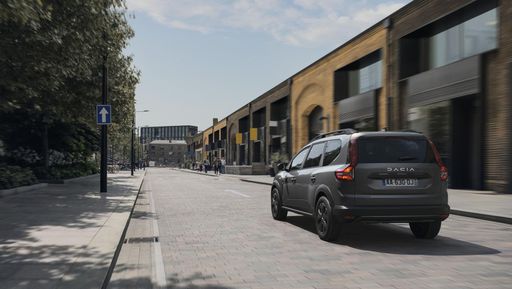
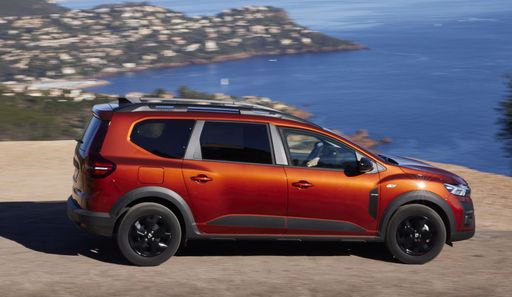
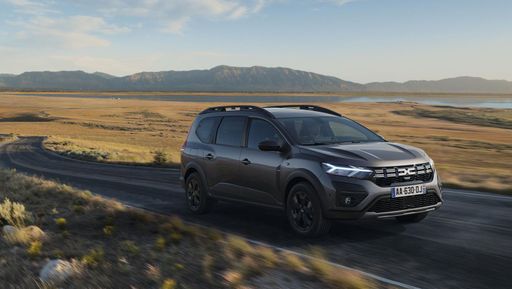
The Dacia Jogger is classified as a Multi-Purpose Vehicle (MPV), offering a versatile design intended for families and versatile use. With its spacious dimensions, measuring 4547 mm in length, 1784 mm in width, and 1674 mm in height, it guarantees ample interior space. The Jogger also impresses with its trunk capacity of 607 liters, ideal for carrying luggage or everyday gear.

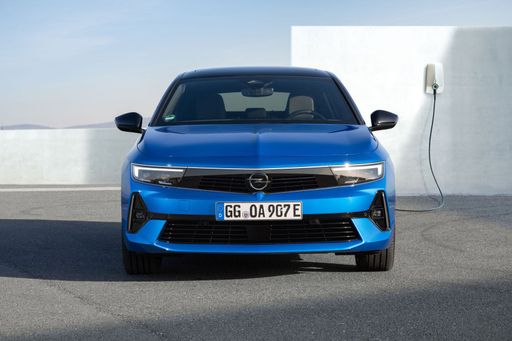
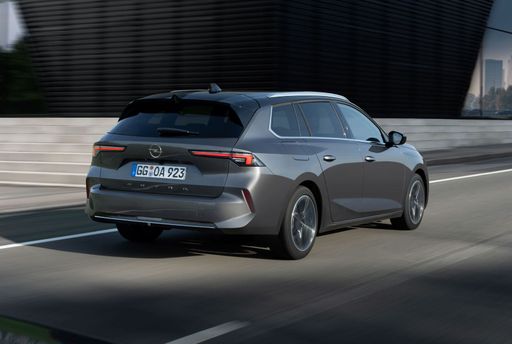
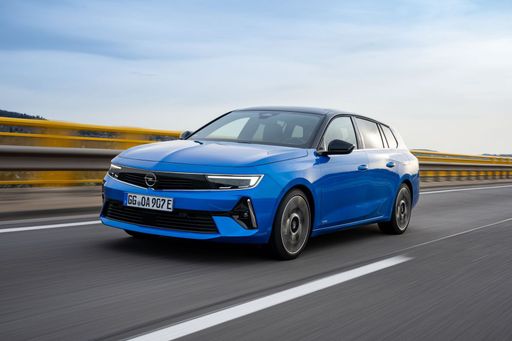
On the other hand, the Opel Astra Sports Tourer is a sleek station wagon that balances style with utility. Slightly longer at 4642 mm, and wider at 1860 mm, it presents a more streamlined profile. While its trunk capacity is marginally less at 597 liters, the Astra Sports Tourer emphasizes a sophisticated design, providing a premium feel that complements its practicality.

Jogger

Engine Options and Performance

When it comes to powertrains, the Dacia Jogger offers various options, including a full hybrid, LPG, and petrol engines, with power ranging from 91 to 140 HP. The acceleration time from 0-100 km/h spans between 9.8 to 13.2 seconds, depending on the engine choice. The vehicle's fuel efficiency varies from 4.7 to 7.7 L/100km, showcasing its capability as an economical choice for everyday driving.

In contrast, the Opel Astra Sports Tourer showcases a richer selection of engine types, from petrol and diesel to plug-in hybrid and electric variants, with power outputs ranging between 110 and 225 HP. Notably, the Astra's 0-100 km/h acceleration can be as quick as 7.6 seconds, reflecting its sporty pedigree. Not to forget, the Astra’s fuel consumption is competitive, with figures between 1.3 L/100km (electric) to approximately 5.8 L/100km (petrol), reinforcing its efficiency.

Astra Sports Tourer

Transmission and Drive Type

Both vehicles come equipped with front-wheel drive systems—a practical choice for stability and manageability. The Dacia Jogger offers options for both automatic and manual transmissions, while the Astra Sports Tourer’s advanced offerings include a dual-clutch automatic gearbox and a reduction gearbox, ensuring smooth gear shifts and improved performance.

Jogger

Innovative Features and Technology

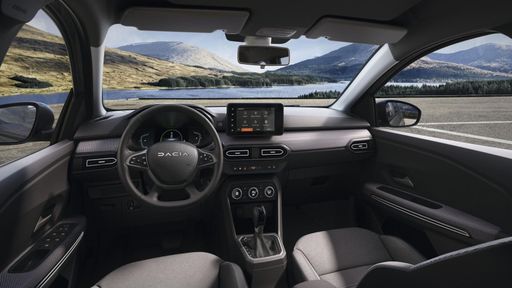
Dacia has transformed the affordability narrative with the Jogger by integrating essential technology options, ensuring a comfortable driving experience without compromising on cost. It attracts budget-conscious families or individuals looking without sacrificing necessary features.

The Astra Sports Tourer, however, leaps into the future with its innovative technologies. It incorporates cutting-edge driver-assistance systems and a well-designed infotainment suite that enhances driving connectivity. The available plug-in hybrid and electric variants also reflect Opel’s commitment to sustainability without sacrificing performance.

Astra Sports Tourer

Safety and Efficiency Ratings

Each model boasts respectable safety ratings, important for family-oriented consumers. While exact figures for crash tests may vary, both Dacia and Opel are committed to ensuring their vehicles meet or exceed safety standards in their class.

In terms of efficiency ratings, the Dacia Jogger typically falls within the CO2 efficiency classes of C and D. In contrast, the Astra Sports Tourer proudly features higher efficiency ratings, with models achieving class A ratings, especially in its electric variant, catering to environmentally conscious drivers.

Jogger

The Verdict: Which One Suits You Best?

Choosing between the Dacia Jogger and Opel Astra Sports Tourer boils down to prioritizing personal needs—versatility and space versus style and advanced technology. The Jogger is aimed at those seeking an economical, spacious family vehicle, while the Astra Sports Tourer targets buyers interested in a blend of practicality with a sporty edge and modern innovations.

Ultimately, both vehicles showcase their manufacturers' philosophies, offering respective strengths and appealing features to their targeted audiences. As the automotive landscape becomes more diverse, these models illustrate how choices continue to expand for consumers.

Here’s where it gets real: The technical differences in detail

Jogger

Costs and Efficiency:

Price and efficiency are key factors when choosing a car – and this is often where the real differences emerge.

Dacia Jogger is substantially cheaper – starting at 15,400 £ , while the Vauxhall Astra Sports Tourer costs 30,000 £ . That’s a price difference of around 14,571 £.

Fuel consumption also shows a difference: the Vauxhall Astra Sports Tourer uses 2.3 L/100km and is considerably more efficient than the Dacia Jogger with 4.5 L/100km. The difference is about 2.2 L/100km.

Astra Sports Tourer

Engine and Performance:

Power, torque and acceleration say a lot about how a car feels on the road. This is where you see which model delivers more driving dynamics.

When it comes to engine power, the Vauxhall Astra Sports Tourer offers a bit more power – delivering 196 HP compared to 158 HP. That’s roughly 38 HP more horsepower.

When accelerating from 0 to 100 km/h, the Vauxhall Astra Sports Tourer is moderately quicker – completing the sprint in 7.7 s, while the Dacia Jogger takes 8.9 s. That’s about 1.2 s quicker.

There’s also a difference in torque: the Vauxhall Astra Sports Tourer delivers clearly more torque with 360 Nm compared to 200 Nm. That’s about 160 Nm more.

Jogger

Space and Everyday Use:

Cabin size, boot volume and payload all play a role in everyday practicality. Here, comfort and flexibility make the difference.

Seats: Dacia Jogger offers more seats – 7 vs 5.

In terms of curb weight, Dacia Jogger is slightly lighter – 1,268 kg compared to 1,438 kg. The difference is around 170 kg.

Looking at boot space, the Dacia Jogger offers barely more boot space – 607 L compared to 597 L. That’s a difference of about 10 L.

When it comes to payload, the Dacia Jogger carries somewhat more – 559 kg compared to 502 kg. That’s a difference of about 57 kg.

Who wins the race in the data check?

The Vauxhall Astra Sports Tourer stands well ahead of its rival in the objective data comparison.
This result only shows which model scores more points on paper – not which of the two cars feels right for you.

from £30,000
Astra Sports Tourer

Vauxhall Astra Sports Tourer

  • Engine Type : Petrol MHEV, Plugin Hybrid, Diesel, Electric
  • Transmission : Automatic
  • Drive Type : Front-Wheel Drive
  • Power HP : 130 - 196 HP
  • Consumption L/100km : 2.3 - 5 L/100km
  • Consumption kWh/100km : 15.6 kWh/100km
  • Electric Range : 82 - 445 km
Dacia Jogger
Vauxhall Astra Sports Tourer

Costs and Consumption

View detailed analysis

Engine and Performance

View detailed analysis

Dimensions and Body

View detailed analysis

Dacia Jogger

The Dacia Jogger is a no-nonsense family mover that stretches the idea of value with cavernous practicality and flexible space, perfect for buyers who need a sensible, everyday Swiss Army knife on wheels. It doesn’t try to be glamorous — instead it wins hearts with cheerful thrift, durable materials and honest engineering, giving you useful transport without the pretence.

details

Vauxhall Astra Sports Tourer

The Opel Astra Sports Tourer blends family-friendly practicality with a sleek, grown-up wagon silhouette that manages to be both useful and unexpectedly stylish. It’s an easy car to live with — comfortable, well put together and clever with space — a sensible choice for buyers who want everyday versatility without fuss.

details
Dacia Jogger
Vauxhall Astra Sports Tourer

Costs and Consumption

Price
15,400 - 23,500 £
Price
30,000 - 39,600 £
Consumption L/100km
4.5 - 7.6 L/100km
Consumption L/100km
2.3 - 5 L/100km
Consumption kWh/100km
-
Consumption kWh/100km
15.6 kWh/100km
Electric Range
-
Electric Range
82 - 445 km
Battery Capacity
-
Battery Capacity
-
co2
103 - 138 g/km
co2
0 - 132 g/km
Fuel tank capacity
-
Fuel tank capacity
-

Dimensions and Body

Body Type
MPV
Body Type
Estate
Seats
5 - 7
Seats
5
Doors
-
Doors
-
Curb weight
1,268 - 1,463 kg
Curb weight
1,438 - 1,765 kg
Trunk capacity
160 - 607 L
Trunk capacity
466 - 597 L
Length
-
Length
-
Width
1,784 mm
Width
1,859 mm
Height
-
Height
-
Max trunk capacity
-
Max trunk capacity
-
Payload
384 - 559 kg
Payload
434 - 502 kg

Engine and Performance

Engine Type
Petrol, Full Hybrid, LPG
Engine Type
Petrol MHEV, Plugin Hybrid, Diesel, Electric
Transmission
Manuel, Automatic
Transmission
Automatic
Transmission Detail
Manual Gearbox, Automatic Gearbox, Dual-Clutch Automatic
Transmission Detail
Dual-Clutch Automatic, Automatic Gearbox, Reduction Gearbox
Drive Type
Front-Wheel Drive
Drive Type
Front-Wheel Drive
Power HP
110 - 158 HP
Power HP
130 - 196 HP
Acceleration 0-100km/h
8.9 - 12 s
Acceleration 0-100km/h
7.7 - 10.6 s
Max Speed
-
Max Speed
-
Torque
190 - 200 Nm
Torque
230 - 360 Nm
Number of Cylinders
3 - 4
Number of Cylinders
3 - 4
Power kW
81 - 116 kW
Power kW
96 - 144 kW
Engine capacity
999 - 1,789 cm3
Engine capacity
1,199 - 1,598 cm3

General

Model Year
2025
Model Year
2026
CO2 Efficiency Class
D, E, C
CO2 Efficiency Class
C, B, D, A
Brand
Dacia
Brand
Vauxhall
DriveDuel uses data analysis and artificial intelligence to evaluate vehicle data and create content. Content is regularly reviewed and improved. The displayed prices are estimates based on German list prices, adjusted to the respective country’s VAT. Country-specific registration taxes are not included. This information is not legally binding.