
 Deutschland
 France
 Nederland
 Great Britain
 Sverige
 Norge
Norge Danmark
 Suomi
Suomi Italia
 Polska
 España
VS
Dacia Jogger vs Subaru Crosstrek – Differences & prices compared
Both models have their strengths – but which one suits you more?
Compare performance, efficiency, price and space directly: Dacia Jogger or Subaru Crosstrek?
Jogger
@ Dacia / Renault Group Media
Costs and Efficiency:
Price and efficiency are often the first things buyers look at. Here it becomes clear which model has the long-term edge – whether at the pump, the plug, or in purchase price.
Dacia Jogger has a clearly advantage in terms of price – it starts at 15400 £, while the Subaru Crosstrek costs 29800 £. That’s a price difference of around 14400 £.
Fuel consumption also shows a difference: Dacia Jogger manages with 4.70 L and is therefore decisively more efficient than the Subaru Crosstrek with 7.70 L. The difference is about 3 L per 100 km.
Jogger
@ Dacia / Renault Group Media
Engine and Performance:
Power, torque and acceleration are the classic benchmarks for car enthusiasts – and here, some clear differences start to show.
When it comes to engine power, the Dacia Jogger has a barely noticeable edge – offering 140 HP compared to 136 HP. That’s roughly 4 HP more horsepower.
In acceleration from 0 to 100 km/h, the Dacia Jogger is to a small extent quicker – completing the sprint in 9.80 s, while the Subaru Crosstrek takes 10.80 s. That’s about 1 s faster.
In terms of top speed, the Subaru Crosstrek performs somewhat better – reaching 198 km/h, while the Dacia Jogger tops out at 174 km/h. The difference is around 24 km/h.
There’s also a difference in torque: Dacia Jogger pulls minimal stronger with 200 Nm compared to 182 Nm. That’s about 18 Nm difference.
Jogger
@ Dacia / Renault Group Media
Space and Everyday Use:
Cabin size, boot volume and payload all play a role in everyday practicality. Here, comfort and flexibility make the difference.
Seats: Dacia Jogger offers noticeable more seating capacity – 7 vs 5.
In curb weight, Dacia Jogger is distinct lighter – 1251 kg compared to 1595 kg. The difference is around 344 kg.
In terms of boot space, the Dacia Jogger offers clearly more room – 607 L compared to 315 L. That’s a difference of about 292 L.
In maximum load capacity, the Dacia Jogger performs clearly perceptible better – up to 1819 L, which is about 505 L more than the Subaru Crosstrek.
When it comes to payload, Dacia Jogger somewhat takes the win – 582 kg compared to 505 kg. That’s a difference of about 77 kg.
Who wins the race?
The Dacia Jogger proves to be outperforms in nearly all aspects and therefore becomes our DriveDuel Champion!
Dacia Jogger is the better all-rounder in this comparison.
from about £15,400
 @ Dacia / Renault Group Media
Dacia Jogger
Dacia Jogger
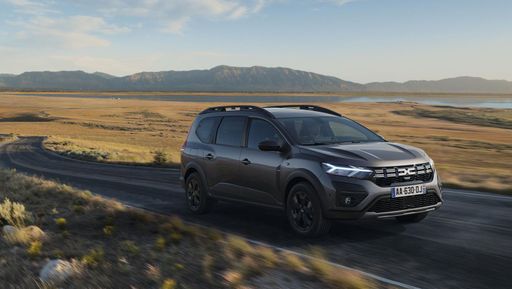
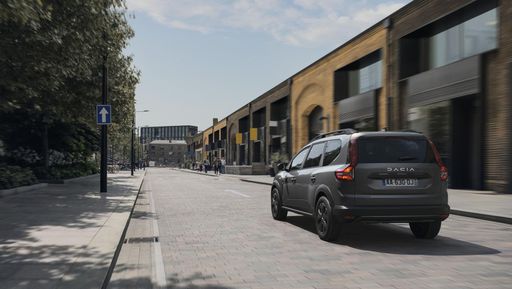
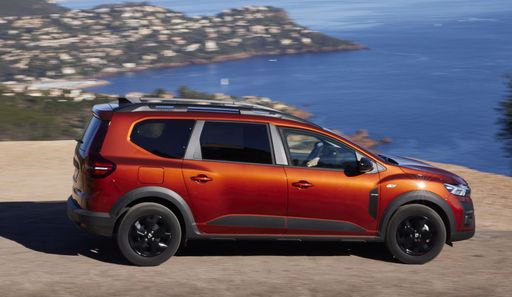
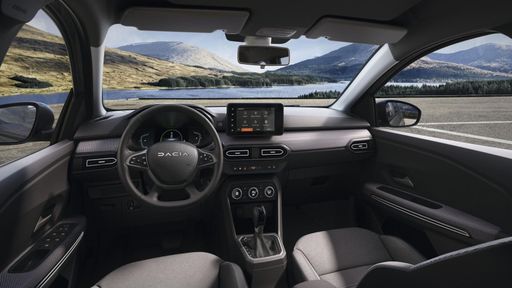
The Dacia Jogger is a no-nonsense family mover that stretches the idea of value with cavernous practicality and flexible space, perfect for buyers who need a sensible, everyday Swiss Army knife on wheels. It doesn’t try to be glamorous — instead it wins hearts with cheerful thrift, durable materials and honest engineering, giving you useful transport without the pretence.
details
@ Dacia / Renault Group Media
 @ Dacia / Renault Group Media
 @ Dacia / Renault Group Media
 @ Dacia / Renault Group Media
Subaru Crosstrek
The Subaru Crosstrek stands out in the compact SUV market with its rugged design and excellent off-road capabilities. Its versatile interior space and comfortable seating make it a great choice for both city commutes and weekend adventures. Coupled with Subaru's renowned all-wheel-drive system, the Crosstrek offers a dynamic driving experience for those seeking reliability and performance.
details
Dacia Jogger
Subaru Crosstrek
|
@ Dacia / Renault Group Media
|
|
|
|
|
Costs and Consumption |
|
|---|---|
|
Price
15400 - 23400 £
|
Price
29800 - 34900 £
|
|
Consumption L/100km
4.7 - 7.8 L
|
Consumption L/100km
7.70 L
|
|
Consumption kWh/100km
-
|
Consumption kWh/100km
-
|
|
Electric Range
-
|
Electric Range
-
|
|
Battery Capacity
0.60 kWh
|
Battery Capacity
-
|
|
co2
105 - 137 g/km
|
co2
174 g/km
|
|
Fuel tank capacity
40 - 50 L
|
Fuel tank capacity
48 L
|
Dimensions and Body |
|
|---|---|
|
Body Type
MPV
|
Body Type
SUV
|
|
Seats
5 - 7
|
Seats
5
|
|
Doors
5
|
Doors
5
|
|
Curb weight
1251 - 1460 kg
|
Curb weight
1595 - 1628 kg
|
|
Trunk capacity
160 - 607 L
|
Trunk capacity
315 L
|
|
Length
4547 mm
|
Length
4495 mm
|
|
Width
1784 mm
|
Width
1800 mm
|
|
Height
1674 mm
|
Height
1600 mm
|
|
Max trunk capacity
1807 - 1819 L
|
Max trunk capacity
1297 - 1314 L
|
|
Payload
393 - 582 kg
|
Payload
472 - 505 kg
|
Engine and Performance |
|
|---|---|
|
Engine Type
Full Hybrid, LPG, Petrol
|
Engine Type
Petrol MHEV
|
|
Transmission
Automatic, Manuel
|
Transmission
Automatic
|
|
Transmission Detail
Automatic Gearbox, Manual Gearbox
|
Transmission Detail
CVT
|
|
Drive Type
Front-Wheel Drive
|
Drive Type
All-Wheel Drive
|
|
Power HP
91 - 140 HP
|
Power HP
136 HP
|
|
Acceleration 0-100km/h
9.8 - 13.2 s
|
Acceleration 0-100km/h
10.80 s
|
|
Max Speed
167 - 174 km/h
|
Max Speed
198 km/h
|
|
Torque
160 - 200 Nm
|
Torque
182 Nm
|
|
Number of Cylinders
3 - 4
|
Number of Cylinders
4
|
|
Power kW
67 - 103 kW
|
Power kW
100 kW
|
|
Engine capacity
999 - 1598 cm3
|
Engine capacity
1995 cm3
|
General |
|
|---|---|
|
Model Year
2024 - 2025
|
Model Year
2024
|
|
CO2 Efficiency Class
C, D
|
CO2 Efficiency Class
F
|
|
Brand
Dacia
|
Brand
Subaru
|
What drivetrain options does the Dacia Jogger have?
The Dacia Jogger is offered with Front-Wheel Drive.
The prices and data displayed are estimates based on German list prices and may vary by country. This information is not legally binding.