VS

Dacia Jogger vs Toyota Proace City comparison

Compare performance (158 HP vs 136 HP), boot space and price (15,400 £ vs 20,800 £ ) at a glance. Find out which car is the better choice for you – Dacia Jogger or Toyota Proace City?

Dacia Jogger vs Toyota Proace City: Key differences

Dacia Jogger

4.3 (3 Reviews)
rate
  • visibly cheaper
  • somewhat more power
  • somewhat more efficient
  • markedly quicker 0–100 km/h
  • very slightly lighter
details

Toyota Proace City

  • noticeably more trunk space
details

All details on performance, efficiency, range and trunk space can be found in the technical comparison below – including user reviews for both models.

By Achim Sedelmaier

Jogger

The Ultimate Drive-Off: Dacia Jogger vs. Toyota Proace City

In the ever-evolving automotive landscape, versatility and practicality form the cornerstone of family-friendly vehicles. Today, we pit two contenders against each other to discern which emerges superior in these aspects: the Dacia Jogger and the Toyota Proace City. Each promises unique features and state-of-the-art engineering, catering to distinct driving needs. Let’s delve into their technical intricacies and innovation highlights.
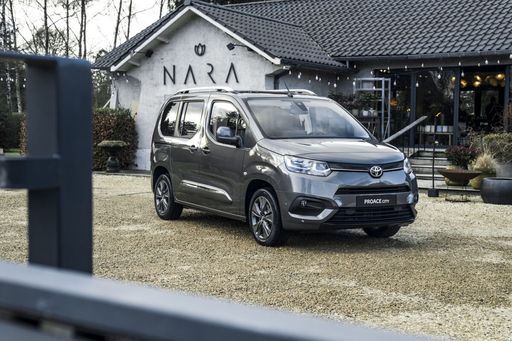
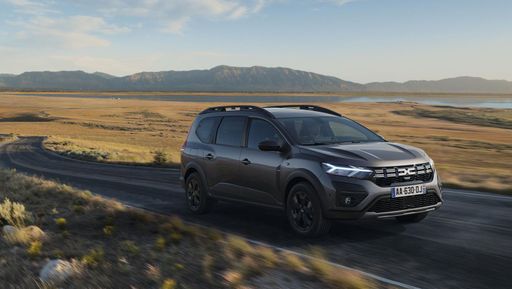
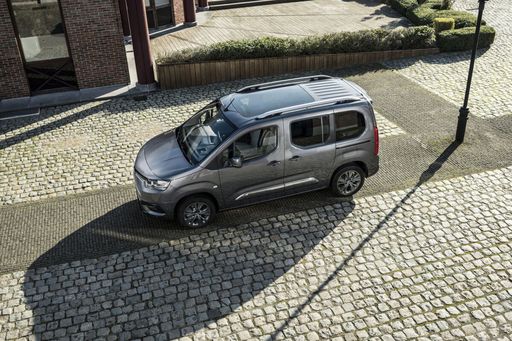
Proace City

Design and Dimensional Appeal

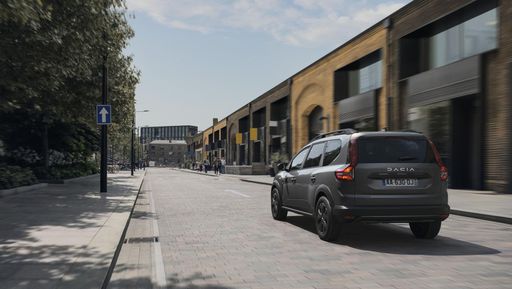
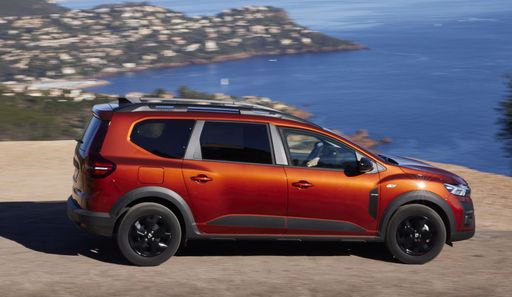
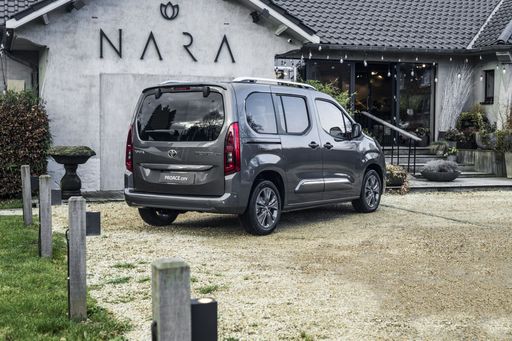
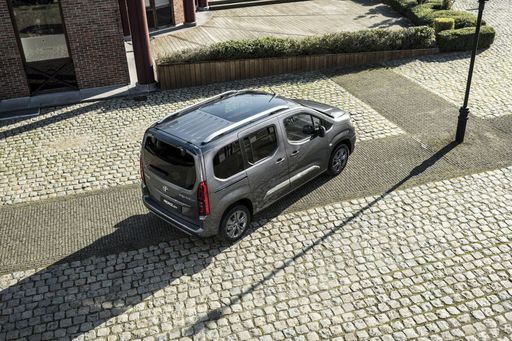
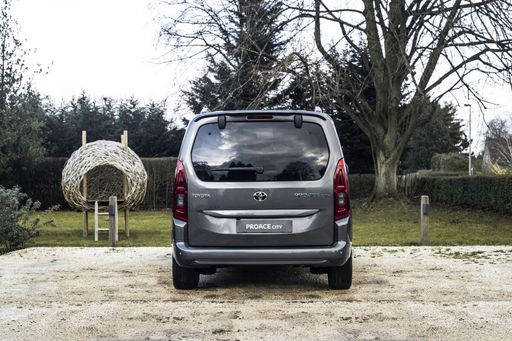
The Dacia Jogger strikes a fine balance between an MPV’s spaciousness and an SUV’s rugged aesthetics. Measuring 4547 mm in length, 1784 mm in width, and 1674 mm in height, it provides ample room for families while maintaining a manageable footprint. The Toyota Proace City, slightly larger as a high roof wagon, offers dimensions of up to 4751 mm in length, 1848 mm in width, and 1818 mm in height, favoring cargo space and practicality.

Jogger

Powertrains and Performance

Powering the Dacia Jogger is a suite of engine options including full hybrid, LPG, and petrol engines. Notably, it offers maximum horsepower of 140 HP coupled with an acceleration time as quick as 9.8 seconds from 0-100 km/h, effectively balancing efficiency and performance. Transmission choices range between automatic and manual, catering to varied preferences.

The Toyota Proace City offers diverse powertrains including petrol, diesel, and a 100% electric option rivaling its counterparts. Its electric variant boasts a commendable range of up to 343 km, underlining Toyota’s commitment to sustainable automotive solutions. This diversity provides users with the flexibility to choose according to their sustainability goals and power preferences.

Proace City

Efficiency and Environmental Considerations

The Dacia Jogger impresses with a fuel consumption as low as 4.7 L/100 km, aligned with environment-conscious driving. Its CO2 emissions vary from 105 to 137 g/km, offering decent sustainability credentials.

Toyota’s Proace City operates with commendable efficiency too, especially its electric model boasting zero emissions. Fuel variants deliver consumption as frugal as 5.3 L/100 km and CO2 emissions of 0 to 146 g/km, enhancing its appeal among eco-conscious drivers.

Jogger

Interior and Cargo Space

When it comes to seating accommodations, both models step up with 5 to 7 passenger configurations. The Jogger offers trunk capacities between 607 to 160 liters, ensuring versatile storage options for families. Its payload ranges from 393 to 582 kg, tailoring for different hauling needs.

In contrast, the Proace City raises the bar with trunk volumes of up to 912 liters and payload capacities stretching to 869 kg. Be it gear or groceries, it promises ample space, marking it a formidable choice for those with extensive cargo demands.

Proace City

Innovation and Final Verdict

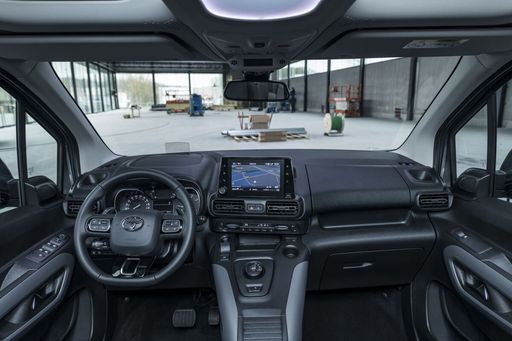
Both vehicles exhibit genuine commitment to the latest advancements in automotive technology. The Dacia Jogger imbibes modern hybrid technology for improved fuel economy, while the Proace City champions electric innovation, making strides in emission-free commuting.

In summation, the choice between the Dacia Jogger and Toyota Proace City lies predominantly in the intended utility. For those seeking eco-friendliness with adequate space, the Proace City stands as a leading contender with its electric offering and large cargo volume. Conversely, families valuing performance diversity and fuel technology might find solace in the Dacia Jogger’s multi-faceted engine selection.

Ultimately, both models excel in their unique avenues, catering to distinct yet equally important automotive sensibilities. Whichever you choose, rest assured you're selecting a vehicle designed for modern-day demands.

Here’s where it gets real: The technical differences in detail

Jogger

Costs and Efficiency:

When it comes to price and running costs, the biggest differences usually appear. This is often where you see which car fits your budget better in the long run.

Dacia Jogger is visibly cheaper – starting at 15,400 £ , while the Toyota Proace City costs 20,800 £ . That’s a price difference of around 5,378 £.

Fuel consumption also shows a difference: the Dacia Jogger uses 4.5 L/100km and is somewhat more efficient than the Toyota Proace City with 5.3 L/100km. The difference is about 0.8 L/100km.

Proace City

Engine and Performance:

Power, torque and acceleration say a lot about how a car feels on the road. This is where you see which model delivers more driving dynamics.

When it comes to engine power, the Dacia Jogger offers somewhat more power – delivering 158 HP compared to 136 HP. That’s roughly 22 HP more horsepower.

When accelerating from 0 to 100 km/h, the Dacia Jogger is markedly quicker – completing the sprint in 8.9 s, while the Toyota Proace City takes 11.5 s. That’s about 2.6 s quicker.

There’s also a difference in torque: the Toyota Proace City delivers visibly more torque with 300 Nm compared to 200 Nm. That’s about 100 Nm more.

Jogger

Space and Everyday Use:

Whether family car or daily driver – which one offers more room, flexibility and comfort?

Both vehicles offer seating for 7 people.

In terms of curb weight, Dacia Jogger is very slightly lighter – 1,268 kg compared to 1,366 kg. The difference is around 98 kg.

Looking at boot space, the Toyota Proace City offers noticeably more boot space – 912 L compared to 607 L. That’s a difference of about 305 L.

When it comes to payload, the Toyota Proace City carries clearly more – 829 kg compared to 559 kg. That’s a difference of about 270 kg.

Who wins the race in the data check?

The Toyota Proace City is clearly superior overall in the objective data comparison.
This result only shows which model scores more points on paper – not which of the two cars feels right for you.

from £20,800
Proace City

Toyota Proace City

  • Engine Type Electric, Petrol, Diesel
  • Transmission Automatic, Manuel
  • Drive Type Front-Wheel Drive
  • Power HP 102 - 136 HP
  • Consumption L/100km 5.3 - 6.3 L/100km
  • Consumption kWh/100km 18.1 kWh/100km
  • Electric Range 343 km
Dacia Jogger
Toyota Proace City

Costs and Consumption

View detailed analysis

Engine and Performance

View detailed analysis

Dimensions and Body

View detailed analysis

Dacia Jogger

The Dacia Jogger is a no-nonsense family mover that stretches the idea of value with cavernous practicality and flexible space, perfect for buyers who need a sensible, everyday Swiss Army knife on wheels. It doesn’t try to be glamorous — instead it wins hearts with cheerful thrift, durable materials and honest engineering, giving you useful transport without the pretence.

details

Toyota Proace City

The Toyota Proace City is a clever compact workhorse that blends van practicality with passenger comfort, turning daily deliveries or weekend DIY runs into a surprisingly civilised affair. It won't set your pulse racing, but its easy driving manners, flexible interior and low-hassle ownership make it a smart pick for buyers who value usefulness over flash.

details
Dacia Jogger
Toyota Proace City

Costs and Consumption

Price
15,400 - 23,500 £
Price
20,800 - 44,100 £
Consumption L/100km
4.5 - 7.6 L/100km
Consumption L/100km
5.3 - 6.3 L/100km
Consumption kWh/100km
-
Consumption kWh/100km
18.1 kWh/100km
Electric Range
-
Electric Range
343 km
Battery Capacity
-
Battery Capacity
-
co2
103 - 138 g/km
co2
0 - 146 g/km
Fuel tank capacity
-
Fuel tank capacity
-

Dimensions and Body

Body Type
MPV
Body Type
High Roof Estate
Seats
5 - 7
Seats
5 - 7
Doors
-
Doors
-
Curb weight
1,268 - 1,463 kg
Curb weight
1,366 - 1,664 kg
Trunk capacity
160 - 607 L
Trunk capacity
322 - 912 L
Length
-
Length
-
Width
1,784 mm
Width
1,848 mm
Height
-
Height
-
Max trunk capacity
-
Max trunk capacity
-
Payload
384 - 559 kg
Payload
525 - 829 kg

Engine and Performance

Engine Type
Petrol, Full Hybrid, LPG
Engine Type
Electric, Petrol, Diesel
Transmission
Manuel, Automatic
Transmission
Automatic, Manuel
Transmission Detail
Manual Gearbox, Automatic Gearbox, Dual-Clutch Automatic
Transmission Detail
Reduction Gearbox, Manual Gearbox, Automatic Gearbox
Drive Type
Front-Wheel Drive
Drive Type
Front-Wheel Drive
Power HP
110 - 158 HP
Power HP
102 - 136 HP
Acceleration 0-100km/h
8.9 - 12 s
Acceleration 0-100km/h
11.5 - 13.2 s
Max Speed
-
Max Speed
-
Torque
190 - 200 Nm
Torque
205 - 300 Nm
Number of Cylinders
3 - 4
Number of Cylinders
3 - 4
Power kW
81 - 116 kW
Power kW
75 - 100 kW
Engine capacity
999 - 1,789 cm3
Engine capacity
1,199 - 1,499 cm3

General

Model Year
2025
Model Year
2,025 - 2,026
CO2 Efficiency Class
D, E, C
CO2 Efficiency Class
A, E
Brand
Dacia
Brand
Toyota
DriveDuel uses data analysis and artificial intelligence to evaluate vehicle data and create content. Content is regularly reviewed and improved. The displayed prices are estimates based on German list prices, adjusted to the respective country’s VAT. Country-specific registration taxes are not included. This information is not legally binding.