VS

Dacia Sandero vs Skoda Scala - Differences and prices compared

Compare performance (122 HP vs 150 HP), boot space and price (11000 £ vs 20900 £ ) at a glance. Find out which car is the better choice for you – Dacia Sandero or Skoda Scala?

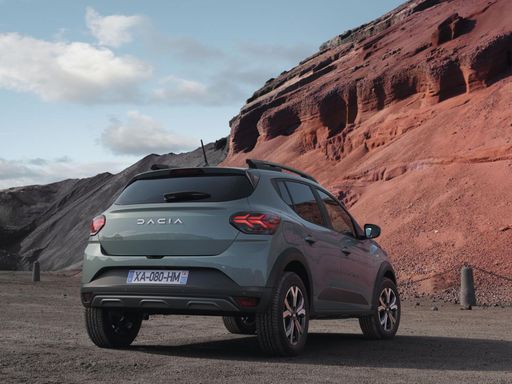
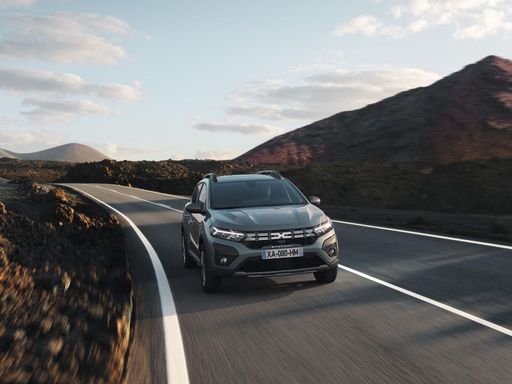
Sandero

Head-to-Head Hatchbacks: Dacia Sandero vs. Skoda Scala

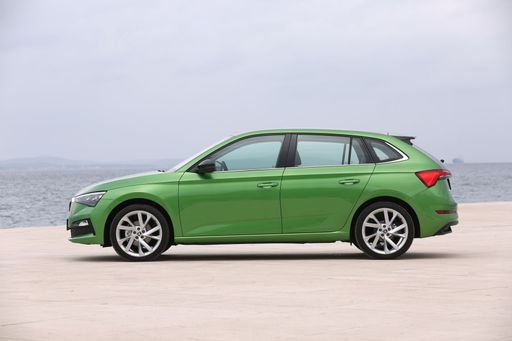
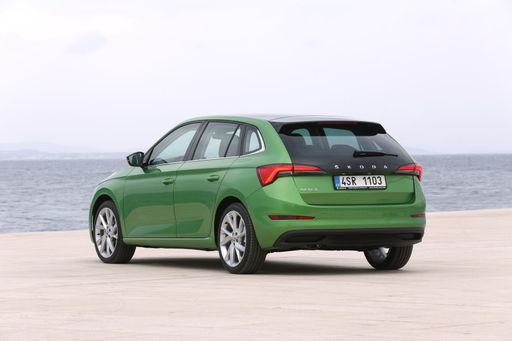
In the bustling world of budget-friendly hatchbacks, the Dacia Sandero and the Skoda Scala stand out as compelling choices for those seeking a practical yet stylish ride. Both models have been enhanced for the 2024 model year, offering impressive features and robust engine options. In this comparison, we will dissect the technical aspects and innovations that set these two hatchbacks apart.
Scala

Performance and Engine Options

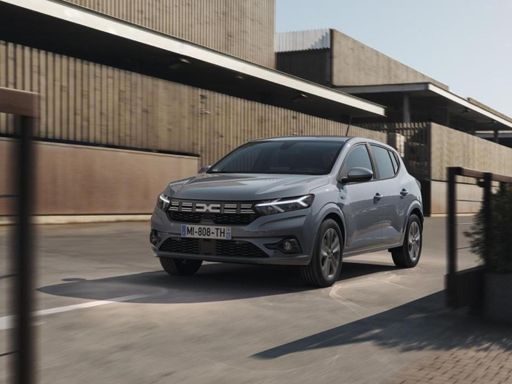
The Dacia Sandero comes equipped with a range of petrol and LPG engines, boasting power outputs between 67 and 110 HP. Notably, the Sandero offers both manual and automatic CVT transmissions, catering to diverse driving preferences. Acceleration times range from 10 to 16.7 seconds for a sprint from 0 to 100 km/h, with top speeds varying from 158 to 183 km/h. This versatility in the lineup gives potential buyers plenty of options to choose from based on their performance requirements.

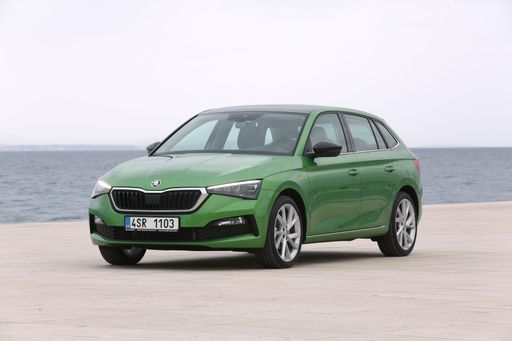
On the other hand, the Skoda Scala steps up with three refined petrol engine choices, offering 95 to 150 HP. It provides seamless shifting with either a manual gearbox or a sporty dual-clutch automatic transmission. Accelerating from 0 to 100 km/h falls between a sporty 8.2 to a modest 10.8 seconds, while the top speeds soar from 192 to an impressive 221 km/h. This makes the Scala ideal for those who value a zippier performance.

Sandero

Fuel Efficiency and Environmental Impact

Fuel consumption is an essential consideration for any car buyer. The Dacia Sandero flaunts a consumption range from 5.2 to 7 L/100 km, depending on the engine choice. CO2 emissions range between 105 and 139 g/km, positioning the Sandero in CO2 Efficiency Classes from C to E.

Meanwhile, the Skoda Scala demonstrates commendable efficiency with fuel consumption figures from 5.1 to 5.6 L/100 km. Its CO2 emissions fluctuate from 115 to 127 g/km, generally classified within the C and D efficiency classes. The Scala's slightly superior economy highlights its edge in long-term running costs.

Scala

Space and Practicality

Both models are five-door hatchbacks but differ in design philosophies. The Sandero measures between 4088 and 4099 mm in length, providing a trunk capacity of 328 liters—ample for a weekend getaway. With a spacious interior width of 1848 mm, it comfortably accommodates five passengers.

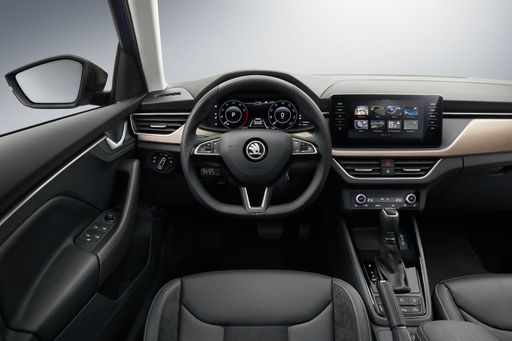
Conversely, the Scala stretches to 4362 mm in length and offers a more generous trunk capacity of 467 liters. Its narrower width of 1793 mm belies an efficient use of space, maintaining comfort for five passengers. These dimensions make the Scala a practical option for families or those needing extra storage on the move.

Sandero

Final Thoughts: Choosing Between Two Capable Contenders

The choice between the Dacia Sandero and the Skoda Scala boils down to preferences for performance, efficiency, and practicality. The Sandero offers a broad range of powertrain options and budget-conscious sensibilities, while the Scala shines with its enhanced performance, economy, and practicality. Both models represent excellent value, demonstrating that drivers can have innovation and style without breaking the bank.

Dacia Sandero

Skoda Scala

4.9 (6 Reviews)
rate

Here’s where it gets real: The technical differences in detail

Scala

Costs and Efficiency:

Looking at overall running costs, both models reveal some interesting differences in everyday economy.

Dacia Sandero has a convincingly advantage in terms of price – it starts at 11000 £ , while the Skoda Scala costs 20900 £ . That’s a price difference of around 9943 £.

Fuel consumption also shows a difference: Skoda Scala manages with 5 L and is therefore barely noticeable more efficient than the Dacia Sandero with 5.30 L. The difference is about 0.30 L per 100 km.

Engine and Performance:

Power, torque and acceleration say a lot about how a car feels on the road. This is where you see which model delivers more driving dynamics.

When it comes to engine power, the Skoda Scala has a slightly edge – offering 150 HP compared to 122 HP. That’s roughly 28 HP more horsepower.

In acceleration from 0 to 100 km/h, the Skoda Scala is somewhat quicker – completing the sprint in 8.20 s, while the Dacia Sandero takes 9.70 s. That’s about 1.50 s faster.

There’s also a difference in torque: Skoda Scala pulls to a small extent stronger with 250 Nm compared to 200 Nm. That’s about 50 Nm difference.

Space and Everyday Use:

Cabin size, boot volume and payload all play a role in everyday practicality. Here, comfort and flexibility make the difference.

Both vehicles offer seating for 5 people.

In curb weight, Dacia Sandero is minimal lighter – 1100 kg compared to 1199 kg. The difference is around 99 kg.

In terms of boot space, the Skoda Scala offers clearly perceptible more room – 467 L compared to 372 L. That’s a difference of about 95 L.

When it comes to payload, Dacia Sandero hardly perceptible takes the win – 436 kg compared to 431 kg. That’s a difference of about 5 kg.

Who wins the race in the data check?

The Skoda Scala is clearly ahead overall in the objective data comparison.
This result only shows which model scores more points on paper – not which of the two cars feels right for you.

Dacia Sandero
Skoda Scala

Costs and Consumption

View detailed analysis

Engine and Performance

View detailed analysis

Dimensions and Body

View detailed analysis
from about £20,900
Scala

Skoda Scala

  • Engine Type : Petrol
  • Transmission : Manuel, Automatic
  • Drive Type : Front-Wheel Drive
  • Power HP : 95 - 150 HP
  • Consumption L/100km : 5 - 5.6 L

Dacia Sandero

The Dacia Sandero is the everyman's hatchback — unpretentious, practical and brilliantly affordable, with sensible space and straightforward charm where it matters most. It won't wow in the premium lane, but for buyers who want honest, dependable transport without showroom theatrics, the Sandero is a clever, no‑nonsense pick that keeps running costs low and grin levels high.

details

Skoda Scala

4.9 (6 Reviews)
rate

The Skoda Scala is a tidy, no-nonsense hatch that wraps clever packaging and composed manners into a compact, grown-up package. It’s the sensible choice for buyers who want everyday practicality with a dash of style and personality—no drama, just reliable charm.

details
Dacia Sandero
Skoda Scala

Costs and Consumption

Price
11000 - 16300 £
Price
20900 - 30700 £
Consumption L/100km
5.3 - 7.2 L
Consumption L/100km
5 - 5.6 L
Consumption kWh/100km
-
Consumption kWh/100km
-
Electric Range
-
Electric Range
-
Battery Capacity
-
Battery Capacity
-
co2
111 - 131 g/km
co2
114 - 126 g/km
Fuel tank capacity
-
Fuel tank capacity
50 L

Dimensions and Body

Body Type
Hatchback
Body Type
Hatchback
Seats
5
Seats
5
Doors
-
Doors
5
Curb weight
1100 - 1297 kg
Curb weight
1199 - 1271 kg
Trunk capacity
372 L
Trunk capacity
467 L
Length
-
Length
4362 mm
Width
1853 mm
Width
1793 mm
Height
-
Height
1514 mm
Max trunk capacity
-
Max trunk capacity
1410 L
Payload
385 - 436 kg
Payload
403 - 431 kg

Engine and Performance

Engine Type
Petrol, LPG
Engine Type
Petrol
Transmission
Manuel, Automatic
Transmission
Manuel, Automatic
Transmission Detail
Manual Gearbox, Dual-Clutch Automatic
Transmission Detail
Manual Gearbox, Dual-Clutch Automatic
Drive Type
Front-Wheel Drive
Drive Type
Front-Wheel Drive
Power HP
67 - 122 HP
Power HP
95 - 150 HP
Acceleration 0-100km/h
9.7 - 16.7 s
Acceleration 0-100km/h
8.2 - 10.8 s
Max Speed
-
Max Speed
192 - 221 km/h
Torque
95 - 200 Nm
Torque
175 - 250 Nm
Number of Cylinders
3
Number of Cylinders
3 - 4
Power kW
49 - 90 kW
Power kW
70 - 110 kW
Engine capacity
999 - 1199 cm3
Engine capacity
999 - 1498 cm3

General

Model Year
2025
Model Year
2025
CO2 Efficiency Class
D, C
CO2 Efficiency Class
C, D
Brand
Dacia
Brand
Skoda
What drive types are available for the Dacia Sandero?

The Dacia Sandero is available as Front-Wheel Drive.

The prices shown are estimates based on German list prices, adjusted for local VAT. Local registration taxes (e.g. NoVA, BPM or CO2 malus) are not included. This information is not legally binding.