VS

Dacia Spring vs BYD Dolphin comparison

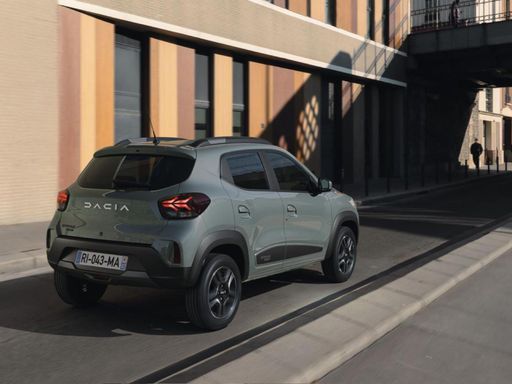
Compare performance (100 HP vs 204 HP), boot space and price (14,500 £ vs 29,700 £ ) at a glance. Find out which car is the better choice for you – Dacia Spring or BYD Dolphin?

Dacia Spring vs BYD Dolphin: Key differences

Dacia Spring

4.8 (3 Reviews)
rate
  • substantially cheaper
  • markedly more efficient
  • clearly lighter

BYD Dolphin

3.7 (3 Reviews)
rate
  • substantially more power
  • significantly more electric range
  • noticeably quicker 0–100 km/h
  • moderately more trunk space

All details on performance, efficiency, range and trunk space can be found in the technical comparison below – including user reviews for both models.

Spring

Electric Warfare: BYD Dolphin vs. Dacia Spring

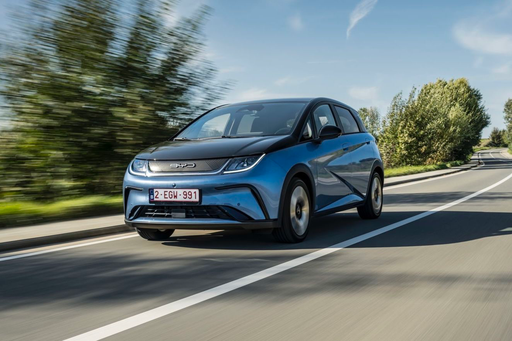
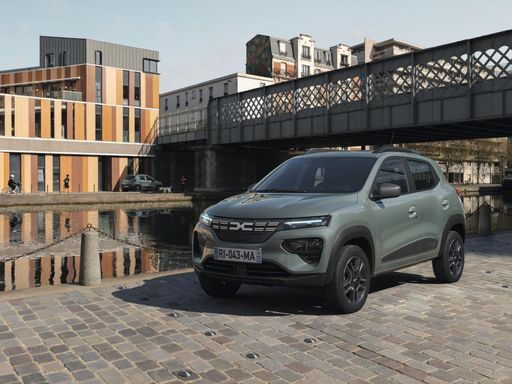
In the growing world of electric vehicles, two promising contenders cater to different ends of the market spectrum: the BYD Dolphin and the Dacia Spring. These compact EVs are tailor-made for city driving, offering an intriguing mix of innovation, efficiency, and practicality. Let's delve into the comparison of these two electric warriors and uncover what makes each unique.
Dolphin

Power & Performance

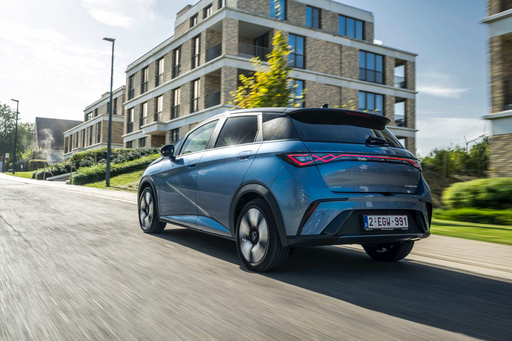
The BYD Dolphin is a powerhouse among electric hatchbacks. Boasting an impressive 204 HP (150 kW) and a torque of 310 Nm, it delivers swift acceleration, reaching 0-100 km/h in just 7 seconds. With a top speed of 160 km/h, it is designed for those who crave a dynamic driving experience.

In contrast, the Dacia Spring offers a more modest power output with its range topping at 65 HP (48 kW), providing up to 113 Nm of torque. The Spring takes 13.7 seconds to reach 100 km/h and maxes out at a speed of 125 km/h, which is well-suited for urban environments where brisk efficiency and maneuverability trump raw power.

Spring

Efficiency & Range

When it comes to energy consumption, the BYD Dolphin registers at 15.9 kWh/100 km, with an impressive electric driving range of 427 km. With a substantial payload capacity of 410 kg, it offers both range and practicality for passengers and load alike.

The Dacia Spring, a compact SUV, is frugal when it comes to energy usage, consuming just 13.2 - 14.1 kWh/100 km. However, it has a limited range of up to 228 km, making it ideal for short city commutes rather than long journeys. Its versatility and modest payload capacity of up to 285 kg make it highly practical in urban settings.

Dolphin

Space & Comfort

The BYD Dolphin sports a larger body, measuring 4290 mm in length, 1770 mm in width, and 1570 mm in height. Its generous trunk capacity of 345 liters bolsters its appeal for those who value cargo space along with passenger comfort for up to five occupants.

The Dacia Spring, compact in nature with dimensions of 3701 mm in length, 1583 mm in width, and 1519 mm in height, is designed to swiftly navigate tight city streets. It supports four passengers comfortably and offers a trunk capacity of 308 liters, sufficient for city-dwellers' everyday needs.

Spring

Innovative Features

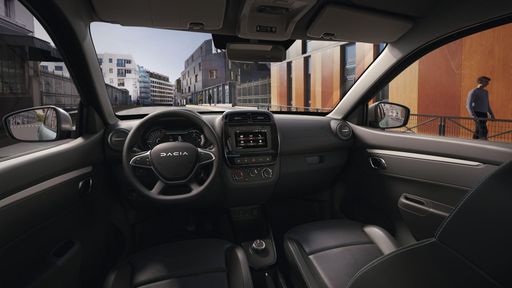
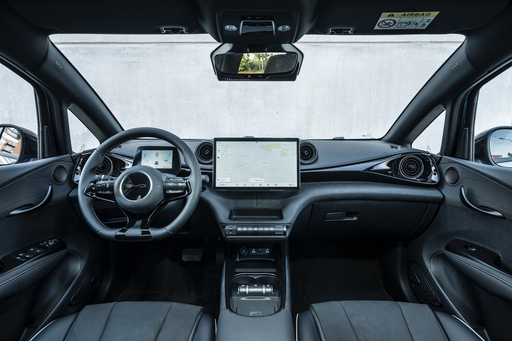
Interior innovation is where these models diverge. The BYD Dolphin features a sleek, contemporary cabin, loaded with modern technology, including intuitive infotainment systems and driver-assistance tools that enhance both safety and convenience.

The Dacia Spring, while more utilitarian, doesn’t lag behind in smart features. It offers essential digital functionalities that meet the requirements of city driving, keeping things simple while ensuring connectivity and ease of use for all occupants.

Dolphin

Concluding Thoughts

The choice between the BYD Dolphin and the Dacia Spring largely depends on the user’s priorities. The Dolphin excels in performance and range, appealing to those needing a robust everyday electric companion. The Dacia Spring, however, shines in practicality and efficiency, marking itself as a perfect entrant into the EV world, particularly suited for city life. Both represent a significant step forward in the practicality of electric vehicles, each catering to different driving preferences and lifestyle needs.

Here’s where it gets real: The technical differences in detail

Spring

Costs and Efficiency:

When it comes to price and running costs, the biggest differences usually appear. This is often where you see which car fits your budget better in the long run.

Dacia Spring is substantially cheaper – starting at 14,500 £ , while the BYD Dolphin costs 29,700 £ . That’s a price difference of around 15,206 £.

In terms of energy consumption, the Dacia Spring is markedly more efficient: consuming 12.4 kWh/100km compared to 15.9 kWh/100km for the BYD Dolphin. That’s a difference of about 3.5 kWh/100km.

As for electric range, the BYD Dolphin offers significantly more range – reaching up to 427 km, about 202 km more than the Dacia Spring.

Dolphin

Engine and Performance:

Power, torque and acceleration say a lot about how a car feels on the road. This is where you see which model delivers more driving dynamics.

When it comes to engine power, the BYD Dolphin offers substantially more power – delivering 204 HP compared to 100 HP. That’s roughly 104 HP more horsepower.

When accelerating from 0 to 100 km/h, the BYD Dolphin is noticeably quicker – completing the sprint in 7 s, while the Dacia Spring takes 9.6 s. That’s about 2.6 s quicker.

There’s also a difference in torque: the BYD Dolphin delivers clearly more torque with 310 Nm compared to 137 Nm. That’s about 173 Nm more.

Spring

Space and Everyday Use:

Beyond pure performance, interior space and usability matter most in daily life. This is where you see which car is more practical and versatile.

Seats: BYD Dolphin offers more seats – 5 vs 4.

In terms of curb weight, Dacia Spring is clearly lighter – 1,070 kg compared to 1,658 kg. The difference is around 588 kg.

Looking at boot space, the BYD Dolphin offers moderately more boot space – 345 L compared to 308 L. That’s a difference of about 37 L.

When it comes to payload, the BYD Dolphin carries markedly more – 410 kg compared to 274 kg. That’s a difference of about 136 kg.

Who wins the race in the data check?

The BYD Dolphin is clearly superior overall in the objective data comparison.
This result only shows which model scores more points on paper – not which of the two cars feels right for you.

from £29,700
Dolphin

BYD Dolphin

  • Engine Type : Electric
  • Transmission : Automatic
  • Drive Type : Front-Wheel Drive
  • Power HP : 204 HP
  • Consumption kWh/100km : 15.9 kWh/100km
  • Electric Range : 427 km
Dacia Spring
BYD Dolphin

Costs and Consumption

View detailed analysis

Engine and Performance

View detailed analysis

Dimensions and Body

View detailed analysis

Dacia Spring

The Dacia Spring is an unpretentious city electric that strips EV ownership down to the essentials, offering clean, fuss-free transport for daily urban life. It won't impress luxury-seekers, but its cheerful practicality and rock-bottom running costs make it a clever, no-nonsense choice for anyone who wants electric mobility without the drama.

details

BYD Dolphin

The BYD Dolphin is a cheeky electric hatchback that blends playful styling with surprising practicality, making it a brilliant city companion for buyers who want modern tech without the showroom bravado. It’s comfy, efficient and easy to live with, and while it won’t blind you with supercar drama, it will quietly get the job done with plenty of character.

details
Dacia Spring
BYD Dolphin

Costs and Consumption

Price
14,500 - 16,900 £
Price
29,700 - 31,400 £
Consumption L/100km
-
Consumption L/100km
-
Consumption kWh/100km
12.4 - 12.7 kWh/100km
Consumption kWh/100km
15.9 kWh/100km
Electric Range
221 - 225 km
Electric Range
427 km
Battery Capacity
-
Battery Capacity
-
co2
0 g/km
co2
0 g/km
Fuel tank capacity
-
Fuel tank capacity
-

Dimensions and Body

Body Type
SUV
Body Type
Hatchback
Seats
4
Seats
5
Doors
-
Doors
5
Curb weight
1,070 kg
Curb weight
1,658 kg
Trunk capacity
308 L
Trunk capacity
345 L
Length
-
Length
4,290 mm
Width
1,583 mm
Width
1,770 mm
Height
-
Height
1,570 mm
Max trunk capacity
-
Max trunk capacity
1,310 L
Payload
274 kg
Payload
410 kg

Engine and Performance

Engine Type
Electric
Engine Type
Electric
Transmission
Automatic
Transmission
Automatic
Transmission Detail
Reduction Gearbox
Transmission Detail
Reduction Gearbox
Drive Type
Front-Wheel Drive
Drive Type
Front-Wheel Drive
Power HP
70 - 100 HP
Power HP
204 HP
Acceleration 0-100km/h
9.6 - 12.3 s
Acceleration 0-100km/h
7 s
Max Speed
-
Max Speed
160 km/h
Torque
137 Nm
Torque
310 Nm
Number of Cylinders
-
Number of Cylinders
-
Power kW
52 - 75 kW
Power kW
150 kW
Engine capacity
-
Engine capacity
-

General

Model Year
2,025
Model Year
2,023
CO2 Efficiency Class
A
CO2 Efficiency Class
A
Brand
Dacia
Brand
BYD
DriveDuel uses data analysis and artificial intelligence to evaluate vehicle data and create content. Content is regularly reviewed and improved. The displayed prices are estimates based on German list prices, adjusted to the respective country’s VAT. Country-specific registration taxes are not included. This information is not legally binding.