VS

BYD Dolphin vs VW ID.3 - Differences and prices compared

Compare performance (204 HP vs 326 HP), boot space and price (29700 £ vs 28600 £ ) at a glance. Find out which car is the better choice for you – BYD Dolphin or VW ID.3?

BYD Dolphin

5 (1 Reviews)
rate

VW ID.3

4.9 (3 Reviews)
rate

You can find all user reviews further down on this page.

Here’s where it gets real: The technical differences in detail

Dolphin

Costs and Efficiency:

Looking at overall running costs, both models reveal some interesting differences in everyday economy.

VW ID.3 has a minimal advantage in terms of price – it starts at 28600 £ , while the BYD Dolphin costs 29700 £ . That’s a price difference of around 1123 £.

In terms of energy consumption, the advantage goes to the VW ID.3: with 14.50 kWh per 100 km, it’s barely noticeable more efficient than the BYD Dolphin with 15.90 kWh. That’s a difference of about 1.40 kWh.

As for electric range, the VW ID.3 performs evident better – achieving up to 605 km, about 178 km more than the BYD Dolphin.

ID.3

Engine and Performance:

Power, torque and acceleration say a lot about how a car feels on the road. This is where you see which model delivers more driving dynamics.

When it comes to engine power, the VW ID.3 has a evident edge – offering 326 HP compared to 204 HP. That’s roughly 122 HP more horsepower.

In acceleration from 0 to 100 km/h, the VW ID.3 is noticeable quicker – completing the sprint in 5.70 s, while the BYD Dolphin takes 7 s. That’s about 1.30 s faster.

In terms of top speed, the VW ID.3 performs somewhat better – reaching 200 km/h, while the BYD Dolphin tops out at 160 km/h. The difference is around 40 km/h.

There’s also a difference in torque: VW ID.3 pulls clearly stronger with 545 Nm compared to 310 Nm. That’s about 235 Nm difference.

Dolphin

Space and Everyday Use:

Whether family car or daily driver – which one offers more room, flexibility and comfort?

Both vehicles offer seating for 5 people.

In curb weight, BYD Dolphin is slight lighter – 1658 kg compared to 1787 kg. The difference is around 129 kg.

In terms of boot space, the VW ID.3 offers to a small extent more room – 385 L compared to 345 L. That’s a difference of about 40 L.

In maximum load capacity, the BYD Dolphin performs hardly perceptible better – up to 1310 L, which is about 43 L more than the VW ID.3.

When it comes to payload, VW ID.3 slightly takes the win – 473 kg compared to 410 kg. That’s a difference of about 63 kg.

Who wins the race in the data check?

The VW ID.3 holds a decisive overall lead in the objective data comparison.
This result only shows which model scores more points on paper – not which of the two cars feels right for you.

BYD Dolphin
VW ID.3

Costs and Consumption

View detailed analysis

Engine and Performance

View detailed analysis

Dimensions and Body

View detailed analysis
from about £28,600
ID.3

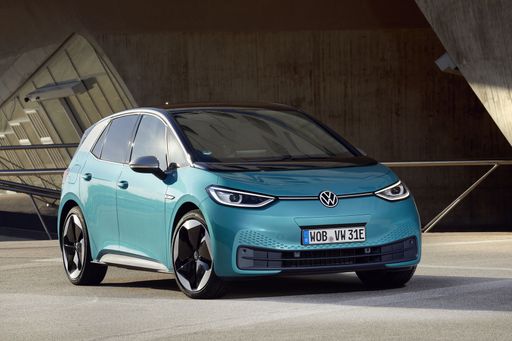
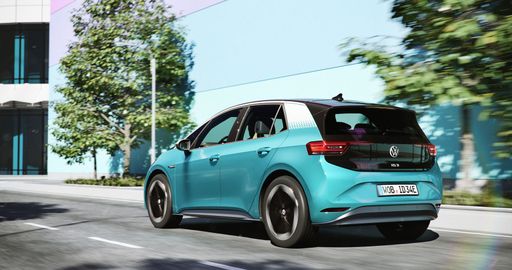
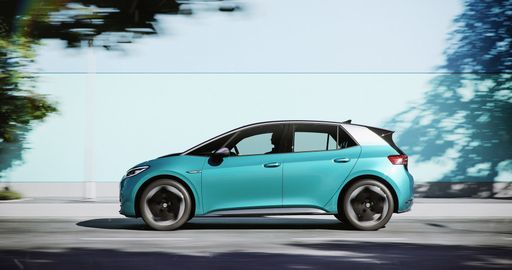
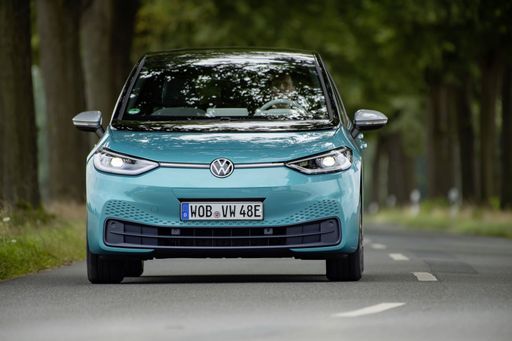
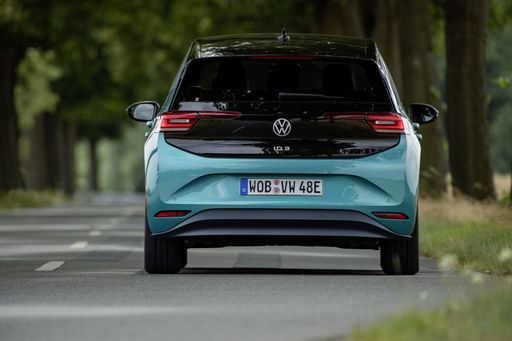
VW ID.3

  • Engine Type : Electric
  • Transmission : Automatic
  • Drive Type : Rear-Wheel Drive
  • Power HP : 170 - 326 HP
  • Consumption kWh/100km : 14.5 - 15.8 kWh
  • Electric Range : 383 - 605 km

BYD Dolphin

5 (1 Reviews)
rate

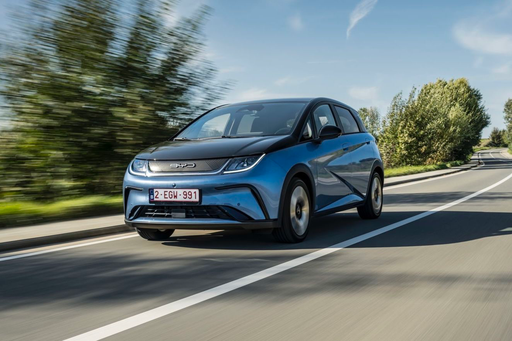
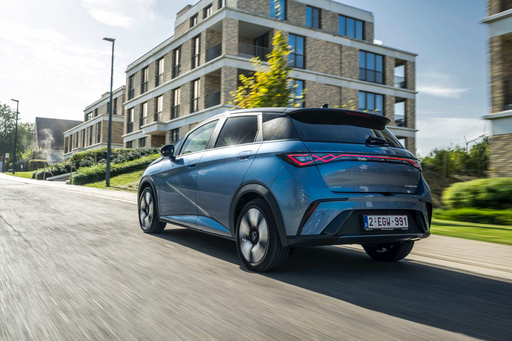
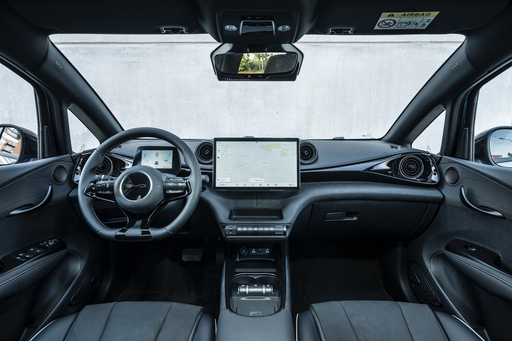
The BYD Dolphin is a cheeky electric hatchback that blends playful styling with surprising practicality, making it a brilliant city companion for buyers who want modern tech without the showroom bravado. It’s comfy, efficient and easy to live with, and while it won’t blind you with supercar drama, it will quietly get the job done with plenty of character.

details

VW ID.3

4.9 (3 Reviews)
rate

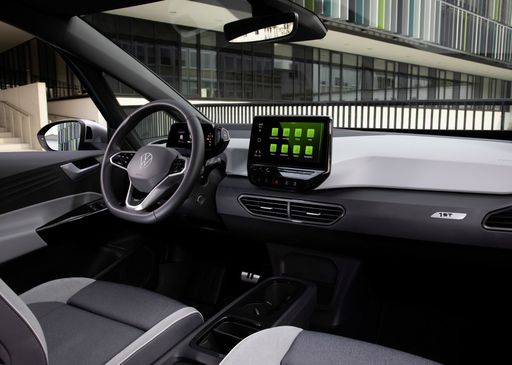
The VW ID.3 is a crisply styled electric hatch that masks serious practicality behind a friendly, modern face, making city runs and longer trips pleasantly fuss free. For buyers seeking a sensible, well-equipped EV that doesn't take itself too seriously, the ID.3 strikes a neat balance of comfort, tech and everyday usability with a cheeky smile.

details
BYD Dolphin
VW ID.3

Costs and Consumption

Price
29700 - 31400 £
Price
28600 - 49300 £
Consumption L/100km
-
Consumption L/100km
-
Consumption kWh/100km
15.90 kWh
Consumption kWh/100km
14.5 - 15.8 kWh
Electric Range
427 km
Electric Range
383 - 605 km
Battery Capacity
-
Battery Capacity
52 - 79 kWh
co2
0 g/km
co2
0 g/km
Fuel tank capacity
-
Fuel tank capacity
-

Dimensions and Body

Body Type
Hatchback
Body Type
Hatchback
Seats
5
Seats
5
Doors
5
Doors
5
Curb weight
1658 kg
Curb weight
1787 - 1993 kg
Trunk capacity
345 L
Trunk capacity
385 L
Length
4290 mm
Length
4264 mm
Width
1770 mm
Width
1809 mm
Height
1570 mm
Height
1564 mm
Max trunk capacity
1310 L
Max trunk capacity
1267 L
Payload
410 kg
Payload
437 - 473 kg

Engine and Performance

Engine Type
Electric
Engine Type
Electric
Transmission
Automatic
Transmission
Automatic
Transmission Detail
Reduction Gearbox
Transmission Detail
Reduction Gearbox
Drive Type
Front-Wheel Drive
Drive Type
Rear-Wheel Drive
Power HP
204 HP
Power HP
170 - 326 HP
Acceleration 0-100km/h
7 s
Acceleration 0-100km/h
5.7 - 8.2 s
Max Speed
160 km/h
Max Speed
160 - 200 km/h
Torque
310 Nm
Torque
310 - 545 Nm
Number of Cylinders
-
Number of Cylinders
-
Power kW
150 kW
Power kW
125 - 240 kW
Engine capacity
-
Engine capacity
-

General

Model Year
2023
Model Year
2024 - 2025
CO2 Efficiency Class
A
CO2 Efficiency Class
A
Brand
BYD
Brand
VW
What drivetrain options does the BYD Dolphin have?

The BYD Dolphin is offered with Front-Wheel Drive.

The prices shown are estimates based on German list prices, adjusted for local VAT. Local registration taxes (e.g. NoVA, BPM or CO2 malus) are not included. This information is not legally binding.