
 Deutschland
 France
 Nederland
 Great Britain
 Sverige
 Norge
Norge Danmark
 Suomi
Suomi Italia
 Polska
 España
VS
Dacia Spring vs Mazda CX-60 – Which model is better for everyday use?
Spring
@ Dacia / Renault Group Media
Costs and Efficiency:
Price and efficiency are often the first things buyers look at. Here it becomes clear which model has the long-term edge – whether at the pump, the plug, or in purchase price.
Dacia Spring has a clearly advantage in terms of price – it starts at 14500 £, while the Mazda CX-60 costs 41900 £. That’s a price difference of around 27420 £.
As for range, the Dacia Spring performs convincingly better – achieving up to 228 km, about 164 km more than the Mazda CX-60.
CX-60
@ Mazda Motor Corporation
Engine and Performance:
Power, torque and acceleration are the classic benchmarks for car enthusiasts – and here, some clear differences start to show.
When it comes to engine power, the Mazda CX-60 has a convincingly edge – offering 327 HP compared to 65 HP. That’s roughly 262 HP more horsepower.
In acceleration from 0 to 100 km/h, the Mazda CX-60 is clearly quicker – completing the sprint in 5.80 s, while the Dacia Spring takes 13.70 s. That’s about 7.90 s faster.
In terms of top speed, the Mazda CX-60 performs significantly better – reaching 219 km/h, while the Dacia Spring tops out at 125 km/h. The difference is around 94 km/h.
There’s also a difference in torque: Mazda CX-60 pulls significantly stronger with 550 Nm compared to 125 Nm. That’s about 425 Nm difference.
Spring
@ Dacia / Renault Group Media
Space and Everyday Use:
Beyond pure performance, interior space and usability matter most in daily life. This is where you see which car is more practical and versatile.
Seats: Mazda CX-60 offers somewhat more seating capacity – 5 vs 4.
In curb weight, Dacia Spring is clearly lighter – 1013 kg compared to 1890 kg. The difference is around 877 kg.
In terms of boot space, the Mazda CX-60 offers convincingly more room – 570 L compared to 308 L. That’s a difference of about 262 L.
In maximum load capacity, the Mazda CX-60 performs convincingly better – up to 1726 L, which is about 722 L more than the Dacia Spring.
When it comes to payload, Mazda CX-60 clearly takes the win – 612 kg compared to 302 kg. That’s a difference of about 310 kg.
Who wins the race?
The Mazda CX-60 proves to be outperforms in nearly all aspects and therefore becomes our DriveDuel Champion!
Mazda CX-60 is the better all-rounder in this comparison.
Dacia Spring
Mazda CX-60
Costs and Consumption
View detailed analysis
View detailed analysis
Engine and Performance
View detailed analysis
View detailed analysis
Dimensions and Body
View detailed analysis
View detailed analysis
from about £41,900
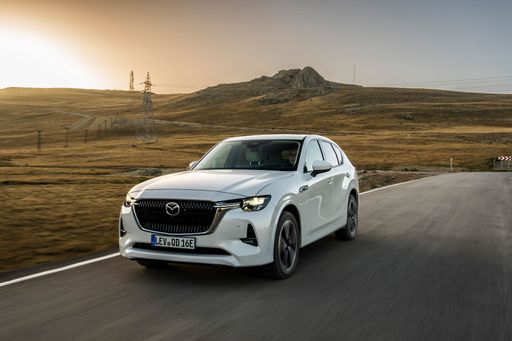 @ Mazda Motor Corporation
Mazda CX-60
Dacia Spring
The Dacia Spring is an unpretentious city electric that strips EV ownership down to the essentials, offering clean, fuss-free transport for daily urban life. It won't impress luxury-seekers, but its cheerful practicality and rock-bottom running costs make it a clever, no-nonsense choice for anyone who wants electric mobility without the drama.
details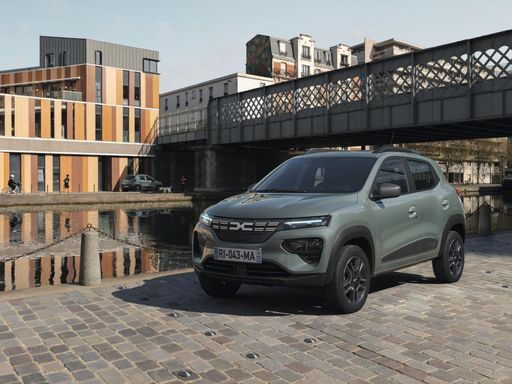 @ Dacia / Renault Group Media
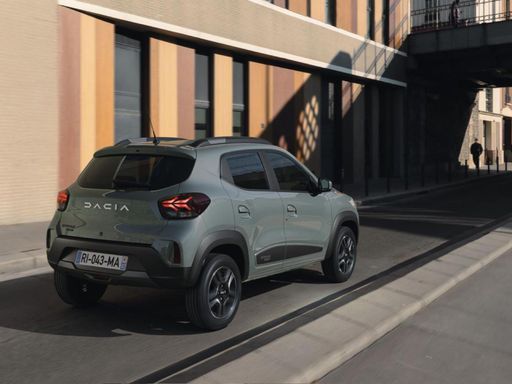 @ Dacia / Renault Group Media
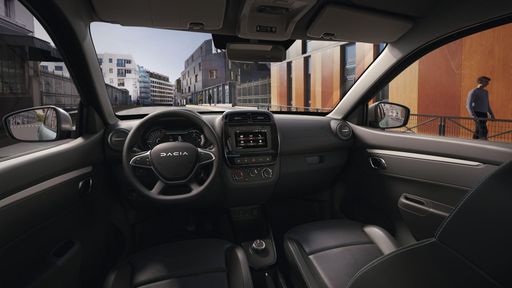 @ Dacia / Renault Group Media
Mazda CX-60
5 (1 Reviews)
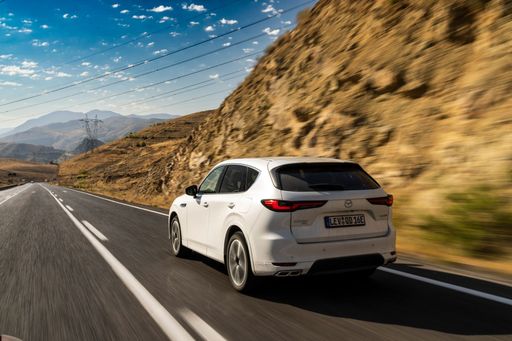
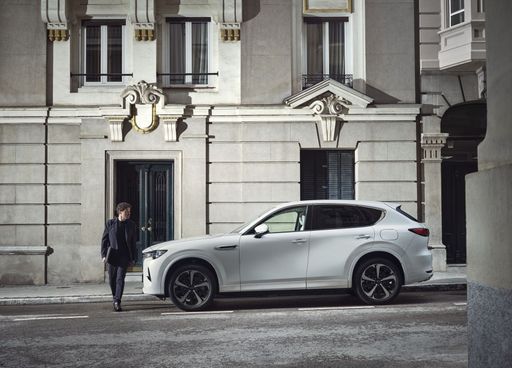
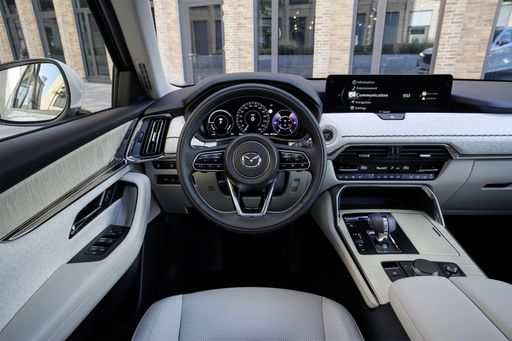
The Mazda CX-60 pairs sculpted, understated looks with poised handling and a cabin that punches above its class, making long drives feel unexpectedly civilized. For buyers who want a premium feel without the showroom swagger, it's the sort of car that earns respect quietly — and still manages a wink when you push on.
details
@ Mazda Motor Corporation
 @ Mazda Motor Corporation
 @ Mazda Motor Corporation
 @ Mazda Motor Corporation
Dacia Spring
Mazda CX-60
|
@ Dacia / Renault Group Media
|
@ Mazda Motor Corporation
|
|
|
|
Costs and Consumption |
|
|---|---|
|
Price
14500 - 17100 £
|
Price
41900 - 56800 £
|
|
Consumption L/100km
-
|
Consumption L/100km
1.4 - 5.4 L
|
|
Consumption kWh/100km
13.2 - 14.1 kWh
|
Consumption kWh/100km
-
|
|
Electric Range
225 - 228 km
|
Electric Range
64 km
|
|
Battery Capacity
26.80 kWh
|
Battery Capacity
-
|
|
co2
0 g/km
|
co2
31 - 139 g/km
|
|
Fuel tank capacity
-
|
Fuel tank capacity
50 - 58 L
|
Dimensions and Body |
|
|---|---|
|
Body Type
SUV
|
Body Type
SUV
|
|
Seats
4
|
Seats
5
|
|
Doors
5
|
Doors
5
|
|
Curb weight
1013 - 1050 kg
|
Curb weight
1890 - 2055 kg
|
|
Trunk capacity
308 L
|
Trunk capacity
570 L
|
|
Length
3701 mm
|
Length
4745 mm
|
|
Width
1583 mm
|
Width
1890 mm
|
|
Height
1519 mm
|
Height
1680 - 1688 mm
|
|
Max trunk capacity
1004 L
|
Max trunk capacity
1726 L
|
|
Payload
265 - 302 kg
|
Payload
581 - 612 kg
|
Engine and Performance |
|
|---|---|
|
Engine Type
Electric
|
Engine Type
Plugin Hybrid, Diesel MHEV
|
|
Transmission
Automatic
|
Transmission
Automatic
|
|
Transmission Detail
Reduction Gearbox
|
Transmission Detail
Automatic Gearbox
|
|
Drive Type
Front-Wheel Drive
|
Drive Type
All-Wheel Drive, Rear-Wheel Drive
|
|
Power HP
44 - 65 HP
|
Power HP
200 - 327 HP
|
|
Acceleration 0-100km/h
13.7 - 19.1 s
|
Acceleration 0-100km/h
5.8 - 8.4 s
|
|
Max Speed
125 km/h
|
Max Speed
200 - 219 km/h
|
|
Torque
113 - 125 Nm
|
Torque
450 - 550 Nm
|
|
Number of Cylinders
-
|
Number of Cylinders
4 - 6
|
|
Power kW
33 - 48 kW
|
Power kW
147 - 241 kW
|
|
Engine capacity
-
|
Engine capacity
2488 - 3283 cm3
|
General |
|
|---|---|
|
Model Year
2024
|
Model Year
2024
|
|
CO2 Efficiency Class
A
|
CO2 Efficiency Class
B, D, E
|
|
Brand
Dacia
|
Brand
Mazda
|
What drive types are available for the Dacia Spring?
The Dacia Spring is available as Front-Wheel Drive.
The prices and data displayed are estimates based on German list prices and may vary by country. This information is not legally binding.