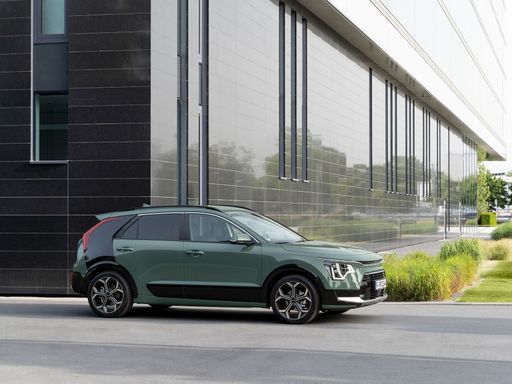
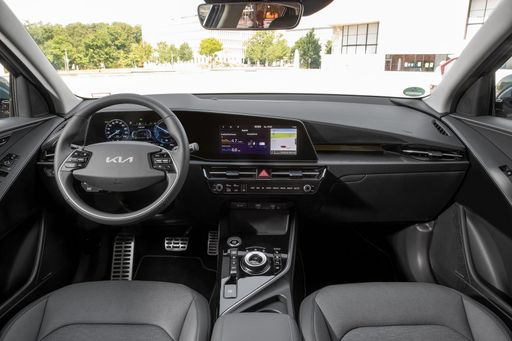
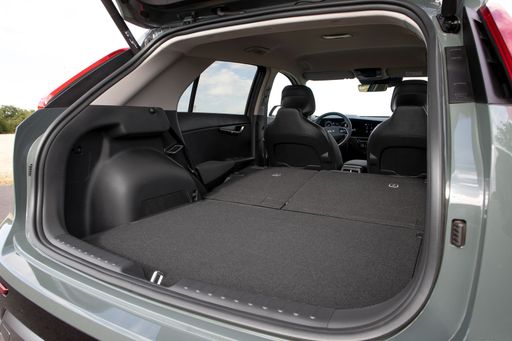
@ DS Automobiles / Stellantis Media
@ Kia Corporation
VS

DS Automobiles DS 7 vs Kia Niro – Differences & prices compared

Both models have their strengths – but which one suits you more?
Compare performance, efficiency, price and space directly: DS Automobiles DS 7 or Kia Niro?

DS Automobiles DS 7

5 (1 Reviews)
rate

Kia Niro

5 (1 Reviews)
rate
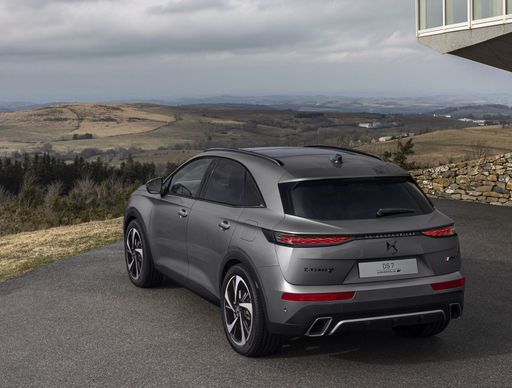
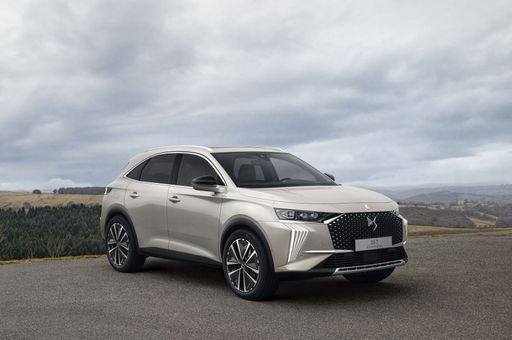
DS 7 @ DS Automobiles / Stellantis Media

Comparing Elegance and Efficiency: DS 7 Crossback vs. Kia Niro

As the automotive market increasingly leans towards eco-friendly and technologically advanced vehicles, the comparison between the DS Automobiles DS 7 Crossback and the Kia Niro becomes particularly relevant. Both models present distinctive features and innovative technologies that cater to modern consumer needs, from luxury and performance to fuel efficiency and practicality.
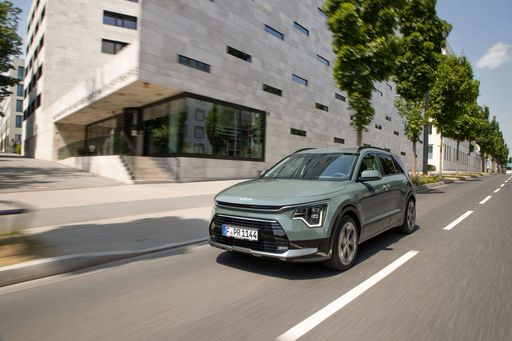
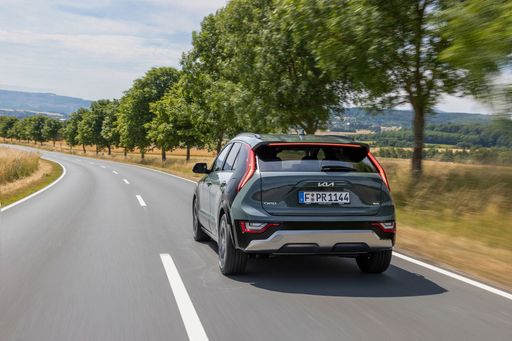
Niro @ Kia Corporation

Design and Comfort

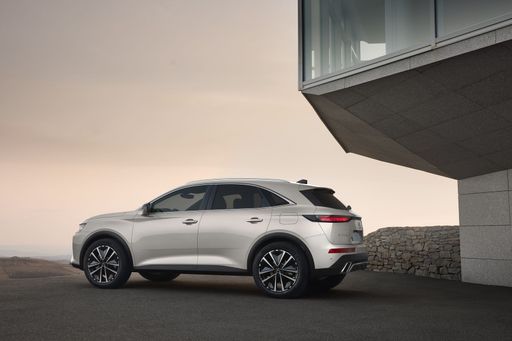
The DS 7 Crossback, with its SUV body type, boasts a refined design that emphasizes luxury. Measuring 4593 mm in length, 1891 mm in width, and 1625 mm in height, it's designed to make a statement on the road while offering a spacious interior for passengers.

In contrast, the Kia Niro also presents an SUV form but is more compact at 4420 mm long, 1825 mm wide, and 1545 mm high. While it offers practical space, its design leans towards a more utilitarian aesthetic compared to the DS 7's premium approach. Both models offer seating for five, making them suitable for different lifestyles.

DS 7 @ DS Automobiles / Stellantis Media

Performance Specifications

Under the hood, the DS 7 Crossback offers a range of engines including Diesel and Plug-in Hybrid options, with power outputs ranging from 130 to a robust 360 HP. Notably, the hybrid variant achieves impressive emissions ratings of just 30 g/km and an electric range of up to 65 km, making it a strong choice for environmentally conscious drivers.

On the other hand, the Kia Niro comes equipped with Full Hybrid and Plug-in Hybrid powertrains, offering up to 171 HP. The Niro's best-in-class consumption of just 0.8 L/100 km in hybrid mode complements its efficient electric range of up to 65 km. While the Niro's acceleration of 0-100 km/h in 10.4 seconds is respectable, the DS 7 Crossback's performance variants can achieve similar speeds in as little as 5.7 seconds.

Niro @ Kia Corporation

Fuel Efficiency and Emissions

Fuel efficiency is a core consideration for both models. The DS 7 Crossback consumes between 1.3 L/100 km for its hybrid variants and 5.5 L/100 km for its diesel engine. In contrast, the Kia Niro sets benchmarks with figures as low as 1 L/100 km for its hybrid model. Both vehicles are designed with eco-friendliness in mind, with the DS 7 Crossback offering CO2 emissions as low as 30 g/km and the Niro achieving 19 g/km in its most efficient configuration.

DS 7 @ DS Automobiles / Stellantis Media

Interior Technology and Innovations

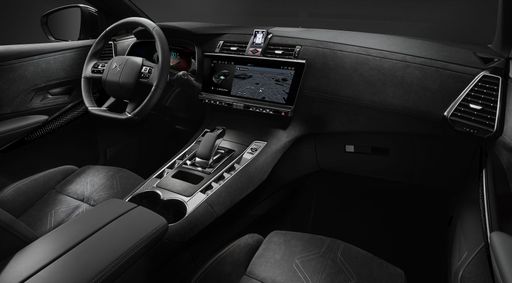
Inside the DS 7 Crossback, elegance meets technology with an array of premium materials and innovative infotainment options. The vehicle features advanced driver assistance systems, a digital cockpit, and customizable ambient lighting, ensuring a luxurious driving experience.

On the other hand, the Kia Niro offers modern conveniences with a more practical focus. It is equipped with an intuitive touchscreen interface, smartphone integration, and a suite of safety features that enhance everyday usability. The Niro’s technology may lack the luxurious touches found in the DS 7 Crossback, but it provides excellent functionality and ease of use.

Niro @ Kia Corporation

Conclusion

In conclusion, the DS 7 Crossback and Kia Niro cater to different segments of the SUV market. The DS 7 Crossback excels in luxury, performance, and innovative design, appealing to those who prioritize a premium experience. Meanwhile, the Kia Niro stands out for its exceptional fuel efficiency, practicality, and value, making it an excellent choice for eco-conscious consumers.

Ultimately, your decision may come down to personal preference. Whether you value luxury and performance or efficiency and practicality, both models offer something unique for today's discerning driver.

Here’s where it gets real: The technical differences in detail

DS 7 @ DS Automobiles / Stellantis Media

Costs and Efficiency:

Looking at overall running costs, both models reveal some interesting differences in everyday economy.

Kia Niro has a convincingly advantage in terms of price – it starts at 29100 £, while the DS Automobiles DS 7 costs 41900 £. That’s a price difference of around 12746 £.

Fuel consumption also shows a difference: DS Automobiles DS 7 manages with 1.30 L and is therefore decisively more efficient than the Kia Niro with 2.40 L. The difference is about 1.10 L per 100 km.

As for range, the DS Automobiles DS 7 performs barely noticeable better – achieving up to 65 km, about 3 km more than the Kia Niro.

Niro @ Kia Corporation

Engine and Performance:

Power, torque and acceleration are the classic benchmarks for car enthusiasts – and here, some clear differences start to show.

When it comes to engine power, the DS Automobiles DS 7 has a convincingly edge – offering 360 HP compared to 180 HP. That’s roughly 180 HP more horsepower.

In acceleration from 0 to 100 km/h, the DS Automobiles DS 7 is clearly quicker – completing the sprint in 5.70 s, while the Kia Niro takes 9.90 s. That’s about 4.20 s faster.

In terms of top speed, the DS Automobiles DS 7 performs distinct better – reaching 235 km/h, while the Kia Niro tops out at 185 km/h. The difference is around 50 km/h.

There’s also a difference in torque: DS Automobiles DS 7 pulls significantly stronger with 520 Nm compared to 265 Nm. That’s about 255 Nm difference.

Space and Everyday Use:

Whether family car or daily driver – which one offers more room, flexibility and comfort?

Both vehicles offer seating for 5 people.

In curb weight, Kia Niro is a bit lighter – 1474 kg compared to 1651 kg. The difference is around 177 kg.

In terms of boot space, the DS Automobiles DS 7 offers somewhat more room – 555 L compared to 451 L. That’s a difference of about 104 L.

In maximum load capacity, the DS Automobiles DS 7 performs a bit better – up to 1750 L, which is about 305 L more than the Kia Niro.

When it comes to payload, Kia Niro minimal takes the win – 466 kg compared to 424 kg. That’s a difference of about 42 kg.

Who comes out on top?

Overall, the DS Automobiles DS 7 shows itself to be is largely superior and secures the title of DriveDuel Champion.
It convinces with the more balanced overall package and proves to be the more versatile choice for everyday use.

DS Automobiles DS 7
Kia Niro

Costs and Consumption

View detailed analysis

Engine and Performance

View detailed analysis

Dimensions and Body

View detailed analysis
from about £41,900
DS 7 @ DS Automobiles / Stellantis Media

DS Automobiles DS 7

  • Engine Type : Diesel, Plugin Hybrid
  • Transmission : Automatic
  • Drive Type : Front-Wheel Drive, All-Wheel Drive
  • Power HP : 130 - 360 HP
  • Consumption L/100km : 1.3 - 5.5 L
  • Electric Range : 50 - 65 km

DS Automobiles DS 7

5 (1 Reviews)
rate

The DS 7 wraps Parisian elegance into SUV practicality, with sculpted surfaces, a jewel-like grille and an interior that feels more boutique lounge than family transporter. It appeals to buyers who want style and comfort without shouting, delivering a refined ride and clever tech that make daily driving feel a little more special — and yes, it’ll turn heads in the school run.

details

Kia Niro

5 (1 Reviews)
rate

The Kia Niro blends clever packaging and modern styling into a compact crossover that’s refreshingly sensible for daily life. It’s comfortable, economical and packed with user‑friendly tech, so if you want a fuss‑free family car with a touch of green credibility, the Niro is worth a test drive.

details
DS Automobiles DS 7
Kia Niro
DS 7 @ DS Automobiles / Stellantis Media
Niro @ Kia Corporation

Costs and Consumption

Price
41900 - 59300 £
Price
29100 - 38600 £
Consumption L/100km
1.3 - 5.5 L
Consumption L/100km
2.4 - 4.9 L
Consumption kWh/100km
-
Consumption kWh/100km
-
Electric Range
50 - 65 km
Electric Range
57 - 62 km
Battery Capacity
12.90 kWh
Battery Capacity
1.3 - 11.1 kWh
co2
30 - 145 g/km
co2
53 - 111 g/km
Fuel tank capacity
43 - 55 L
Fuel tank capacity
37 - 42 L

Dimensions and Body

Body Type
SUV
Body Type
SUV
Seats
5
Seats
5
Doors
5
Doors
5
Curb weight
1651 - 2002 kg
Curb weight
1474 - 1594 kg
Trunk capacity
555 L
Trunk capacity
348 - 451 L
Length
4593 mm
Length
4420 mm
Width
1891 mm
Width
1825 mm
Height
1625 mm
Height
1545 mm
Max trunk capacity
1750 L
Max trunk capacity
1342 - 1445 L
Payload
398 - 424 kg
Payload
466 kg

Engine and Performance

Engine Type
Diesel, Plugin Hybrid
Engine Type
Full Hybrid, Plugin Hybrid
Transmission
Automatic
Transmission
Automatic
Transmission Detail
Automatic Gearbox
Transmission Detail
Dual-Clutch Automatic
Drive Type
Front-Wheel Drive, All-Wheel Drive
Drive Type
Front-Wheel Drive
Power HP
130 - 360 HP
Power HP
138 - 180 HP
Acceleration 0-100km/h
5.7 - 11.9 s
Acceleration 0-100km/h
9.9 - 11.4 s
Max Speed
195 - 235 km/h
Max Speed
170 - 185 km/h
Torque
300 - 520 Nm
Torque
265 Nm
Number of Cylinders
4
Number of Cylinders
4
Power kW
96 - 265 kW
Power kW
102 - 132 kW
Engine capacity
1499 - 1598 cm3
Engine capacity
1580 cm3

General

Model Year
2024 - 2025
Model Year
2025
CO2 Efficiency Class
E, B
CO2 Efficiency Class
C, B
Brand
DS Automobiles
Brand
Kia
What drive types are available for the DS Automobiles DS 7?

The DS Automobiles DS 7 is available as Front-Wheel Drive or All-Wheel Drive.

The prices and data displayed are estimates based on German list prices and may vary by country. This information is not legally binding.

do not click