@ DS Automobiles / Stellantis Media
@ MINI / BMW Group Press
VS

DS Automobiles DS 7 vs MINI Countryman – Which car suits you better?

Both models have their strengths – but which one suits you more?
Compare performance, efficiency, price and space directly: DS Automobiles DS 7 or MINI Countryman?

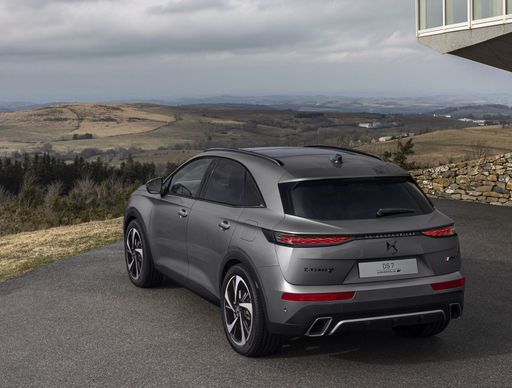
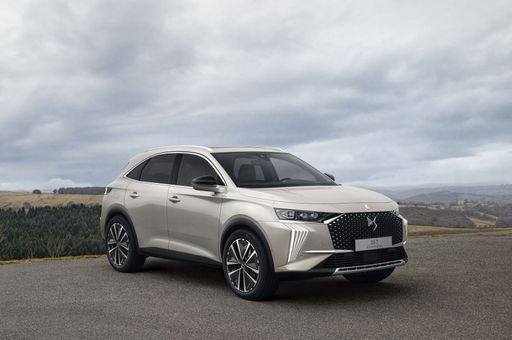
DS 7 @ DS Automobiles / Stellantis Media

Head-to-Head: DS 7 Crossback vs. MINI Countryman

The automotive arena is buzzing with excitement as two European titans, the DS 7 Crossback and the MINI Countryman, go head-to-head. Both are chic, stylish, and efficient SUVs aimed at elevating the driving experience. This in-depth comparison explores technical aspects and innovations offered by these two models, revealing what sets them apart in a fiercely competitive market.
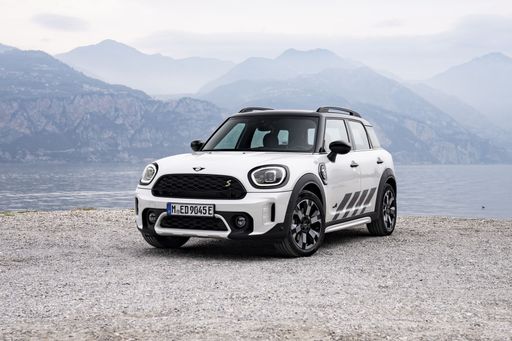
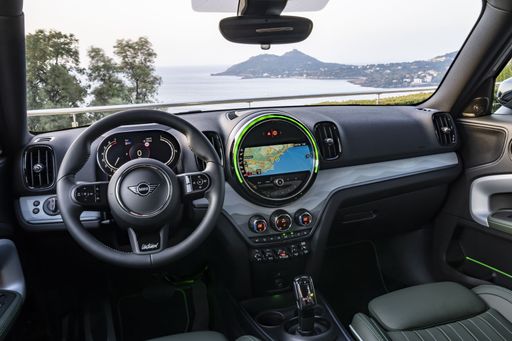
Countryman @ MINI / BMW Group Press

Under the Hood: Engine Variants and Performance

The DS 7 Crossback impresses with its versatile engine lineup, offering both diesel and plug-in hybrid options. With power outputs ranging from 130 to 360 HP and torque between 300 and 520 Nm, the DS 7 ensures a customizable driving experience. Acceleration varies, with 0-100 km/h times between 11.9 to 5.7 seconds, dependent on the powertrain you choose. Maximum speeds reach up to 235 km/h, suiting a range of driving styles.

On the other hand, the MINI Countryman provides a diverse engine selection, including petrol, diesel, mild hybrid (MHEV), and pure electric models. Power figures are equally impressive, ranging from 163 to 313 HP, with maximum torque stretching from 250 to 494 Nm. The Countryman boasts an acceleration range of 8.6 to 5.4 seconds to 100 km/h, reaching top speeds up to 250 km/h, appealing to speed enthusiasts and eco-conscious drivers alike.

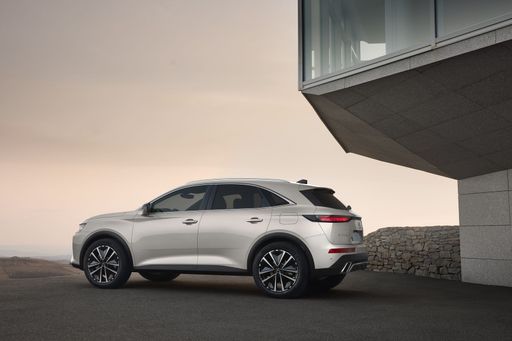
DS 7 @ DS Automobiles / Stellantis Media

Fuel Efficiency and Electric Range

Efficiency is a strong suit for the DS 7 Crossback, especially in its plug-in hybrid format, offering consumption as low as 1.3 L/100km and an electric range up to 65 km. Its 12.9 kWh battery capacity allows for efficient energy use, resulting in low CO2 emissions ranging from 30 to 44 g/km.

The MINI Countryman, particularly its electric variant, shines with an impressive range of up to 462 km. Fuel consumption varies from 4.6 to 7.8 L/100km across its combustion engine variants. As for the electrified options, it showcases a consumption rate of 15.7 to 16.8 kWh/100km, adhering to A-class CO2 efficiency.

Countryman @ MINI / BMW Group Press

Dimensions and Practicality

The DS 7 Crossback’s dimensions promote a spacious and comfortable cabin, measuring 4593 mm in length, 1891 mm in width, and 1625 mm in height. It boasts a substantial trunk capacity of 555 liters, catering to families and adventurers alike. Its curb weight ranges from 1651 to 2002 kg, allowing for a decent payload capacity.

Meanwhile, the MINI Countryman measures slightly more compact at lengths between 4444 to 4447 mm, with widths of 1843 mm and varying heights up to 1661 mm. It holds a trunk copacity between 450 to 505 liters, offering ample space for daily commutes or weekend escapes. The curb weight ranges from 1620 to 2075 kg, aligning with its lightweight maneuverability.

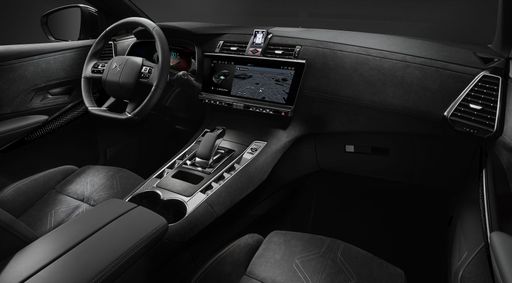
DS 7 @ DS Automobiles / Stellantis Media

Drive Types and Transmission

Both the DS 7 Crossback and MINI Countryman feature automatic transmissions, enhancing their user-friendly driving experiences. The DS 7 is available in front-wheel and all-wheel-drive configurations, whereas the MINI Countryman offers versatility with similar drive options and even includes an electric-exclusive option.

Countryman @ MINI / BMW Group Press

Conclusion: Which Model Suits You?

The decision between the DS 7 Crossback and the MINI Countryman largely depends on individual preferences and lifestyle needs. The DS 7 banks on luxurious comfort and hybrid efficiency, while the MINI Countryman is a versatile choice for those seeking a blend of performance and eco-friendly innovations. Whichever you choose, both models promise an engaging and sophisticated ride.

Here’s where it gets real: The technical differences in detail

DS 7 @ DS Automobiles / Stellantis Media

Costs and Efficiency:

Looking at overall running costs, both models reveal some interesting differences in everyday economy.

MINI Countryman has a clearly perceptible advantage in terms of price – it starts at 31500 £, while the DS Automobiles DS 7 costs 41900 £. That’s a price difference of around 10338 £.

Fuel consumption also shows a difference: DS Automobiles DS 7 manages with 1.30 L and is therefore decisively more efficient than the MINI Countryman with 4.60 L. The difference is about 3.30 L per 100 km.

As for range, the MINI Countryman performs convincingly better – achieving up to 462 km, about 397 km more than the DS Automobiles DS 7.

Countryman @ MINI / BMW Group Press

Engine and Performance:

Power, torque and acceleration say a lot about how a car feels on the road. This is where you see which model delivers more driving dynamics.

When it comes to engine power, the DS Automobiles DS 7 has a a bit edge – offering 360 HP compared to 313 HP. That’s roughly 47 HP more horsepower.

In acceleration from 0 to 100 km/h, the MINI Countryman is slight quicker – completing the sprint in 5.40 s, while the DS Automobiles DS 7 takes 5.70 s. That’s about 0.30 s faster.

In terms of top speed, the MINI Countryman performs hardly perceptible better – reaching 250 km/h, while the DS Automobiles DS 7 tops out at 235 km/h. The difference is around 15 km/h.

There’s also a difference in torque: DS Automobiles DS 7 pulls minimal stronger with 520 Nm compared to 494 Nm. That’s about 26 Nm difference.

Space and Everyday Use:

Cabin size, boot volume and payload all play a role in everyday practicality. Here, comfort and flexibility make the difference.

Both vehicles offer seating for 5 people.

In curb weight, MINI Countryman is slight lighter – 1620 kg compared to 1651 kg. The difference is around 31 kg.

In terms of boot space, the DS Automobiles DS 7 offers slight more room – 555 L compared to 505 L. That’s a difference of about 50 L.

In maximum load capacity, the DS Automobiles DS 7 performs slightly better – up to 1750 L, which is about 220 L more than the MINI Countryman.

When it comes to payload, MINI Countryman slightly takes the win – 500 kg compared to 424 kg. That’s a difference of about 76 kg.

Who comes out on top?

Overall, the DS Automobiles DS 7 shows itself to be is largely superior and secures the title of DriveDuel Champion.
It convinces with the more balanced overall package and proves to be the more versatile choice for everyday use.

from about £41,900
DS 7 @ DS Automobiles / Stellantis Media

DS Automobiles DS 7

  • Engine Type : Diesel, Plugin Hybrid
  • Transmission : Automatic
  • Drive Type : Front-Wheel Drive, All-Wheel Drive
  • Power HP : 130 - 360 HP
  • Consumption L/100km : 1.3 - 5.5 L
  • Electric Range : 50 - 65 km

DS Automobiles DS 7

5 (1)
rate

The DS 7 wraps Parisian elegance into SUV practicality, with sculpted surfaces, a jewel-like grille and an interior that feels more boutique lounge than family transporter. It appeals to buyers who want style and comfort without shouting, delivering a refined ride and clever tech that make daily driving feel a little more special — and yes, it’ll turn heads in the school run.

details

MINI Countryman

The MINI Countryman turns the cheeky charm of a classic MINI into a proper all-rounder, blending playful styling with surprisingly usable space for everyday life. It still grins at city lights but will happily tackle muddy lanes, perfect for buyers who want character without sacrificing practicality.

details
DS Automobiles DS 7
MINI Countryman
DS 7 @ DS Automobiles / Stellantis Media
Countryman @ MINI / BMW Group Press

Costs and Consumption

Price
41900 - 59300 £
Price
31500 - 45300 £
Consumption L/100km
1.3 - 5.5 L
Consumption L/100km
4.6 - 7.8 L
Consumption kWh/100km
-
Consumption kWh/100km
15.7 - 16.8 kWh
Electric Range
50 - 65 km
Electric Range
432 - 462 km
Battery Capacity
12.90 kWh
Battery Capacity
64.60 kWh
co2
30 - 145 g/km
co2
0 - 177 g/km
Fuel tank capacity
43 - 55 L
Fuel tank capacity
45 - 54 L

Dimensions and Body

Body Type
SUV
Body Type
SUV
Seats
5
Seats
5
Doors
5
Doors
5
Curb weight
1651 - 2002 kg
Curb weight
1620 - 2075 kg
Trunk capacity
555 L
Trunk capacity
450 - 505 L
Length
4593 mm
Length
4444 - 4447 mm
Width
1891 mm
Width
1843 mm
Height
1625 mm
Height
1635 - 1661 mm
Max trunk capacity
1750 L
Max trunk capacity
1450 - 1530 L
Payload
398 - 424 kg
Payload
460 - 500 kg

Engine and Performance

Engine Type
Diesel, Plugin Hybrid
Engine Type
Petrol MHEV, Diesel MHEV, Electric, Petrol
Transmission
Automatic
Transmission
Automatic
Transmission Detail
Automatic Gearbox
Transmission Detail
Dual-Clutch Automatic, Automatic Gearbox, Reduction Gearbox
Drive Type
Front-Wheel Drive, All-Wheel Drive
Drive Type
Front-Wheel Drive, All-Wheel Drive
Power HP
130 - 360 HP
Power HP
163 - 313 HP
Acceleration 0-100km/h
5.7 - 11.9 s
Acceleration 0-100km/h
5.4 - 8.6 s
Max Speed
195 - 235 km/h
Max Speed
170 - 250 km/h
Torque
300 - 520 Nm
Torque
250 - 494 Nm
Number of Cylinders
4
Number of Cylinders
3 - 4
Power kW
96 - 265 kW
Power kW
120 - 230 kW
Engine capacity
1499 - 1598 cm3
Engine capacity
1499 - 1998 cm3

General

Model Year
2024 - 2025
Model Year
2024
CO2 Efficiency Class
E, B
CO2 Efficiency Class
D, E, A, G
Brand
DS Automobiles
Brand
MINI
What drive types are available for the DS Automobiles DS 7?

The DS Automobiles DS 7 is available as Front-Wheel Drive or All-Wheel Drive.

The prices and data displayed are estimates based on German list prices and may vary by country. This information is not legally binding.