@ BMW Group Press
@ MINI / BMW Group Press
VS

BMW iX1 vs MINI Countryman – Performance, range & efficiency compared

Compare performance, boot capacity, efficiency and price at a glance.
Find out which car is the better choice for you – BMW iX1 or MINI Countryman?

iX1 @ BMW Group Press

BMW iX1 vs MINI Countryman: A Detailed Comparison

In the rapidly evolving world of electric and hybrid SUVs, two models stand out for their distinctive blend of performance, design, and innovation: the BMW iX1 and the MINI Countryman. Both vehicles represent the finest elements of their respective brands and are a testament to the automotive industry's commitment to sustainability without compromising on driving pleasure.

Countryman @ MINI / BMW Group Press

Engine and Performance

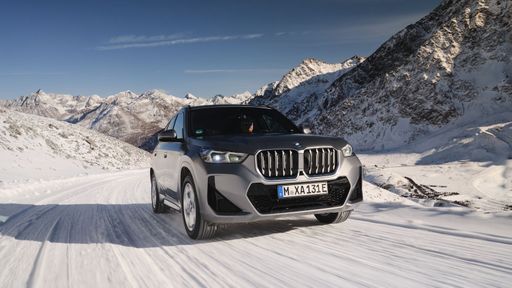
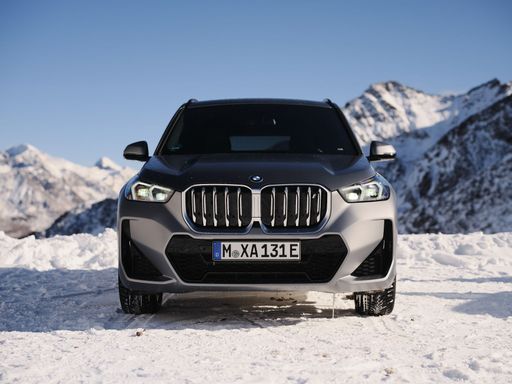
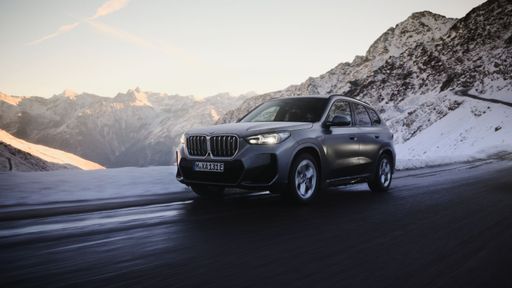
The BMW iX1 offers a fully electric experience with two powertrain options, providing 204 HP in the front-wheel-drive version and a more robust 313 HP in the all-wheel-drive variant. The torque figures are equally impressive, with the higher model delivering a substantial 494 Nm. This provides an acceleration from 0-100 km/h in just 5.6 seconds, rivaling many traditional combustion engines while maintaining a top speed of 180 km/h.

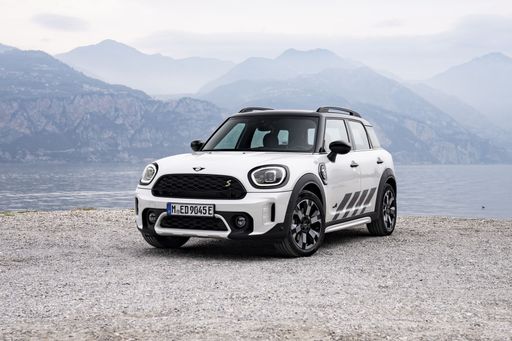
On the other hand, the MINI Countryman offers a diverse range of engines, including petrol, diesel, and electric options, with power outputs ranging up to 313 HP. Its acceleration varies, with its fastest option hitting 0-100 km/h in 5.4 seconds, closely matching the BMW's capabilities. The top speed can reach up to an exhilarating 250 km/h, showcasing MINI's sportier approach in their upper-tier models.

iX1 @ BMW Group Press

Range and Efficiency

When it comes to electric range, the BMW iX1 offers a competitive reach of up to 463 km, supported by a 64.8 kWh battery. This range allows for longer journeys without frequent recharging needs and positions the iX1 as a practical option for many drivers.

The MINI Countryman, equipped with a slightly smaller 64.6 kWh battery, provides a comparable electric range of 462 km. Despite its broader engine variety, MINI has managed to maintain competitive electric efficiency, making it a versatile choice for those not entirely committed to an electric-only future.

Countryman @ MINI / BMW Group Press

Design and Dimensions

In terms of size, the BMW iX1 stands tall with dimensions of 4500 mm in length, 1845 mm in width, and a height of 1616 mm. Its curb weight varies from 1940 to 2085 kg, signifying a solid build that contributes to stability on the road.

The MINI Countryman is slightly more compact, measuring around 4444 to 4447 mm in length, with a width of 1843 mm. Height-wise, it ranges from 1635 to 1661 mm, catering to urban maneuverability without losing its adventurous SUV character. With a lighter curb weight starting at 1620 kg extending to 1940 kg, the Countryman often delivers nimble handling, a hallmark of MINI's design philosophy.

iX1 @ BMW Group Press

Interior and Practicality

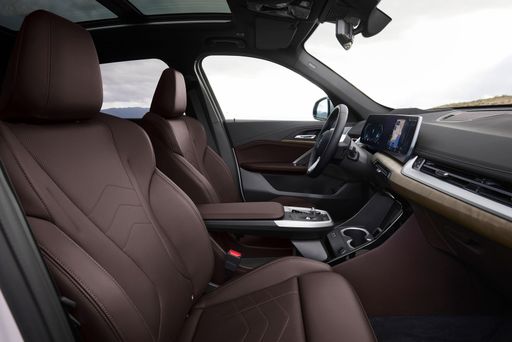
Both models offer seating for five passengers, combining practicality with luxury. The trunk capacity of the BMW iX1 is 490 liters, catering well to families or those needing to transport goods comfortably. The MINI Countryman provides a flexible trunk capacity, ranging from 450 to 505 liters, slightly edging out the iX1 in storage flexibility.

Countryman @ MINI / BMW Group Press

Innovations and Technology

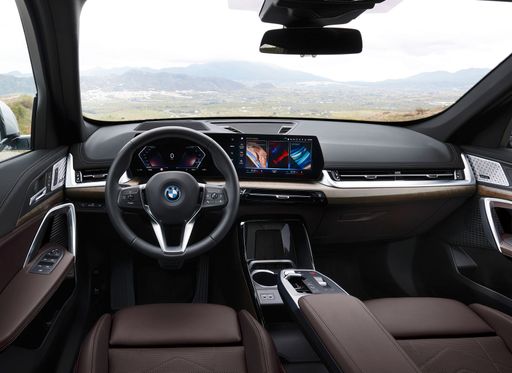
The 2023 BMW iX1 is loaded with the latest technology, including state-of-the-art driver assistance systems and a modern infotainment setup that enhances the driving experience. BMW’s focus on sustainability is evident from the iX1's CO2 efficiency class of 'A', resulting in zero direct emissions.

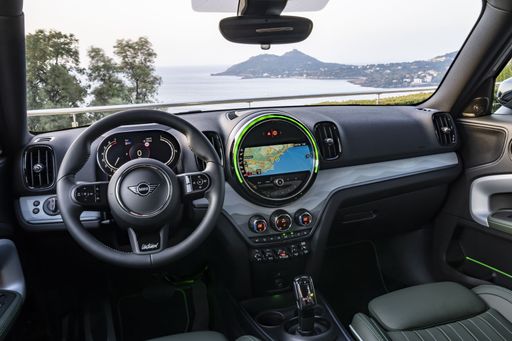
MINI's 2024 Countryman doesn’t lag in innovation, featuring advanced tech options and hybridization for those seeking a blend of traditional and modern driving experiences. It encompasses a range of CO2 classifications from efficient 'A' models to more conventional categories, reflecting its versatile engine options.

iX1 @ BMW Group Press

Conclusion

Choosing between the BMW iX1 and the MINI Countryman largely depends on personal preference. The iX1 is tailored towards those seeking a pure electric experience with a focus on luxury and sustainability. Meanwhile, the Countryman appeals to drivers looking for a blend of tradition and innovation, offering a variety of powertrains and dynamic performance capabilities. Both models prove that sustainability and driving pleasure can coexist, making the decision a matter of stylistic preference rather than a compromise on performance or efficiency.

Here’s where it gets real: The technical differences in detail

Countryman @ MINI / BMW Group Press

Costs and Efficiency:

Price and efficiency are key factors when choosing a car – and this is often where the real differences emerge.

MINI Countryman has a evident advantage in terms of price – it starts at 31500 £, while the BMW iX1 costs 41800 £. That’s a price difference of around 10286 £.

In terms of energy consumption, the advantage goes to the MINI Countryman: with 15.70 kWh per 100 km, it’s minimal more efficient than the BMW iX1 with 15.80 kWh. That’s a difference of about 0.10 kWh.

As for range, the BMW iX1 performs minimal better – achieving up to 463 km, about 1 km more than the MINI Countryman.

iX1 @ BMW Group Press

Engine and Performance:

Power, torque and acceleration say a lot about how a car feels on the road. This is where you see which model delivers more driving dynamics.

Both models deliver identical power – 313 HP each.

In acceleration from 0 to 100 km/h, the MINI Countryman is slight quicker – completing the sprint in 5.40 s, while the BMW iX1 takes 5.60 s. That’s about 0.20 s faster.

In terms of top speed, the MINI Countryman performs clearly perceptible better – reaching 250 km/h, while the BMW iX1 tops out at 180 km/h. The difference is around 70 km/h.

Both models offer the same torque – 494 Nm.

Space and Everyday Use:

Whether family car or daily driver – which one offers more room, flexibility and comfort?

Both vehicles offer seating for 5 people.

In curb weight, MINI Countryman is to a small extent lighter – 1620 kg compared to 1940 kg. The difference is around 320 kg.

In terms of boot space, the MINI Countryman offers minimal more room – 505 L compared to 490 L. That’s a difference of about 15 L.

In maximum load capacity, the MINI Countryman performs hardly perceptible better – up to 1530 L, which is about 35 L more than the BMW iX1.

When it comes to payload, MINI Countryman hardly perceptible takes the win – 500 kg compared to 495 kg. That’s a difference of about 5 kg.

Who comes out on top?

Overall, the MINI Countryman shows itself to be is largely superior and secures the title of DriveDuel Champion.
It convinces with the more balanced overall package and proves to be the more versatile choice for everyday use.

from about £31,500
Countryman @ MINI / BMW Group Press

MINI Countryman

  • Engine Type : Petrol MHEV, Diesel MHEV, Electric, Petrol
  • Transmission : Automatic
  • Drive Type : Front-Wheel Drive, All-Wheel Drive
  • Power HP : 163 - 313 HP
  • Consumption L/100km : 4.6 - 7.8 L
  • Consumption kWh/100km : 15.7 - 16.8 kWh
  • Electric Range : 432 - 462 km

BMW iX1

5 (2)
rate

The BMW iX1 wraps BMW's electric ambition into a compact SUV package that feels unexpectedly premium, with sharp handling and a crisp, modern cabin that keeps the driver in charge. It's ideal for buyers who want a stylish, quiet daily driver with useful practicality and tech-savvy touches — plus enough character to make the commute feel less like a chore and more like a short joyride.

details

MINI Countryman

The MINI Countryman turns the cheeky charm of a classic MINI into a proper all-rounder, blending playful styling with surprisingly usable space for everyday life. It still grins at city lights but will happily tackle muddy lanes, perfect for buyers who want character without sacrificing practicality.

details
BMW iX1
MINI Countryman
iX1 @ BMW Group Press
Countryman @ MINI / BMW Group Press

Costs and Consumption

Price
41800 - 54600 £
Price
31500 - 45300 £
Consumption L/100km
-
Consumption L/100km
4.6 - 7.8 L
Consumption kWh/100km
15.8 - 17.1 kWh
Consumption kWh/100km
15.7 - 16.8 kWh
Electric Range
436 - 463 km
Electric Range
432 - 462 km
Battery Capacity
64.80 kWh
Battery Capacity
64.60 kWh
co2
0 g/km
co2
0 - 177 g/km
Fuel tank capacity
-
Fuel tank capacity
45 - 54 L

Dimensions and Body

Body Type
SUV
Body Type
SUV
Seats
5
Seats
5
Doors
5
Doors
5
Curb weight
1940 - 2085 kg
Curb weight
1620 - 2075 kg
Trunk capacity
490 L
Trunk capacity
450 - 505 L
Length
4500 mm
Length
4444 - 4447 mm
Width
1845 mm
Width
1843 mm
Height
1616 mm
Height
1635 - 1661 mm
Max trunk capacity
1495 L
Max trunk capacity
1450 - 1530 L
Payload
495 kg
Payload
460 - 500 kg

Engine and Performance

Engine Type
Electric
Engine Type
Petrol MHEV, Diesel MHEV, Electric, Petrol
Transmission
Automatic
Transmission
Automatic
Transmission Detail
Reduction Gearbox
Transmission Detail
Dual-Clutch Automatic, Automatic Gearbox, Reduction Gearbox
Drive Type
Front-Wheel Drive, All-Wheel Drive
Drive Type
Front-Wheel Drive, All-Wheel Drive
Power HP
204 - 313 HP
Power HP
163 - 313 HP
Acceleration 0-100km/h
5.6 - 8.6 s
Acceleration 0-100km/h
5.4 - 8.6 s
Max Speed
170 - 180 km/h
Max Speed
170 - 250 km/h
Torque
250 - 494 Nm
Torque
250 - 494 Nm
Number of Cylinders
-
Number of Cylinders
3 - 4
Power kW
150 - 230 kW
Power kW
120 - 230 kW
Engine capacity
-
Engine capacity
1499 - 1998 cm3

General

Model Year
2022 - 2023
Model Year
2024
CO2 Efficiency Class
A
CO2 Efficiency Class
D, E, A, G
Brand
BMW
Brand
MINI
Is the BMW iX1 offered with different drivetrains?

The BMW iX1 is available as Front-Wheel Drive or All-Wheel Drive.

The prices and data displayed are estimates based on German list prices and may vary by country. This information is not legally binding.