VS

Fiat Panda vs Dacia Duster comparison

Compare performance (70 HP vs 158 HP), boot space and price (14,100 £ vs 16,300 £ ) at a glance. Find out which car is the better choice for you – Fiat Panda or Dacia Duster?

Fiat Panda vs Dacia Duster: Key differences

Fiat Panda

4.5 (2 Reviews)
rate
  • somewhat cheaper
  • clearly lighter

Dacia Duster

5 (2 Reviews)
rate
  • considerably more power
  • barely more efficient
  • clearly quicker 0–100 km/h
  • considerably more trunk space

All details on performance, efficiency, range and trunk space can be found in the technical comparison below – including user reviews for both models.

Panda

Compact SUV vs. Urban Hatchback: Dacia Duster vs. Fiat Panda

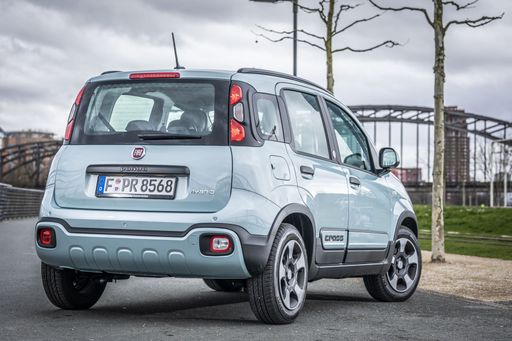
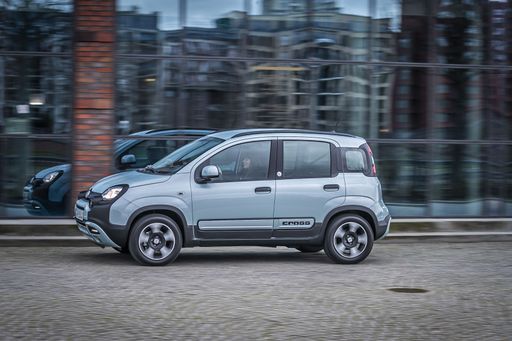
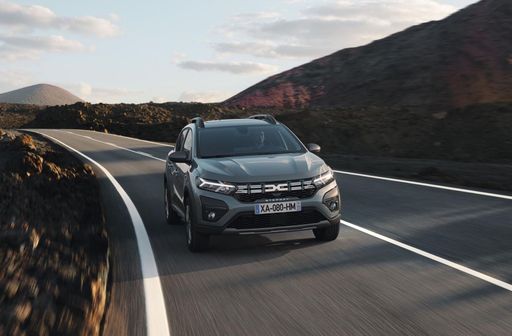
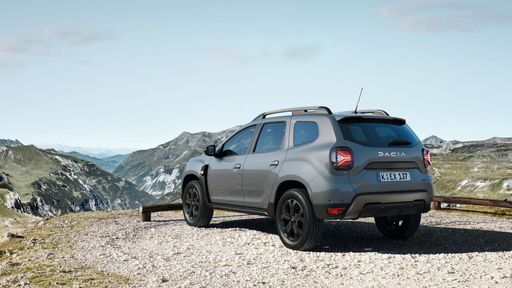
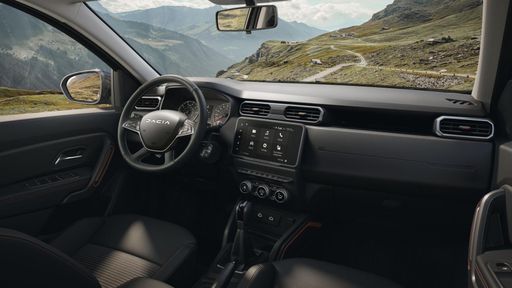
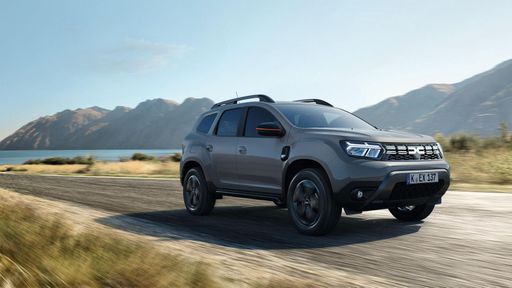
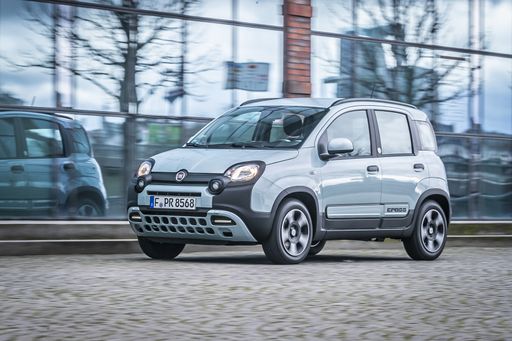
For car enthusiasts and prospective buyers, choosing the right car often involves balancing needs with wants. Enter the 2024 Dacia Duster and Fiat Panda—two models that cater to different aspects of driving, yet offer their own unique appeal. While the Duster invites you into the world of SUVs, the Panda nudges you into urban exploration with its compact design.
Duster

Power and Performance: Muscle vs. Agility

The Dacia Duster sets itself apart with multiple engine types, including options for LPG, full hybrid, and petrol MHEV, achieving a remarkable power output range of 91 to 140 HP. Depending on your choice, the Duster can sprint from 0-100 km/h in as little as 9.9 seconds and reach speeds up to 180 km/h. Its robust torque figures of up to 230 Nm ensure that it's not just all talk but full of action, especially appealing to those looking for a versatile SUV.

On the other side, the Fiat Panda is humble but not to be underestimated. Sporting a petrol MHEV engine with 70 HP, the Panda achieves a top speed of 164 km/h. It accelerates from 0 to 100 km/h in 13.9 to 14.7 seconds, showcasing its urban-friendly design without compromising the driving experience. Its smaller torque of 92 Nm is perfectly suitable for navigating city streets efficiently.

Panda

Consumption and Efficiency: Balancing the Budget

Fuel efficiency is increasingly critical in the automotive market, and both models address this with impressive consumption figures. The Duster offers a range as low as 5 L/100 km, appealing for longer expeditions and eco-driven enthusiasts. Additionally, with CO2 emissions between 114 and 147 g/km, it carefully treads the line of sustainability crucial in today's climate-conscious era.

The Fiat Panda prides itself on delivering an efficient urban drive with a consumption of around 5 to 5.1 L/100 km. Its CO2 emissions remain commendably between 113 and 116 g/km. This lighter environmental footprint is ideal for those commuting predominantly within city limits.

Duster

Design and Dimensions: Roominess vs. Compactness

A look at the Dacia Duster reveals its distinctive SUV dimensions, measuring 4343 mm in length, 1813 mm in width, and a height upwards of 1661 mm. It comfortably holds five passengers with an impressive trunk capacity ranging from 430 to 517 liters, making it a family favorite for trips.

Contrastingly, the Fiat Panda is the definition of compact efficiency, stretching from 3653 to 3705 mm in length and 1643 to 1662 mm in width. Its hatchback design maximizes urban maneuverability yet accommodates up to five passengers. Though its trunk holds 225 liters—less than the Duster—it serves the typical urban scenarios effortlessly.

Panda

Safety and Innovation: Keeping Ahead

Both cars excel in incorporating modern safety features but differ based on their intended usage. The Duster, with its all-wheel-drive option, is tailored for more dynamic terrains. Its innovation extends to various engine types and transmission options, including both manual and automatic configurations that are suitable for varied terrains and driver preferences.

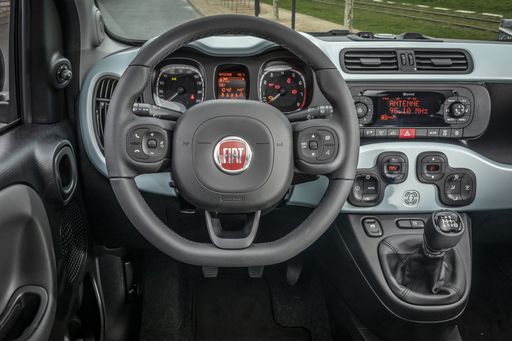
The Panda, designed to thrive in city roads, features front-wheel drive and a manual gearbox that keeps things simple yet effective. Its focus remains on practicality and reliability, making it a dependable choice for city dwellers.

Duster

Conclusion: Which Is Right for You?

Ultimately, the Dacia Duster and Fiat Panda cater to differing needs. For those in search of adventure, space, and engine versatility, the Duster is your go-to SUV. For city slickers desiring compactness, fuel efficiency, and reliability, the Fiat Panda fits the bill. Both are 2024's compelling offerings in their own rights, inviting you into varied yet distinct automotive journeys.

Here’s where it gets real: The technical differences in detail

Panda

Costs and Efficiency:

Price and efficiency are often the first things buyers look at. Here it becomes clear which model has the long-term edge – whether at the pump, the plug, or in purchase price.

Fiat Panda is somewhat cheaper – starting at 14,100 £ , while the Dacia Duster costs 16,300 £ . That’s a price difference of around 2,143 £.

Fuel consumption also shows a difference: the Dacia Duster uses 4.7 L/100km and is barely more efficient than the Fiat Panda with 5 L/100km. The difference is about 0.3 L/100km.

Duster

Engine and Performance:

Power, torque and acceleration are the classic benchmarks for car enthusiasts – and here, some clear differences start to show.

When it comes to engine power, the Dacia Duster offers considerably more power – delivering 158 HP compared to 70 HP. That’s roughly 88 HP more horsepower.

When accelerating from 0 to 100 km/h, the Dacia Duster is clearly quicker – completing the sprint in 9.4 s, while the Fiat Panda takes 13.9 s. That’s about 4.5 s quicker.

Looking at top speed, the Dacia Duster is only slightly faster – reaching 180 km/h, while the Fiat Panda tops out at 164 km/h. The difference is around 16 km/h.

There’s also a difference in torque: the Dacia Duster delivers substantially more torque with 230 Nm compared to 92 Nm. That’s about 138 Nm more.

Panda

Space and Everyday Use:

Cabin size, boot volume and payload all play a role in everyday practicality. Here, comfort and flexibility make the difference.

Seats: Dacia Duster offers more seats – 5 vs 4.

In terms of curb weight, Fiat Panda is clearly lighter – 1,055 kg compared to 1,377 kg. The difference is around 322 kg.

Looking at boot space, the Dacia Duster offers considerably more boot space – 517 L compared to 225 L. That’s a difference of about 292 L.

For maximum load capacity, the Dacia Duster offers substantially more capacity – up to 1,609 L, about 739 L more than the Fiat Panda.

When it comes to payload, the Dacia Duster carries somewhat more – 453 kg compared to 365 kg. That’s a difference of about 88 kg.

Who wins the race in the data check?

The Dacia Duster holds a decisive overall lead in the objective data comparison.
This result only shows which model scores more points on paper – not which of the two cars feels right for you.

from £16,300
Duster

Dacia Duster

  • Engine Type : Petrol MHEV, Full Hybrid, LPG
  • Transmission : Manuel, Automatic
  • Drive Type : Front-Wheel Drive, All-Wheel Drive
  • Power HP : 115 - 158 HP
  • Consumption L/100km : 4.7 - 7.6 L/100km
Fiat Panda
Dacia Duster

Costs and Consumption

View detailed analysis

Engine and Performance

View detailed analysis

Dimensions and Body

View detailed analysis

Fiat Panda

The Panda is a charming, no-nonsense city companion that mixes cheerful Italian flair with genuinely useful practicality, making tight streets and daily errands feel less of a chore. Its honest simplicity, clever packaging and a dash of cheeky character make it a smart, low-stress buy for people who prefer sensible perks over showroom flash.

details

Dacia Duster

The Dacia Duster is a no-nonsense compact SUV that delivers rugged practicality and surprisingly comfortable everyday driving without fuss. It might not win any beauty contests, but its honest design, easy-to-live-with cabin and tough attitude make it a smart pick for buyers who want reliable transport without luxury frills.

details
Fiat Panda
Dacia Duster

Costs and Consumption

Price
14,100 £
Price
16,300 - 24,900 £
Consumption L/100km
5 L/100km
Consumption L/100km
4.7 - 7.6 L/100km
Consumption kWh/100km
-
Consumption kWh/100km
-
Electric Range
-
Electric Range
-
Battery Capacity
-
Battery Capacity
0.6 kWh
co2
113 g/km
co2
107 - 140 g/km
Fuel tank capacity
38 L
Fuel tank capacity
50 L

Dimensions and Body

Body Type
Hatchback
Body Type
SUV
Seats
4
Seats
5
Doors
5
Doors
5
Curb weight
1,055 kg
Curb weight
1,377 - 1,455 kg
Trunk capacity
225 L
Trunk capacity
348 - 517 L
Length
3,635 mm
Length
4,343 mm
Width
1,643 mm
Width
1,813 mm
Height
1,551 mm
Height
1,656 - 1,659 mm
Max trunk capacity
870 L
Max trunk capacity
1,414 - 1,609 L
Payload
365 kg
Payload
402 - 453 kg

Engine and Performance

Engine Type
Petrol MHEV
Engine Type
Petrol MHEV, Full Hybrid, LPG
Transmission
Manuel
Transmission
Manuel, Automatic
Transmission Detail
Manual Gearbox
Transmission Detail
Manual Gearbox, Automated Manual, Dual-Clutch Automatic
Drive Type
Front-Wheel Drive
Drive Type
Front-Wheel Drive, All-Wheel Drive
Power HP
70 HP
Power HP
115 - 158 HP
Acceleration 0-100km/h
13.9 s
Acceleration 0-100km/h
9.4 - 11.7 s
Max Speed
164 km/h
Max Speed
180 km/h
Torque
92 Nm
Torque
190 - 230 Nm
Number of Cylinders
3
Number of Cylinders
3 - 4
Power kW
51 kW
Power kW
84 - 116 kW
Engine capacity
999 cm3
Engine capacity
1,199 - 1,789 cm3

General

Model Year
2,024
Model Year
2,025 - 2,026
CO2 Efficiency Class
C
CO2 Efficiency Class
D, C
Brand
Fiat
Brand
Dacia
DriveDuel uses data analysis and artificial intelligence to evaluate vehicle data and create content. Content is regularly reviewed and improved. The displayed prices are estimates based on German list prices, adjusted to the respective country’s VAT. Country-specific registration taxes are not included. This information is not legally binding.