VS

Fiat Panda vs Dacia Sandero comparison

Compare performance (70 HP vs 122 HP), boot space and price (14,100 £ vs 11,000 £ ) at a glance. Find out which car is the better choice for you – Fiat Panda or Dacia Sandero?

Fiat Panda vs Dacia Sandero: Key differences

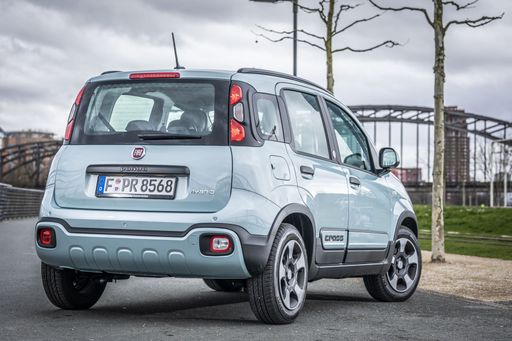
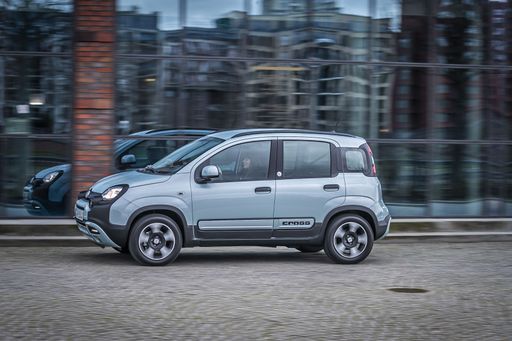
Fiat Panda

4.5 (3 Reviews)
rate
  • barely more efficient
  • very slightly lighter
details

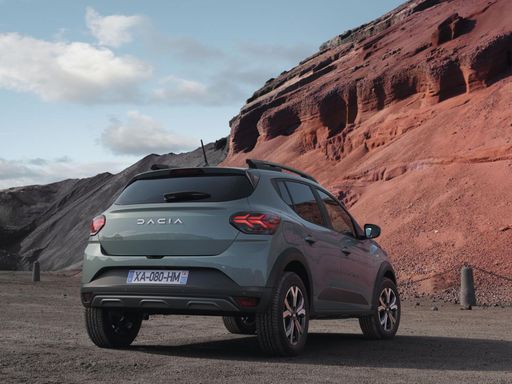
Dacia Sandero

3.1 (5 Reviews)
rate
  • noticeably cheaper
  • significantly more power
  • substantially quicker 0–100 km/h
  • noticeably more trunk space
details

All details on performance, efficiency, range and trunk space can be found in the technical comparison below – including user reviews for both models.

By Achim Sedelmaier

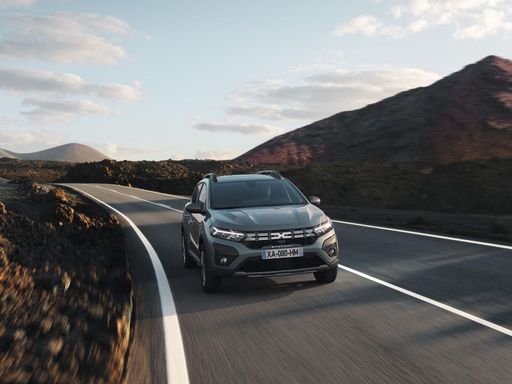
Panda

Dacia Sandero vs Fiat Panda: The Ultimate Hatchback Showdown

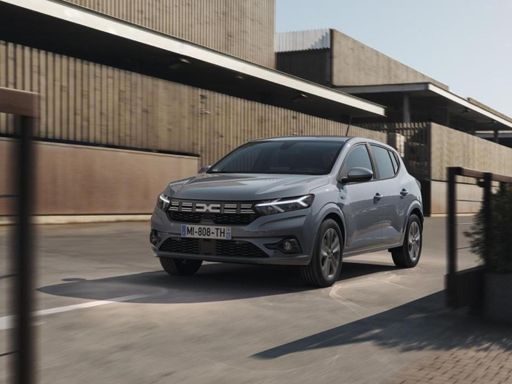
In the ever-competitive hatchback market, two vehicles have consistently stood out for offering practicality and affordability: the Dacia Sandero and the Fiat Panda. Both 2024 models bring new innovations, efficiency improvements, and distinct features aimed at capturing the hearts of potential buyers. Let's dive into a detailed comparison of these automotive favourites.
Sandero

Engine and Performance

The Dacia Sandero offers a range of engine options, including petrol and LPG variants. The available power output ranges from 67 HP to 110 HP, providing a versatile performance spectrum for various driving needs. With acceleration times from 0-100 km/h spanning between 10 and 16.7 seconds, the Sandero allows for a customization of power and efficiency. Directly targeted at eco-conscious drivers, its CO2 emissions range from 105 to 139 g/km.

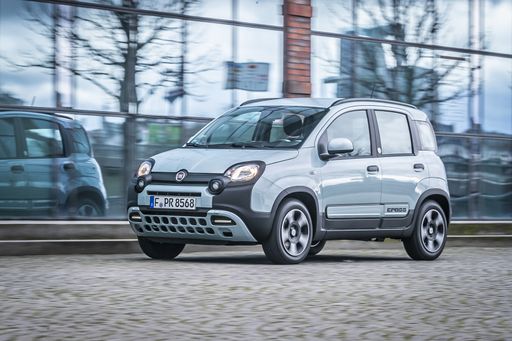
Conversely, the Fiat Panda utilizes a mild hybrid electric vehicle (MHEV) petrol engine, delivering a stable 70 HP. The Panda accelerates from 0-100 km/h in 13.9 to 14.7 seconds, showcasing a balance between performance and fuel economy. Its CO2 emissions are competitive, ranging from 113 to 116 g/km, thus catering to those mindful of environmental concerns.

Panda

Fuel Consumption and Efficiency

The Dacia Sandero exhibits varying fuel consumption figures, with numbers ranging from 5.2 to 7 L/100km, depending upon the engine variant. The fuel tank capacity sits at either 32 or 50 liters, providing considerable range and flexibility for longer journeys.

The Fiat Panda boasts slightly more conservative fuel consumption, recording between 5 and 5.1 L/100km, with its 38-liter fuel tank further supporting its efficient design. This positions the Panda as a strong contender for urban commuting needs.

Sandero

Dimensions and Practicality

When it comes to dimensions, the Dacia Sandero is the larger option, measuring between 4088 and 4099 mm in length, and up to 1848 mm in width, offering ample space inside. Its trunk capacity stands at 328 liters, coupled with a payload capacity that reaches up to 436 kg, highlighting its utility-focused design.

The Fiat Panda, more compact at 3653 to 3705 mm in length and up to 1662 mm in width, fits snugly into tighter parking spots. Although its trunk capacity is smaller at 225 liters, the Panda compensates with its light curb weight of 1055 kg and a payload capacity of 365 kg, making it a nimble and practical choice for city dwellers.

Panda

Seating and Comfort

Both vehicles feature a five-door design, but while the Dacia Sandero accommodates five passengers, the Fiat Panda offers configurations for either four or five occupants. The choice might come down to how often you plan to travel fully loaded, with the Sandero potentially providing more comfort for larger groups.

Sandero

Innovation and Technology

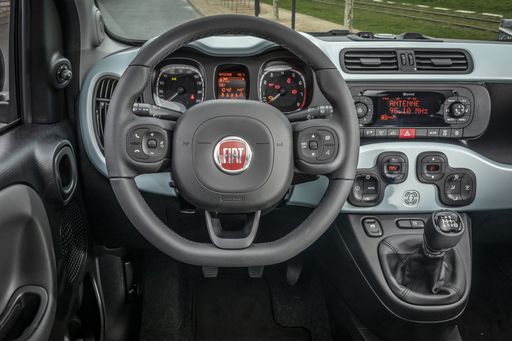
The Sandero brings an array of tech-centric options, including manual and automatic transmissions with CVT technology, appealing to those who prioritize driving ease and comfort. Meanwhile, the Fiat Panda keeps things straightforward with its manual gearbox, catering to drivers who appreciate the traditional driving style.

Panda

Conclusion

The choice between the Dacia Sandero and the Fiat Panda ultimately comes down to individual preferences and lifestyle needs. If larger space and more powerful engine options top your list, the Sandero could be your ideal pick. However, if you seek a compact, eco-friendly vehicle suitable for urban landscapes, the Fiat Panda stands as a worthy contender. Each brings unique advantages to the table, showcasing the best in hatchback innovations. The decision, as always, lies in matching these features to your priorities.

Here’s where it gets real: The technical differences in detail

Panda

Costs and Efficiency:

Price and efficiency are key factors when choosing a car – and this is often where the real differences emerge.

Dacia Sandero is noticeably cheaper – starting at 11,000 £ , while the Fiat Panda costs 14,100 £ . That’s a price difference of around 3,172 £.

Fuel consumption also shows a difference: the Fiat Panda uses 5 L/100km and is barely more efficient than the Dacia Sandero with 5.3 L/100km. The difference is about 0.3 L/100km.

Sandero

Engine and Performance:

Power, torque and acceleration are the classic benchmarks for car enthusiasts – and here, some clear differences start to show.

When it comes to engine power, the Dacia Sandero offers significantly more power – delivering 122 HP compared to 70 HP. That’s roughly 52 HP more horsepower.

When accelerating from 0 to 100 km/h, the Dacia Sandero is substantially quicker – completing the sprint in 9.7 s, while the Fiat Panda takes 13.9 s. That’s about 4.2 s quicker.

There’s also a difference in torque: the Dacia Sandero delivers considerably more torque with 200 Nm compared to 92 Nm. That’s about 108 Nm more.

Panda

Space and Everyday Use:

Beyond pure performance, interior space and usability matter most in daily life. This is where you see which car is more practical and versatile.

Seats: Dacia Sandero offers more seats – 5 vs 4.

In terms of curb weight, Fiat Panda is very slightly lighter – 1,055 kg compared to 1,100 kg. The difference is around 45 kg.

Looking at boot space, the Dacia Sandero offers noticeably more boot space – 372 L compared to 225 L. That’s a difference of about 147 L.

When it comes to payload, the Dacia Sandero carries a bit more – 436 kg compared to 365 kg. That’s a difference of about 71 kg.

Who wins the race in the data check?

The Dacia Sandero holds a decisive overall lead in the objective data comparison.
This result only shows which model scores more points on paper – not which of the two cars feels right for you.

from £11,000
Sandero

Dacia Sandero

  • Engine Type : Petrol, LPG
  • Transmission : Manuel, Automatic
  • Drive Type : Front-Wheel Drive
  • Power HP : 67 - 122 HP
  • Consumption L/100km : 5.3 - 7.2 L/100km
Fiat Panda
Dacia Sandero

Costs and Consumption

View detailed analysis

Engine and Performance

View detailed analysis

Dimensions and Body

View detailed analysis

Fiat Panda

The Panda is a charming, no-nonsense city companion that mixes cheerful Italian flair with genuinely useful practicality, making tight streets and daily errands feel less of a chore. Its honest simplicity, clever packaging and a dash of cheeky character make it a smart, low-stress buy for people who prefer sensible perks over showroom flash.

details

Dacia Sandero

The Dacia Sandero is the everyman's hatchback — unpretentious, practical and brilliantly affordable, with sensible space and straightforward charm where it matters most. It won't wow in the premium lane, but for buyers who want honest, dependable transport without showroom theatrics, the Sandero is a clever, no‑nonsense pick that keeps running costs low and grin levels high.

details
Fiat Panda
Dacia Sandero

Costs and Consumption

Price
14,100 £
Price
11,000 - 16,300 £
Consumption L/100km
5 L/100km
Consumption L/100km
5.3 - 7.2 L/100km
Consumption kWh/100km
-
Consumption kWh/100km
-
Electric Range
-
Electric Range
-
Battery Capacity
-
Battery Capacity
-
co2
113 g/km
co2
111 - 131 g/km
Fuel tank capacity
38 L
Fuel tank capacity
-

Dimensions and Body

Body Type
Hatchback
Body Type
Hatchback
Seats
4
Seats
5
Doors
5
Doors
-
Curb weight
1,055 kg
Curb weight
1,100 - 1,297 kg
Trunk capacity
225 L
Trunk capacity
372 L
Length
3,635 mm
Length
-
Width
1,643 mm
Width
1,853 mm
Height
1,551 mm
Height
-
Max trunk capacity
870 L
Max trunk capacity
-
Payload
365 kg
Payload
385 - 436 kg

Engine and Performance

Engine Type
Petrol MHEV
Engine Type
Petrol, LPG
Transmission
Manuel
Transmission
Manuel, Automatic
Transmission Detail
Manual Gearbox
Transmission Detail
Manual Gearbox, Dual-Clutch Automatic
Drive Type
Front-Wheel Drive
Drive Type
Front-Wheel Drive
Power HP
70 HP
Power HP
67 - 122 HP
Acceleration 0-100km/h
13.9 s
Acceleration 0-100km/h
9.7 - 16.7 s
Max Speed
164 km/h
Max Speed
-
Torque
92 Nm
Torque
95 - 200 Nm
Number of Cylinders
3
Number of Cylinders
3
Power kW
51 kW
Power kW
49 - 90 kW
Engine capacity
999 cm3
Engine capacity
999 - 1,199 cm3

General

Model Year
2024
Model Year
2025
CO2 Efficiency Class
C
CO2 Efficiency Class
D, C
Brand
Fiat
Brand
Dacia
DriveDuel uses data analysis and artificial intelligence to evaluate vehicle data and create content. Content is regularly reviewed and improved. The displayed prices are estimates based on German list prices, adjusted to the respective country’s VAT. Country-specific registration taxes are not included. This information is not legally binding.