VS

Fiat Scudo vs VW Caddy Compact Van comparison

Compare performance (180 HP vs 150 HP), boot space and price (30,900 £ vs 25,800 £ ) at a glance. Find out which car is the better choice for you – Fiat Scudo or VW Caddy Compact Van?

Fiat Scudo vs VW Caddy Compact Van: Key differences

Fiat Scudo

  • a bit more power
  • clearly more electric range
details

VW Caddy Compact Van

  • somewhat cheaper
  • significantly more efficient
  • somewhat lighter
details

By Achim Sedelmaier

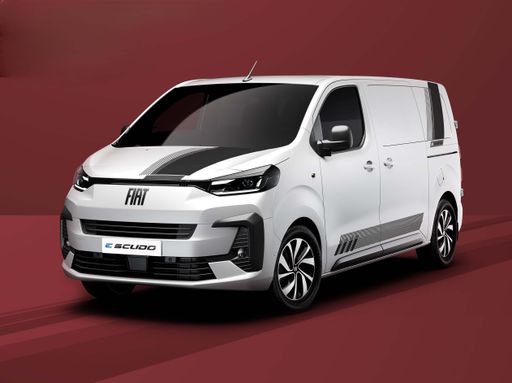
Scudo

A Comprehensive Look at the Fiat Scudo vs VW Caddy Kompaktvan

In the world of compact cargo vans, the Fiat Scudo and Volkswagen's Caddy Kompaktvan emerge as two leading contenders. Both models flaunt an impressive balance of innovation, performance, and utility. Here's a detailed comparison to help you discern which van stands out where it matters most.
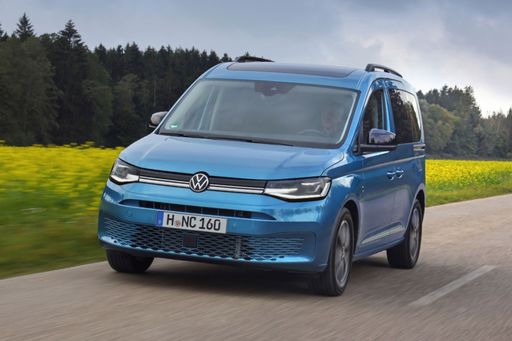
Caddy Compact Van

Technical Aspects: Engines and Performance

The Fiat Scudo offers a diverse engine lineup, including diesel and electric variants. With power outputs ranging between 101 and 180 HP for diesel, and up to 177 HP for electric motors, the Scudo caters to both traditionalists and those leaning toward green technology. These engines are matched with either a manual or an automatic gearbox, prioritizing versatility and control.

In comparison, the VW Caddy Kompaktvan takes a slightly different approach, featuring petrol, diesel, and plug-in hybrid options. Power outputs range from 102 to 150 HP. The VW offers both manual and advanced dual-clutch automatic transmissions, ensuring smooth transitions and enhanced driving pleasure.

Fuel Economy and Efficiency

Fuel efficiency is a notable strength for VW, with the Caddy Kompaktvan achieving consumption figures as low as 5.3 L/100km for its petrol and diesel models, and a mere 0.5 L/100km for its hybrid version. Scudo's diesel consumption varies between 6.5 and 7.8 L/100km, with electric consumption fluctuating between 23.6 and 27 kWh/100km, offering an electric range of up to 352 km.

Dimensions and Capacity

Dimension-wise, the Scudo stretches from 4,609 mm to 5,309 mm in length, providing ample space for toolkit and goods. Its payload capacity tops at 1,333 kg, furthered by a robust build with curb weights between 1,616 kg and 2,260 kg.

The Caddy Kompaktvan is slightly more compact, ranging from 4,500 mm to 4,853 mm in length. It offers a maximum payload of 759 kg and curb weights from 1,442 kg to 1,818 kg, making it an agile and maneuverable choice ideal for urban deliveries.

Interior and Seating

Fiat's Scudo offers various seating configurations, accommodating between 2 to 6 seats, depending on specific model setups. This flexibility can appeal to both cargo transport and team travel needs.

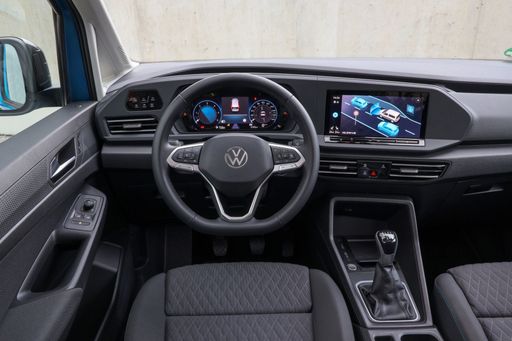
Conversely, the Caddy Kompaktvan maintains a straightforward approach with a 2-seater configuration, focused on maximizing cargo space rather than passenger transport.

Innovations and Technology

The Scudo's embrace of electric powertrains signals Fiat's commitment to innovation and sustainability, while its versatile transmission options address diverse driving preferences. Additionally, the inclusion of a maximum speed of up to 185 km/h demonstrates an ability to swiftly handle longer hauls.

Volkswagen responds with the Caddy Kompaktvan's advanced dual-clutch automatic setup, promising enhanced driving dynamics and a finely tuned experience. The inclusion of plug-in hybrid technology not only offers superior fuel efficiency but also reduces the vehicle's environmental footprint.

Final Verdict

Both the Fiat Scudo and the VW Caddy Kompaktvan present compelling features tailored to specific needs. The Scudo’s flexibility and electric range make it appealing for businesses focused on versatile operations and sustainability. Meanwhile, the Caddy's fuel efficiency and innovative transmission solutions provide a fine balance between performance and economy. Thus, your ultimate choice hinges on personal priorities, be it capacity, fuel preference, or tech advancements.

Here’s where it gets real: The technical differences in detail

Scudo

Costs and Efficiency:

Price and efficiency are often the first things buyers look at. Here it becomes clear which model has the long-term edge – whether at the pump, the plug, or in purchase price.

VW Caddy Compact Van is somewhat cheaper – starting at 25,800 £ , while the Fiat Scudo costs 30,900 £ . That’s a price difference of around 5,085 £.

Fuel consumption also shows a difference: the VW Caddy Compact Van uses 0.5 L/100km and is significantly more efficient than the Fiat Scudo with 6.2 L/100km. The difference is about 5.7 L/100km.

As for electric range, the Fiat Scudo offers clearly more range – reaching up to 352 km, about 232 km more than the VW Caddy Compact Van.

Caddy Compact Van

Engine and Performance:

Under the bonnet, it becomes clear which model is tuned for sportiness and which one takes the lead when you hit the accelerator.

When it comes to engine power, the Fiat Scudo offers a bit more power – delivering 180 HP compared to 150 HP. That’s roughly 30 HP more horsepower.

There’s also a difference in torque: the Fiat Scudo delivers slightly more torque with 400 Nm compared to 320 Nm. That’s about 80 Nm more.

Space and Everyday Use:

Beyond pure performance, interior space and usability matter most in daily life. This is where you see which car is more practical and versatile.

Seats: Fiat Scudo offers more seats – 6 vs 2.

In terms of curb weight, VW Caddy Compact Van is somewhat lighter – 1,442 kg compared to 1,722 kg. The difference is around 280 kg.

When it comes to payload, the Fiat Scudo carries considerably more – 1,805 kg compared to 759 kg. That’s a difference of about 1,046 kg.

Who wins the race in the data check?

The VW Caddy Compact Van is clearly superior overall in the objective data comparison.
This result only shows which model scores more points on paper – not which of the two cars feels right for you.

from £25,800
Caddy Compact Van

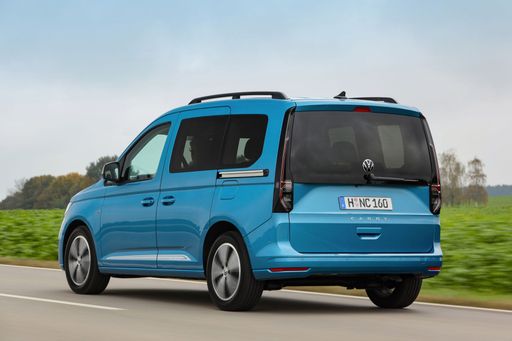
VW Caddy Compact Van

  • Engine Type : Petrol, Diesel, Plugin Hybrid
  • Transmission : Manuel, Automatic
  • Drive Type : Front-Wheel Drive, All-Wheel Drive
  • Power HP : 102 - 150 HP
  • Consumption L/100km : 0.5 - 6.8 L/100km
  • Electric Range : 117 - 120 km
Fiat Scudo
VW Caddy Compact Van

Costs and Consumption

View detailed analysis

Engine and Performance

View detailed analysis

Dimensions and Body

View detailed analysis

Fiat Scudo

The Fiat Scudo is a practical and unpretentious van that balances hardworking utility with a surprisingly polished cabin, making it a sensible choice for tradespeople and families who need space without fuss. It doesn't pretend to be flashy, but its clever packaging, sensible driving manners and affordable running costs make the Scudo a dependable partner for the daily grind and weekend projects — and it even manages to look tidy in the car park.

details

VW Caddy Compact Van

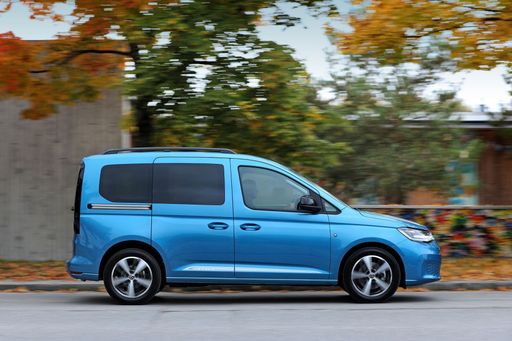
The VW Caddy is a clever compact van that turns urban chores into something almost enjoyable, thanks to smart packaging and a cabin that refuses to feel like punishment. For buyers who want useful practicality without drama, the Caddy is a tidy, dependable choice that quietly gets the job done while remaining surprisingly pleasant to drive.

details
Fiat Scudo
VW Caddy Compact Van

Costs and Consumption

Price
30,900 - 51,300 £
Price
25,800 - 42,300 £
Consumption L/100km
6.2 - 6.5 L/100km
Consumption L/100km
0.5 - 6.8 L/100km
Consumption kWh/100km
23.6 - 24 kWh/100km
Consumption kWh/100km
-
Electric Range
221 - 352 km
Electric Range
117 - 120 km
Battery Capacity
-
Battery Capacity
19.7 kWh
co2
0 - 172 g/km
co2
11 - 154 g/km
Fuel tank capacity
-
Fuel tank capacity
50 L

Dimensions and Body

Body Type
Cargo Van
Body Type
Cargo Van
Seats
2 - 6
Seats
2
Doors
-
Doors
4 - 5
Curb weight
1,722 - 2,260 kg
Curb weight
1,442 - 1,818 kg
Trunk capacity
-
Trunk capacity
-
Length
-
Length
4,500 - 4,853 mm
Width
1,920 mm
Width
1,855 mm
Height
-
Height
1,819 - 1,823 mm
Max trunk capacity
-
Max trunk capacity
3,100 - 3,700 L
Payload
840 - 1,805 kg
Payload
628 - 759 kg

Engine and Performance

Engine Type
Electric, Diesel
Engine Type
Petrol, Diesel, Plugin Hybrid
Transmission
Automatic, Manuel
Transmission
Manuel, Automatic
Transmission Detail
Reduction Gearbox, Manual Gearbox, Automatic Gearbox
Transmission Detail
Manual Gearbox, Dual-Clutch Automatic
Drive Type
Front-Wheel Drive
Drive Type
Front-Wheel Drive, All-Wheel Drive
Power HP
120 - 180 HP
Power HP
102 - 150 HP
Acceleration 0-100km/h
10.5 - 11.2 s
Acceleration 0-100km/h
-
Max Speed
-
Max Speed
175 - 186 km/h
Torque
260 - 400 Nm
Torque
220 - 320 Nm
Number of Cylinders
4
Number of Cylinders
4
Power kW
88 - 132 kW
Power kW
75 - 110 kW
Engine capacity
1,499 - 2,184 cm3
Engine capacity
1,498 - 1,968 cm3

General

Model Year
2,024 - 2,025
Model Year
2024
CO2 Efficiency Class
A, F
CO2 Efficiency Class
E, B
Brand
Fiat
Brand
VW
DriveDuel uses data analysis and artificial intelligence to evaluate vehicle data and create content. Content is regularly reviewed and improved. The displayed prices are estimates based on German list prices, adjusted to the respective country’s VAT. Country-specific registration taxes are not included. This information is not legally binding.