VS

Peugeot 5008 vs VW Caddy Compact Van comparison

Compare performance (325 HP vs 150 HP), boot space and price (37,600 £ vs 25,800 £ ) at a glance. Find out which car is the better choice for you – Peugeot 5008 or VW Caddy Compact Van?

Peugeot 5008 vs VW Caddy Compact Van: Key differences

Peugeot 5008

4.7 (1 Reviews)
rate
  • significantly more power
  • substantially more electric range
details

VW Caddy Compact Van

  • clearly cheaper
  • significantly more efficient
  • somewhat lighter
details

All details on performance, efficiency, range and trunk space can be found in the technical comparison below – including user reviews for both models.

By Achim Sedelmaier

5008

Peugeot 5008 vs VW Caddy Kompaktvan: A Clash of Practical Titans

In the bustling world of family-friendly vehicles, the Peugeot 5008 and VW Caddy Kompaktvan stand out as two distinct contenders. They cater to different niches but share a common goal: offering practicality, comfort, and innovative engineering. Let's explore how these two vehicles stack up against each other in terms of technical prowess and modern features.
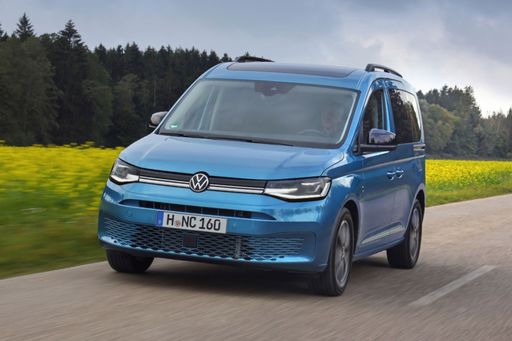
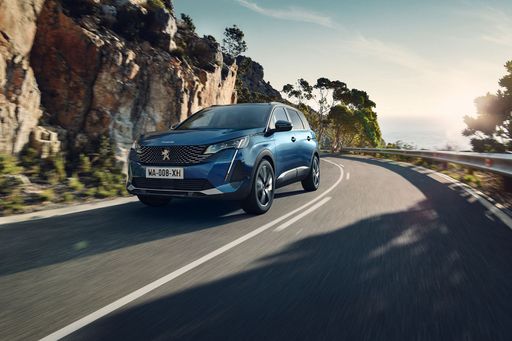
Caddy Compact Van

Design and Body Type: SUV vs Cargo Van

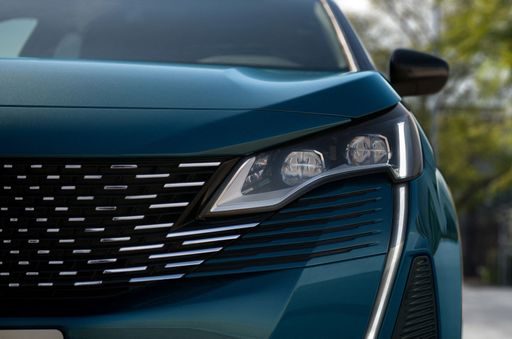
The Peugeot 5008 prides itself on its SUV heritage, boasting a sleek design and generous dimensions of 4791 mm in length, 1895 mm in width, and 1694 mm in height. This makes it a stylish yet spacious option for families. With seven seats and five doors, it's crafted for those who need flexibility on the road.

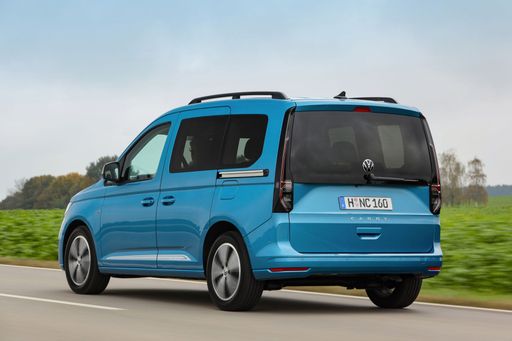
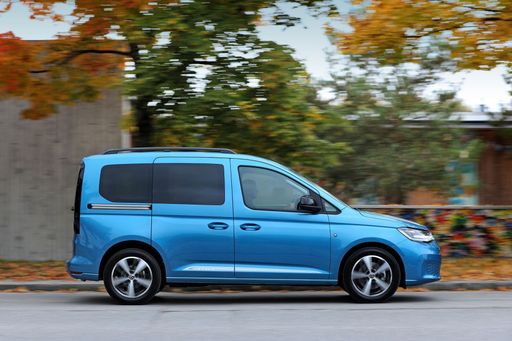
Contrastingly, the VW Caddy Kompaktvan leans towards the utilitarian side with its cargo van design. Available in lengths of 4500 mm or 4853 mm, and a consistent width of 1855 mm, it offers a higher vertical space of up to 1823 mm, making it a versatile choice for business and leisure. The Caddy comes with options for four or five doors and primarily seats two, focusing on maximizing cargo capacity.

5008

Engine Efficiency and Performance

The Peugeot 5008 offers a diverse range of engines including petrol, mild hybrid electric vehicle (MHEV), plugin hybrid, and electric variants. Power outputs range from 136 HP to 231 HP, ensuring a balance between performance and efficiency. Its clever use of a dual-clutch automatic transmission contributes to a smooth ride. Remarkably, the electric version can achieve an impressive range of up to 664 km on a single charge.

In contrast, the VW Caddy Kompaktvan provides a traditional selection of petrol, diesel, and plugin hybrid engines. With power outputs from 102 HP to 150 HP, it may not match the 5008 on power, but it compensates with practicality. The Caddy also offers both manual and dual-clutch automatic transmissions, alongside the flexibility of front-wheel and all-wheel drive options. For eco-conscious buyers, the plugin hybrid variant offers a modest electric range of around 120 km.

Caddy Compact Van

Technological Innovations and Features

Peugeot has equipped the 5008 with an array of modern features. Its dual-clutch automatic transmission and advanced driver-assist systems enhance driving pleasure and safety. Additionally, the 5008’s electric models benefit from a significant battery capacity of up to 96.9 kWh, ensuring long journeys are tackleable without frequent recharges.

Meanwhile, the VW Caddy is tailored with practicality in mind, featuring engine capacities of 1498 cm3 to 1968 cm3. Its robust build is ideal for those who need a dependable partner for both work and play. The efficiency of its engines and drive type options cater well to eco-conscious consumers, despite less emphasis on pure electric performance compared to the 5008.

5008

Verdict: Choosing the Right Companion

In conclusion, selecting between the Peugeot 5008 and the VW Caddy Kompaktvan largely depends on individual needs and lifestyle. The Peugeot 5008 is an ideal choice for families seeking a blend of style, comfort, and cutting-edge hybrid and electric technology, complete with comprehensive seating capacity. In contrast, the VW Caddy Kompaktvan is perfect for business or leisure activities requiring ample cargo space and the versatility of a van setup.

SUV luxury meets cargo van versatility in this head-to-head—whether your priority is space or style, fuel efficiency or power, both vehicles stand ready to serve, each dominant in their unique realms.

Here’s where it gets real: The technical differences in detail

5008

Costs and Efficiency:

Price and efficiency are key factors when choosing a car – and this is often where the real differences emerge.

VW Caddy Compact Van is clearly cheaper – starting at 25,800 £ , while the Peugeot 5008 costs 37,600 £ . That’s a price difference of around 11,773 £.

Fuel consumption also shows a difference: the VW Caddy Compact Van uses 0.5 L/100km and is significantly more efficient than the Peugeot 5008 with 2.7 L/100km. The difference is about 2.2 L/100km.

As for electric range, the Peugeot 5008 offers substantially more range – reaching up to 669 km, about 549 km more than the VW Caddy Compact Van.

Caddy Compact Van

Engine and Performance:

Under the bonnet, it becomes clear which model is tuned for sportiness and which one takes the lead when you hit the accelerator.

When it comes to engine power, the Peugeot 5008 offers significantly more power – delivering 325 HP compared to 150 HP. That’s roughly 175 HP more horsepower.

Looking at top speed, the Peugeot 5008 is very slightly faster – reaching 198 km/h, while the VW Caddy Compact Van tops out at 186 km/h. The difference is around 12 km/h.

There’s also a difference in torque: the Peugeot 5008 delivers markedly more torque with 511 Nm compared to 320 Nm. That’s about 191 Nm more.

5008

Space and Everyday Use:

Whether family car or daily driver – which one offers more room, flexibility and comfort?

Seats: Peugeot 5008 offers more seats – 7 vs 2.

In terms of curb weight, VW Caddy Compact Van is somewhat lighter – 1,442 kg compared to 1,700 kg. The difference is around 258 kg.

For maximum load capacity, the VW Caddy Compact Van offers markedly more capacity – up to 3,700 L, about 1,468 L more than the Peugeot 5008.

When it comes to payload, the VW Caddy Compact Van carries a bit more – 759 kg compared to 640 kg. That’s a difference of about 119 kg.

Who wins the race in the data check?

The VW Caddy Compact Van is clearly superior overall in the objective data comparison.
This result only shows which model scores more points on paper – not which of the two cars feels right for you.

from £25,800
Caddy Compact Van

VW Caddy Compact Van

  • Engine Type : Petrol, Diesel, Plugin Hybrid
  • Transmission : Manuel, Automatic
  • Drive Type : Front-Wheel Drive, All-Wheel Drive
  • Power HP : 102 - 150 HP
  • Consumption L/100km : 0.5 - 6.8 L/100km
  • Electric Range : 117 - 120 km
Peugeot 5008
VW Caddy Compact Van

Costs and Consumption

View detailed analysis

Engine and Performance

View detailed analysis

Dimensions and Body

View detailed analysis

Peugeot 5008

The Peugeot 5008 blends Peugeot's sharp design with the space and versatility families actually need, wrapping clever packaging and a premium-feeling cabin in a crisp, SUV-like silhouette. It drives with more poise than you'd expect from a people carrier, serves up practical touches and flexible seating for everyday chaos, and still looks good when parked outside the school gates.

details

VW Caddy Compact Van

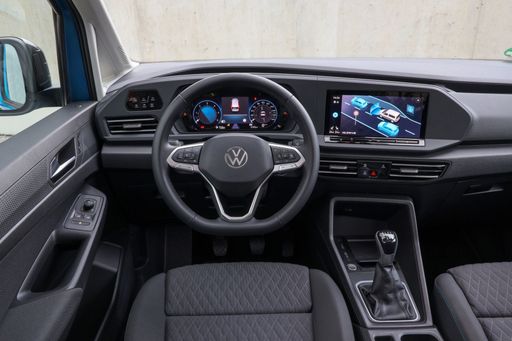
The VW Caddy is a clever compact van that turns urban chores into something almost enjoyable, thanks to smart packaging and a cabin that refuses to feel like punishment. For buyers who want useful practicality without drama, the Caddy is a tidy, dependable choice that quietly gets the job done while remaining surprisingly pleasant to drive.

details
Peugeot 5008
VW Caddy Compact Van

Costs and Consumption

Price
37,600 - 54,200 £
Price
25,800 - 42,300 £
Consumption L/100km
2.7 - 5.6 L/100km
Consumption L/100km
0.5 - 6.8 L/100km
Consumption kWh/100km
17.8 - 18.6 kWh/100km
Consumption kWh/100km
-
Electric Range
78 - 669 km
Electric Range
117 - 120 km
Battery Capacity
0.4 - 96.9 kWh
Battery Capacity
19.7 kWh
co2
0 - 127 g/km
co2
11 - 154 g/km
Fuel tank capacity
55 L
Fuel tank capacity
50 L

Dimensions and Body

Body Type
SUV
Body Type
Cargo Van
Seats
7
Seats
2
Doors
5
Doors
4 - 5
Curb weight
1,700 - 2,344 kg
Curb weight
1,442 - 1,818 kg
Trunk capacity
294 - 348 L
Trunk capacity
-
Length
4,791 mm
Length
4,500 - 4,853 mm
Width
1,895 mm
Width
1,855 mm
Height
1,694 mm
Height
1,819 - 1,823 mm
Max trunk capacity
2,178 - 2,232 L
Max trunk capacity
3,100 - 3,700 L
Payload
596 - 640 kg
Payload
628 - 759 kg

Engine and Performance

Engine Type
Electric, Petrol MHEV, Plugin Hybrid
Engine Type
Petrol, Diesel, Plugin Hybrid
Transmission
Automatic
Transmission
Manuel, Automatic
Transmission Detail
Reduction Gearbox, Dual-Clutch Automatic
Transmission Detail
Manual Gearbox, Dual-Clutch Automatic
Drive Type
Front-Wheel Drive, All-Wheel Drive
Drive Type
Front-Wheel Drive, All-Wheel Drive
Power HP
145 - 325 HP
Power HP
102 - 150 HP
Acceleration 0-100km/h
6.5 - 10.2 s
Acceleration 0-100km/h
-
Max Speed
170 - 198 km/h
Max Speed
175 - 186 km/h
Torque
230 - 511 Nm
Torque
220 - 320 Nm
Number of Cylinders
3 - 4
Number of Cylinders
4
Power kW
107 - 239 kW
Power kW
75 - 110 kW
Engine capacity
1,199 - 1,598 cm3
Engine capacity
1,498 - 1,968 cm3

General

Model Year
2,024 - 2,026
Model Year
2024
CO2 Efficiency Class
A, D, B
CO2 Efficiency Class
E, B
Brand
Peugeot
Brand
VW
DriveDuel uses data analysis and artificial intelligence to evaluate vehicle data and create content. Content is regularly reviewed and improved. The displayed prices are estimates based on German list prices, adjusted to the respective country’s VAT. Country-specific registration taxes are not included. This information is not legally binding.