VS

BYD Seal U vs Peugeot 5008 - Differences and prices compared

Compare performance (324 HP vs 325 HP), boot space and price (34300 £ vs 37600 £ ) at a glance. Find out which car is the better choice for you – BYD Seal U or Peugeot 5008?

BYD Seal U

5 (2 Reviews)
rate

Peugeot 5008

4.7 (1 Reviews)
rate

Here’s where it gets real: The technical differences in detail

Seal U

Costs and Efficiency:

Price and efficiency are often the first things buyers look at. Here it becomes clear which model has the long-term edge – whether at the pump, the plug, or in purchase price.

BYD Seal U has a slight advantage in terms of price – it starts at 34300 £ , while the Peugeot 5008 costs 37600 £ . That’s a price difference of around 3317 £.

Fuel consumption also shows a difference: BYD Seal U manages with 0.40 L and is therefore significantly more efficient than the Peugeot 5008 with 2.70 L. The difference is about 2.30 L per 100 km.

In terms of energy consumption, the advantage goes to the Peugeot 5008: with 17.80 kWh per 100 km, it’s to a small extent more efficient than the BYD Seal U with 19.90 kWh. That’s a difference of about 2.10 kWh.

As for electric range, the Peugeot 5008 performs noticeable better – achieving up to 669 km, about 169 km more than the BYD Seal U.

5008

Engine and Performance:

Power, torque and acceleration say a lot about how a car feels on the road. This is where you see which model delivers more driving dynamics.

When it comes to engine power, the Peugeot 5008 has a minimal edge – offering 325 HP compared to 324 HP. That’s roughly 1 HP more horsepower.

In acceleration from 0 to 100 km/h, the BYD Seal U is a bit quicker – completing the sprint in 5.90 s, while the Peugeot 5008 takes 6.50 s. That’s about 0.60 s faster.

In terms of top speed, the Peugeot 5008 performs a bit better – reaching 220 km/h, while the BYD Seal U tops out at 180 km/h. The difference is around 40 km/h.

There’s also a difference in torque: BYD Seal U pulls hardly perceptible stronger with 550 Nm compared to 511 Nm. That’s about 39 Nm difference.

Seal U

Space and Everyday Use:

Cabin size, boot volume and payload all play a role in everyday practicality. Here, comfort and flexibility make the difference.

Seats: Peugeot 5008 offers noticeable more seating capacity – 7 vs 5.

In curb weight, Peugeot 5008 is somewhat lighter – 1700 kg compared to 1940 kg. The difference is around 240 kg.

In terms of boot space, the BYD Seal U offers noticeable more room – 552 L compared to 348 L. That’s a difference of about 204 L.

In maximum load capacity, the Peugeot 5008 performs distinct better – up to 2232 L, which is about 767 L more than the BYD Seal U.

When it comes to payload, Peugeot 5008 noticeable takes the win – 640 kg compared to 410 kg. That’s a difference of about 230 kg.

Who wins the race in the data check?

The BYD Seal U is decisively ahead in the objective data comparison.
This result only shows which model scores more points on paper – not which of the two cars feels right for you.

BYD Seal U
Peugeot 5008

Costs and Consumption

View detailed analysis

Engine and Performance

View detailed analysis

Dimensions and Body

View detailed analysis
from about £34,300
Seal U

BYD Seal U

  • Engine Type : Plugin Hybrid, Electric
  • Transmission : Automatic
  • Drive Type : Front-Wheel Drive, All-Wheel Drive
  • Power HP : 218 - 324 HP
  • Consumption L/100km : 0.4 - 1.2 L
  • Consumption kWh/100km : 19.9 - 20.5 kWh
  • Electric Range : 70 - 500 km

BYD Seal U

5 (2 Reviews)
rate

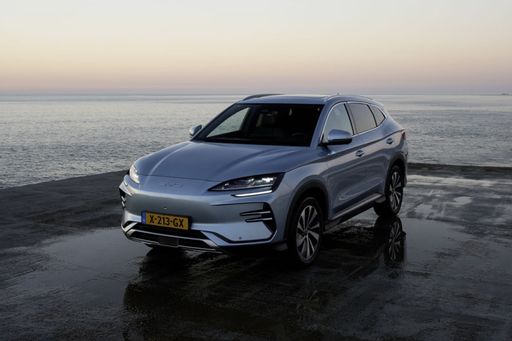
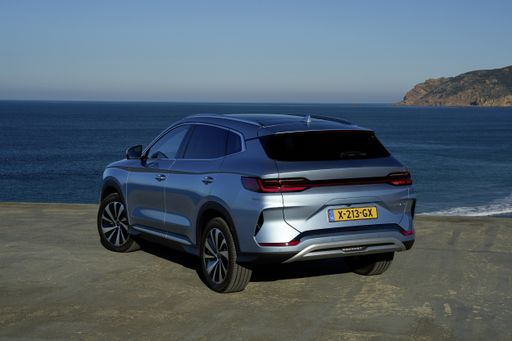
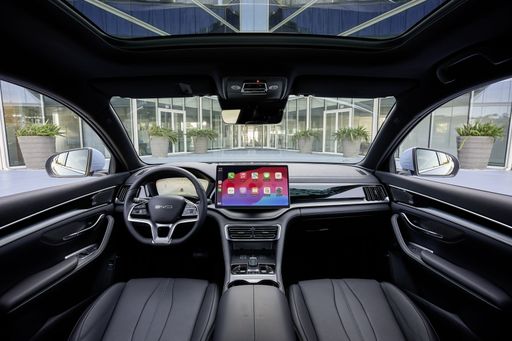
The BYD Seal U pairs a sleek fastback silhouette with a surprisingly roomy, tech-rich cabin, giving electric chic without the showroom pretension. It's a smart pick for buyers after confident handling, sensible practicality and standout value — all wrapped up with a cheeky grin when you put your foot down.

details

Peugeot 5008

4.7 (1 Reviews)
rate

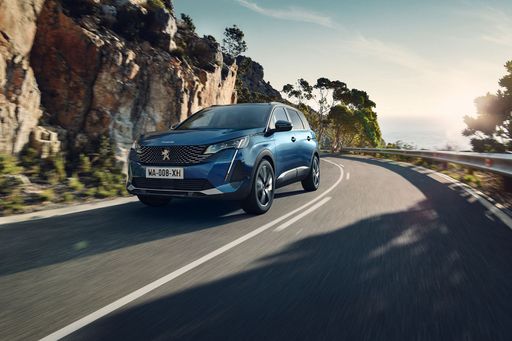
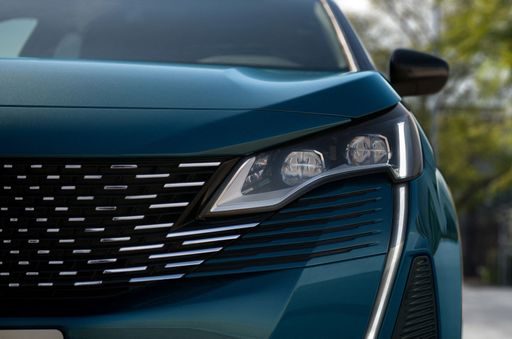
The Peugeot 5008 blends Peugeot's sharp design with the space and versatility families actually need, wrapping clever packaging and a premium-feeling cabin in a crisp, SUV-like silhouette. It drives with more poise than you'd expect from a people carrier, serves up practical touches and flexible seating for everyday chaos, and still looks good when parked outside the school gates.

details
BYD Seal U
Peugeot 5008

Costs and Consumption

Price
34300 - 39800 £
Price
37600 - 54200 £
Consumption L/100km
0.4 - 1.2 L
Consumption L/100km
2.7 - 5.6 L
Consumption kWh/100km
19.9 - 20.5 kWh
Consumption kWh/100km
17.8 - 18.6 kWh
Electric Range
70 - 500 km
Electric Range
78 - 669 km
Battery Capacity
-
Battery Capacity
0.4 - 96.9 kWh
co2
0 - 26 g/km
co2
0 - 127 g/km
Fuel tank capacity
60 L
Fuel tank capacity
55 L

Dimensions and Body

Body Type
SUV
Body Type
SUV
Seats
5
Seats
7
Doors
5
Doors
5
Curb weight
1940 - 2147 kg
Curb weight
1700 - 2344 kg
Trunk capacity
425 - 552 L
Trunk capacity
294 - 348 L
Length
4775 - 4785 mm
Length
4791 mm
Width
1890 mm
Width
1895 mm
Height
1668 - 1670 mm
Height
1694 mm
Max trunk capacity
1440 - 1465 L
Max trunk capacity
2178 - 2232 L
Payload
410 kg
Payload
596 - 640 kg

Engine and Performance

Engine Type
Plugin Hybrid, Electric
Engine Type
Electric, Petrol MHEV, Plugin Hybrid
Transmission
Automatic
Transmission
Automatic
Transmission Detail
CVT, Reduction Gearbox
Transmission Detail
Reduction Gearbox, Dual-Clutch Automatic
Drive Type
Front-Wheel Drive, All-Wheel Drive
Drive Type
Front-Wheel Drive, All-Wheel Drive
Power HP
218 - 324 HP
Power HP
145 - 325 HP
Acceleration 0-100km/h
5.9 - 9.6 s
Acceleration 0-100km/h
6.5 - 10.2 s
Max Speed
170 - 180 km/h
Max Speed
170 - 220 km/h
Torque
300 - 550 Nm
Torque
230 - 511 Nm
Number of Cylinders
4
Number of Cylinders
3 - 4
Power kW
160 - 238 kW
Power kW
107 - 239 kW
Engine capacity
1497 - 1498 cm3
Engine capacity
1199 - 1598 cm3

General

Model Year
2024
Model Year
2024 - 2025
CO2 Efficiency Class
B, A
CO2 Efficiency Class
A, D, B
Brand
BYD
Brand
Peugeot
What drive types are available for the BYD Seal U?

The BYD Seal U is available as Front-Wheel Drive or All-Wheel Drive.

The prices shown are estimates based on German list prices, adjusted for local VAT. Local registration taxes (e.g. NoVA, BPM or CO2 malus) are not included. This information is not legally binding.