VS

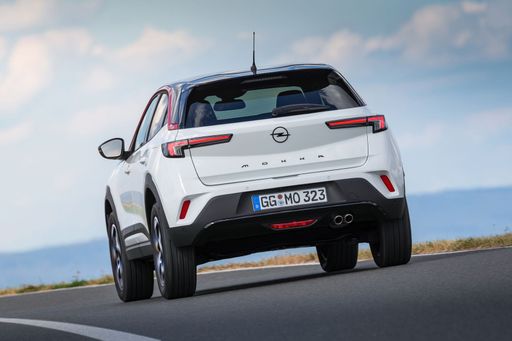
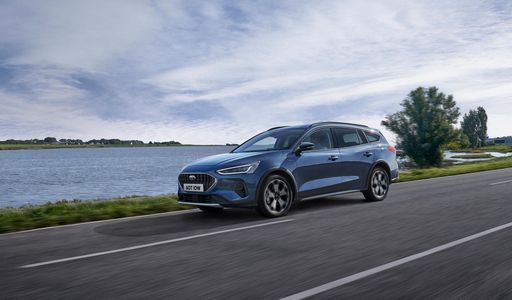
Ford Focus Turnier vs Vauxhall Mokka comparison

Compare performance (280 HP vs 281 HP), boot space and price (28,500 £ vs 23,000 £ ) at a glance. Find out which car is the better choice for you – Ford Focus Turnier or Vauxhall Mokka?

Ford Focus Turnier vs Vauxhall Mokka: Key differences

Ford Focus Turnier

  • very slightly quicker 0–100 km/h
  • clearly more trunk space
details

Vauxhall Mokka

4.1 (4 Reviews)
rate
  • clearly cheaper
  • only slightly more power
  • very slightly more efficient
  • marginally lighter
details

All details on performance, efficiency, range and trunk space can be found in the technical comparison below – including user reviews for both models.

By Achim Sedelmaier

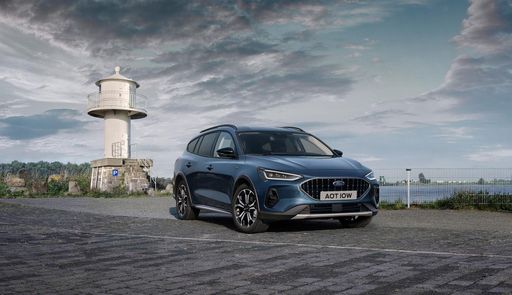
Focus Turnier

Ford Focus Turnier vs. Vauxhall Mokka: A Clash of Versatility and Style

In today's automotive world, the choices between a practical family wagon and a stylish compact SUV are more intriguing than ever. In this comparison, we explore the Ford Focus Turnier, known for its roomy interior and efficient driving dynamics, against the Vauxhall Mokka, a trendy SUV with a futuristic appeal and options galore. Both vehicles cater to distinct lifestyles yet share a commitment to modern innovation. Let's dive into their technical specifications and see where they excel and fall short.
Mokka

Engine Choices and Performance

When it comes to engine variety and performance, the Ford Focus Turnier offers a diverse range of options including petrol, diesel, and petrol MHEV powertrains, with outputs ranging from 115 HP to an impressive 280 HP. This flexibility allows drivers to select an engine that best meets their performance and efficiency needs. The Focus Turnier also features manual, automatic, and dual-clutch transmissions, further enhancing its versatility on the road.

In contrast, the Vauxhall Mokka comes with petrol, petrol MHEV, and fully electric powertrains, boasting outputs from 130 HP up to 156 HP. It also features a range of efficient transmission options including manual, automatic, and reduction gearboxes for the electric variant. The Mokka shines with its electric option, providing an emissions-free drive with a notable electric range of 403 km powered by a 51 kWh battery.

Focus Turnier

Fuel Efficiency and Environmental Impact

For those concerned about fuel economy, the Ford Focus Turnier offers consumption rates from 5 to 8 L/100km, complemented by CO2 emissions between 120 and 183 g/km. Meanwhile, the Vauxhall Mokka provides petrol consumption starting at 4.8 L/100km, with CO2 emissions as low as 108 g/km. The electric Mokka stands out, offering a remarkable consumption efficiency of 15.4 kWh/100km with zero CO2 emissions.

Mokka

Interior Space and Comfort

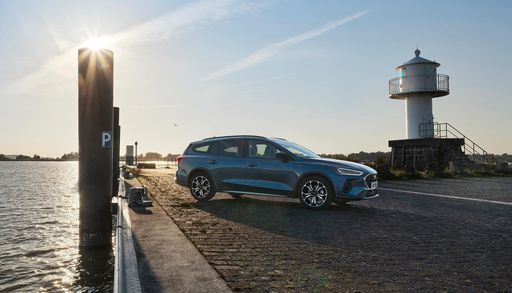
When it comes to passenger space and cargo capacity, the two vehicles cater to different needs. The Ford Focus Turnier delivers on storage with a trunk capacity of 608 to 635 L and room for five passengers, making it a strong contender for family getaways. With its larger physical dimensions, it offers a more spacious interior experience.

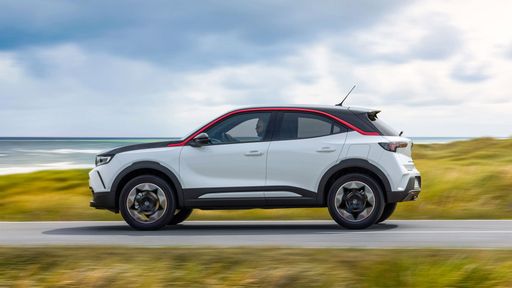
Conversely, the Vauxhall Mokka, while more compact, still provides a practical cargo space of up to 350 L. Its charming design is perfect for urban environments, and the elevated SUV stance gives drivers a commanding view of the road, enhancing both comfort and driving convenience.

Focus Turnier

Innovation and Technology

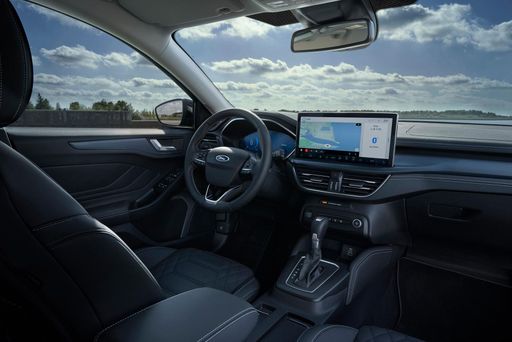
In terms of technological innovation, both vehicles embrace modern connectivity and safety features to enhance the driving experience. The Ford Focus Turnier offers advanced features, including dynamic cruise control, driver-assist technologies, and comprehensive infotainment systems.

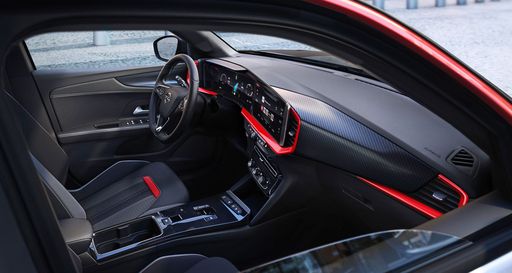
The Vauxhall Mokka is not far behind, offering a suite of smart technologies, including the latest infotainment systems, superior sound options, and intelligent safety features designed to keep occupants safe and entertained on the road.

Mokka

Conclusion

The choice between the Ford Focus Turnier and the Vauxhall Mokka ultimately comes down to lifestyle preferences. The Focus Turnier is the epitome of practicality, offering an impressive blend of power, space, and efficiency, making it ideal for families or those who need more room. On the other hand, the Mokka stands as an excellent choice for urban dwellers or those seeking a stylish, compact SUV with eco-friendly electric options. Both vehicles represent the quintessence of innovation and performance, each ready to exceed expectations in their distinctive way.

Here’s where it gets real: The technical differences in detail

Focus Turnier

Costs and Efficiency:

Price and efficiency are often the first things buyers look at. Here it becomes clear which model has the long-term edge – whether at the pump, the plug, or in purchase price.

Vauxhall Mokka is clearly cheaper – starting at 23,000 £ , while the Ford Focus Turnier costs 28,500 £ . That’s a price difference of around 5,494 £.

Fuel consumption also shows a difference: the Vauxhall Mokka uses 4.9 L/100km and is very slightly more efficient than the Ford Focus Turnier with 5 L/100km. The difference is about 0.1 L/100km.

Mokka

Engine and Performance:

Power, torque and acceleration say a lot about how a car feels on the road. This is where you see which model delivers more driving dynamics.

When it comes to engine power, the Vauxhall Mokka offers only slightly more power – delivering 281 HP compared to 280 HP. That’s roughly 1 HP more horsepower.

When accelerating from 0 to 100 km/h, the Ford Focus Turnier is very slightly quicker – completing the sprint in 5.8 s, while the Vauxhall Mokka takes 5.9 s. That’s about 0.1 s quicker.

Looking at top speed, the Ford Focus Turnier is noticeably faster – reaching 250 km/h, while the Vauxhall Mokka tops out at 150 km/h. The difference is around 100 km/h.

There’s also a difference in torque: the Ford Focus Turnier delivers somewhat more torque with 420 Nm compared to 345 Nm. That’s about 75 Nm more.

Focus Turnier

Space and Everyday Use:

Beyond pure performance, interior space and usability matter most in daily life. This is where you see which car is more practical and versatile.

Both vehicles offer seating for 5 people.

In terms of curb weight, Vauxhall Mokka is marginally lighter – 1,294 kg compared to 1,413 kg. The difference is around 119 kg.

Looking at boot space, the Ford Focus Turnier offers clearly more boot space – 635 L compared to 350 L. That’s a difference of about 285 L.

For maximum load capacity, the Ford Focus Turnier offers visibly more capacity – up to 1,653 L, about 593 L more than the Vauxhall Mokka.

When it comes to payload, the Ford Focus Turnier carries visibly more – 557 kg compared to 400 kg. That’s a difference of about 157 kg.

Who wins the race in the data check?

The Ford Focus Turnier holds a decisive overall lead in the objective data comparison.
This result only shows which model scores more points on paper – not which of the two cars feels right for you.

from £28,500
Focus Turnier

Ford Focus Turnier

  • Engine Type : Petrol MHEV, Diesel, Petrol
  • Transmission : Manuel, Automatic
  • Drive Type : Front-Wheel Drive
  • Power HP : 115 - 280 HP
  • Consumption L/100km : 5 - 8 L/100km
Ford Focus Turnier
Vauxhall Mokka

Costs and Consumption

View detailed analysis

Engine and Performance

View detailed analysis

Dimensions and Body

View detailed analysis

Ford Focus Turnier

The Ford Focus Estate packs practical, family-friendly space into a compact, poised package that feels sharper and more grown-up than its price suggests. It steers with tidy composure, offers sensible interior flexibility, and is perfect for buyers who want everyday usability without turning into a moving van.

details

Vauxhall Mokka

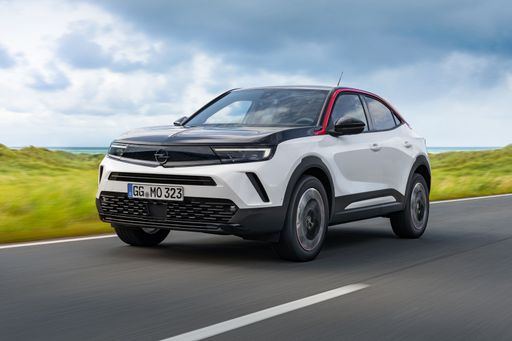
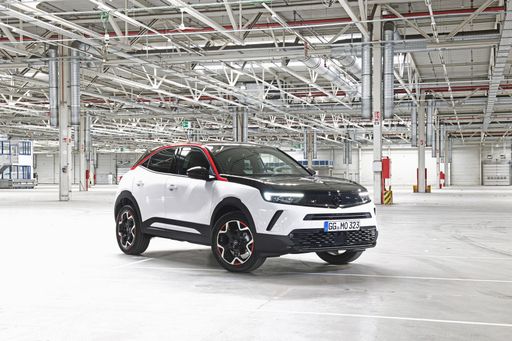
The Opel Mokka cuts a smart, modern silhouette that feels right at home in the city while still turning heads on the open road. It's a practical, easy-to-live-with crossover that blends comfy driving manners with enough flair and tech to keep daily commutes interesting — and it won’t make you regret trading up.

details
Ford Focus Turnier
Vauxhall Mokka

Costs and Consumption

Price
28,500 - 39,900 £
Price
23,000 - 40,500 £
Consumption L/100km
5 - 8 L/100km
Consumption L/100km
4.9 - 5.7 L/100km
Consumption kWh/100km
-
Consumption kWh/100km
15.4 - 18.5 kWh/100km
Electric Range
-
Electric Range
336 - 403 km
Battery Capacity
-
Battery Capacity
51 kWh
co2
120 - 183 g/km
co2
0 - 129 g/km
Fuel tank capacity
52 L
Fuel tank capacity
-

Dimensions and Body

Body Type
Estate
Body Type
SUV
Seats
5
Seats
5
Doors
5
Doors
5
Curb weight
1,413 - 1,563 kg
Curb weight
1,294 - 1,672 kg
Trunk capacity
608 - 635 L
Trunk capacity
310 - 350 L
Length
4,672 - 4,693 mm
Length
4,150 mm
Width
1,825 - 1,844 mm
Width
1,787 mm
Height
1,459 - 1,504 mm
Height
1,515 mm
Max trunk capacity
1,653 L
Max trunk capacity
1,060 L
Payload
523 - 557 kg
Payload
388 - 400 kg

Engine and Performance

Engine Type
Petrol MHEV, Diesel, Petrol
Engine Type
Electric, Petrol, Petrol MHEV
Transmission
Manuel, Automatic
Transmission
Automatic, Manuel
Transmission Detail
Manual Gearbox, Dual-Clutch Automatic, Automatic Gearbox
Transmission Detail
Reduction Gearbox, Manual Gearbox, Dual-Clutch Automatic
Drive Type
Front-Wheel Drive
Drive Type
Front-Wheel Drive
Power HP
115 - 280 HP
Power HP
136 - 281 HP
Acceleration 0-100km/h
5.8 - 12.1 s
Acceleration 0-100km/h
5.9 - 9 s
Max Speed
184 - 250 km/h
Max Speed
150 km/h
Torque
170 - 420 Nm
Torque
230 - 345 Nm
Number of Cylinders
3 - 4
Number of Cylinders
3
Power kW
85 - 206 kW
Power kW
100 - 207 kW
Engine capacity
999 - 2,261 cm3
Engine capacity
1,199 cm3

General

Model Year
2,023 - 2,024
Model Year
2,024 - 2,025
CO2 Efficiency Class
D, G
CO2 Efficiency Class
A, D, C
Brand
Ford
Brand
Vauxhall
DriveDuel uses data analysis and artificial intelligence to evaluate vehicle data and create content. Content is regularly reviewed and improved. The displayed prices are estimates based on German list prices, adjusted to the respective country’s VAT. Country-specific registration taxes are not included. This information is not legally binding.