VS

Ford Focus vs Fiat Tipo Hatchback comparison

Compare performance (280 HP vs 130 HP), boot space and price (27,500 £ vs 19,700 £ ) at a glance. Find out which car is the better choice for you – Ford Focus or Fiat Tipo Hatchback?

Ford Focus vs Fiat Tipo Hatchback: Key differences

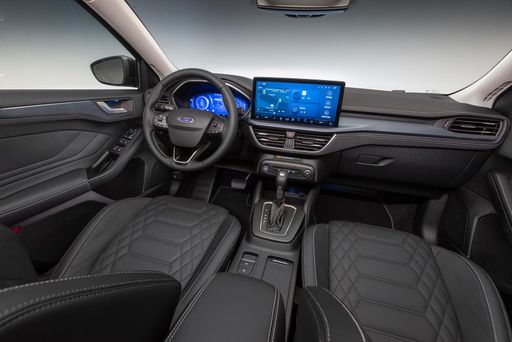
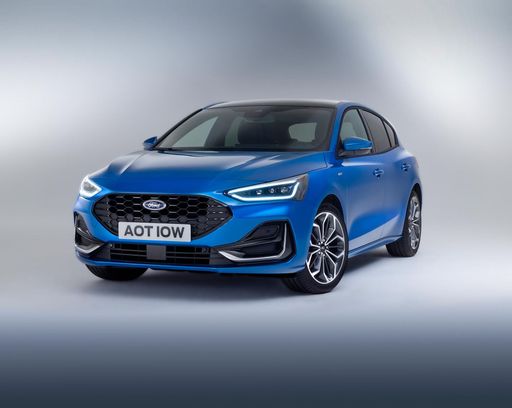
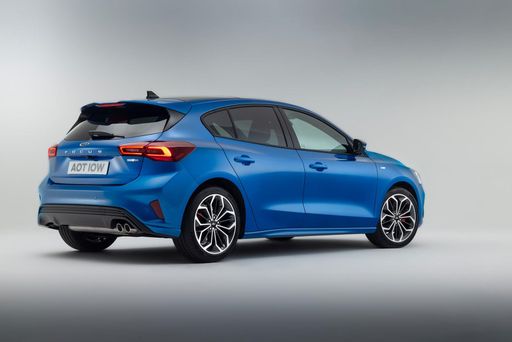
Ford Focus

4.6 (1 Reviews)
rate
  • considerably more power
  • considerably quicker 0–100 km/h
  • very slightly lighter
details

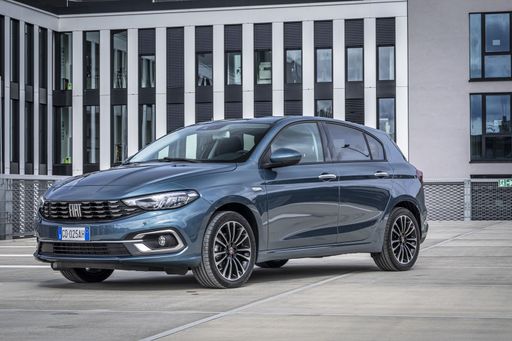
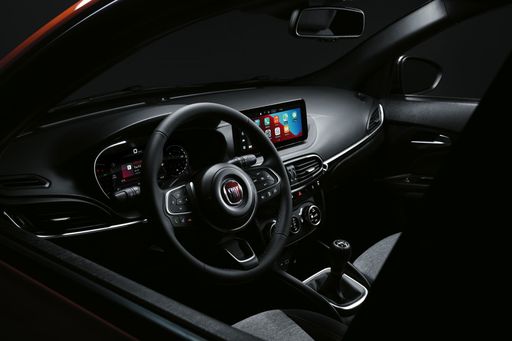
Fiat Tipo Hatchback

  • markedly cheaper
  • marginally more efficient
  • moderately more trunk space
details

All details on performance, efficiency, range and trunk space can be found in the technical comparison below – including user reviews for both models.

By Achim Sedelmaier

Focus

Introducing the Contenders: Fiat Tipo Hatchback vs. Ford Focus

The compact hatchback segment has long been dominated by a variety of players who offer the perfect blend of practicality and performance. Two vehicles that stand out in this competitive landscape are the Fiat Tipo Hatchback and the Ford Focus. Both models bring something unique to the table, yet they cater to the needs of diverse drivers. Let’s explore these two contenders in detail, from their technical specs to innovative features that drive them ahead.
Tipo Hatchback

Under the Hood: Engine and Performance

The Fiat Tipo Hatchback and Ford Focus both shine in engine variety and performance. The Tipo Hatchback is equipped with two main engine types—a Petrol Mild Hybrid Electric Vehicle (MHEV) and Diesel. These engines churn out a hearty 130 horsepower, and the acceleration from 0 to 100 km/h varies between 8.8 and 9.8 seconds, depending on the engine choice. The maximum torque is around 240 to 320 Nm, allowing for responsive throttle and a top speed of 208 km/h.

On the other hand, the Ford Focus offers a broader array of engines, including Petrol MHEV, Diesel, and pure Petrol engines. The power ranges from 115 to 280 horsepower with a peak torque hitting the 420 Nm mark. With such impressive numbers, it's no surprise that the fastest variant zips from 0 to 100 km/h in a brisk 5.7 seconds, and can hit top speeds up to 250 km/h. The Ford Focus provides an enticing blend of efficiency and power for a wide range of driving preferences.

Focus

Transmission and Drivability

When it comes to transmission, both vehicles feature options that cater to different driving styles. The Fiat Tipo allows for a choice between a Dual-Clutch Automatic and a Manual Gearbox, supporting its agile front-wheel-drive system especially well in urban settings.

The Ford Focus offers even more variety with Manual, Dual-Clutch Automatic, and Automatic Gearbox options. This breadth invites drivers who crave control as well as those who prefer automated ease. Both cars provide a smooth and comfortable driving experience owing to advanced transmission systems.

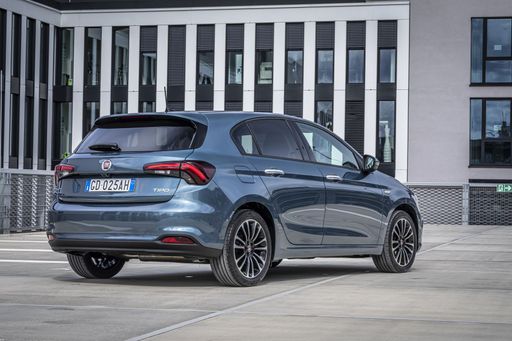
Tipo Hatchback

Fuel Efficiency and Environmental Considerations

Fuel efficiency remains a significant decision factor for hatchback buyers. The Fiat Tipo has fuel consumption rates ranging from 4.7 to 5.4 L/100km, which places it in the CO2 efficiency class of D with emissions from 122 to 125 g/km.

The Ford Focus manages a competitive fuel consumption range of 4.9 to 8 L/100km, and its CO2 emissions fluctuate between 117 and 183 g/km. Interestingly, similar to the Tipo, the Focus offers an efficiency class of D, but some models slip into G, depending on the performance specifications.

Focus

Space and Practicality

Inside, both competitors provide enough room for a family outing or a weekend getaway. The Fiat Tipo offers a segment-leading trunk capacity of 440 liters, which is complemented by a spacious cabin capable of seating five comfortably. The curb weight aligns between 1,415 and 1,425 kg, a fair balance for spirited yet stable performance.

The Ford Focus, while slightly more compact at 392 liters of trunk space, still remains ample enough for daily use. With seating for five and curb weight varying from 1,330 to 1,529 kg, the Focus ensures that you don't sacrifice performance for utility.

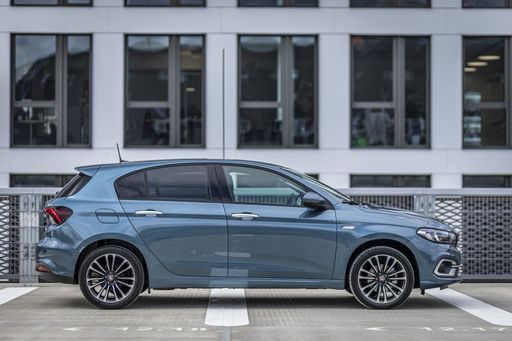
Tipo Hatchback

Overall Impressions

The Fiat Tipo Hatchback versus Ford Focus debate is as much about choice as it is about performance. Both vehicles offer compelling features suited to distinct driving styles. Whether you prioritize the Tipo's trunk space and slightly better carbon efficiency or the Focus's wide engine range and brisk acceleration options, either way, you're met with a rewarding driving experience.

In summary, the Fiat Tipo edges forward with its expansive boot and consistent performance, whereas the Ford Focus impresses with its dynamic range and spirited drive. Choosing between these two may come down to personal preferences and priorities, but either way, you’re investing in practicality with a touch of innovation.

Here’s where it gets real: The technical differences in detail

Focus

Costs and Efficiency:

Price and efficiency are key factors when choosing a car – and this is often where the real differences emerge.

Fiat Tipo Hatchback is markedly cheaper – starting at 19,700 £ , while the Ford Focus costs 27,500 £ . That’s a price difference of around 7,809 £.

Fuel consumption also shows a difference: the Fiat Tipo Hatchback uses 4.7 L/100km and is marginally more efficient than the Ford Focus with 4.9 L/100km. The difference is about 0.2 L/100km.

Tipo Hatchback

Engine and Performance:

Power, torque and acceleration are the classic benchmarks for car enthusiasts – and here, some clear differences start to show.

When it comes to engine power, the Ford Focus offers considerably more power – delivering 280 HP compared to 130 HP. That’s roughly 150 HP more horsepower.

When accelerating from 0 to 100 km/h, the Ford Focus is considerably quicker – completing the sprint in 5.7 s, while the Fiat Tipo Hatchback takes 8.8 s. That’s about 3.1 s quicker.

Looking at top speed, the Ford Focus is slightly faster – reaching 250 km/h, while the Fiat Tipo Hatchback tops out at 208 km/h. The difference is around 42 km/h.

There’s also a difference in torque: the Ford Focus delivers visibly more torque with 420 Nm compared to 320 Nm. That’s about 100 Nm more.

Focus

Space and Everyday Use:

Whether family car or daily driver – which one offers more room, flexibility and comfort?

Both vehicles offer seating for 5 people.

In terms of curb weight, Ford Focus is very slightly lighter – 1,330 kg compared to 1,415 kg. The difference is around 85 kg.

Looking at boot space, the Fiat Tipo Hatchback offers moderately more boot space – 440 L compared to 392 L. That’s a difference of about 48 L.

When it comes to payload, the Ford Focus carries visibly more – 560 kg compared to 425 kg. That’s a difference of about 135 kg.

Who wins the race in the data check?

The Ford Focus is far ahead overall in the objective data comparison.
This result only shows which model scores more points on paper – not which of the two cars feels right for you.

from £27,500
Focus

Ford Focus

  • Engine Type Petrol MHEV, Diesel, Petrol
  • Transmission Manuel, Automatic
  • Drive Type Front-Wheel Drive
  • Power HP 115 - 280 HP
  • Consumption L/100km 4.9 - 8 L/100km
Ford Focus
Fiat Tipo Hatchback

Costs and Consumption

View detailed analysis

Engine and Performance

View detailed analysis

Dimensions and Body

View detailed analysis

Ford Focus

The Ford Focus remains a clever all‑rounder that balances sharp handling with everyday comfort, making it a strong choice whether your commute is city streets or country lanes. Its practical cabin and sensible running costs mean you’ll spend more time enjoying the drive and less time worrying about ownership, with a playful streak underfoot that keeps things interesting.

details

Fiat Tipo Hatchback

The Fiat Tipo is a sensible, spacious hatchback that prides itself on practical charm and everyday usability, perfect for buyers who want straightforward value rather than runway drama. It won’t turn heads for flash, but its comfortable ride, clever interior space and low-stress nature make it a smart, grown-up choice with a wink of character.

details
Ford Focus
Fiat Tipo Hatchback

Costs and Consumption

Price
27,500 - 42,700 £
Price
19,700 - 25,700 £
Consumption L/100km
4.9 - 8 L/100km
Consumption L/100km
4.7 - 5.4 L/100km
Consumption kWh/100km
-
Consumption kWh/100km
-
Electric Range
-
Electric Range
-
Battery Capacity
-
Battery Capacity
-
co2
117 - 183 g/km
co2
122 - 125 g/km
Fuel tank capacity
52 L
Fuel tank capacity
50 L

Dimensions and Body

Body Type
Hatchback
Body Type
Hatchback
Seats
5
Seats
5
Doors
5
Doors
5
Curb weight
1,330 - 1,529 kg
Curb weight
1,415 - 1,425 kg
Trunk capacity
392 L
Trunk capacity
440 L
Length
4,382 - 4,397 mm
Length
4,368 mm
Width
1,825 - 1,844 mm
Width
1,792 mm
Height
1,438 - 1,482 mm
Height
1,495 mm
Max trunk capacity
1,354 L
Max trunk capacity
-
Payload
495 - 560 kg
Payload
425 kg

Engine and Performance

Engine Type
Petrol MHEV, Diesel, Petrol
Engine Type
Petrol MHEV, Diesel
Transmission
Manuel, Automatic
Transmission
Automatic, Manuel
Transmission Detail
Manual Gearbox, Dual-Clutch Automatic, Automatic Gearbox
Transmission Detail
Dual-Clutch Automatic, Manual Gearbox
Drive Type
Front-Wheel Drive
Drive Type
Front-Wheel Drive
Power HP
115 - 280 HP
Power HP
130 HP
Acceleration 0-100km/h
5.7 - 11.8 s
Acceleration 0-100km/h
8.8 - 9.8 s
Max Speed
186 - 250 km/h
Max Speed
207 - 208 km/h
Torque
170 - 420 Nm
Torque
240 - 320 Nm
Number of Cylinders
3 - 4
Number of Cylinders
4
Power kW
85 - 206 kW
Power kW
96 kW
Engine capacity
999 - 2,261 cm3
Engine capacity
1,469 - 1,598 cm3

General

Model Year
2,022 - 2,024
Model Year
2024
CO2 Efficiency Class
D, G
CO2 Efficiency Class
D
Brand
Ford
Brand
Fiat
DriveDuel uses data analysis and artificial intelligence to evaluate vehicle data and create content. Content is regularly reviewed and improved. The displayed prices are estimates based on German list prices, adjusted to the respective country’s VAT. Country-specific registration taxes are not included. This information is not legally binding.