@ Ford Motor Company / Ford Media Center
@ Škoda Auto a.s. / Škoda Storyboard
VS

Ford Focus vs Skoda Octavia Combi – Which model is better for everyday use?

Everyday use, family trips or long-distance drives – here’s where the differences show.
Discover whether Ford Focus or Skoda Octavia Combi fits your lifestyle better.

Ford Focus

Skoda Octavia Combi

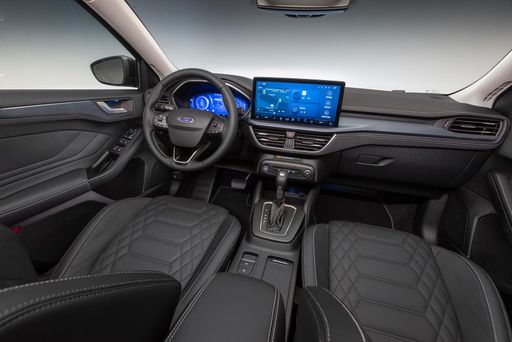
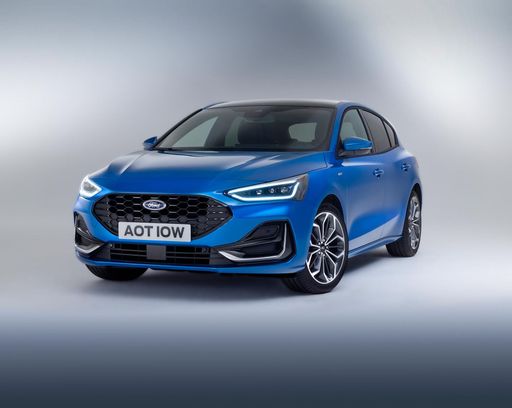
Focus @ Ford Motor Company / Ford Media Center

The Battle of Practicality and Performance: Ford Focus vs. Skoda Octavia Combi

When it comes to choosing a reliable vehicle that offers a blend of practicality and performance, two names often stand out - the Ford Focus and the Skoda Octavia Combi. Both popular in their segments, these vehicles cater to diverse needs and preferences. Let’s delve into a detailed comparison to help you make an informed choice.
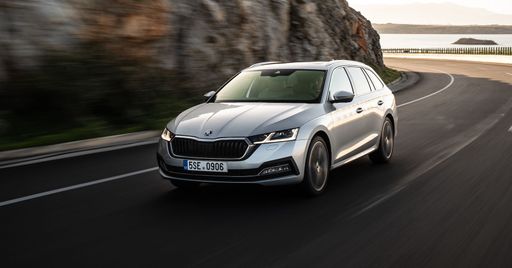
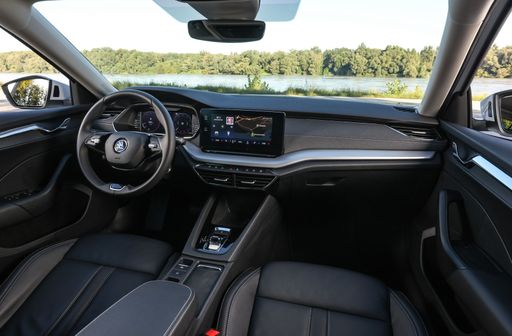
Octavia Combi @ Škoda Auto a.s. / Škoda Storyboard

Design and Body Type

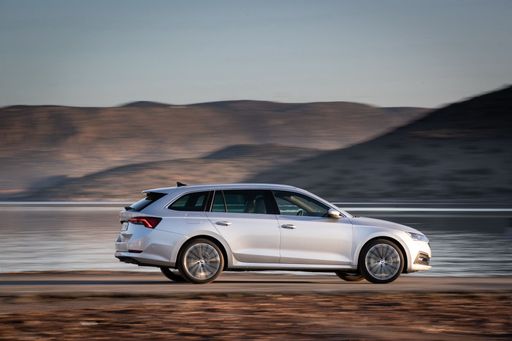
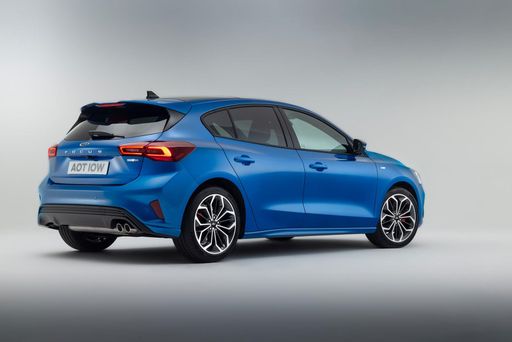
The Ford Focus has been a staple in the hatchback category, celebrated for its sporty design and agile handling. On the other hand, the Skoda Octavia Combi offers a wagon body type, providing a more spacious interior and cargo space, ideal for families and those who prioritize storage.

Focus @ Ford Motor Company / Ford Media Center

Engine Options and Performance

Under the hood, the Ford Focus offers diverse engine choices including Petrol MHEV, Diesel, and standard Petrol options. The power ranges from 125 HP to a high-performance 280 HP in its sporty trims. A distinct feature of the Focus is its variety of transmissions such as the manual gearbox, dual-clutch automatic, and an automatic gearbox, all in a front-wheel-drive configuration. The acceleration spectrum ranges from 11.8 seconds to a thrilling 5.7 seconds for 0-100 km/h.

The Skoda Octavia Combi, on the other hand, features Petrol, Petrol MHEV, and Diesel engines, with power outputs ranging from 116 HP to 265 HP. Notably, the Octavia Combi offers both front-wheel and all-wheel drive, providing more flexibility for different driving conditions. It delivers a 0-100 km/h acceleration time between 10.5 seconds and a robust 6.5 seconds.

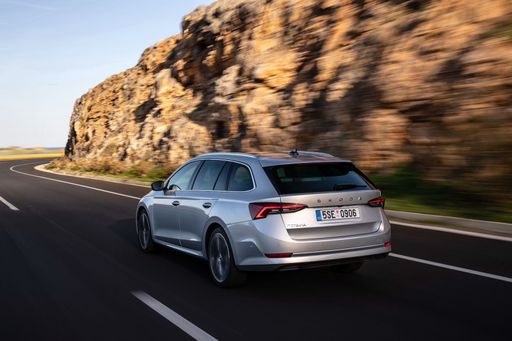
Octavia Combi @ Škoda Auto a.s. / Škoda Storyboard

Fuel Efficiency and Environmental Impact

Efficiency is a critical consideration for many buyers. The Ford Focus shows a fuel consumption range of 4.9 to 8 L/100km, accompanied by CO2 emissions between 117 to 183 g/km. It has a fuel tank capacity of 52 L.

Conversely, the Skoda Octavia Combi exhibits a slightly more varied fuel consumption from 4.4 to 6.9 L/100km, and its CO2 emissions range from 114 to 157 g/km, demonstrating a balanced performance. It boasts an optional fuel tank capacity from 45 to 55 L, allowing for extended travel ranges.

Focus @ Ford Motor Company / Ford Media Center

Interior Space and Practicality

The interior dimensions of these vehicles significantly affect their practicality. The Ford Focus provides seating for five and a trunk capacity of 392 L. Its compact dimensions (4392 to 4397 mm in length) make it easy to maneuver in urban settings.

Skoda Octavia Combi emphasizes space, featuring a generous trunk capacity of 640 L, making it a favorite for long journeys and larger families. With a length of up to 4709 mm, it ensures ample room without compromising on ride quality and comfort.

Octavia Combi @ Škoda Auto a.s. / Škoda Storyboard

Technological Innovations

Both models incorporate significant technological features to enhance the driving experience. The Ford Focus is equipped with modern infotainment systems, driver-assistance technologies, and connectivity options to keep you safe and entertained.

Meanwhile, the Skoda Octavia Combi offers cutting-edge tech such as advanced driver aids, a comprehensive infotainment suite, and high-quality materials in its cabin. It emphasizes connectivity and convenience, aiming to make every journey enjoyable and efficient.

Concluding Thoughts

In conclusion, the choice between the Ford Focus and the Skoda Octavia Combi largely depends on your priorities. If you value sporty driving and a compact footprint, the Focus might catch your interest. However, if you’re in search of space and versatility, with an edge in efficiency, the Octavia Combi stands out as a strong contender. Both models uphold their brand’s reputation for quality and innovation, promising satisfaction for drivers regardless of choice.

Here’s where it gets real: The technical differences in detail

Costs and Efficiency:

Price and efficiency are key factors when choosing a car – and this is often where the real differences emerge.

Skoda Octavia Combi has a to a small extent advantage in terms of price – it starts at 24400 £, while the Ford Focus costs 27500 £. That’s a price difference of around 3094 £.

Fuel consumption also shows a difference: Skoda Octavia Combi manages with 4.40 L and is therefore a bit more efficient than the Ford Focus with 4.90 L. The difference is about 0.50 L per 100 km.

Engine and Performance:

Under the bonnet, it becomes clear which model is tuned for sportiness and which one takes the lead when you hit the accelerator.

When it comes to engine power, the Ford Focus has a barely noticeable edge – offering 280 HP compared to 265 HP. That’s roughly 15 HP more horsepower.

In acceleration from 0 to 100 km/h, the Ford Focus is slightly quicker – completing the sprint in 5.70 s, while the Skoda Octavia Combi takes 6.50 s. That’s about 0.80 s faster.

There’s no difference in top speed – both reach 250 km/h.

There’s also a difference in torque: Ford Focus pulls slightly stronger with 420 Nm compared to 370 Nm. That’s about 50 Nm difference.

Space and Everyday Use:

Beyond pure performance, interior space and usability matter most in daily life. This is where you see which car is more practical and versatile.

Both vehicles offer seating for 5 people.

In curb weight, Ford Focus is minimal lighter – 1330 kg compared to 1366 kg. The difference is around 36 kg.

In terms of boot space, the Skoda Octavia Combi offers noticeable more room – 640 L compared to 392 L. That’s a difference of about 248 L.

In maximum load capacity, the Skoda Octavia Combi performs noticeable better – up to 1700 L, which is about 346 L more than the Ford Focus.

When it comes to payload, Ford Focus barely noticeable takes the win – 560 kg compared to 534 kg. That’s a difference of about 26 kg.

Who wins the race?

The Skoda Octavia Combi proves to be slightly ahead and therefore becomes our DriveDuel Champion!
Skoda Octavia Combi is the better all-rounder in this comparison.

Ford Focus
Skoda Octavia Combi

Costs and Consumption

View detailed analysis

Engine and Performance

View detailed analysis

Dimensions and Body

View detailed analysis
from about £24,400
Octavia Combi @ Škoda Auto a.s. / Škoda Storyboard

Skoda Octavia Combi

  • Engine Type : Petrol, Petrol MHEV, Diesel
  • Transmission : Automatic, Manuel
  • Drive Type : Front-Wheel Drive, All-Wheel Drive
  • Power HP : 116 - 265 HP
  • Consumption L/100km : 4.4 - 6.9 L

Ford Focus

The Ford Focus remains a clever all‑rounder that balances sharp handling with everyday comfort, making it a strong choice whether your commute is city streets or country lanes. Its practical cabin and sensible running costs mean you’ll spend more time enjoying the drive and less time worrying about ownership, with a playful streak underfoot that keeps things interesting.

details

Skoda Octavia Combi

The Skoda Octavia Combi is the sensible family wagon that somehow turns grocery runs and long trips into a pleasant, unshowy experience — spacious, practical and built like it prefers reliability over flash. With smart touches, clever storage and a cabin that feels grown-up rather than frugal, it’s an easy recommendation for buyers who want maximum utility without sacrificing comfort or style.

details
Ford Focus
Skoda Octavia Combi
Focus @ Ford Motor Company / Ford Media Center
Octavia Combi @ Škoda Auto a.s. / Škoda Storyboard

Costs and Consumption

Price
27500 - 42700 £
Price
24400 - 42300 £
Consumption L/100km
4.9 - 8 L
Consumption L/100km
4.4 - 6.9 L
Consumption kWh/100km
-
Consumption kWh/100km
-
Electric Range
-
Electric Range
-
Battery Capacity
-
Battery Capacity
-
co2
117 - 183 g/km
co2
113 - 157 g/km
Fuel tank capacity
52 L
Fuel tank capacity
45 - 55 L

Dimensions and Body

Body Type
Hatchback
Body Type
Estate
Seats
5
Seats
5
Doors
5
Doors
5
Curb weight
1330 - 1529 kg
Curb weight
1366 - 1553 kg
Trunk capacity
392 L
Trunk capacity
640 L
Length
4382 - 4397 mm
Length
4698 - 4709 mm
Width
1825 - 1844 mm
Width
1829 mm
Height
1438 - 1482 mm
Height
1455 - 1468 mm
Max trunk capacity
1354 L
Max trunk capacity
1700 L
Payload
495 - 560 kg
Payload
471 - 534 kg

Engine and Performance

Engine Type
Petrol MHEV, Diesel, Petrol
Engine Type
Petrol, Petrol MHEV, Diesel
Transmission
Manuel, Automatic
Transmission
Automatic, Manuel
Transmission Detail
Manual Gearbox, Dual-Clutch Automatic, Automatic Gearbox
Transmission Detail
Dual-Clutch Automatic, Manual Gearbox
Drive Type
Front-Wheel Drive
Drive Type
Front-Wheel Drive, All-Wheel Drive
Power HP
115 - 280 HP
Power HP
116 - 265 HP
Acceleration 0-100km/h
5.7 - 11.8 s
Acceleration 0-100km/h
6.5 - 10.7 s
Max Speed
186 - 250 km/h
Max Speed
203 - 250 km/h
Torque
170 - 420 Nm
Torque
220 - 370 Nm
Number of Cylinders
3 - 4
Number of Cylinders
4
Power kW
85 - 206 kW
Power kW
85 - 195 kW
Engine capacity
999 - 2261 cm3
Engine capacity
1498 - 1984 cm3

General

Model Year
2022 - 2024
Model Year
2024 - 2025
CO2 Efficiency Class
D, G
CO2 Efficiency Class
E, F, D, C
Brand
Ford
Brand
Skoda
What drive types are available for the Ford Focus?

Available configurations include Front-Wheel Drive.

The prices and data displayed are estimates based on German list prices and may vary by country. This information is not legally binding.

do not click