VS

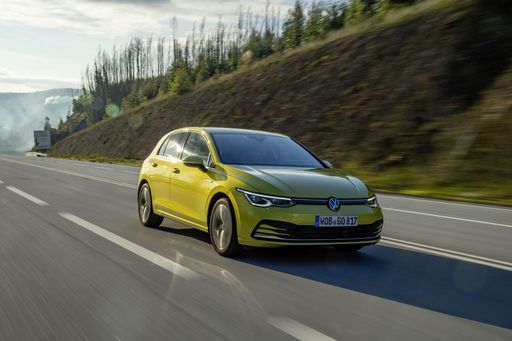
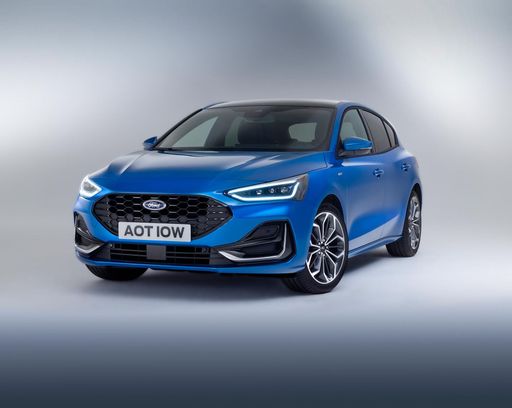
Ford Focus vs VW Golf comparison

Compare performance (280 HP vs 333 HP), boot space and price (27500 £ vs 25200 £ ) at a glance. Find out which car is the better choice for you – Ford Focus or VW Golf?

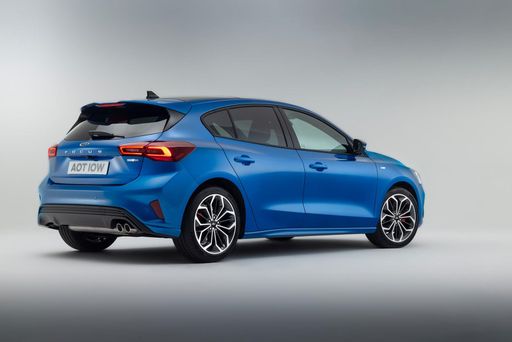
Focus

The Ford Focus vs. VW Golf: A Clash of Compact Titans

In the realm of compact hatchbacks, the Ford Focus and the VW Golf have long stood as stalwarts, renowned for their performance, practicality, and innovation. Both models offer a compelling mix of style and substance, but which one should earn your hard-earned money? Let's dive into the intricacies of these automotive icons to find out.
Golf

Powertrain & Performance

The Ford Focus offers a broad range of engine options, including petrol, diesel, and mild hybrid electric vehicles (MHEV), providing buyers with a choice of power outputs ranging from 115 HP to 280 HP. The Ford Focus's acceleration time varies significantly with the power option, with its top model reaching 0-100 km/h in a brisk 5.7 seconds and a top speed of up to 250 km/h.

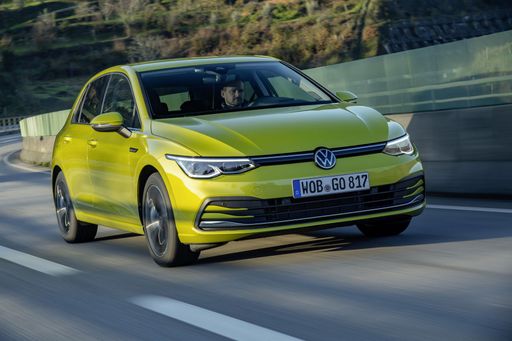
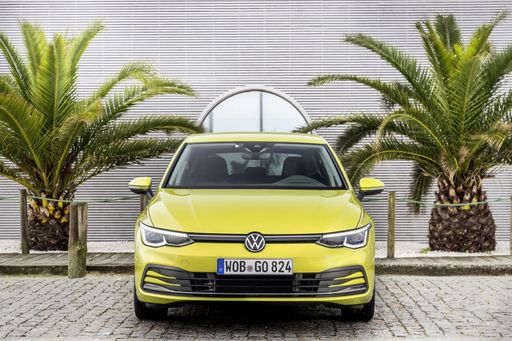
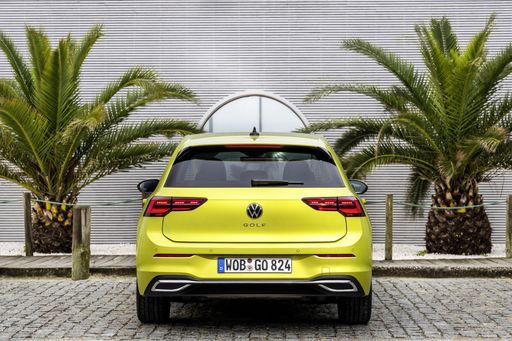
On the other hand, the VW Golf offers an equally diverse selection, including petrol, diesel, mild hybrid, and even a plug-in hybrid variant. With power outputs stretching from 116 HP to a substantial 333 HP, the Golf presents impressive acceleration figures, with its GTI and R models managing a swift 0-100 km/h sprint in as little as 4.6 seconds.

Focus

Fuel Efficiency

The Ford Focus provides a competitive edge with fuel consumption figures ranging from 4.9 to 8 L/100km. An efficient choice for those conscious of fuel economy, it also stands as a vigilant steward of the environment. The VW Golf, striving for supremacy, offers an impressive spectrum from a remarkably low 0.3 L/100km for its plug-in hybrid variant, to 8.5 L/100km at the higher end, appealing to eco-friendly drivers.

Golf

Space & Comfort

The Ford Focus's well-designed interior provides ample space with room for five passengers and a generous trunk capacity of 392 liters. Extensive adjustments and thoughtful ergonomics ensure that drivers and passengers travel in comfort.

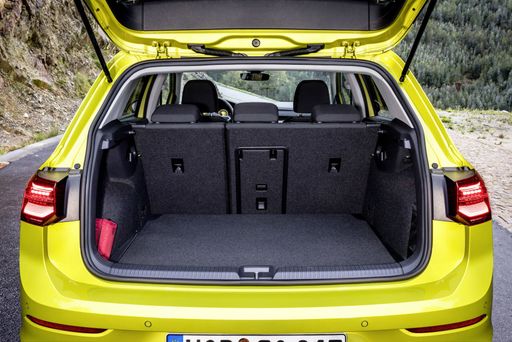
Meanwhile, the VW Golf, with its plush seating and adaptable interior, offers a slightly smaller trunk capacity ranging up to 381 liters. Though marginally compact, the VW focuses on material quality and passenger comfort, delivering a refined in-car experience.

Focus

Technological Innovations

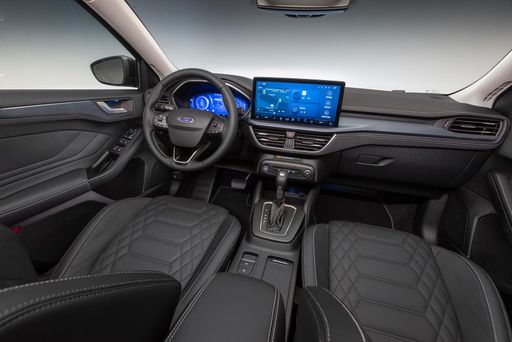
Both vehicles brim with cutting-edge technology. The Focus integrates features like Ford's SYNC infotainment system, providing seamless connectivity and advanced driver assistance systems that enhance safety and convenience.

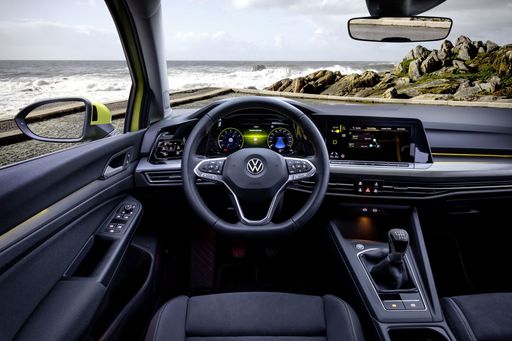
The VW Golf, renowned for its tech-forward nature, includes a digital cockpit, gesture controls, and a sophisticated navigation system. It elevates the driving experience with comprehensive integration of digital services and advanced assistance packages.

Golf

Final Thoughts

In conclusion, the battle between the Ford Focus and the VW Golf is a clash between two finely honed, formidable hatchbacks. The Focus presents as a versatile, driver-focused option with a broad powertrain offering and spacious interior. Meanwhile, the Golf stands out with its pioneering technological advancements and a wide spectrum of efficient powertrains.

Your choice between these two will ultimately hinge on where your priorities lie—dynamic performance and spacious design or technological sophistication and eco-friendliness. Regardless of the decision, both vehicles promise to deliver exceptional driving pleasure, embodying the essence of modern-day compact hatchbacks.

Ford Focus vs VW Golf: Key differences

Ford Focus

4.6 (1 Reviews)
rate
  • minimal more trunk space

VW Golf

4.6 (1 Reviews)
rate
  • minimal cheaper
  • slightly more power
  • decisively more efficient
  • evident quicker from 0–100 km/h
  • hardly perceptible lighter

All details on performance, efficiency, range and trunk space can be found in the technical comparison below – including user reviews for both models.

Here’s where it gets real: The technical differences in detail

Costs and Efficiency:

Price and efficiency are often the first things buyers look at. Here it becomes clear which model has the long-term edge – whether at the pump, the plug, or in purchase price.

VW Golf has a minimal advantage in terms of price – it starts at 25200 £ , while the Ford Focus costs 27500 £ . That’s a price difference of around 2319 £.

Fuel consumption also shows a difference: VW Golf manages with 1.10 L and is therefore decisively more efficient than the Ford Focus with 4.90 L. The difference is about 3.80 L per 100 km.

Engine and Performance:

Power, torque and acceleration are the classic benchmarks for car enthusiasts – and here, some clear differences start to show.

When it comes to engine power, the VW Golf has a slightly edge – offering 333 HP compared to 280 HP. That’s roughly 53 HP more horsepower.

In acceleration from 0 to 100 km/h, the VW Golf is evident quicker – completing the sprint in 4.60 s, while the Ford Focus takes 5.70 s. That’s about 1.10 s faster.

In terms of top speed, the VW Golf performs minimal better – reaching 270 km/h, while the Ford Focus tops out at 250 km/h. The difference is around 20 km/h.

Both models offer the same torque – 420 Nm.

Space and Everyday Use:

Cabin size, boot volume and payload all play a role in everyday practicality. Here, comfort and flexibility make the difference.

Both vehicles offer seating for 5 people.

In curb weight, VW Golf is hardly perceptible lighter – 1307 kg compared to 1330 kg. The difference is around 23 kg.

In terms of boot space, the Ford Focus offers minimal more room – 392 L compared to 381 L. That’s a difference of about 11 L.

In maximum load capacity, the Ford Focus performs hardly perceptible better – up to 1354 L, which is about 117 L more than the VW Golf.

When it comes to payload, Ford Focus slight takes the win – 560 kg compared to 508 kg. That’s a difference of about 52 kg.

Who wins the race in the data check?

The VW Golf is clearly superior overall in the objective data comparison.
This result only shows which model scores more points on paper – not which of the two cars feels right for you.

Ford Focus
VW Golf

Costs and Consumption

View detailed analysis

Engine and Performance

View detailed analysis

Dimensions and Body

View detailed analysis
from about £25,200
Golf

VW Golf

  • Engine Type : Petrol MHEV, Petrol, Diesel, Plugin Hybrid
  • Transmission : Automatic, Manuel
  • Drive Type : Front-Wheel Drive, All-Wheel Drive
  • Power HP : 116 - 333 HP
  • Consumption L/100km : 1.1 - 8.1 L
  • Electric Range : 131 - 143 km

Ford Focus

4.6 (1 Reviews)
rate

The Ford Focus remains a clever all‑rounder that balances sharp handling with everyday comfort, making it a strong choice whether your commute is city streets or country lanes. Its practical cabin and sensible running costs mean you’ll spend more time enjoying the drive and less time worrying about ownership, with a playful streak underfoot that keeps things interesting.

details

VW Golf

4.6 (1 Reviews)
rate

The VW Golf remains the everyman’s favourite — cleverly balanced, composed and just posh enough to feel grown-up without pretending to be something it’s not. It slips through town and eats up longer trips with a refined cabin, practical layout and a kindly, capable character that turns everyday driving into something a little bit special.

details
Ford Focus
VW Golf

Costs and Consumption

Price
27500 - 42700 £
Price
25200 - 47600 £
Consumption L/100km
4.9 - 8 L
Consumption L/100km
1.1 - 8.1 L
Consumption kWh/100km
-
Consumption kWh/100km
-
Electric Range
-
Electric Range
131 - 143 km
Battery Capacity
-
Battery Capacity
19.70 kWh
co2
117 - 183 g/km
co2
25 - 184 g/km
Fuel tank capacity
52 L
Fuel tank capacity
40 - 55 L

Dimensions and Body

Body Type
Hatchback
Body Type
Hatchback
Seats
5
Seats
5
Doors
5
Doors
5
Curb weight
1330 - 1529 kg
Curb weight
1307 - 1662 kg
Trunk capacity
392 L
Trunk capacity
273 - 381 L
Length
4382 - 4397 mm
Length
4282 - 4296 mm
Width
1825 - 1844 mm
Width
1789 mm
Height
1438 - 1482 mm
Height
1454 - 1483 mm
Max trunk capacity
1354 L
Max trunk capacity
1129 - 1237 L
Payload
495 - 560 kg
Payload
438 - 508 kg

Engine and Performance

Engine Type
Petrol MHEV, Diesel, Petrol
Engine Type
Petrol MHEV, Petrol, Diesel, Plugin Hybrid
Transmission
Manuel, Automatic
Transmission
Automatic, Manuel
Transmission Detail
Manual Gearbox, Dual-Clutch Automatic, Automatic Gearbox
Transmission Detail
Dual-Clutch Automatic, Manual Gearbox
Drive Type
Front-Wheel Drive
Drive Type
Front-Wheel Drive, All-Wheel Drive
Power HP
115 - 280 HP
Power HP
116 - 333 HP
Acceleration 0-100km/h
5.7 - 11.8 s
Acceleration 0-100km/h
4.6 - 10.2 s
Max Speed
186 - 250 km/h
Max Speed
202 - 270 km/h
Torque
170 - 420 Nm
Torque
220 - 420 Nm
Number of Cylinders
3 - 4
Number of Cylinders
4
Power kW
85 - 206 kW
Power kW
85 - 245 kW
Engine capacity
999 - 2261 cm3
Engine capacity
1498 - 1984 cm3

General

Model Year
2022 - 2024
Model Year
2024 - 2025
CO2 Efficiency Class
D, G
CO2 Efficiency Class
D, F, G, C, B
Brand
Ford
Brand
VW
What drive types are available for the Ford Focus?

Available configurations include Front-Wheel Drive.

The prices shown are estimates based on German list prices, adjusted for local VAT. Local registration taxes (e.g. NoVA, BPM or CO2 malus) are not included. This information is not legally binding.