VS

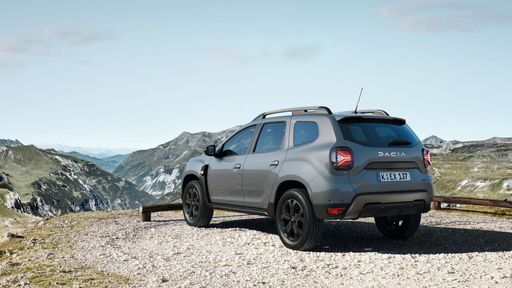
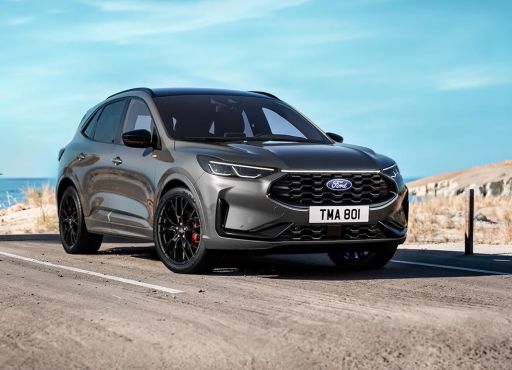
Ford Kuga vs Dacia Duster comparison

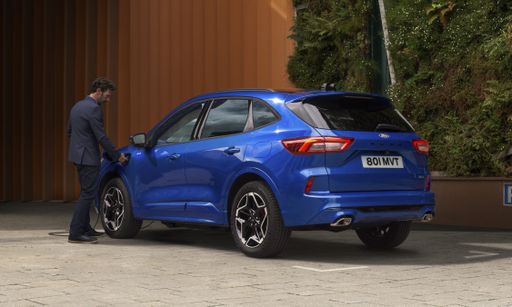
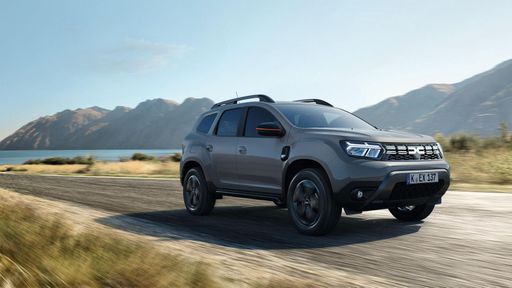
Compare performance (243 HP vs 158 HP), boot space and price (34,200 £ vs 16,300 £ ) at a glance. Find out which car is the better choice for you – Ford Kuga or Dacia Duster?

Ford Kuga vs Dacia Duster: Key differences

Ford Kuga

4.3 (7 Reviews)
rate
  • markedly more power
  • significantly more efficient
  • noticeably quicker 0–100 km/h
details

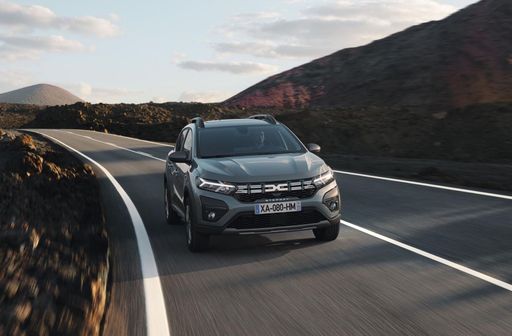
Dacia Duster

4.6 (5 Reviews)
rate
  • substantially cheaper
  • somewhat lighter
details

All details on performance, efficiency, range and trunk space can be found in the technical comparison below – including user reviews for both models.

By Achim Sedelmaier

Kuga

Overview: Dacia Duster VS Ford Kuga in plain terms

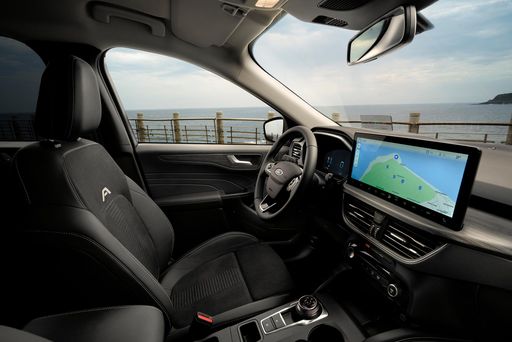
Dacia Duster VS Ford Kuga puts a no‑frills, utility‑first compact SUV up against a more refined, driver‑focused rival. The Dacia Duster trades gloss for practicality: rugged bits, simple controls and genuine off‑road credentials make it an honest value play. The Ford Kuga aims for refinement and technology, with sharper handling, a larger infotainment suite and better motorway manners. Choosing between them is about priorities — saving money and utility with the Duster or paying more for the Kuga’s quieter cabin, flexibility and driving polish.
Duster

Character and driving experience

The Ford Kuga feels like a composed, agile car on twisty roads thanks to direct steering and a firmer setup, so drivers who actually enjoy steering will prefer the Kuga. The Dacia Duster leans the other way: comfortable, forgiving and built to shrug off potholes, with higher clearance and optional four‑wheel capability for rough tracks. Under hard acceleration both can get vocal — the Kuga’s hybrid systems can sound strained under load while the Duster’s powertrains hum more noticeably on the motorway — but in everyday driving the Duster’s relaxed manners and the Kuga’s precision create very different personalities. If you value driver engagement pick the Kuga; if you value composure over poor surfaces and simple competence pick the Duster.

Kuga

Cabin feel, controls and perceived quality

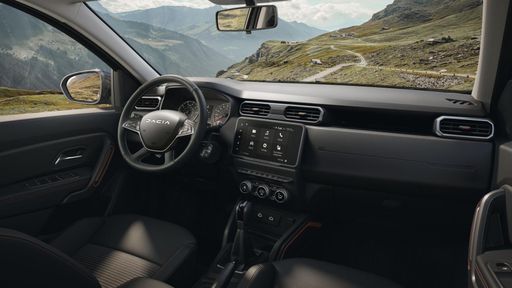
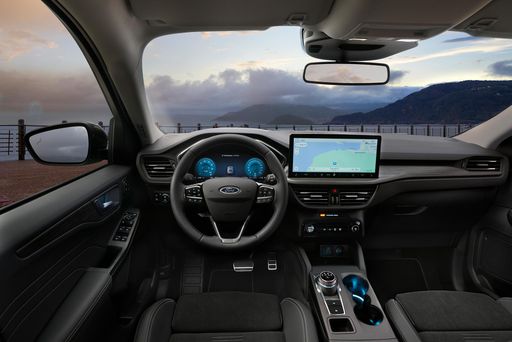
Dacia Duster’s interior is unapologetically functional: durable plastics, useful tie‑downs and tactile physical buttons that stay sensible when wet or muddy. The Ford Kuga presents a cleaner, more modern cabin with a big Sync system and wireless phone mirroring, but its reliance on touch controls for climate functions is an ergonomic step back. Neither car pretends to luxury, yet the Kuga’s quieter cabin materials and better long‑distance refinement feel more premium in daily use, while the Duster’s finish tolerates family life and outdoor gear better. If you value tech polish and quieter journeys the Kuga has the edge; if you want low‑stress, easy‑to‑clean practicality the Duster wins on feel.

Duster

Practicality and everyday usability

The Ford Kuga scores with a sliding rear bench and genuinely useful rear legroom that make family trips and variable luggage easy to manage, although hybrid versions eat into boot space. The Dacia Duster returns the favour with straightforward practicality: a sensible boot shape, robust interior options and accessories that suit dogs, muddy boots and camping kits. Payload and towing expectations shift the choice as well — the Duster’s utility package and higher ground clearance suit outdoor lifestyles, while the Kuga’s configurability and clever seat packaging suit families who swap people and cargo frequently. In short, pick the Duster for rugged utility and simple practicality, pick the Kuga for packaging flexibility and everyday family versatility.

Kuga

City life versus long‑distance behavior

In town both cars can be efficient, but they do it differently: the Dacia Duster’s hybrid variants often start electrically and feel relaxed in stop‑start traffic, while the Ford Kuga’s hybrid systems and driving dynamics deliver very low urban consumption and a quieter, composed ride through fast suburban roads. On long motorway runs the Kuga’s better insulation and highway composure make fatigue and noise less of an issue, whereas the Duster keeps occupants comfortable over uneven surfaces but lets wind and tyre roar climb at higher speeds. Parking and everyday maneuvering favor the Duster’s simplicity and high seating position for visibility, but the Kuga’s parking sensors and clearer rear view make tight spots easier. If your daily life is mixed with long commutes the Kuga will feel more grown‑up; if you live rurally or value short urban hops and easy maintenance the Duster is more forgiving.

Duster

Buyer fit — who should choose which car

Choose the Dacia Duster if you’re price‑conscious, need a utilitarian SUV that tolerates mud, boots and rough lanes, and you prefer straightforward controls and low running complexity. Opt for the Ford Kuga if you want sharper handling, a quieter motorway companion, a flexible rear bench for family life and modern infotainment, and you’re willing to pay more for those refinements. The trade‑off is clear: Duster gives rugged value and practical toughness, Kuga gives refinement, driving engagement and tech flexibility. Read the technical comparison next to see how engines, weights and boot volumes translate into the real‑world compromises just described.

Here’s where it gets real: The technical differences in detail

Kuga

Costs and Efficiency:

Price and efficiency are key factors when choosing a car – and this is often where the real differences emerge.

Dacia Duster is substantially cheaper – starting at 16,300 £ , while the Ford Kuga costs 34,200 £ . That’s a price difference of around 17,965 £.

Fuel consumption also shows a difference: the Ford Kuga uses 2.8 L/100km and is significantly more efficient than the Dacia Duster with 4.7 L/100km. The difference is about 1.9 L/100km.

Duster

Engine and Performance:

Power, torque and acceleration say a lot about how a car feels on the road. This is where you see which model delivers more driving dynamics.

When it comes to engine power, the Ford Kuga offers markedly more power – delivering 243 HP compared to 158 HP. That’s roughly 85 HP more horsepower.

When accelerating from 0 to 100 km/h, the Ford Kuga is noticeably quicker – completing the sprint in 7.3 s, while the Dacia Duster takes 9.4 s. That’s about 2.1 s quicker.

There’s also a difference in torque: the Ford Kuga delivers barely more torque with 240 Nm compared to 230 Nm. That’s about 10 Nm more.

Kuga

Space and Everyday Use:

Beyond pure performance, interior space and usability matter most in daily life. This is where you see which car is more practical and versatile.

Both vehicles offer seating for 5 people.

In terms of curb weight, Dacia Duster is somewhat lighter – 1,377 kg compared to 1,526 kg. The difference is around 149 kg.

When it comes to payload, the Ford Kuga carries moderately more – 550 kg compared to 453 kg. That’s a difference of about 97 kg.

Who wins the race in the data check?

The Ford Kuga is clearly superior overall in the objective data comparison.
This result only shows which model scores more points on paper – not which of the two cars feels right for you.

from £34,200
Kuga

Ford Kuga

  • Engine Type Petrol, Full Hybrid, Plugin Hybrid
  • Transmission Manuel, Automatic
  • Drive Type Front-Wheel Drive, All-Wheel Drive
  • Power HP 150 - 243 HP
  • Consumption L/100km 2.8 - 6.8 L/100km
  • Electric Range 68 km
Ford Kuga
Dacia Duster

Costs and Consumption

View detailed analysis

Engine and Performance

View detailed analysis

Dimensions and Body

View detailed analysis

Ford Kuga

The Ford Kuga is a practical and comfortable compact SUV that balances everyday usability with a composed ride and adaptable interior. It offers sensible tech and safety features, making it a solid choice for families or anyone seeking a versatile, easy-to-live-with crossover.

details

Dacia Duster

The Dacia Duster is a straightforward, budget-friendly SUV that prioritizes practicality and value over flashy features. Its rugged styling and simple, roomy interior make it a sensible choice for buyers who want capable everyday transport without paying for extras they won’t use.

details
Ford Kuga
Dacia Duster

Costs and Consumption

Price
34,200 - 46,300 £
Price
16,300 - 24,900 £
Consumption L/100km
2.8 - 6.8 L/100km
Consumption L/100km
4.7 - 7.6 L/100km
Consumption kWh/100km
-
Consumption kWh/100km
-
Electric Range
68 km
Electric Range
-
Battery Capacity
-
Battery Capacity
-
co2
55 - 154 g/km
co2
107 - 140 g/km
Fuel tank capacity
-
Fuel tank capacity
-

Dimensions and Body

Body Type
SUV
Body Type
SUV
Seats
5
Seats
5
Doors
-
Doors
-
Curb weight
1,526 - 1,859 kg
Curb weight
1,377 - 1,559 kg
Trunk capacity
-
Trunk capacity
348 - 517 L
Length
-
Length
-
Width
1,882 mm
Width
1,813 mm
Height
-
Height
-
Max trunk capacity
-
Max trunk capacity
-
Payload
541 - 550 kg
Payload
402 - 453 kg

Engine and Performance

Engine Type
Petrol, Full Hybrid, Plugin Hybrid
Engine Type
Petrol MHEV, Full Hybrid, LPG
Transmission
Manuel, Automatic
Transmission
Manuel, Automatic
Transmission Detail
Manual Gearbox, CVT, Automatic Gearbox
Transmission Detail
Manual Gearbox, Automated Manual, Dual-Clutch Automatic
Drive Type
Front-Wheel Drive, All-Wheel Drive
Drive Type
Front-Wheel Drive, All-Wheel Drive
Power HP
150 - 243 HP
Power HP
115 - 158 HP
Acceleration 0-100km/h
7.3 - 9.9 s
Acceleration 0-100km/h
9.4 - 11.7 s
Max Speed
-
Max Speed
-
Torque
240 Nm
Torque
190 - 230 Nm
Number of Cylinders
3 - 4
Number of Cylinders
3 - 4
Power kW
111 - 178 kW
Power kW
84 - 116 kW
Engine capacity
1,496 - 2,488 cm3
Engine capacity
1,199 - 1,789 cm3

General

Model Year
2025
Model Year
2,025 - 2,026
CO2 Efficiency Class
E, D, B
CO2 Efficiency Class
D, C
Brand
Ford
Brand
Dacia
DriveDuel uses data analysis and artificial intelligence to evaluate vehicle data and create content. Content is regularly reviewed and improved. The displayed prices are estimates based on German list prices, adjusted to the respective country’s VAT. Country-specific registration taxes are not included. This information is not legally binding.