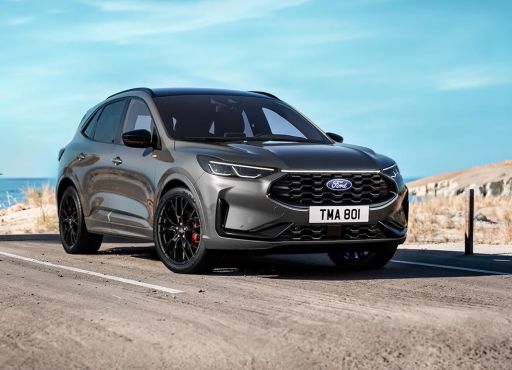
@ Ford Motor Company / Ford Media Center
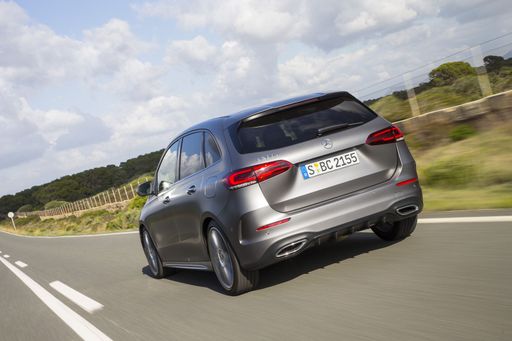
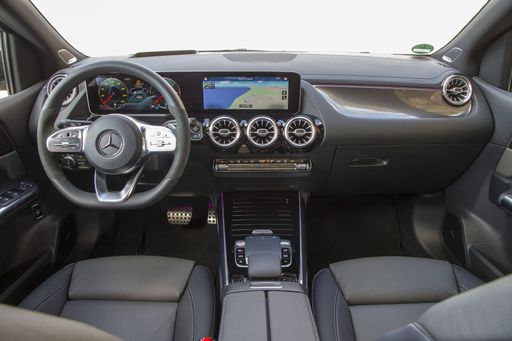
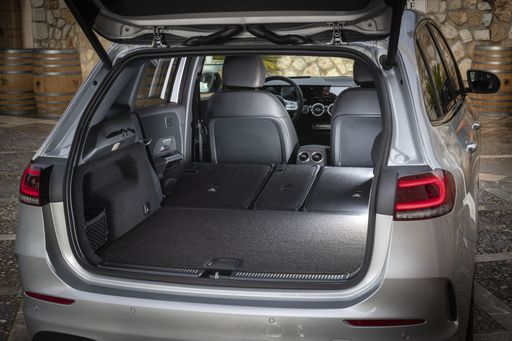
@ Mercedes-Benz Group Media
VS

Ford Kuga vs Mercedes B Class – Performance, range & efficiency compared

Everyday use, family trips or long-distance drives – here’s where the differences show.
Discover whether Ford Kuga or Mercedes B Class fits your lifestyle better.

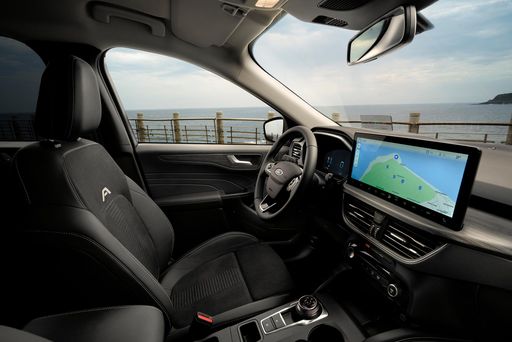
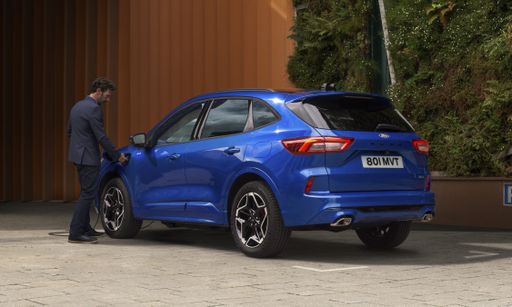
Kuga @ Ford Motor Company / Ford Media Center

The Battle of Versatility: Ford Kuga vs. Mercedes B-Klasse

In the dynamic world of automobiles, the Ford Kuga and Mercedes B-Klasse stand out as versatile performers, each offering a blend of innovation, technology, and efficiency. As two of the most sought-after models in the SUV and MPV segments, respectively, they cater to different tastes and requirements. Let's delve into their technical prowess and innovative features to see how they stack up against each other.
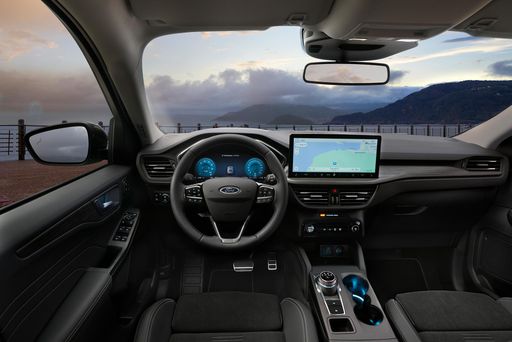
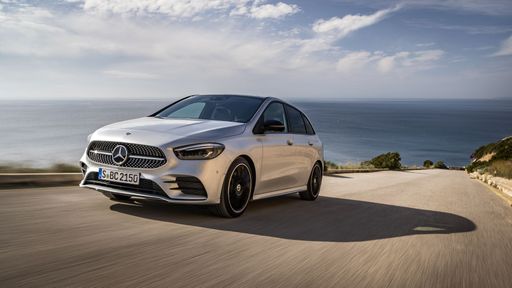
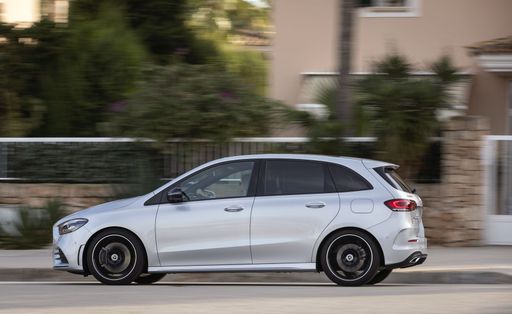
B Class @ Mercedes-Benz Group Media

Engine Performance and Efficiency

The Ford Kuga offers a range of engine options, including petrol, full hybrid, and plugin hybrid variants, delivering power outputs between 150 to 243 horsepower. With options for both manual and automatic (CVT) transmissions, and drive options that include both front-wheel and all-wheel drive, the Kuga is designed for flexibility and choice. Its noteworthy fuel consumption ranges from an impressive 0.9 to 6.4 liters per 100 kilometers, the lowest figure being achieved by the plugin hybrid variant, which boasts an electric range of 69 kilometers.

On the other hand, the Mercedes B-Klasse mainly features petrol MHEV, diesel, and plugin hybrid models, with outputs ranging from 116 to 238 horsepower. The B-Klasse runs on an automatic transmission with a dual-clutch system, ensuring seamless shifting. The plugin hybrid version provides an exceptional electric range of 83 kilometers and a fuel consumption low of 0.8 liters per 100 kilometers. These numbers highlight Mercedes' focus on blending sustainability with performance.

Kuga @ Ford Motor Company / Ford Media Center

Size, Space, and Practicality

In terms of dimensions, the Ford Kuga stands tall as an SUV with a length ranging from 4604 to 4645 mm, a width of 1882 mm, and a height of up to 1681 mm. The Kuga is suitable for families, offering 5 seats and a generous trunk capacity of 412 liters.

Conversely, the Mercedes B-Klasse, being an MPV, is slightly more compact with a length of 4419 mm, a width of 1796 mm, and a height of 1562 mm. Nevertheless, it surprises with a larger trunk capacity of up to 455 liters, making it practical for day-to-day utility while maintaining its sporty, sleek aesthetic.

B Class @ Mercedes-Benz Group Media

Performance and Driving Dynamics

The Ford Kuga accelerates from 0 to 100 km/h in times ranging between 7.3 to 9.5 seconds, depending on the engine selected, and can reach top speeds up to 200 km/h. With a torque output of 240 Nm and its available all-wheel-drive system, the Kuga promises a robust and consistent driving experience.

The Mercedes B-Klasse, meanwhile, offers quicker acceleration in some models, with 0 to 100 km/h times as sharp as 6.5 seconds and top speeds reaching a thrilling 250 km/h. Torque figures reach up to 450 Nm in the higher-powered variants, showcasing its spirited drive credentials.

Kuga @ Ford Motor Company / Ford Media Center

Environmental Impact and Efficiency

Both models incorporate Eco-friendly technologies. The Kuga holds a CO2 efficiency classification between E and B, revealing its varied efficiency depending on the configuration, with CO2 emissions as low as 20 g/km for the plugin hybrid.

The B-Klasse is similarly efficient, with CO2 emission classifications ranging from E to B and emissions as low as 18 g/km, achieved by the plugin hybrid. Mercedes' commitment to reducing environmental impact is clear with these commendable figures.

B Class @ Mercedes-Benz Group Media

Conclusion: Choosing Your Champion

The Ford Kuga and Mercedes B-Klasse each bring something unique to the table. If you're seeking the rugged versatility and off-road capabilities of an SUV with a wide choice of powertrains, the Ford Kuga might be your perfect match. Alternatively, if you desire the refined comfort and urban agility of an MPV, infused with advanced technology and eco-friendliness, the Mercedes B-Klasse stands as a formidable contender. Ultimately, your lifestyle and preference will determine which vehicle emerges as your champion in this exciting automotive showdown.

Here’s where it gets real: The technical differences in detail

Costs and Efficiency:

Looking at overall running costs, both models reveal some interesting differences in everyday economy.

Mercedes B Class has a barely noticeable advantage in terms of price – it starts at 33100 £, while the Ford Kuga costs 34200 £. That’s a price difference of around 1113 £.

Fuel consumption also shows a difference: Mercedes B Class manages with 2.50 L and is therefore to a small extent more efficient than the Ford Kuga with 2.80 L. The difference is about 0.30 L per 100 km.

As for range, the Mercedes B Class performs slightly better – achieving up to 83 km, about 15 km more than the Ford Kuga.

Engine and Performance:

Power, torque and acceleration say a lot about how a car feels on the road. This is where you see which model delivers more driving dynamics.

When it comes to engine power, the Ford Kuga has a slight edge – offering 243 HP compared to 238 HP. That’s roughly 5 HP more horsepower.

In acceleration from 0 to 100 km/h, the Mercedes B Class is slightly quicker – completing the sprint in 6.50 s, while the Ford Kuga takes 7.30 s. That’s about 0.80 s faster.

In terms of top speed, the Mercedes B Class performs slightly better – reaching 250 km/h, while the Ford Kuga tops out at 200 km/h. The difference is around 50 km/h.

There’s also a difference in torque: Mercedes B Class pulls decisively stronger with 450 Nm compared to 240 Nm. That’s about 210 Nm difference.

Space and Everyday Use:

Cabin size, boot volume and payload all play a role in everyday practicality. Here, comfort and flexibility make the difference.

Both vehicles offer seating for 5 people.

In curb weight, Mercedes B Class is minimal lighter – 1405 kg compared to 1526 kg. The difference is around 121 kg.

In terms of boot space, the Mercedes B Class offers minimal more room – 455 L compared to 412 L. That’s a difference of about 43 L.

In maximum load capacity, the Mercedes B Class performs minimal better – up to 1540 L, which is about 6 L more than the Ford Kuga.

Maximum payload is identical – both can carry up to 550 kg.

Who wins the race?

The Mercedes B Class proves to be dominates this comparison and therefore becomes our DriveDuel Champion!
Mercedes B Class is the better all-rounder in this comparison.

from about £33,100
B Class @ Mercedes-Benz Group Media

Mercedes B Class

  • Engine Type : Plugin Hybrid, Petrol MHEV, Diesel
  • Transmission : Automatic
  • Drive Type : Front-Wheel Drive, All-Wheel Drive
  • Power HP : 116 - 238 HP
  • Consumption L/100km : 2.5 - 6.9 L
  • Electric Range : 83 km

Ford Kuga

3.5 (2)
rate

The Kuga is Ford’s adaptable family SUV that blends usable space with a surprisingly lively driving character, making daily commutes and weekend escapes equally enjoyable. With smart interior packaging, an easy-to-use infotainment setup and composed road manners, it’s a sensible choice for buyers who want a bit of fun without the fuss.

details

Mercedes B Class

5 (2)
rate

The Mercedes B-Class is a smart, grown-up compact people carrier that dresses everyday practicality in a near‑premium polish, perfect for buyers who want comfort and a classy badge without the theatrics. It won’t set your pulse racing on a back road, but it will make school runs, commutes and grocery hauls feel pleasantly civilized — a reliable, slightly posh companion for real life.

details
Ford Kuga
Mercedes B Class
Kuga @ Ford Motor Company / Ford Media Center
B Class @ Mercedes-Benz Group Media

Costs and Consumption

Price
34200 - 46300 £
Price
33100 - 52500 £
Consumption L/100km
2.8 - 6.8 L
Consumption L/100km
2.5 - 6.9 L
Consumption kWh/100km
-
Consumption kWh/100km
-
Electric Range
68 km
Electric Range
83 km
Battery Capacity
1.1 - 14.4 kWh
Battery Capacity
12.90 kWh
co2
55 - 154 g/km
co2
56 - 156 g/km
Fuel tank capacity
42 - 54 L
Fuel tank capacity
35 - 51 L

Dimensions and Body

Body Type
SUV
Body Type
MPV
Seats
5
Seats
5
Doors
5
Doors
5
Curb weight
1526 - 1859 kg
Curb weight
1405 - 1745 kg
Trunk capacity
412 L
Trunk capacity
405 - 455 L
Length
4604 - 4645 mm
Length
4419 mm
Width
1882 mm
Width
1796 mm
Height
1673 - 1681 mm
Height
1562 mm
Max trunk capacity
1534 L
Max trunk capacity
1440 - 1540 L
Payload
541 - 550 kg
Payload
505 - 550 kg

Engine and Performance

Engine Type
Petrol, Full Hybrid, Plugin Hybrid
Engine Type
Plugin Hybrid, Petrol MHEV, Diesel
Transmission
Manuel, Automatic
Transmission
Automatic
Transmission Detail
Manual Gearbox, CVT, Automatic Gearbox
Transmission Detail
Dual-Clutch Automatic
Drive Type
Front-Wheel Drive, All-Wheel Drive
Drive Type
Front-Wheel Drive, All-Wheel Drive
Power HP
150 - 243 HP
Power HP
116 - 238 HP
Acceleration 0-100km/h
7.3 - 9.9 s
Acceleration 0-100km/h
6.5 - 10 s
Max Speed
195 - 200 km/h
Max Speed
200 - 250 km/h
Torque
240 Nm
Torque
200 - 450 Nm
Number of Cylinders
3 - 4
Number of Cylinders
4
Power kW
111 - 178 kW
Power kW
85 - 175 kW
Engine capacity
1496 - 2488 cm3
Engine capacity
1332 - 1991 cm3

General

Model Year
2025
Model Year
2024 - 2025
CO2 Efficiency Class
E, D, B
CO2 Efficiency Class
B, D, E, F
Brand
Ford
Brand
Mercedes-Benz
What drivetrain options does the Ford Kuga have?

The Ford Kuga is available as Front-Wheel Drive or All-Wheel Drive.

The prices and data displayed are estimates based on German list prices and may vary by country. This information is not legally binding.