VS

Ford Kuga vs Peugeot 408 comparison

Compare performance (243 HP vs 225 HP), boot space and price (34,200 £ vs 35,100 £ ) at a glance. Find out which car is the better choice for you – Ford Kuga or Peugeot 408?

Ford Kuga vs Peugeot 408: Key differences

Ford Kuga

4.2 (6 Reviews)
rate
  • marginally cheaper
  • barely more power
  • marginally lighter

Peugeot 408

4.9 (1 Reviews)
rate
  • barely more efficient
  • clearly more electric range
  • only slightly quicker 0–100 km/h

All details on performance, efficiency, range and trunk space can be found in the technical comparison below – including user reviews for both models.

By Achim Sedelmaier

Kuga

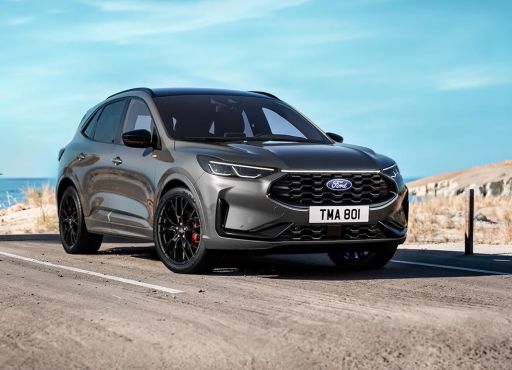
In today’s automotive landscape, two notable contenders have emerged in the compact SUV segment: the Ford Kuga and the Peugeot 408. Both cars offer unique features, styling, and technology, making them appealing options for drivers seeking versatility and performance. Here, we compare these two models based on their technical specifications, innovations, and what they bring to the table for potential buyers.
408

Design and Dimensions

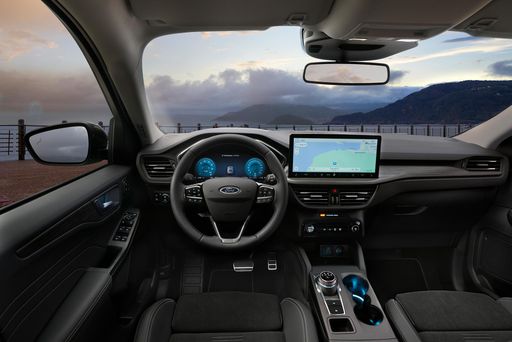
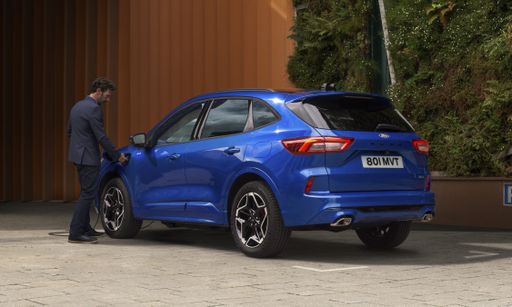
The Ford Kuga showcases a robust and muscular design with dimensions that include a length of 4604 mm and a width of 1882 mm. Its height varies slightly among models, reaching up to 1681 mm. The SUV's stance is complemented by a spacious trunk capacity of 412 L, ensuring ample storage for everyday needs.

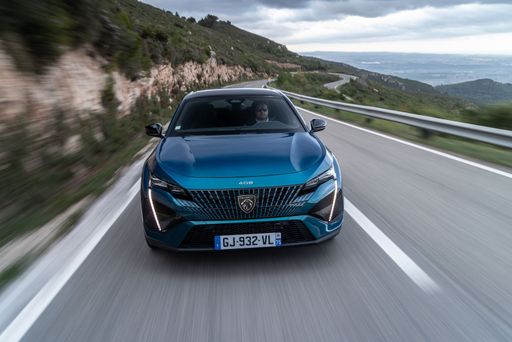
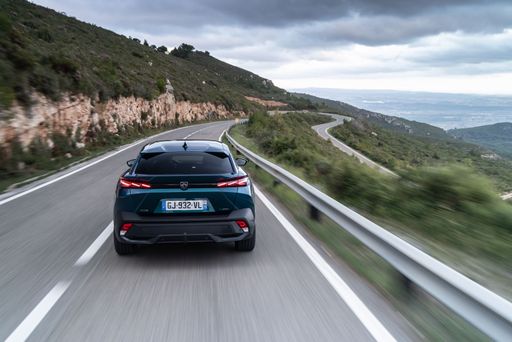
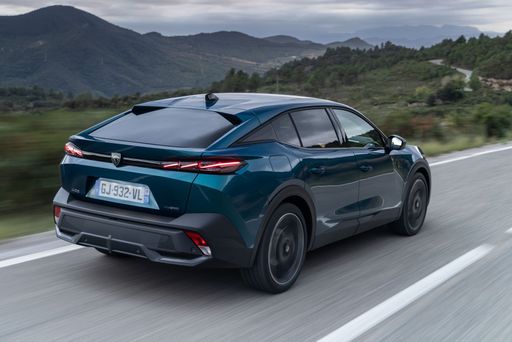
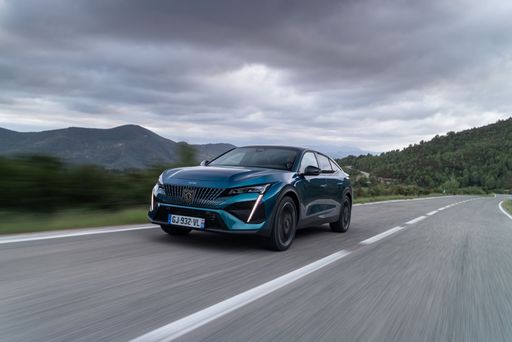
In contrast, the Peugeot 408 sports a more streamlined silhouette, stretching 4687 mm long and 1848 mm wide, with a height of 1478 mm. Its contemporary design is not just for aesthetics; the larger trunk capacity of 536 L provides practicality for families or weekend adventurers. Peugeot has masterfully blended style with function, making the 408 a strong contender in this category.

Kuga

Powertrains: Engine Options and Performance

The Ford Kuga comes equipped with a variety of engine types, including petrol, full hybrid, and plug-in hybrid options. Power outputs range from 150 HP to an impressive 243 HP, with torque peaking at 240 Nm. The Kuga also offers an acceleration of 0-100 km/h in as quick as 7.3 seconds. With fuel consumption as low as 5.3 L/100 km and an electric driving range of 69 km, it effectively caters to eco-conscious drivers.

On the other hand, the Peugeot 408 features petrol MHEV, plug-in hybrid, and electric variants. Their performance includes power outputs between 136 HP and 225 HP, while torque can go up to 360 Nm. The 408 has an acceleration advantage, reportedly reaching 0-100 km/h in just 7.2 seconds. With fuel consumption figures as low as 1.4 L/100 km and an impressive electric range of up to 453 km, the 408 emphasizes efficiency and sustainability in urban environments.

408

Transmission and Driving Dynamics

The Kuga offers both manual and automatic transmission options, including a Continuously Variable Transmission (CVT), catering to different driver preferences. Available in both front-wheel and all-wheel drive configurations, this model provides versatility in handling various road conditions, making it ideal for both city driving and exploring off-the-beaten-path adventures.

Conversely, the Peugeot 408 only features automatic transmission options, including dual-clutch and reduction gearbox variants, which contribute to smooth and efficient performance. While it is front-wheel drive only, the refined suspension and chassis tuning deliver an engaging driving experience on city streets and highway journeys.

Kuga

Technological Innovations and Features

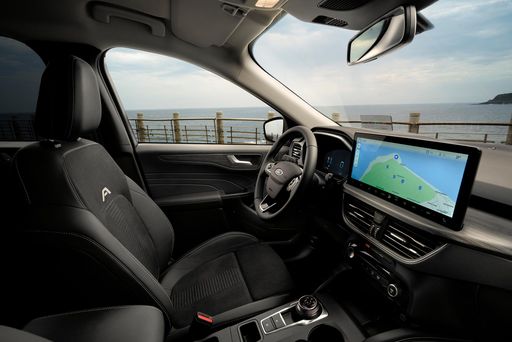
When it comes to technology, the Ford Kuga is equipped with a user-friendly infotainment system that includes a touchscreen interface, smartphone connectivity, and advanced driver assistance features, enhancing both comfort and safety. Innovations like adaptive cruise control and lane-keeping assistance are available, making it a technologically adept SUV.

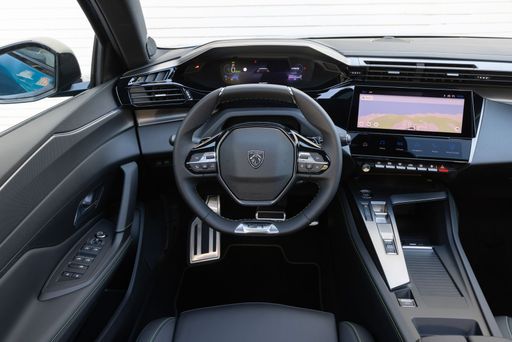
The Peugeot 408, on the other hand, pushes the envelope further with its commitment to digital innovation. The model features a state-of-the-art digital cockpit that seamlessly integrates all driving functions and infotainment systems. Many variants come with advanced safety and connectivity features as well, including semi-autonomous driving capabilities, ensuring drivers feel both secure and connected while on the go.

408

Conclusion: Which SUV Reigns Supreme?

Ultimately, both the Ford Kuga and Peugeot 408 are compelling choices within the compact SUV market. The Kuga leans more towards a traditional SUV format with variances in drivetrain options and powerful engine variants. Meanwhile, the 408 captures attention with its modern design, superior efficiency, and clever technological innovations.

Drivers must consider their own needs: whether seeking dynamic performance and versatility with the Kuga or cutting-edge technology and efficiency with the 408. Regardless of choice, both models promise to deliver a noteworthy driving experience in their own unique ways.

Here’s where it gets real: The technical differences in detail

Kuga

Costs and Efficiency:

Price and efficiency are often the first things buyers look at. Here it becomes clear which model has the long-term edge – whether at the pump, the plug, or in purchase price.

Ford Kuga is marginally cheaper – starting at 34,200 £ , while the Peugeot 408 costs 35,100 £ . That’s a price difference of around 875 £.

Fuel consumption also shows a difference: the Peugeot 408 uses 2.7 L/100km and is barely more efficient than the Ford Kuga with 2.8 L/100km. The difference is about 0.1 L/100km.

As for electric range, the Peugeot 408 offers clearly more range – reaching up to 455 km, about 387 km more than the Ford Kuga.

408

Engine and Performance:

Under the bonnet, it becomes clear which model is tuned for sportiness and which one takes the lead when you hit the accelerator.

When it comes to engine power, the Ford Kuga offers barely more power – delivering 243 HP compared to 225 HP. That’s roughly 18 HP more horsepower.

When accelerating from 0 to 100 km/h, the Peugeot 408 is only slightly quicker – completing the sprint in 7.2 s, while the Ford Kuga takes 7.3 s. That’s about 0.1 s quicker.

There’s also a difference in torque: the Peugeot 408 delivers noticeably more torque with 360 Nm compared to 240 Nm. That’s about 120 Nm more.

Kuga

Space and Everyday Use:

Whether family car or daily driver – which one offers more room, flexibility and comfort?

Both vehicles offer seating for 5 people.

In terms of curb weight, Ford Kuga is marginally lighter – 1,526 kg compared to 1,544 kg. The difference is around 18 kg.

When it comes to payload, the Ford Kuga carries moderately more – 550 kg compared to 456 kg. That’s a difference of about 94 kg.

Who wins the race in the data check?

The Peugeot 408 is clearly superior overall in the objective data comparison.
This result only shows which model scores more points on paper – not which of the two cars feels right for you.

from £35,100
408

Peugeot 408

  • Engine Type : Electric, Petrol MHEV, Plugin Hybrid
  • Transmission : Automatic
  • Drive Type : Front-Wheel Drive
  • Power HP : 145 - 225 HP
  • Consumption L/100km : 2.7 - 5.1 L/100km
  • Consumption kWh/100km : 14.8 kWh/100km
  • Electric Range : 79 - 455 km
Ford Kuga
Peugeot 408

Costs and Consumption

View detailed analysis

Engine and Performance

View detailed analysis

Dimensions and Body

View detailed analysis

Ford Kuga

The Kuga is Ford’s adaptable family SUV that blends usable space with a surprisingly lively driving character, making daily commutes and weekend escapes equally enjoyable. With smart interior packaging, an easy-to-use infotainment setup and composed road manners, it’s a sensible choice for buyers who want a bit of fun without the fuss.

details

Peugeot 408

The Peugeot 408 blends a coupe-like roofline with practical sensibility, delivering striking looks and a surprisingly airy, premium-feeling cabin. On the road it prefers comfort and poise over manic thrills, making it a smart, stylish choice for buyers who want something a bit different from the usual family hatchback.

details
Ford Kuga
Peugeot 408

Costs and Consumption

Price
34,200 - 46,300 £
Price
35,100 - 48,000 £
Consumption L/100km
2.8 - 6.8 L/100km
Consumption L/100km
2.7 - 5.1 L/100km
Consumption kWh/100km
-
Consumption kWh/100km
14.8 kWh/100km
Electric Range
68 km
Electric Range
79 - 455 km
Battery Capacity
-
Battery Capacity
58.2 kWh
co2
55 - 154 g/km
co2
0 - 114 g/km
Fuel tank capacity
-
Fuel tank capacity
42 - 52 L

Dimensions and Body

Body Type
SUV
Body Type
SUV
Seats
5
Seats
5
Doors
-
Doors
5
Curb weight
1,526 - 1,859 kg
Curb weight
1,544 - 1,879 kg
Trunk capacity
-
Trunk capacity
471 - 536 L
Length
-
Length
4,687 mm
Width
1,882 mm
Width
1,848 mm
Height
-
Height
1,478 mm
Max trunk capacity
-
Max trunk capacity
1,528 - 1,583 L
Payload
541 - 550 kg
Payload
371 - 456 kg

Engine and Performance

Engine Type
Petrol, Full Hybrid, Plugin Hybrid
Engine Type
Electric, Petrol MHEV, Plugin Hybrid
Transmission
Manuel, Automatic
Transmission
Automatic
Transmission Detail
Manual Gearbox, CVT, Automatic Gearbox
Transmission Detail
Reduction Gearbox, Dual-Clutch Automatic
Drive Type
Front-Wheel Drive, All-Wheel Drive
Drive Type
Front-Wheel Drive
Power HP
150 - 243 HP
Power HP
145 - 225 HP
Acceleration 0-100km/h
7.3 - 9.9 s
Acceleration 0-100km/h
7.2 - 9.4 s
Max Speed
-
Max Speed
160 - 233 km/h
Torque
240 Nm
Torque
230 - 360 Nm
Number of Cylinders
3 - 4
Number of Cylinders
4
Power kW
111 - 178 kW
Power kW
107 - 165 kW
Engine capacity
1,496 - 2,488 cm3
Engine capacity
1,199 - 1,598 cm3

General

Model Year
2,025
Model Year
2,024 - 2,025
CO2 Efficiency Class
E, D, B
CO2 Efficiency Class
A, C, B
Brand
Ford
Brand
Peugeot
DriveDuel uses data analysis and artificial intelligence to evaluate vehicle data and create content. Content is regularly reviewed and improved. The displayed prices are estimates based on German list prices, adjusted to the respective country’s VAT. Country-specific registration taxes are not included. This information is not legally binding.