@ Ford Motor Company / Ford Media Center
@ Škoda Auto a.s. / Škoda Storyboard
VS

Ford Kuga vs Skoda Elroq – Which model is better for everyday use?

Two cars, one duel: Ford Kuga meets Skoda Elroq.
Which one wins in performance, efficiency and value for money? Find out now!

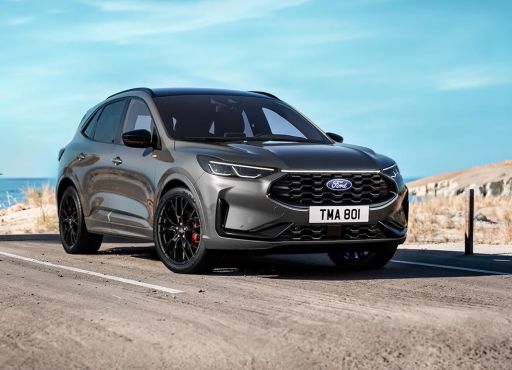
Kuga @ Ford Motor Company / Ford Media Center

As the SUV market continues to evolve, two contenders have emerged that cater to a diverse range of demands: the Ford Kuga and the Skoda Elroq. Both vehicles promise a blend of versatility, technology, and performance, but each brings a unique flavor to the segment. In this comparison, we will delve deeply into their technical specifications, innovations, and overall appeal.
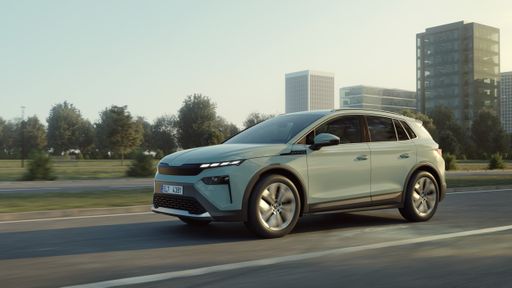
Elroq @ Škoda Auto a.s. / Škoda Storyboard

Design and Dimensions

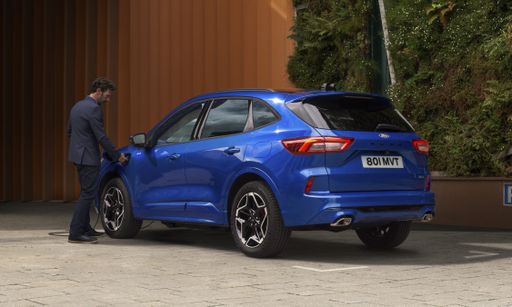
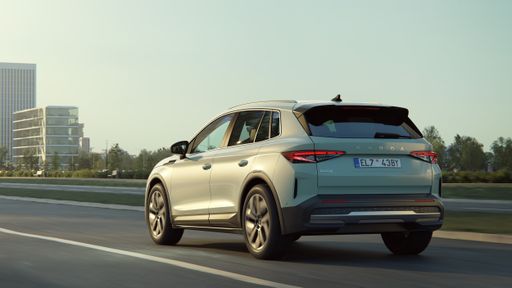
Both the Ford Kuga and Skoda Elroq exhibit a commanding presence on the road, yet their dimensions slightly differ. The Kuga is longer, measuring between 4604 mm and 4645 mm, while the Elroq stands at 4488 mm. The Kuga is also a touch taller at up to 1681 mm compared to the Elroq's 1625 mm height. Width-wise, both vehicles are comparable, with the Kuga at 1882 mm and the Elroq slightly wider at 1884 mm. This extra width gives the Elroq a more stable stance, particularly beneficial in tight cornering situations.

Kuga @ Ford Motor Company / Ford Media Center

Powertrains and Performance

The Ford Kuga offers a more varied lineup when it comes to powertrains. Customers can choose between petrol engines, full hybrid, and plug-in hybrid options, with power outputs ranging from 150 HP to an impressive 243 HP. The Kuga also boasts performance specifications that include 0-100 km/h times ranging from 7.3 seconds to 9.5 seconds depending on the variant. It's available with both a manual and a CVT automatic transmission, catering to different driving preferences.

In contrast, the Skoda Elroq embraces electric mobility with a line of electric drivetrains. The Elroq's power ranges from 170 HP to 285 HP, delivering a brisk acceleration of 0-100 km/h in as little as 6.6 seconds for the more potent options. The Elroq's rear-wheel-drive system provides a different driving dynamic, emphasizing smooth acceleration and handling, although the maximum speed is capped at 180 km/h.

Elroq @ Škoda Auto a.s. / Škoda Storyboard

Efficiency and Driving Range

When it comes to fuel efficiency, the Kuga's hybrids shine, with consumption figures as low as 0.9 L/100 km for the plug-in variant. However, the Elroq takes the lead in the electric domain, offering a remarkable range of up to 580 km on a single charge with its larger 77 kWh battery. The Kuga's hybrid variants can feature electric-only ranges of up to 69 km, but they can't match the continuous electric performance of the Elroq.

Kuga @ Ford Motor Company / Ford Media Center

Interior Comfort and Technology

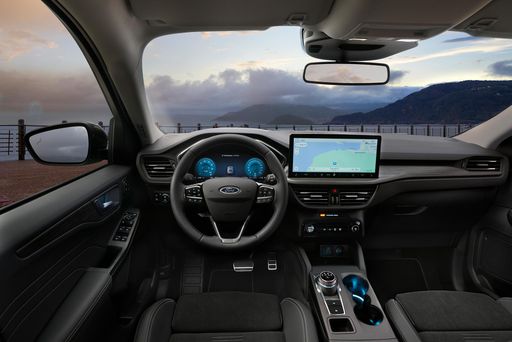
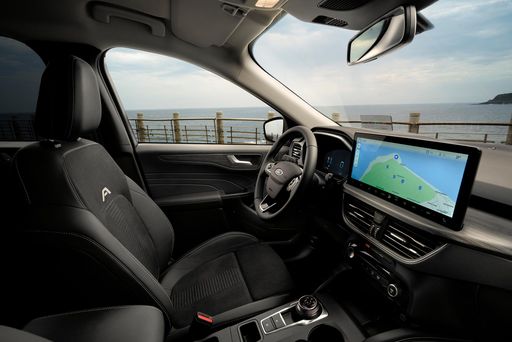
Inside the Ford Kuga, the cabin is designed with comfort and user-friendliness in mind. It offers ample space for five passengers and a trunk capacity of up to 412 L, ensuring practicality for everyday use. Features such as an intuitive infotainment system and advanced driver-assistance technologies are included to enhance the driving experience.

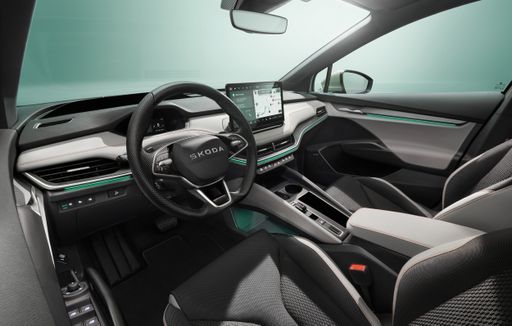
The Skoda Elroq, on the other hand, takes a minimalist approach with high-quality materials and a spacious interior boasting a trunk capacity of 470 L. It incorporates top-tier connectivity options and safety technologies, leveraging its electric architecture to provide a futuristic driving environment.

Elroq @ Škoda Auto a.s. / Škoda Storyboard

Innovations and Eco-Friendliness

Both the Kuga and Elroq focus on sustainability but in different ways. The Kuga emphasizes hybrid solutions that ease the transition for those still reliant on traditional fuels, while the Elroq stands firmly in the electric future, boasting a CO2 efficiency class of A, signifying zero emissions during operation.

Ford's innovations in the Kuga include adaptive cruise control and a suite of co-pilot technologies aimed at enhancing safety and driving ease. Meanwhile, the Elroq offers advanced AI features for smarter energy management and navigation, showcasing Skoda's commitment to pioneering technology in the EV sector.

Conclusion

Choosing between the Ford Kuga and Skoda Elroq ultimately depends on individual preferences and driving needs. The Kuga appeals to those seeking a hybrid solution with versatile options and robust performance, whereas the Elroq caters to the environmentally conscious driver looking for an electric vehicle that combines modern design with impressive range and technology. As the automotive landscape continues to evolve, both vehicles stand as testaments to their respective brands' commitments to innovation and sustainability.

Video - Skoda Elroq

Here’s where it gets real: The technical differences in detail

Costs and Efficiency:

Price and efficiency are key factors when choosing a car – and this is often where the real differences emerge.

Skoda Elroq has a to a small extent advantage in terms of price – it starts at 29100 £, while the Ford Kuga costs 34200 £. That’s a price difference of around 5185 £.

As for range, the Skoda Elroq performs convincingly better – achieving up to 573 km, about 505 km more than the Ford Kuga.

Engine and Performance:

Power, torque and acceleration say a lot about how a car feels on the road. This is where you see which model delivers more driving dynamics.

When it comes to engine power, the Skoda Elroq has a clearly perceptible edge – offering 340 HP compared to 243 HP. That’s roughly 97 HP more horsepower.

In acceleration from 0 to 100 km/h, the Skoda Elroq is distinct quicker – completing the sprint in 5.40 s, while the Ford Kuga takes 7.30 s. That’s about 1.90 s faster.

In terms of top speed, the Ford Kuga performs barely noticeable better – reaching 200 km/h, while the Skoda Elroq tops out at 180 km/h. The difference is around 20 km/h.

There’s also a difference in torque: Skoda Elroq pulls convincingly stronger with 679 Nm compared to 240 Nm. That’s about 439 Nm difference.

Space and Everyday Use:

Beyond pure performance, interior space and usability matter most in daily life. This is where you see which car is more practical and versatile.

Both vehicles offer seating for 5 people.

In curb weight, Ford Kuga is noticeable lighter – 1526 kg compared to 1953 kg. The difference is around 427 kg.

In terms of boot space, the Skoda Elroq offers a bit more room – 470 L compared to 412 L. That’s a difference of about 58 L.

In maximum load capacity, the Skoda Elroq performs slight better – up to 1580 L, which is about 46 L more than the Ford Kuga.

When it comes to payload, Ford Kuga barely noticeable takes the win – 550 kg compared to 531 kg. That’s a difference of about 19 kg.

Who comes out on top?

Overall, the Skoda Elroq shows itself to be is largely superior and secures the title of DriveDuel Champion.
It convinces with the more balanced overall package and proves to be the more versatile choice for everyday use.

from about £29,100
Elroq @ Škoda Auto a.s. / Škoda Storyboard

Skoda Elroq

  • Engine Type : Electric
  • Transmission : Automatic
  • Drive Type : Rear-Wheel Drive, All-Wheel Drive
  • Power HP : 170 - 340 HP
  • Consumption kWh/100km : 15.2 - 16.5 kWh
  • Electric Range : 377 - 573 km

Ford Kuga

3.5 (2)
rate

The Kuga is Ford’s adaptable family SUV that blends usable space with a surprisingly lively driving character, making daily commutes and weekend escapes equally enjoyable. With smart interior packaging, an easy-to-use infotainment setup and composed road manners, it’s a sensible choice for buyers who want a bit of fun without the fuss.

details

Skoda Elroq

5 (2)
rate

The Skoda Elroq is a cleverly packaged family SUV that mixes roomy practicality with sharp, modern looks, making it an easy pick for buyers who prefer common sense over flash. On the road it's composed and user-friendly, with thoughtful interior details that turn everyday driving into something pleasantly efficient — a sensible companion with a wink.

details
Ford Kuga
Skoda Elroq
Kuga @ Ford Motor Company / Ford Media Center
Elroq @ Škoda Auto a.s. / Škoda Storyboard

Costs and Consumption

Price
34200 - 46300 £
Price
29100 - 45500 £
Consumption L/100km
2.8 - 6.8 L
Consumption L/100km
-
Consumption kWh/100km
-
Consumption kWh/100km
15.2 - 16.5 kWh
Electric Range
68 km
Electric Range
377 - 573 km
Battery Capacity
1.1 - 14.4 kWh
Battery Capacity
52 - 79 kWh
co2
55 - 154 g/km
co2
0 g/km
Fuel tank capacity
42 - 54 L
Fuel tank capacity
-

Dimensions and Body

Body Type
SUV
Body Type
SUV
Seats
5
Seats
5
Doors
5
Doors
5
Curb weight
1526 - 1859 kg
Curb weight
1953 - 2268 kg
Trunk capacity
412 L
Trunk capacity
470 L
Length
4604 - 4645 mm
Length
4488 mm
Width
1882 mm
Width
1884 mm
Height
1673 - 1681 mm
Height
1608 - 1625 mm
Max trunk capacity
1534 L
Max trunk capacity
1580 L
Payload
541 - 550 kg
Payload
470 - 531 kg

Engine and Performance

Engine Type
Petrol, Full Hybrid, Plugin Hybrid
Engine Type
Electric
Transmission
Manuel, Automatic
Transmission
Automatic
Transmission Detail
Manual Gearbox, CVT, Automatic Gearbox
Transmission Detail
Reduction Gearbox
Drive Type
Front-Wheel Drive, All-Wheel Drive
Drive Type
Rear-Wheel Drive, All-Wheel Drive
Power HP
150 - 243 HP
Power HP
170 - 340 HP
Acceleration 0-100km/h
7.3 - 9.9 s
Acceleration 0-100km/h
5.4 - 9 s
Max Speed
195 - 200 km/h
Max Speed
160 - 180 km/h
Torque
240 Nm
Torque
310 - 679 Nm
Number of Cylinders
3 - 4
Number of Cylinders
-
Power kW
111 - 178 kW
Power kW
125 - 250 kW
Engine capacity
1496 - 2488 cm3
Engine capacity
-

General

Model Year
2025
Model Year
2025
CO2 Efficiency Class
E, D, B
CO2 Efficiency Class
A
Brand
Ford
Brand
Skoda
What drivetrain options does the Ford Kuga have?

The Ford Kuga is available as Front-Wheel Drive or All-Wheel Drive.

The prices and data displayed are estimates based on German list prices and may vary by country. This information is not legally binding.