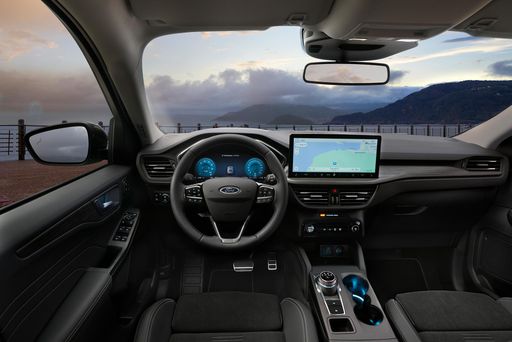
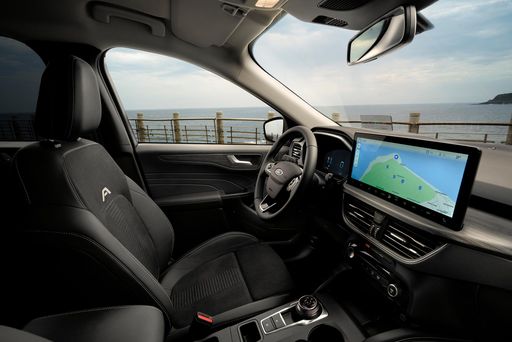
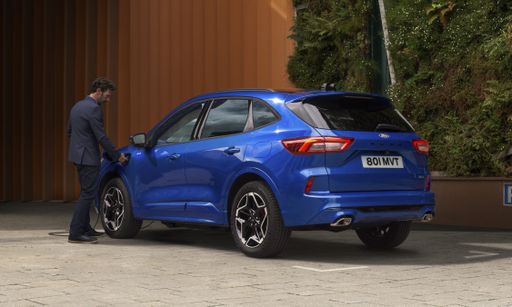
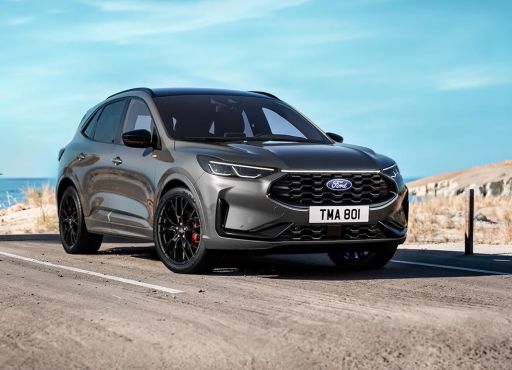
@ Ford Motor Company / Ford Media Center
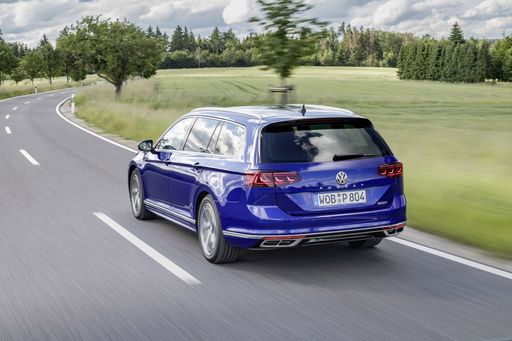
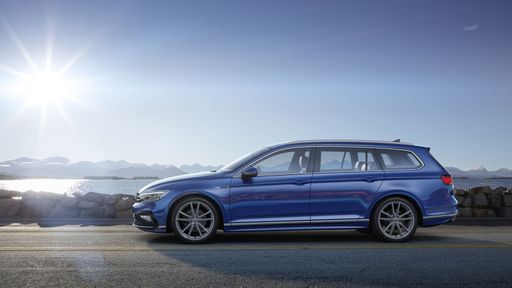
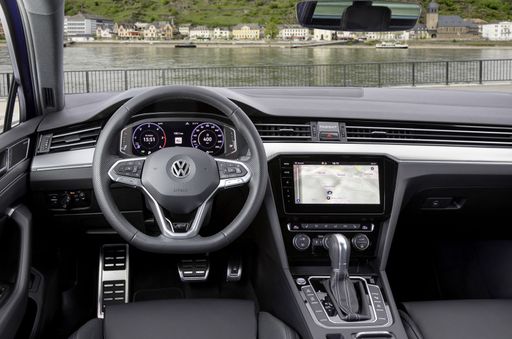
@ Volkswagen AG / VW Media
VS

Ford Kuga vs VW Passat – Differences & prices compared

Everyday use, family trips or long-distance drives – here’s where the differences show.
Discover whether Ford Kuga or VW Passat fits your lifestyle better.

Kuga @ Ford Motor Company / Ford Media Center

Comparing Power and Efficiency: Ford Kuga vs. VW Passat

In the ever-evolving automotive landscape, two models stand out in their respective categories: the Ford Kuga, a robust SUV, and the VW Passat, a versatile wagon. With the 2024 models offering a range of powertrains and technological innovations, this comparison delves into technical specifications and innovations of these two automotive titans.
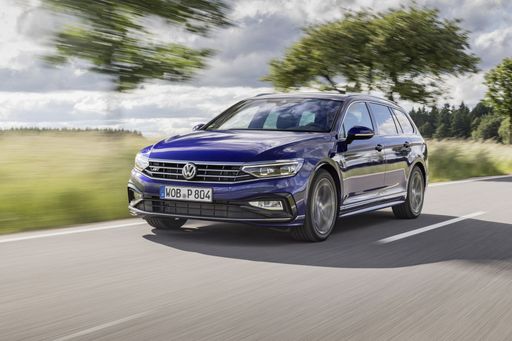
Passat @ Volkswagen AG / VW Media

Engine Options and Performance

The Ford Kuga offers a lineup of engines to cover various buyer needs, including petrol, full hybrid, and plugin hybrid options. Horsepower ranges from a modest 150 HP to a hefty 243 HP, providing a diverse power band tailored for different performance preferences. The Kuga's acceleration ranges from 9.5 to 7.3 seconds for 0-100 km/h, with top speeds between 195 km/h to 200 km/h. This breadth of choice makes the Kuga a compelling option for those who prioritize power alongside efficiency.

In contrast, the VW Passat provides a wide array of engine types, including plugin hybrid and mild hybrid electric vehicle (MHEV) technology, alongside traditional petrol and diesel engines. Power outputs for the Passat range from 122 HP to a robust 272 HP, reflecting VW's engineering prowess. The Passat hits 0-100 km/h in as little as 5.8 seconds, achieving top speeds of up to 250 km/h. This makes it ideal for those seeking performance without compromising on the efficiency of a modern wagon.

Kuga @ Ford Motor Company / Ford Media Center

Fuel Efficiency and Environmental Impact

Both vehicles showcase advanced fuel efficiency, albeit through different approaches. The Kuga's full hybrid and plugin hybrid options boast consumption as low as 0.9 L/100 km, exhibiting a CO2 efficiency class as high as B with CO2 emissions at 20 g/km. It also promises an electric range of up to 69 km, ensuring reduced emissions for urban driving.

The VW Passat, particularly the plugin hybrid variant, excels in efficiency, consuming as little as 0.4 L/100 km with a zero-emission range extending up to 126 km. Its low emissions are reflected in excellent CO2 efficiency classes, with plugin hybrid models recording emissions as low as single-digit g/km numbers.

Passat @ Volkswagen AG / VW Media

Capacity and Dimensions

As an SUV, the Ford Kuga is built to accommodate a family comfortably with its 4615 mm length, 1882 mm width, and trunk capacity of 412 liters. Its payload capacity peaks at 550 kg, making it suitable for light to moderate duty scenarios typical of an active lifestyle.

The VW Passat's design emphasizes not only passenger comfort but also substantial cargo capacity with a trunk capacity that can reach 690 liters in the wagon configuration. Its longer length of 4917 mm provides expansive interior room, ideal for families needing substantial luggage space.

Kuga @ Ford Motor Company / Ford Media Center

The Verdict: Choosing Between Versatility and Performance

The decision between the Ford Kuga and the VW Passat ultimately narrows down to specific needs. The Kuga impresses with its versatile powertrains and SUV practicality, appealing to those who appreciate higher riding positions and off-road potential. Meanwhile, the Passat offers a compelling option for those chasing efficiency in urban driving, coupled with formidable performance and expansive elegance, making it an excellent choice for long-distance travelers.

In conclusion, whether your priority is the adventurous spirit of an SUV or the polish of a wagon, both the Ford Kuga and VW Passat deliver excellent options imbued with modern technology and flexibility, setting high standards in the competitive automotive market of 2024.

Here’s where it gets real: The technical differences in detail

Passat @ Volkswagen AG / VW Media

Costs and Efficiency:

Looking at overall running costs, both models reveal some interesting differences in everyday economy.

Ford Kuga has a barely noticeable advantage in terms of price – it starts at 34200 £, while the VW Passat costs 35700 £. That’s a price difference of around 1492 £.

Fuel consumption also shows a difference: VW Passat manages with 1.20 L and is therefore convincingly more efficient than the Ford Kuga with 2.80 L. The difference is about 1.60 L per 100 km.

As for range, the VW Passat performs clearly better – achieving up to 135 km, about 67 km more than the Ford Kuga.

Engine and Performance:

Power, torque and acceleration say a lot about how a car feels on the road. This is where you see which model delivers more driving dynamics.

When it comes to engine power, the VW Passat has a a bit edge – offering 272 HP compared to 243 HP. That’s roughly 29 HP more horsepower.

In acceleration from 0 to 100 km/h, the VW Passat is evident quicker – completing the sprint in 5.80 s, while the Ford Kuga takes 7.30 s. That’s about 1.50 s faster.

In terms of top speed, the VW Passat performs a bit better – reaching 250 km/h, while the Ford Kuga tops out at 200 km/h. The difference is around 50 km/h.

There’s also a difference in torque: VW Passat pulls noticeable stronger with 400 Nm compared to 240 Nm. That’s about 160 Nm difference.

Space and Everyday Use:

Whether family car or daily driver – which one offers more room, flexibility and comfort?

Both vehicles offer seating for 5 people.

In curb weight, Ford Kuga is slight lighter – 1526 kg compared to 1573 kg. The difference is around 47 kg.

In terms of boot space, the VW Passat offers clearly more room – 690 L compared to 412 L. That’s a difference of about 278 L.

In maximum load capacity, the VW Passat performs distinct better – up to 1920 L, which is about 386 L more than the Ford Kuga.

When it comes to payload, VW Passat slight takes the win – 577 kg compared to 550 kg. That’s a difference of about 27 kg.

Who wins the race?

The VW Passat proves to be dominates this comparison and therefore becomes our DriveDuel Champion!
VW Passat is the better all-rounder in this comparison.

from about £35,700
Passat @ Volkswagen AG / VW Media

VW Passat

  • Engine Type : Petrol, Petrol MHEV, Diesel, Plugin Hybrid
  • Transmission : Automatic
  • Drive Type : All-Wheel Drive, Front-Wheel Drive
  • Power HP : 122 - 272 HP
  • Consumption L/100km : 1.2 - 8 L
  • Electric Range : 124 - 135 km

Ford Kuga

3.5 (2)
rate

The Kuga is Ford’s adaptable family SUV that blends usable space with a surprisingly lively driving character, making daily commutes and weekend escapes equally enjoyable. With smart interior packaging, an easy-to-use infotainment setup and composed road manners, it’s a sensible choice for buyers who want a bit of fun without the fuss.

details

VW Passat

5 (2)
rate

The VW Passat is the grown-up family car that gets the basics absolutely right — roomy, comfortable and built to handle weekday commutes and weekend getaways without fuss. It won't set your pulse racing, but its calm composure and sensible packaging make it boring in the best possible way: a dependable, no‑drama choice for buyers who value practicality over flash.

details
Ford Kuga
VW Passat
Kuga @ Ford Motor Company / Ford Media Center
Passat @ Volkswagen AG / VW Media

Costs and Consumption

Price
34200 - 46300 £
Price
35700 - 58500 £
Consumption L/100km
2.8 - 6.8 L
Consumption L/100km
1.2 - 8 L
Consumption kWh/100km
-
Consumption kWh/100km
-
Electric Range
68 km
Electric Range
124 - 135 km
Battery Capacity
1.1 - 14.4 kWh
Battery Capacity
19.70 kWh
co2
55 - 154 g/km
co2
28 - 181 g/km
Fuel tank capacity
42 - 54 L
Fuel tank capacity
45 - 66 L

Dimensions and Body

Body Type
SUV
Body Type
Estate
Seats
5
Seats
5
Doors
5
Doors
5
Curb weight
1526 - 1859 kg
Curb weight
1573 - 1858 kg
Trunk capacity
412 L
Trunk capacity
510 - 690 L
Length
4604 - 4645 mm
Length
4917 mm
Width
1882 mm
Width
1849 mm
Height
1673 - 1681 mm
Height
1521 mm
Max trunk capacity
1534 L
Max trunk capacity
1770 - 1920 L
Payload
541 - 550 kg
Payload
501 - 577 kg

Engine and Performance

Engine Type
Petrol, Full Hybrid, Plugin Hybrid
Engine Type
Petrol, Petrol MHEV, Diesel, Plugin Hybrid
Transmission
Manuel, Automatic
Transmission
Automatic
Transmission Detail
Manual Gearbox, CVT, Automatic Gearbox
Transmission Detail
Dual-Clutch Automatic
Drive Type
Front-Wheel Drive, All-Wheel Drive
Drive Type
All-Wheel Drive, Front-Wheel Drive
Power HP
150 - 243 HP
Power HP
122 - 272 HP
Acceleration 0-100km/h
7.3 - 9.9 s
Acceleration 0-100km/h
5.8 - 10.7 s
Max Speed
195 - 200 km/h
Max Speed
212 - 250 km/h
Torque
240 Nm
Torque
250 - 400 Nm
Number of Cylinders
3 - 4
Number of Cylinders
4
Power kW
111 - 178 kW
Power kW
90 - 200 kW
Engine capacity
1496 - 2488 cm3
Engine capacity
1498 - 1984 cm3

General

Model Year
2025
Model Year
2024 - 2025
CO2 Efficiency Class
E, D, B
CO2 Efficiency Class
G, D, E, B
Brand
Ford
Brand
VW
What drivetrain options does the Ford Kuga have?

The Ford Kuga is available as Front-Wheel Drive or All-Wheel Drive.

The prices and data displayed are estimates based on German list prices and may vary by country. This information is not legally binding.