@ Ford Motor Company / Ford Media Center
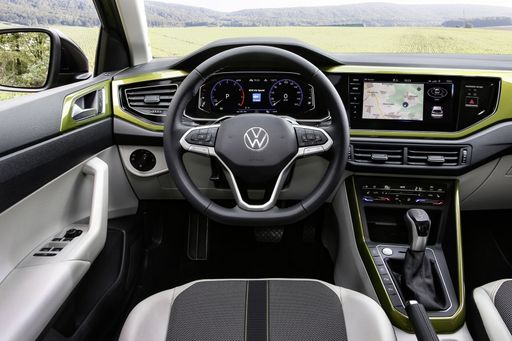
@ Volkswagen AG / VW Media
VS

Ford Kuga vs VW Taigo – Which model is better for everyday use?

Everyday use, family trips or long-distance drives – here’s where the differences show.
Discover whether Ford Kuga or VW Taigo fits your lifestyle better.

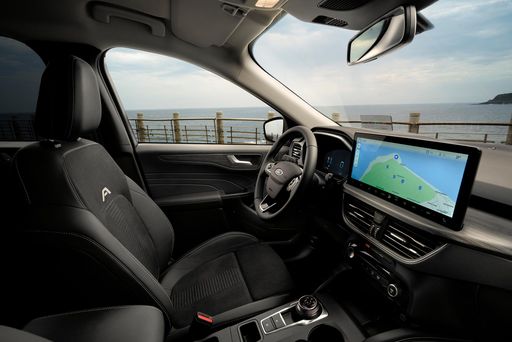
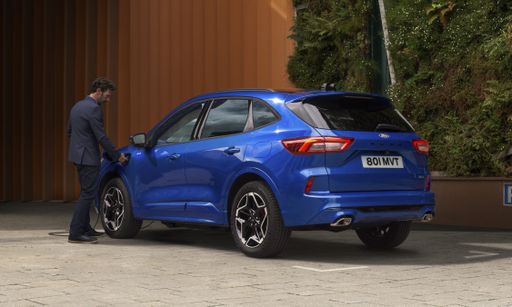
Kuga @ Ford Motor Company / Ford Media Center

Ford Kuga vs VW Taigo: A Battle of Crossovers

The automotive world is always ripe for comparison, and today we set our sights on two popular models within the crossover segment – the Ford Kuga and the VW Taigo. Both vehicles hail from respected manufacturers and offer a compelling blend of practicality and performance. Yet, they cater to slightly different tastes. Let's delve into the technical specifics and innovations that set these models apart.
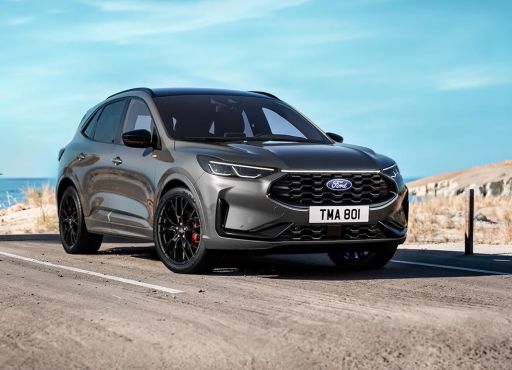
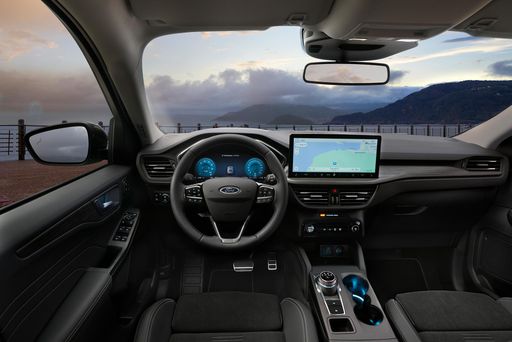
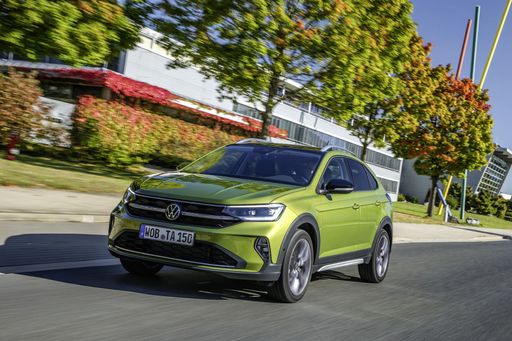
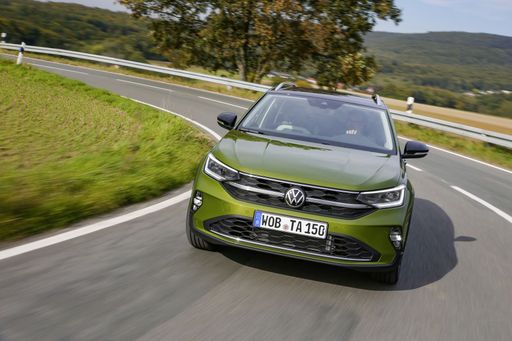
Taigo @ Volkswagen AG / VW Media

Powertrain and Performance

The Ford Kuga comes equipped with a choice of petrol, full hybrid, and plug-in hybrid engines. With power outputs ranging from 150 to 243 HP, the Kuga offers a versatile driving experience. It features both manual and automatic transmissions, including a CVT option, and allows for either front-wheel or all-wheel drive configurations. Notably, the most potent plug-in hybrid variant accelerates from 0-100 km/h in just 7.3 seconds, making it a compelling choice for speed enthusiasts.

On the other hand, the VW Taigo is available solely with petrol engines. Its power output spans from 95 to 150 HP, ensuring sufficient options for varied driving preferences. The Taigo features both manual and dual-clutch automatic transmissions, operating efficiently in its front-wheel-drive configuration. The top-tier engine boasts an acceleration of 0-100 km/h in 8.2 seconds, offering a spirited drive in a more compact package.

Kuga @ Ford Motor Company / Ford Media Center

Fuel Efficiency and Environmental Impact

When it comes to efficiency, the Ford Kuga's hybrid capabilities shine. The plug-in hybrid version consumes a mere 0.9 L/100km and offers an electric range of 69 km, minimizing its environmental footprint with CO2 emissions as low as 20 g/km. Traditional petrol variants manage consumption between 5.3 and 6.4 L/100km.

The VW Taigo exhibits solid fuel efficiency, with consumption figures ranging from 5.4 to 5.8 L/100km, and CO2 emissions between 123 and 132 g/km. While it doesn't sport hybrid technology, it remains a competitive choice for those prioritizing traditional combustion engine efficiency.

Taigo @ Volkswagen AG / VW Media

Design and Space

Both vehicles sport a contemporary SUV design with ample interior space. The Ford Kuga, slightly larger with a length stretching up to 4,645 mm, offers a spacious trunk capacity of 412 liters. Its payload capacity maxes at 550 kg, accommodating families and adventure gear alike.

The VW Taigo, with a length of 4,266 mm, prioritizes nimble urban maneuverability without compromising on trunk space, boasting a capacity of 440 liters. Though smaller than the Kuga, it provides a respectable payload of up to 457 kg.

Kuga @ Ford Motor Company / Ford Media Center

Advanced Features and Innovations

Both models incorporate innovative technologies, catering to modern automotive demands. The Ford Kuga benefits from hybrid technology and advanced driver assistance systems, making it a sophisticated choice for tech-savvy drivers. Additionally, an all-wheel-drive option enhances the Kuga's appeal for off-road enthusiasts.

VW Taigo doesn't shy away from innovation either, leveraging its renowned dual-clutch automatic transmission for a smoother, more efficient driving experience. The Taigo blends practicality with style, ensuring it remains appealing to city dwellers and small families.

Taigo @ Volkswagen AG / VW Media

Conclusion

The decision between the Ford Kuga and VW Taigo ultimately hinges on individual preferences. The Kuga stands out with its hybrid technology and flexible drivetrain options, offering a broader spectrum of performance and efficiency. In contrast, the Taigo presents itself as a more compact and efficient urban vehicle, with a strong focus on practicality and traditional fuel economy.

Whichever you choose, both vehicles promise a rewarding driving experience that remains well-suited to the modern crossover enthusiast.

Here’s where it gets real: The technical differences in detail

Costs and Efficiency:

When it comes to price and running costs, the biggest differences usually appear. This is often where you see which car fits your budget better in the long run.

VW Taigo has a significantly advantage in terms of price – it starts at 19600 £, while the Ford Kuga costs 34200 £. That’s a price difference of around 14618 £.

Fuel consumption also shows a difference: Ford Kuga manages with 2.80 L and is therefore decisively more efficient than the VW Taigo with 5.30 L. The difference is about 2.50 L per 100 km.

Engine and Performance:

Under the bonnet, it becomes clear which model is tuned for sportiness and which one takes the lead when you hit the accelerator.

When it comes to engine power, the Ford Kuga has a clearly perceptible edge – offering 243 HP compared to 150 HP. That’s roughly 93 HP more horsepower.

In acceleration from 0 to 100 km/h, the Ford Kuga is a bit quicker – completing the sprint in 7.30 s, while the VW Taigo takes 8.20 s. That’s about 0.90 s faster.

In terms of top speed, the VW Taigo performs hardly perceptible better – reaching 212 km/h, while the Ford Kuga tops out at 200 km/h. The difference is around 12 km/h.

There’s also a difference in torque: VW Taigo pulls hardly perceptible stronger with 250 Nm compared to 240 Nm. That’s about 10 Nm difference.

Space and Everyday Use:

Cabin size, boot volume and payload all play a role in everyday practicality. Here, comfort and flexibility make the difference.

Both vehicles offer seating for 5 people.

In curb weight, VW Taigo is clearly perceptible lighter – 1229 kg compared to 1526 kg. The difference is around 297 kg.

In terms of boot space, the VW Taigo offers barely noticeable more room – 440 L compared to 412 L. That’s a difference of about 28 L.

In maximum load capacity, the Ford Kuga performs distinct better – up to 1534 L, which is about 312 L more than the VW Taigo.

When it comes to payload, Ford Kuga a bit takes the win – 550 kg compared to 457 kg. That’s a difference of about 93 kg.

Who wins the race?

The Ford Kuga proves to be wins the duel decisively and therefore becomes our DriveDuel Champion!
Ford Kuga is the better all-rounder in this comparison.

from about £34,200
Kuga @ Ford Motor Company / Ford Media Center

Ford Kuga

  • Engine Type : Petrol, Full Hybrid, Plugin Hybrid
  • Transmission : Manuel, Automatic
  • Drive Type : Front-Wheel Drive, All-Wheel Drive
  • Power HP : 150 - 243 HP
  • Consumption L/100km : 2.8 - 6.8 L
  • Electric Range : 68 km

Ford Kuga

3.5 (2)
rate

The Kuga is Ford’s adaptable family SUV that blends usable space with a surprisingly lively driving character, making daily commutes and weekend escapes equally enjoyable. With smart interior packaging, an easy-to-use infotainment setup and composed road manners, it’s a sensible choice for buyers who want a bit of fun without the fuss.

details

VW Taigo

5 (1)
rate

The VW Taigo brings coupe-like flair to the compact crossover scene with sharp styling and an interior that punches above its price, feeling smarter than you’d expect. It’s an easygoing daily companion that balances comfort and practicality with a playful wink, perfect for city drivers who want something livelier than a regular hatchback.

details
Ford Kuga
VW Taigo
Kuga @ Ford Motor Company / Ford Media Center
Taigo @ Volkswagen AG / VW Media

Costs and Consumption

Price
34200 - 46300 £
Price
19600 - 31300 £
Consumption L/100km
2.8 - 6.8 L
Consumption L/100km
5.3 - 5.8 L
Consumption kWh/100km
-
Consumption kWh/100km
-
Electric Range
68 km
Electric Range
-
Battery Capacity
1.1 - 14.4 kWh
Battery Capacity
-
co2
55 - 154 g/km
co2
120 - 132 g/km
Fuel tank capacity
42 - 54 L
Fuel tank capacity
40 L

Dimensions and Body

Body Type
SUV
Body Type
SUV
Seats
5
Seats
5
Doors
5
Doors
5
Curb weight
1526 - 1859 kg
Curb weight
1229 - 1302 kg
Trunk capacity
412 L
Trunk capacity
440 L
Length
4604 - 4645 mm
Length
4266 mm
Width
1882 mm
Width
1757 mm
Height
1673 - 1681 mm
Height
1518 mm
Max trunk capacity
1534 L
Max trunk capacity
1222 L
Payload
541 - 550 kg
Payload
448 - 457 kg

Engine and Performance

Engine Type
Petrol, Full Hybrid, Plugin Hybrid
Engine Type
Petrol
Transmission
Manuel, Automatic
Transmission
Manuel, Automatic
Transmission Detail
Manual Gearbox, CVT, Automatic Gearbox
Transmission Detail
Manual Gearbox, Dual-Clutch Automatic
Drive Type
Front-Wheel Drive, All-Wheel Drive
Drive Type
Front-Wheel Drive
Power HP
150 - 243 HP
Power HP
95 - 150 HP
Acceleration 0-100km/h
7.3 - 9.9 s
Acceleration 0-100km/h
8.2 - 11.1 s
Max Speed
195 - 200 km/h
Max Speed
184 - 212 km/h
Torque
240 Nm
Torque
175 - 250 Nm
Number of Cylinders
3 - 4
Number of Cylinders
3 - 4
Power kW
111 - 178 kW
Power kW
70 - 110 kW
Engine capacity
1496 - 2488 cm3
Engine capacity
999 - 1498 cm3

General

Model Year
2025
Model Year
2024 - 2025
CO2 Efficiency Class
E, D, B
CO2 Efficiency Class
D
Brand
Ford
Brand
VW
What drivetrain options does the Ford Kuga have?

The Ford Kuga is available as Front-Wheel Drive or All-Wheel Drive.

The prices and data displayed are estimates based on German list prices and may vary by country. This information is not legally binding.