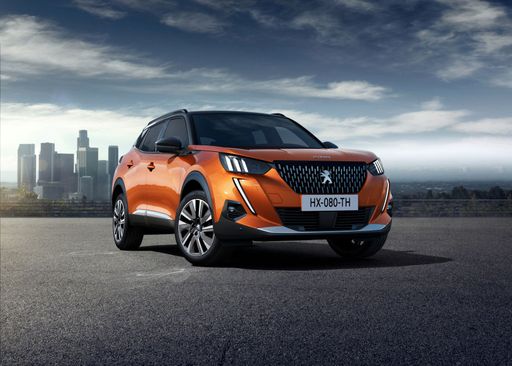
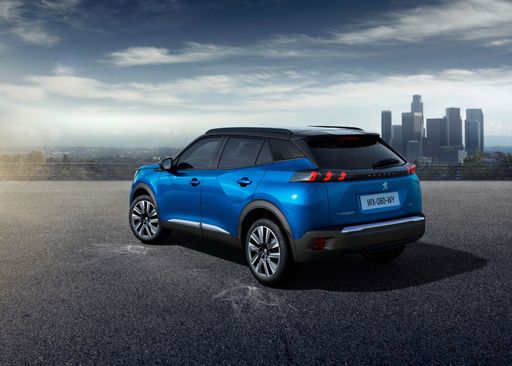
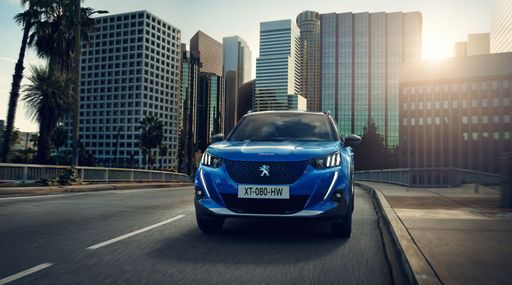
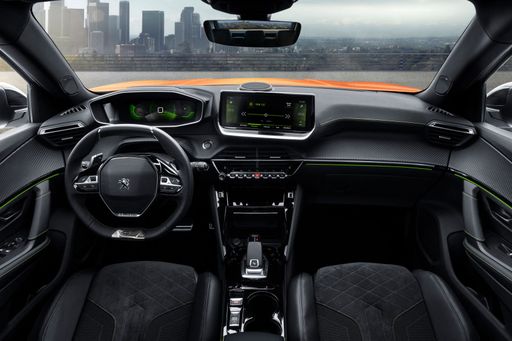
@ Peugeot / Stellantis Media
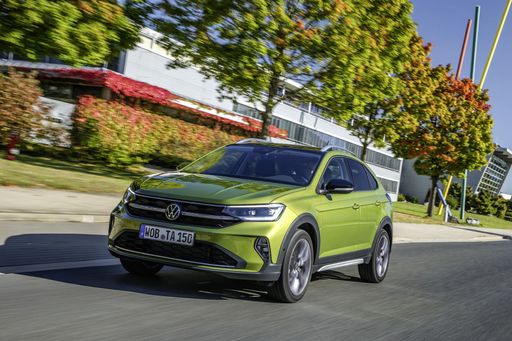
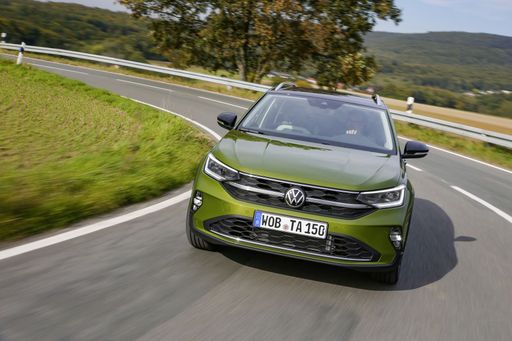
@ Volkswagen AG / VW Media
VS

Peugeot 2008 vs VW Taigo – Which model is better for everyday use?

Both models have their strengths – but which one suits you more?
Compare performance, efficiency, price and space directly: Peugeot 2008 or VW Taigo?

2008 @ Peugeot / Stellantis Media

Compact SUV Showdown: Peugeot 2008 vs. VW Taigo

In the competitive world of compact SUVs, the Peugeot 2008 and the VW Taigo stand out as popular choices for urban adventurers and style-conscious drivers alike. With both vehicles offering a distinct blend of design, technology, and engineering, it's time to delve into the specifics that make each of these SUVs a formidable option. Here, we explore the technical aspects, innovations, and the driving experience of the Peugeot 2008 and VW Taigo.

Taigo @ Volkswagen AG / VW Media

Design and Dimensions: Elegance Meets Practicality

The Peugeot 2008, characterized by its modern and robust design, measures 4,304 mm in length, making it slightly longer than the VW Taigo, which stands at 4,266 mm. This additional length contributes to the Peugeot's more assertive road presence. The 2008 is also marginally wider at 1,770 mm compared to the Taigo's 1,757 mm, offering a bit more cabin space for passengers.

Both vehicles feature a similar height, with the 2008 standing at 1,523 mm and the Taigo at 1,518 mm, which ensures ease of access and a commanding view of the road. In terms of trunk capacity, the Taigo edges out slightly with 440 liters, just surpassing the 434 liters of the Peugeot 2008, giving it a slight advantage for practical everyday use or road trips.

2008 @ Peugeot / Stellantis Media

Engine Options: Power and Efficiency

The Peugeot 2008 offers a versatile selection of powertrains, including petrol, mild hybrid (MHEV), and all-electric variants. With power outputs ranging from 101 HP to 156 HP in its internal combustion and hybrid versions, and an impressive 136 HP electric motor, the 2008 covers a wide range of preferences from eco-conscious drivers to power enthusiasts.

VW Taigo, on the other hand, remains staunchly petrol-driven, with engines producing between 95 HP and 150 HP. This range caters to those who favor traditional petrol engines combined with efficient fuel consumption rates of around 5.4 to 5.8 L/100km, aligning well with urban commuters and long-distance drivers alike.

Taigo @ Volkswagen AG / VW Media

Innovations: Staying Ahead of the Curve

Peugeot 2008's innovation is highlighted in its electric variant, boasting a range of up to 406 km on a single charge due to its 51 kWh battery. This positions the 2008 as a strong contender in the growing electric SUV market. The vehicle also provides advanced autonomous driving aids, making it a tech-savvy choice for modern drivers.

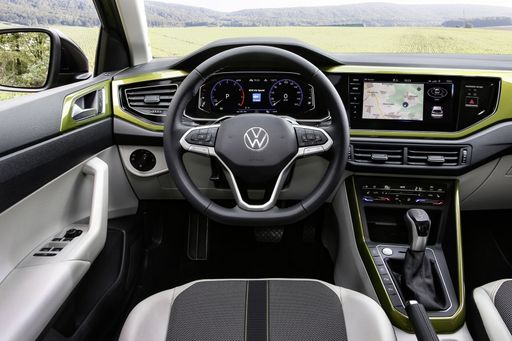
Meanwhile, VW Taigo's focus on innovation is seen in its user-friendly cabin, which incorporates an intuitive digital cockpit and high-quality infotainment system. Its top-tier models include features such as adaptive cruise control and lane assistance, ensuring a balance of comfort and safety.

2008 @ Peugeot / Stellantis Media

Performance and Drive Experience

Performance-wise, the Peugeot 2008 offers a spirited driving experience, particularly with the 156 HP engine that propels the SUV from 0-100 km/h in just 8.3 seconds. The electric version, with its 8.3-second acceleration for 0-100 km/h, and the torque-rich response of the motor provides an exhilarating drive.

The Taigo, while not as quick off the mark with a top sprint time of 8.2 seconds in its 150 HP variant, delivers a smooth and reliable ride, courtesy of its well-tuned suspension and precise steering. Its efficiency and agility make it a favored choice for city driving.

Taigo @ Volkswagen AG / VW Media

Conclusion: Choosing Your Ideal Travel Companion

Deciding between the Peugeot 2008 and VW Taigo ultimately depends on one's personal priorities. For those drawn to electric mobility and a slightly roomier cabin, the 2008 stands out. Meanwhile, if classic petrol performance, compact agility, and practicality are crucial, the VW Taigo makes a compelling case.

Both vehicles exemplify the perfect fusion of style, modern engineering, and functionality, making them exceptional candidates in the compact SUV segment for 2024.

Here’s where it gets real: The technical differences in detail

2008 @ Peugeot / Stellantis Media

Costs and Efficiency:

Price and efficiency are key factors when choosing a car – and this is often where the real differences emerge.

VW Taigo has a noticeable advantage in terms of price – it starts at 19600 £, while the Peugeot 2008 costs 24500 £. That’s a price difference of around 4838 £.

Fuel consumption also shows a difference: Peugeot 2008 manages with 4.90 L and is therefore slight more efficient than the VW Taigo with 5.30 L. The difference is about 0.40 L per 100 km.

Taigo @ Volkswagen AG / VW Media

Engine and Performance:

Power, torque and acceleration are the classic benchmarks for car enthusiasts – and here, some clear differences start to show.

When it comes to engine power, the Peugeot 2008 has a hardly perceptible edge – offering 156 HP compared to 150 HP. That’s roughly 6 HP more horsepower.

In acceleration from 0 to 100 km/h, the VW Taigo is minimal quicker – completing the sprint in 8.20 s, while the Peugeot 2008 takes 8.30 s. That’s about 0.10 s faster.

In terms of top speed, the VW Taigo performs slight better – reaching 212 km/h, while the Peugeot 2008 tops out at 206 km/h. The difference is around 6 km/h.

There’s also a difference in torque: Peugeot 2008 pulls slight stronger with 270 Nm compared to 250 Nm. That’s about 20 Nm difference.

Space and Everyday Use:

Beyond pure performance, interior space and usability matter most in daily life. This is where you see which car is more practical and versatile.

Both vehicles offer seating for 5 people.

In curb weight, VW Taigo is hardly perceptible lighter – 1229 kg compared to 1263 kg. The difference is around 34 kg.

In terms of boot space, the VW Taigo offers slight more room – 440 L compared to 434 L. That’s a difference of about 6 L.

In maximum load capacity, the Peugeot 2008 performs somewhat better – up to 1467 L, which is about 245 L more than the VW Taigo.

When it comes to payload, VW Taigo barely noticeable takes the win – 457 kg compared to 447 kg. That’s a difference of about 10 kg.

Who comes out on top?

Overall, the VW Taigo shows itself to be shows small but notable strengths and secures the title of DriveDuel Champion.
It convinces with the more balanced overall package and proves to be the more versatile choice for everyday use.

from about £19,600
Taigo @ Volkswagen AG / VW Media

VW Taigo

  • Engine Type : Petrol
  • Transmission : Manuel, Automatic
  • Drive Type : Front-Wheel Drive
  • Power HP : 95 - 150 HP
  • Consumption L/100km : 5.3 - 5.8 L

Peugeot 2008

The Peugeot 2008 is a stylish, city-friendly crossover that packs big character into a compact package, turning mundane errands into a mildly entertaining drive. Its clever interior layout, polished looks and confident ride make it a smart choice for buyers who want practical daily sense with a touch of flair.

details

VW Taigo

5 (1)
rate

The VW Taigo brings coupe-like flair to the compact crossover scene with sharp styling and an interior that punches above its price, feeling smarter than you’d expect. It’s an easygoing daily companion that balances comfort and practicality with a playful wink, perfect for city drivers who want something livelier than a regular hatchback.

details
Peugeot 2008
VW Taigo
2008 @ Peugeot / Stellantis Media
Taigo @ Volkswagen AG / VW Media

Costs and Consumption

Price
24500 - 40300 £
Price
19600 - 31300 £
Consumption L/100km
4.9 - 5.7 L
Consumption L/100km
5.3 - 5.8 L
Consumption kWh/100km
15.50 kWh
Consumption kWh/100km
-
Electric Range
406 km
Electric Range
-
Battery Capacity
51 kWh
Battery Capacity
-
co2
0 - 129 g/km
co2
120 - 132 g/km
Fuel tank capacity
44 L
Fuel tank capacity
40 L

Dimensions and Body

Body Type
SUV
Body Type
SUV
Seats
5
Seats
5
Doors
5
Doors
5
Curb weight
1263 - 1623 kg
Curb weight
1229 - 1302 kg
Trunk capacity
434 L
Trunk capacity
440 L
Length
4304 mm
Length
4266 mm
Width
1770 mm
Width
1757 mm
Height
1523 mm
Height
1518 mm
Max trunk capacity
1467 L
Max trunk capacity
1222 L
Payload
407 - 447 kg
Payload
448 - 457 kg

Engine and Performance

Engine Type
Petrol, Electric, Petrol MHEV
Engine Type
Petrol
Transmission
Manuel, Automatic
Transmission
Manuel, Automatic
Transmission Detail
Manual Gearbox, Reduction Gearbox, Dual-Clutch Automatic
Transmission Detail
Manual Gearbox, Dual-Clutch Automatic
Drive Type
Front-Wheel Drive
Drive Type
Front-Wheel Drive
Power HP
101 - 156 HP
Power HP
95 - 150 HP
Acceleration 0-100km/h
8.3 - 10.9 s
Acceleration 0-100km/h
8.2 - 11.1 s
Max Speed
150 - 206 km/h
Max Speed
184 - 212 km/h
Torque
205 - 270 Nm
Torque
175 - 250 Nm
Number of Cylinders
3
Number of Cylinders
3 - 4
Power kW
74 - 115 kW
Power kW
70 - 110 kW
Engine capacity
1199 cm3
Engine capacity
999 - 1498 cm3

General

Model Year
2023 - 2025
Model Year
2024 - 2025
CO2 Efficiency Class
D, A, C
CO2 Efficiency Class
D
Brand
Peugeot
Brand
VW
Is the Peugeot 2008 offered with different drivetrains?

The Peugeot 2008 is available as Front-Wheel Drive.

The prices and data displayed are estimates based on German list prices and may vary by country. This information is not legally binding.