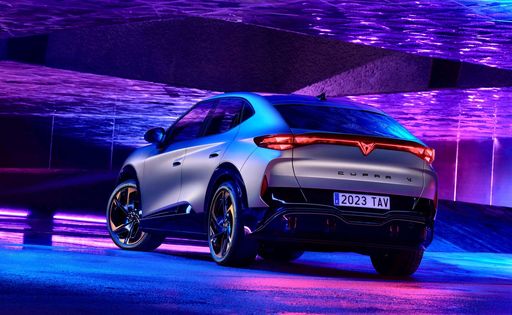
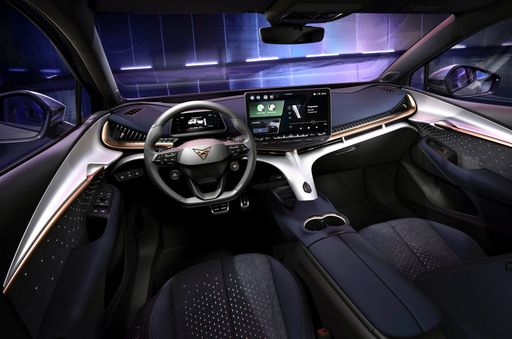
VS

Ford Mustang Mach-E vs CUPRA Tavascan comparison

Compare performance (487 HP vs 340 HP), boot space and price (48,400 £ vs 42,800 £ ) at a glance. Find out which car is the better choice for you – Ford Mustang Mach-E or CUPRA Tavascan?

Ford Mustang Mach-E vs CUPRA Tavascan: Key differences

Ford Mustang Mach-E

3.8 (4 Reviews)
rate
  • markedly more power
  • barely more electric range
  • significantly quicker 0–100 km/h
details

CUPRA Tavascan

4.5 (3 Reviews)
rate
  • a bit cheaper
  • somewhat more efficient
  • only slightly lighter
  • marginally more trunk space
details

All details on performance, efficiency, range and trunk space can be found in the technical comparison below – including user reviews for both models.

By Achim Sedelmaier

Mustang Mach-E

Quick take: CUPRA Tavascan and Ford Mustang Mach-E

The CUPRA Tavascan and Ford Mustang Mach‑E represent two different takes on the electric SUV: sculpted, design‑forward refinement versus muscular, driver‑focused energy. CUPRA Tavascan VS Ford Mustang Mach-E frames the choice as style‑and‑comfort versus character‑and‑punch, and that contrast drives differences in comfort, practicality and everyday usability. This comparison translates reviewer consensus into the concrete trade‑offs you’ll feel on a commute, a family run or a long motorway day. Read on to see which temperament fits your priorities rather than chasing headline specs.
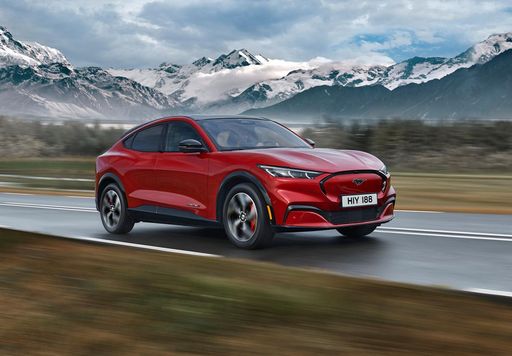
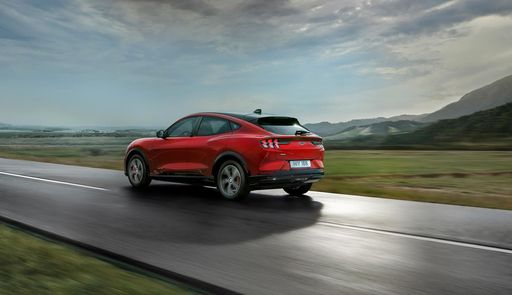
Tavascan

Character and driving feel

Driving the CUPRA Tavascan feels composed and measured: steering is precise and the setup tilts toward comfort with a sporty flavor when you ask for it. By contrast the Ford Mustang Mach‑E announces itself with stronger shove and a more direct steering response that flatters enthusiastic driving and quick overtakes. That means the Mach‑E rewards someone who enjoys dynamic responses and lively acceleration, while the Tavascan suits drivers who want a quieter, more controlled pace. In everyday terms, choose the Mach‑E for grin‑inducing moves and the Tavascan for confidence when the miles get long.

Mustang Mach-E

Comfort and long‑distance behavior

On long motorway days the CUPRA Tavascan impresses with low cabin noise and a settled ride that muffles fatigue better than the Mach‑E. The Ford Mustang Mach‑E can still hold high cruise speeds comfortably, but its firmer suspension and more tactile responses make it feel busier over rough surfaces. Practical travel rhythms differ too: the Tavascan’s efficiency tends to stretch real‑world range slightly further between stops, whereas the Mach‑E’s stronger performance and different charging behaviour create a travel pattern centred on shorter, quicker bursts. In short, the Tavascan feels like a relaxed grand tourer and the Mach‑E like a brisk weekend car that’s perfectly capable of long trips but demands a different driving rhythm.

Tavascan

Practicality and family use

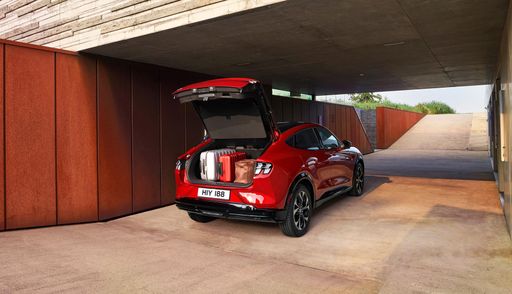
If day‑to‑day usefulness matters, the CUPRA Tavascan delivers a generous, well‑shaped boot and a payload that makes loading easier for family gear. The Ford Mustang Mach‑E counters with a useful frunk and a flatter floor that makes the rear bench more comfortable for three across and simplifies child‑seat installation. However, the Tavascan’s coupé roofline trims rear headroom, so taller passengers will prefer the Mach‑E’s roomier upper cabin. Maneuvering in town also differs: the Tavascan’s lighter steering and tighter turning feel better in tight parking, while the wider Mach‑E asks for more space but rewards with easier ingress and clearer loading layouts up front.

Mustang Mach-E

Cabin feel, infotainment and perceived quality

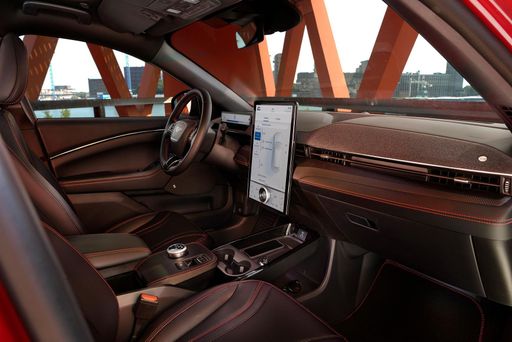
Inside the CUPRA Tavascan the cabin is theatrically arranged with bold surfaces and generally higher perceived quality, though some controls rely on haptics that can be fiddly in daily use. The Ford Mustang Mach‑E offers a cleaner, functional cockpit and a capable infotainment system, but material finishes and certain menu flows feel less premium and can demand attention while driving. Both cars suffer from restricted rear visibility because of strong styling choices, yet the Tavascan’s coupé profile makes that sensation more pronounced. If tactile controls and a staged interior matter, the Tavascan usually nudges ahead; if straightforward layouts and useful software features are your priority, the Mach‑E may suit you better.

Tavascan

Buyer fit: who should pick which car

Choose the CUPRA Tavascan if you prioritise highway serenity, a statement cabin and a capacious, well‑shaped boot that suits family life and long commutes. Opt for the Ford Mustang Mach‑E if you want brisk acceleration, a flatter rear floor and extra front storage that make city life and spirited driving more satisfying. Both cars trade off charging behaviour, ride philosophy and interior ergonomics—so your decision should hinge on whether you value calm, efficient long‑distance cruising (Tavascan) or punchy responses, rear practicality and a more driver‑centric feel (Mach‑E). Below we break down the technical specifics that create these real‑world differences so you can match range, charging and performance numbers to the practical conclusions above.

Here’s where it gets real: The technical differences in detail

Mustang Mach-E

Costs and Efficiency:

Price and efficiency are often the first things buyers look at. Here it becomes clear which model has the long-term edge – whether at the pump, the plug, or in purchase price.

CUPRA Tavascan is a bit cheaper – starting at 42,800 £ , while the Ford Mustang Mach-E costs 48,400 £ . That’s a price difference of around 5,657 £.

In terms of energy consumption, the CUPRA Tavascan is somewhat more efficient: consuming 15.4 kWh/100km compared to 17.7 kWh/100km for the Ford Mustang Mach-E. That’s a difference of about 2.3 kWh/100km.

As for electric range, the Ford Mustang Mach-E offers barely more range – reaching up to 600 km, about 43 km more than the CUPRA Tavascan.

Tavascan

Engine and Performance:

Under the bonnet, it becomes clear which model is tuned for sportiness and which one takes the lead when you hit the accelerator.

When it comes to engine power, the Ford Mustang Mach-E offers markedly more power – delivering 487 HP compared to 340 HP. That’s roughly 147 HP more horsepower.

When accelerating from 0 to 100 km/h, the Ford Mustang Mach-E is significantly quicker – completing the sprint in 3.8 s, while the CUPRA Tavascan takes 5.5 s. That’s about 1.7 s quicker.

There’s also a difference in torque: the Ford Mustang Mach-E delivers clearly more torque with 950 Nm compared to 545 Nm. That’s about 405 Nm more.

Mustang Mach-E

Space and Everyday Use:

Whether family car or daily driver – which one offers more room, flexibility and comfort?

Both vehicles offer seating for 5 people.

In terms of curb weight, CUPRA Tavascan is only slightly lighter – 2,096 kg compared to 2,161 kg. The difference is around 65 kg.

Looking at boot space, the CUPRA Tavascan offers marginally more boot space – 540 L compared to 519 L. That’s a difference of about 21 L.

When it comes to payload, the CUPRA Tavascan carries somewhat more – 518 kg compared to 450 kg. That’s a difference of about 68 kg.

Who wins the race in the data check?

The Ford Mustang Mach-E is clearly superior overall in the objective data comparison.
This result only shows which model scores more points on paper – not which of the two cars feels right for you.

from £48,400
Mustang Mach-E

Ford Mustang Mach-E

  • Engine Type Electric
  • Transmission Automatic
  • Drive Type Rear-Wheel Drive, All-Wheel Drive
  • Power HP 268 - 487 HP
  • Consumption kWh/100km 17.7 - 21 kWh/100km
  • Electric Range 470 - 600 km
Ford Mustang Mach-E
CUPRA Tavascan

Costs and Consumption

View detailed analysis

Engine and Performance

View detailed analysis

Dimensions and Body

View detailed analysis

Ford Mustang Mach-E

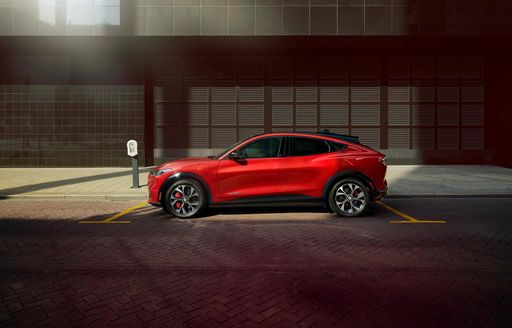
The Mustang Mach-E proves an electric SUV can be both playful and practical, with the Mustang name bringing muscle-car charisma to a family-friendly package. It delivers eager performance, a comfortable cabin, and a slick infotainment setup that keeps daily driving fun — and yes, you’ll still get admiring glances at the lights.

details

CUPRA Tavascan

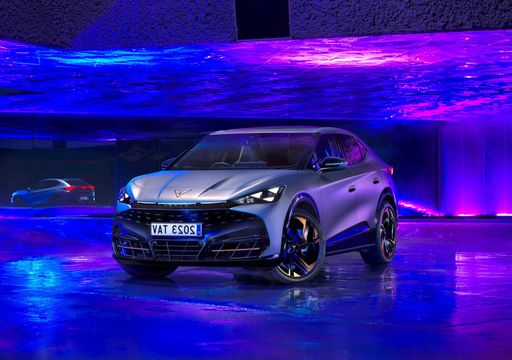
The Cupra Tavascan blends athletic styling with a premium, driver-focused cabin, giving the electric crossover a distinctly sporty character. It feels poised and engaging on the road while standing out with bold design cues and a modern, high-quality finish.

details
Ford Mustang Mach-E
CUPRA Tavascan

Costs and Consumption

Price
48,400 - 66,900 £
Price
42,800 - 50,500 £
Consumption L/100km
-
Consumption L/100km
-
Consumption kWh/100km
17.7 - 21 kWh/100km
Consumption kWh/100km
15.4 - 17.1 kWh/100km
Electric Range
470 - 600 km
Electric Range
441 - 557 km
Battery Capacity
-
Battery Capacity
-
co2
0 g/km
co2
0 g/km
Fuel tank capacity
-
Fuel tank capacity
-

Dimensions and Body

Body Type
SUV
Body Type
SUV
Seats
5
Seats
5
Doors
-
Doors
-
Curb weight
2,161 - 2,351 kg
Curb weight
2,096 - 2,273 kg
Trunk capacity
519 L
Trunk capacity
540 L
Length
-
Length
-
Width
1,881 mm
Width
1,861 mm
Height
-
Height
-
Max trunk capacity
-
Max trunk capacity
-
Payload
368 - 450 kg
Payload
507 - 518 kg

Engine and Performance

Engine Type
Electric
Engine Type
Electric
Transmission
Automatic
Transmission
Automatic
Transmission Detail
Reduction Gearbox
Transmission Detail
Reduction Gearbox
Drive Type
Rear-Wheel Drive, All-Wheel Drive
Drive Type
Rear-Wheel Drive, All-Wheel Drive
Power HP
268 - 487 HP
Power HP
190 - 340 HP
Acceleration 0-100km/h
3.8 - 6.2 s
Acceleration 0-100km/h
5.5 - 8.6 s
Max Speed
-
Max Speed
-
Torque
525 - 950 Nm
Torque
350 - 545 Nm
Number of Cylinders
-
Number of Cylinders
-
Power kW
197 - 358 kW
Power kW
140 - 250 kW
Engine capacity
-
Engine capacity
-

General

Model Year
2025
Model Year
2026
CO2 Efficiency Class
A
CO2 Efficiency Class
A
Brand
Ford
Brand
CUPRA
DriveDuel uses data analysis and artificial intelligence to evaluate vehicle data and create content. Content is regularly reviewed and improved. The displayed prices are estimates based on German list prices, adjusted to the respective country’s VAT. Country-specific registration taxes are not included. This information is not legally binding.