
 Deutschland
 France
 Nederland
 Great Britain
 Sverige
 Norge
Norge Danmark
 Suomi
Suomi Italia
 Polska
 España
VS
Ford Tourneo Connect vs Skoda Superb Limousine – Which one offers the better deal?
Tourneo Connect
@ Ford Motor Company / Ford Media Center
Costs and Efficiency:
When it comes to price and running costs, the biggest differences usually appear. This is often where you see which car fits your budget better in the long run.
Ford Tourneo Connect has a evident advantage in terms of price – it starts at 27300 £, while the Skoda Superb Limousine costs 34200 £. That’s a price difference of around 6858 £.
Fuel consumption also shows a difference: Skoda Superb Limousine manages with 0.30 L and is therefore significantly more efficient than the Ford Tourneo Connect with 0.50 L. The difference is about 0.20 L per 100 km.
As for range, the Skoda Superb Limousine performs somewhat better – achieving up to 137 km, about 18 km more than the Ford Tourneo Connect.
Superb Limousine
@ Škoda Auto a.s. / Škoda Storyboard
Engine and Performance:
Power, torque and acceleration are the classic benchmarks for car enthusiasts – and here, some clear differences start to show.
When it comes to engine power, the Skoda Superb Limousine has a clearly edge – offering 265 HP compared to 150 HP. That’s roughly 115 HP more horsepower.
In acceleration from 0 to 100 km/h, the Skoda Superb Limousine is decisively quicker – completing the sprint in 5.60 s, while the Ford Tourneo Connect takes 10.10 s. That’s about 4.50 s faster.
In terms of top speed, the Skoda Superb Limousine performs noticeable better – reaching 250 km/h, while the Ford Tourneo Connect tops out at 186 km/h. The difference is around 64 km/h.
There’s also a difference in torque: Skoda Superb Limousine pulls somewhat stronger with 400 Nm compared to 350 Nm. That’s about 50 Nm difference.
Tourneo Connect
@ Ford Motor Company / Ford Media Center
Space and Everyday Use:
Cabin size, boot volume and payload all play a role in everyday practicality. Here, comfort and flexibility make the difference.
Both vehicles offer seating for 5 people.
In curb weight, Ford Tourneo Connect is barely noticeable lighter – 1542 kg compared to 1559 kg. The difference is around 17 kg.
In terms of boot space, the Ford Tourneo Connect offers significantly more room – 1720 L compared to 645 L. That’s a difference of about 1075 L.
In maximum load capacity, the Ford Tourneo Connect performs clearly better – up to 3105 L, which is about 1310 L more than the Skoda Superb Limousine.
When it comes to payload, Ford Tourneo Connect noticeable takes the win – 818 kg compared to 580 kg. That’s a difference of about 238 kg.
Who comes out on top?
Overall, the Skoda Superb Limousine shows itself to be wins the duel decisively and secures the title of DriveDuel Champion.
It convinces with the more balanced overall package and proves to be the more versatile choice for everyday use.
Ford Tourneo Connect
Skoda Superb Limousine
Costs and Consumption
View detailed analysis
View detailed analysis
Engine and Performance
View detailed analysis
View detailed analysis
Dimensions and Body
View detailed analysis
View detailed analysis
from about £34,200
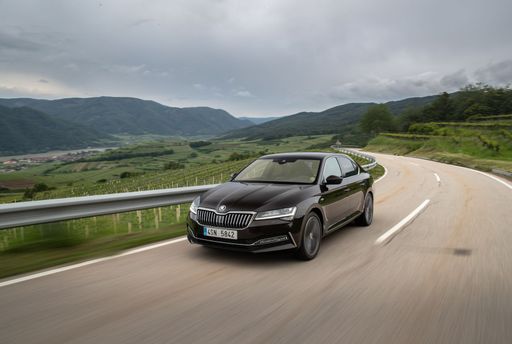 @ Škoda Auto a.s. / Škoda Storyboard
Skoda Superb Limousine
Ford Tourneo Connect
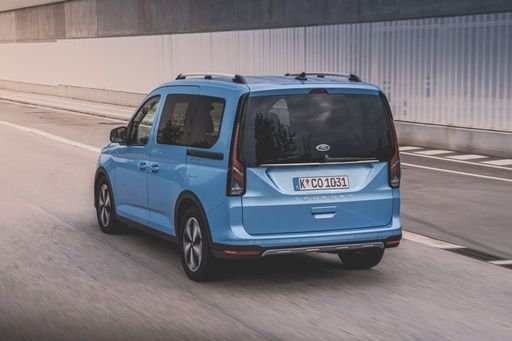
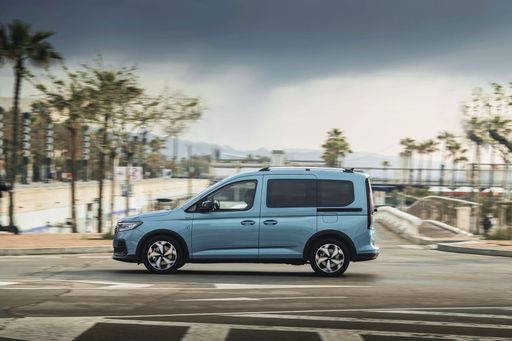
The Ford Tourneo Connect is a practical, surprisingly polished people-mover that balances family-friendly flexibility with car-like driving manners. With clever storage, sliding doors and a bright, airy cabin it’s a smart choice for buyers who want sensible versatility without sacrificing everyday comfort — and it’s oddly enjoyable to drive for its size.
details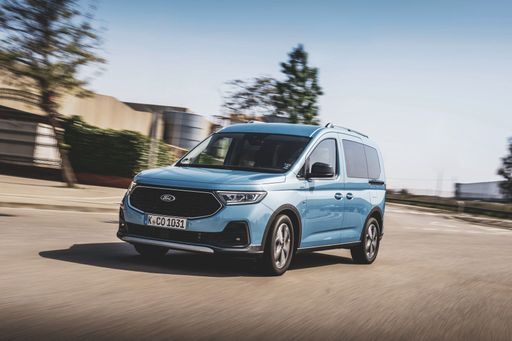 @ Ford Motor Company / Ford Media Center
 @ Ford Motor Company / Ford Media Center
 @ Ford Motor Company / Ford Media Center
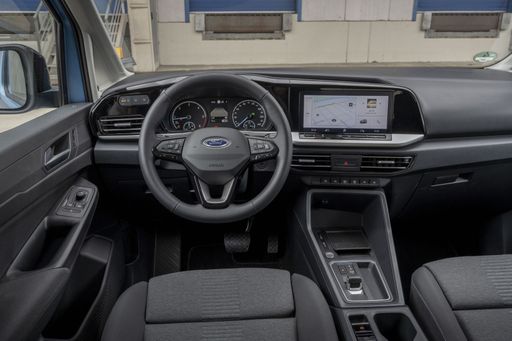 @ Ford Motor Company / Ford Media Center
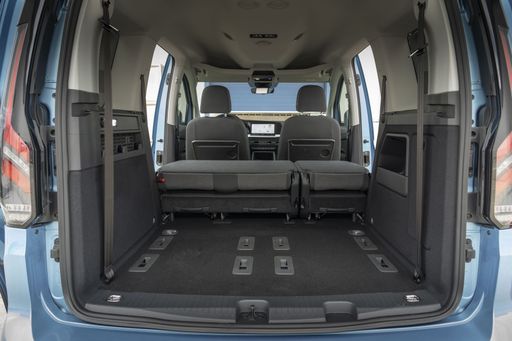 @ Ford Motor Company / Ford Media Center
Skoda Superb Limousine
The Skoda Superb is the quietly imposing saloon that turns everyday practicality into tasteful luxury, with a roomy, well-thought-out cabin and a boot that swallows groceries and luggage with military discipline. For buyers who want executive presence without the badge snobbery, it’s a clever, polished choice that rewards sensible thinking with genuine comfort and pragmatic charm.
details
@ Škoda Auto a.s. / Škoda Storyboard
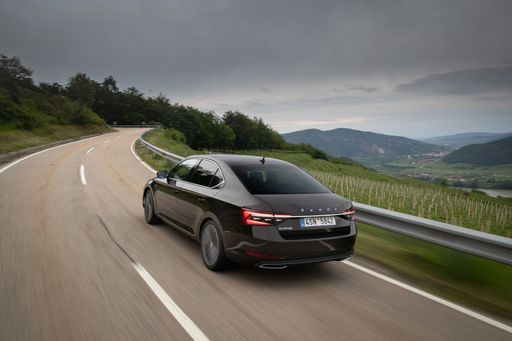 @ Škoda Auto a.s. / Škoda Storyboard
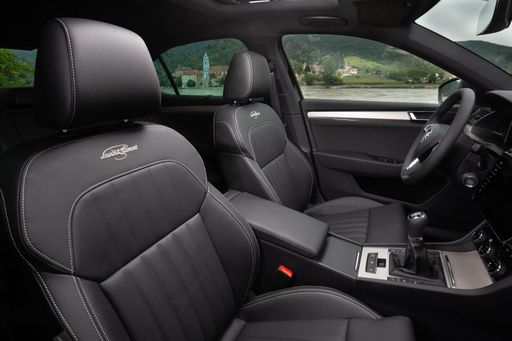 @ Škoda Auto a.s. / Škoda Storyboard
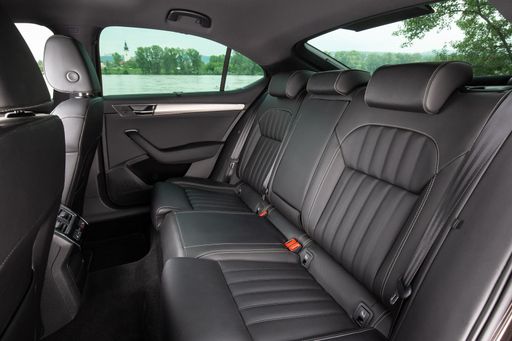 @ Škoda Auto a.s. / Škoda Storyboard
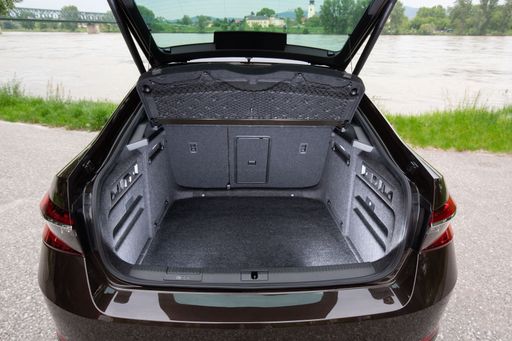 @ Škoda Auto a.s. / Škoda Storyboard
Ford Tourneo Connect
Skoda Superb Limousine
|
@ Ford Motor Company / Ford Media Center
|
@ Škoda Auto a.s. / Škoda Storyboard
|
|
|
|
Costs and Consumption |
|
|---|---|
|
Price
27300 - 41900 £
|
Price
34200 - 50500 £
|
|
Consumption L/100km
0.5 - 6.9 L
|
Consumption L/100km
0.3 - 7.7 L
|
|
Consumption kWh/100km
-
|
Consumption kWh/100km
-
|
|
Electric Range
116 - 119 km
|
Electric Range
128 - 137 km
|
|
Battery Capacity
19.70 kWh
|
Battery Capacity
19.70 kWh
|
|
co2
11 - 164 g/km
|
co2
8 - 175 g/km
|
|
Fuel tank capacity
32 - 50 L
|
Fuel tank capacity
45 - 66 L
|
Dimensions and Body |
|
|---|---|
|
Body Type
High Roof Estate
|
Body Type
Sedan
|
|
Seats
5
|
Seats
5
|
|
Doors
5
|
Doors
5
|
|
Curb weight
1542 - 1781 kg
|
Curb weight
1559 - 1734 kg
|
|
Trunk capacity
1213 - 1720 L
|
Trunk capacity
486 - 645 L
|
|
Length
4500 - 4868 mm
|
Length
4912 mm
|
|
Width
1855 mm
|
Width
1849 mm
|
|
Height
1833 mm
|
Height
1481 mm
|
|
Max trunk capacity
2556 - 3105 L
|
Max trunk capacity
1635 - 1795 L
|
|
Payload
563 - 818 kg
|
Payload
539 - 580 kg
|
Engine and Performance |
|
|---|---|
|
Engine Type
Plugin Hybrid, Petrol, Diesel
|
Engine Type
Petrol, Plugin Hybrid, Petrol MHEV, Diesel
|
|
Transmission
Automatic, Manuel
|
Transmission
Automatic
|
|
Transmission Detail
Dual-Clutch Automatic, Manual Gearbox
|
Transmission Detail
Dual-Clutch Automatic
|
|
Drive Type
Front-Wheel Drive, All-Wheel Drive
|
Drive Type
Front-Wheel Drive, All-Wheel Drive
|
|
Power HP
102 - 150 HP
|
Power HP
150 - 265 HP
|
|
Acceleration 0-100km/h
10.1 - 13.5 s
|
Acceleration 0-100km/h
5.6 - 9.2 s
|
|
Max Speed
175 - 186 km/h
|
Max Speed
220 - 250 km/h
|
|
Torque
220 - 350 Nm
|
Torque
250 - 400 Nm
|
|
Number of Cylinders
4
|
Number of Cylinders
4
|
|
Power kW
75 - 110 kW
|
Power kW
110 - 195 kW
|
|
Engine capacity
1498 - 1968 cm3
|
Engine capacity
1498 - 1984 cm3
|
General |
|
|---|---|
|
Model Year
2024 - 2025
|
Model Year
2024 - 2025
|
|
CO2 Efficiency Class
B, E, F
|
CO2 Efficiency Class
E, B, D, F
|
|
Brand
Ford
|
Brand
Skoda
|
Is the Ford Tourneo Connect offered with different drivetrains?
Available configurations include Front-Wheel Drive or All-Wheel Drive.
The prices and data displayed are estimates based on German list prices and may vary by country. This information is not legally binding.