VS

Ford Tourneo Custom vs Hyundai Santa Fe comparison

Compare performance (286 HP vs 288 HP), boot space and price (52,900 £ vs 51,700 £ ) at a glance. Find out which car is the better choice for you – Ford Tourneo Custom or Hyundai Santa Fe?

Ford Tourneo Custom vs Hyundai Santa Fe: Key differences

Ford Tourneo Custom

3.9 (1 Reviews)
rate
  • substantially more electric range
  • slightly more trunk space
details

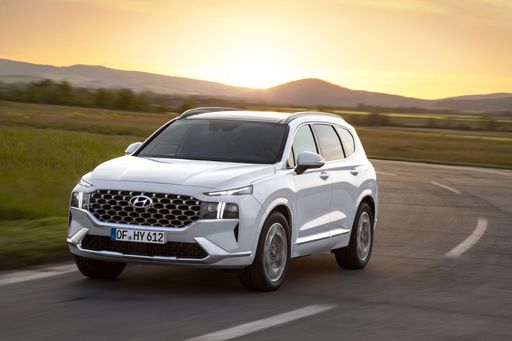
Hyundai Santa Fe

4.7 (1 Reviews)
rate
  • very slightly cheaper
  • only slightly more power
  • clearly lighter
details

All details on performance, efficiency, range and trunk space can be found in the technical comparison below – including user reviews for both models.

By Achim Sedelmaier

Tourneo Custom

Innovation on the Road: Ford Tourneo Custom vs. Hyundai Santa Fe

In the ever-evolving automotive landscape, choosing the right vehicle can be a complex task. When comparing the Ford Tourneo Custom and the Hyundai Santa Fe, both models present a spectrum of innovative solutions designed to meet diverse needs. This article examines their key specifications and innovations to help potential buyers decide which vehicle best suits their lifestyle.
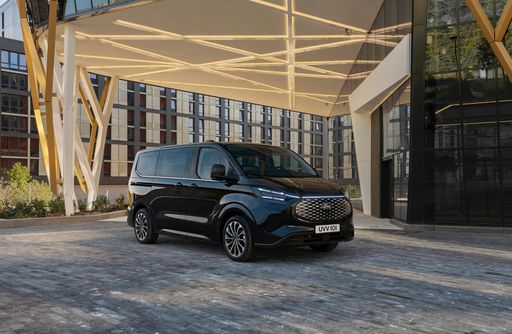
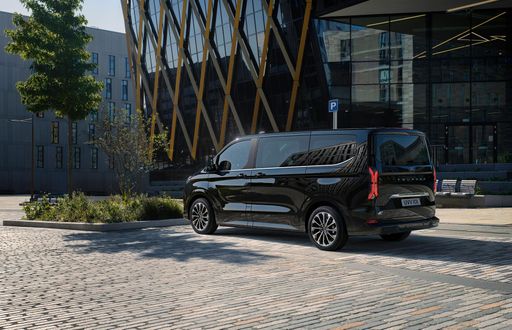
Santa Fe

Performance and Power

Both vehicles are distinct in their engine offerings and performance capabilities. The Ford Tourneo Custom is versatile, boasting options that range from a diesel engine to plug-in hybrid and fully electric variants. Power outputs for the Tourneo range from 136 HP to a noteworthy 286 HP, catering to a wide array of driving requirements. The Hyundai Santa Fe sticks to a streamlined approach with full hybrid and plug-in hybrid engines, delivering 215 HP or 253 HP, respectively. Notably, the Santa Fe edges out in acceleration, achieving 0-100 km/h in as little as 9.3 seconds, compared to the Tourneo Custom's focus on consistent, reliable performance.

Tourneo Custom

Efficiency and Environmental Impact

Efficiency is paramount in modern driving, and here the Ford Tourneo Custom demonstrates robust capability. It offers a range of fuel and power perspectives, featuring consumption rates as low as 1.7 L/100km for its hybrid models and an impressive electric range up to 306 km. Meanwhile, the Hyundai Santa Fe impresses with an optimal electric-only range of 54 km and fuel consumption starting at 6.4 L/100km. Both vehicles provide eco-conscious solutions, with Ford offering CO2 efficiency classes ranging from A to G and Hyundai achieving B to F ratings.

Santa Fe

Interior Space and Capacity

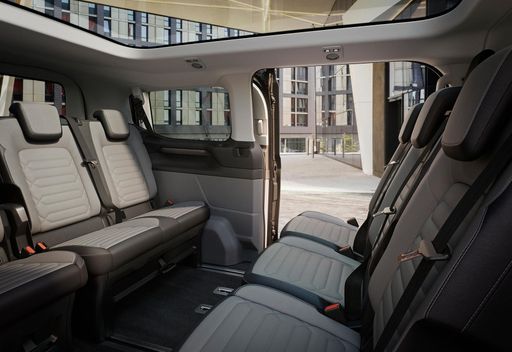
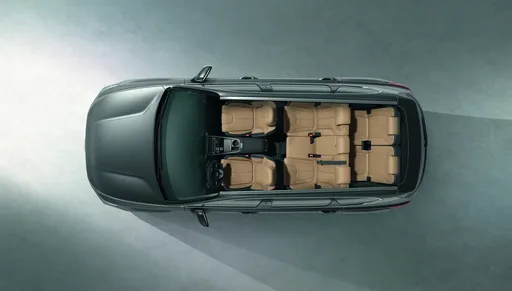
Interior and cargo space are critical considerations for many families and adventurers. The Ford Tourneo Custom serves up to eight passengers, a practical choice for larger groups, with a trunk capacity between 672 and 819 liters. In contrast, the Hyundai Santa Fe offers configurations that range from five to seven seats, optimizing versatility for different family sizes, and features a slightly lower trunk capacity of up to 711 liters in certain configurations.

Tourneo Custom

Dimensions and Design

Each model reflects distinct design philosophies through their dimensions and visual impressions. The Ford Tourneo Custom is significantly larger with lengths up to 5450 mm and a height of 1959 mm, presenting a bus-style body type ideal for those in need of maximum space. The Hyundai Santa Fe fits the SUV category with more compact dimensions of 4830 mm in length and 1720 mm in height, favoring a more agile and urban-friendly driving experience.

Santa Fe

Technical Innovations

Both models showcase different areas of technical innovations. Ford's varied powertrains, including fully electric options, highlight a commitment to forward-thinking mobility. The Tourneo Custom's all-wheel drive capability further adds to its adaptability across various conditions. Hyundai, on the other hand, emphasizes smooth driving with its consistent automatic transmission and a balance between power and efficiency via its hybrid systems. Both vehicles demonstrate dedication to evolving automotive technologies and environmentally responsible options.

Tourneo Custom

Conclusion

Ultimately, the choice between the Ford Tourneo Custom and Hyundai Santa Fe boils down to specific needs and preferences. The Tourneo Custom shines in providing extensive space and a variety of powertrain options, making it ideal for those who prioritize versatility and capacity in their vehicle. Meanwhile, the Hyundai Santa Fe delivers a robust SUV experience with commendable efficiency and urban-friendly design. Both luxury and innovation are embodied in these modern automotive marvels, each catering to a unique driver profile.

Whichever model you lean towards, both the Ford Tourneo Custom and Hyundai Santa Fe promise a satisfying combination of performance, efficiency, and advanced technology ready to enhance your driving journey.

Here’s where it gets real: The technical differences in detail

Tourneo Custom

Costs and Efficiency:

When it comes to price and running costs, the biggest differences usually appear. This is often where you see which car fits your budget better in the long run.

Hyundai Santa Fe is very slightly cheaper – starting at 51,700 £ , while the Ford Tourneo Custom costs 52,900 £ . That’s a price difference of around 1,159 £.

As for electric range, the Ford Tourneo Custom offers substantially more range – reaching up to 339 km, about 285 km more than the Hyundai Santa Fe.

Santa Fe

Engine and Performance:

Power, torque and acceleration are the classic benchmarks for car enthusiasts – and here, some clear differences start to show.

When it comes to engine power, the Hyundai Santa Fe offers only slightly more power – delivering 288 HP compared to 286 HP. That’s roughly 2 HP more horsepower.

There’s also a difference in torque: the Ford Tourneo Custom delivers clearly more torque with 630 Nm compared to 380 Nm. That’s about 250 Nm more.

Tourneo Custom

Space and Everyday Use:

Cabin size, boot volume and payload all play a role in everyday practicality. Here, comfort and flexibility make the difference.

Seats: Ford Tourneo Custom offers more seats – 8 vs 7.

In terms of curb weight, Hyundai Santa Fe is clearly lighter – 1,920 kg compared to 2,660 kg. The difference is around 740 kg.

Looking at boot space, the Ford Tourneo Custom offers slightly more boot space – 819 L compared to 704 L. That’s a difference of about 115 L.

When it comes to payload, the Ford Tourneo Custom carries marginally more – 690 kg compared to 665 kg. That’s a difference of about 25 kg.

Who wins the race in the data check?

The Ford Tourneo Custom is clearly superior overall in the objective data comparison.
This result only shows which model scores more points on paper – not which of the two cars feels right for you.

from £52,900
Tourneo Custom

Ford Tourneo Custom

  • Engine Type : Electric
  • Transmission : Automatic
  • Drive Type : Rear-Wheel Drive, All-Wheel Drive
  • Power HP : 218 - 286 HP
  • Consumption kWh/100km : 24.1 - 26.6 kWh/100km
  • Electric Range : 310 - 339 km
Ford Tourneo Custom
Hyundai Santa Fe

Costs and Consumption

View detailed analysis

Engine and Performance

View detailed analysis

Dimensions and Body

View detailed analysis

Ford Tourneo Custom

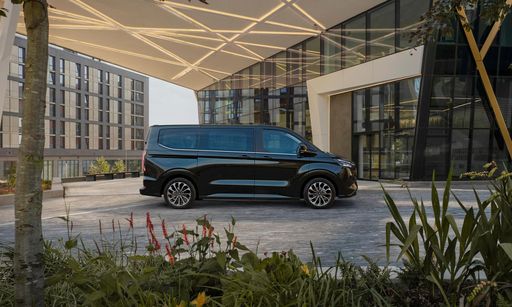
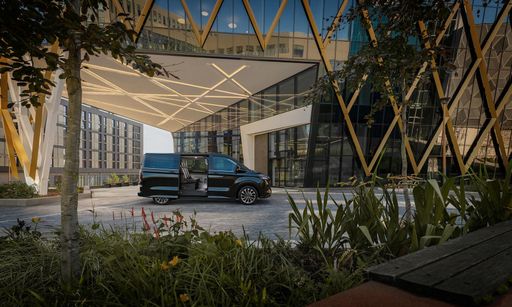
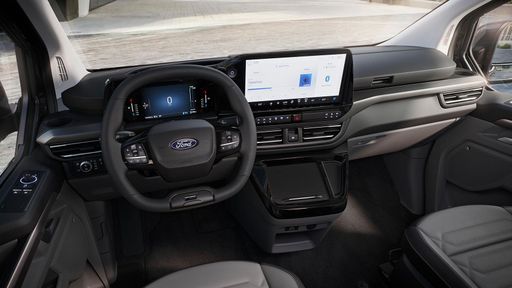
The Ford Tourneo Custom is a practical and polished people‑carrier that turns hauling crew and weekend kit into something surprisingly pleasant, with a composed ride and a cabin built for real life rather than showroom gloss. With clever storage, flexible seating and tech that keeps everyone happy on the road, it’s the sensible choice for families or businesses that want function without sacrificing a bit of style — the van that learnt how to be nice to live with.

details

Hyundai Santa Fe

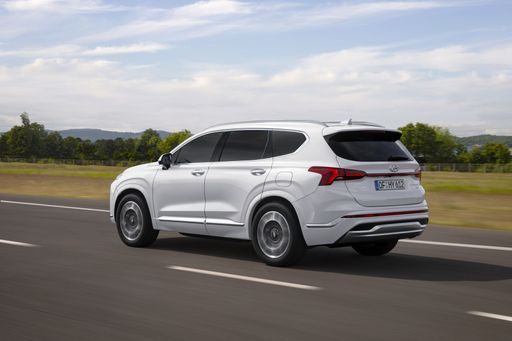
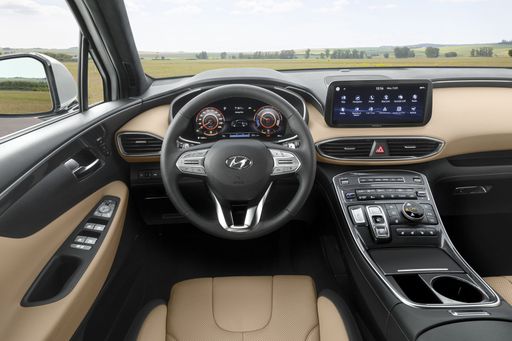
The Hyundai Santa Fe blends practical family friendliness with a hint of premium style, offering roomy, sensible packaging wrapped in modern, confident design. Inside it serves up comfortable seats, straightforward tech and a calm, composed ride that makes daily drives feel a little more grown up — a solid all‑rounder that doesn’t try to be flashy.

details
Ford Tourneo Custom
Hyundai Santa Fe

Costs and Consumption

Price
52,900 - 69,700 £
Price
51,700 - 58,600 £
Consumption L/100km
-
Consumption L/100km
3.8 - 7.2 L/100km
Consumption kWh/100km
24.1 - 26.6 kWh/100km
Consumption kWh/100km
-
Electric Range
310 - 339 km
Electric Range
54 km
Battery Capacity
-
Battery Capacity
-
co2
0 g/km
co2
90 - 162 g/km
Fuel tank capacity
-
Fuel tank capacity
-

Dimensions and Body

Body Type
Bus
Body Type
SUV
Seats
8
Seats
5 - 7
Doors
-
Doors
-
Curb weight
2,660 - 2,707 kg
Curb weight
1,920 - 2,165 kg
Trunk capacity
672 - 819 L
Trunk capacity
621 - 704 L
Length
-
Length
-
Width
2,032 mm
Width
1,900 mm
Height
-
Height
-
Max trunk capacity
-
Max trunk capacity
-
Payload
620 - 690 kg
Payload
560 - 665 kg

Engine and Performance

Engine Type
Electric
Engine Type
Full Hybrid, Plugin Hybrid
Transmission
Automatic
Transmission
Automatic
Transmission Detail
Reduction Gearbox
Transmission Detail
Automatic Gearbox
Drive Type
Rear-Wheel Drive, All-Wheel Drive
Drive Type
Front-Wheel Drive, All-Wheel Drive
Power HP
218 - 286 HP
Power HP
239 - 288 HP
Acceleration 0-100km/h
-
Acceleration 0-100km/h
8 - 9.2 s
Max Speed
-
Max Speed
-
Torque
415 - 630 Nm
Torque
380 Nm
Number of Cylinders
-
Number of Cylinders
4
Power kW
160 - 210 kW
Power kW
176 - 212 kW
Engine capacity
-
Engine capacity
1,598 cm3

General

Model Year
2025
Model Year
2025
CO2 Efficiency Class
A
CO2 Efficiency Class
E, F, B
Brand
Ford
Brand
Hyundai
DriveDuel uses data analysis and artificial intelligence to evaluate vehicle data and create content. Content is regularly reviewed and improved. The displayed prices are estimates based on German list prices, adjusted to the respective country’s VAT. Country-specific registration taxes are not included. This information is not legally binding.