
 Deutschland
 France
 Nederland
 Great Britain
 Sverige
 Danmark
 Suomi
Suomi Italia
 Polska
 Česko
Česko España
VS
Ford Tourneo Custom vs Mercedes EQT comparison
Compare performance (286 HP vs 122 HP), boot space and price (52,900 £ vs 27,800 £ ) at a glance. Find out which car is the better choice for you – Ford Tourneo Custom or Mercedes EQT?
Tourneo Custom
Costs and Efficiency:
Price and efficiency are often the first things buyers look at. Here it becomes clear which model has the long-term edge – whether at the pump, the plug, or in purchase price.
Mercedes EQT is clearly cheaper – starting at 27,800 £ , while the Ford Tourneo Custom costs 52,900 £ . That’s a price difference of around 25,113 £.
In terms of energy consumption, the Mercedes EQT is clearly more efficient: consuming 19.5 kWh/100km compared to 24.1 kWh/100km for the Ford Tourneo Custom. That’s a difference of about 4.6 kWh/100km.
As for electric range, the Ford Tourneo Custom offers moderately more range – reaching up to 339 km, about 61 km more than the Mercedes EQT.
EQT
Engine and Performance:
Under the bonnet, it becomes clear which model is tuned for sportiness and which one takes the lead when you hit the accelerator.
When it comes to engine power, the Ford Tourneo Custom offers clearly more power – delivering 286 HP compared to 122 HP. That’s roughly 164 HP more horsepower.
There’s also a difference in torque: the Ford Tourneo Custom delivers significantly more torque with 630 Nm compared to 245 Nm. That’s about 385 Nm more.
Tourneo Custom
Space and Everyday Use:
Cabin size, boot volume and payload all play a role in everyday practicality. Here, comfort and flexibility make the difference.
Seats: Ford Tourneo Custom offers more seats – 8 vs 5.
In terms of curb weight, Mercedes EQT is clearly lighter – 1,925 kg compared to 2,660 kg. The difference is around 735 kg.
Looking at boot space, the Ford Tourneo Custom offers visibly more boot space – 819 L compared to 551 L. That’s a difference of about 268 L.
When it comes to payload, the Ford Tourneo Custom carries clearly more – 690 kg compared to 531 kg. That’s a difference of about 159 kg.
Who wins the race in the data check?
The Ford Tourneo Custom is clearly superior overall in the objective data comparison.
This result only shows which model scores more points on paper – not which of the two cars feels right for you.
from £52,900
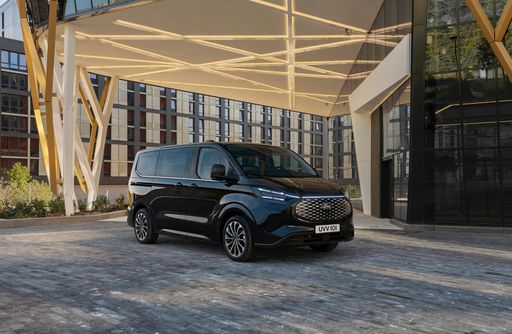
Ford Tourneo Custom
Ford Tourneo Custom
Mercedes EQT
Costs and Consumption
View detailed analysis
View detailed analysis
Engine and Performance
View detailed analysis
View detailed analysis
Dimensions and Body
View detailed analysis
View detailed analysis
Ford Tourneo Custom
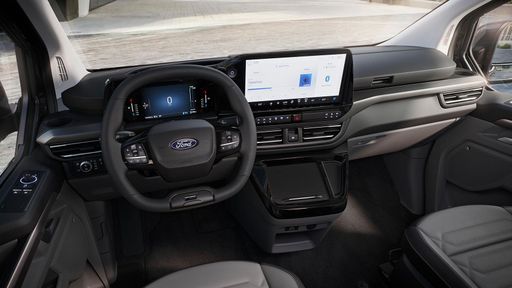
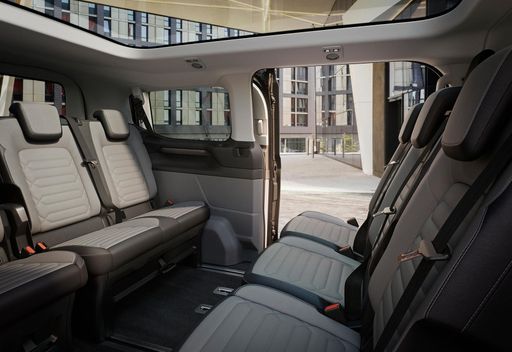
The Ford Tourneo Custom is a practical and polished people‑carrier that turns hauling crew and weekend kit into something surprisingly pleasant, with a composed ride and a cabin built for real life rather than showroom gloss. With clever storage, flexible seating and tech that keeps everyone happy on the road, it’s the sensible choice for families or businesses that want function without sacrificing a bit of style — the van that learnt how to be nice to live with.
details
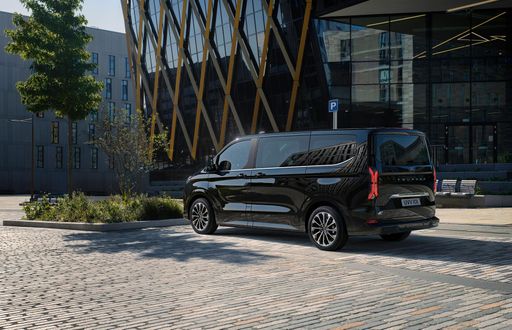
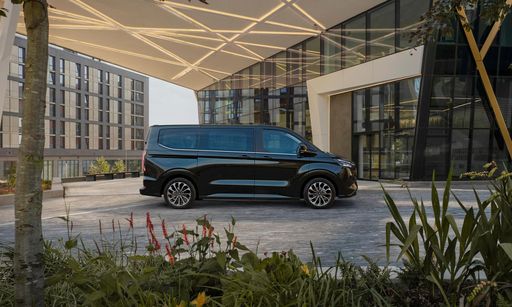
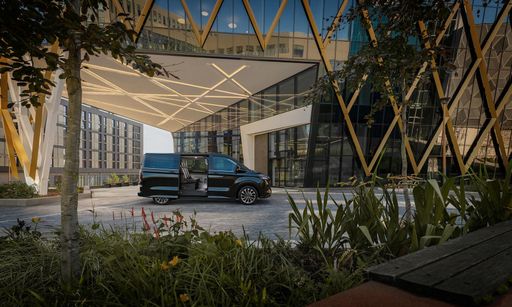
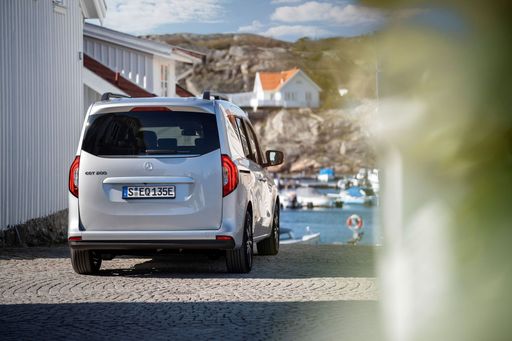
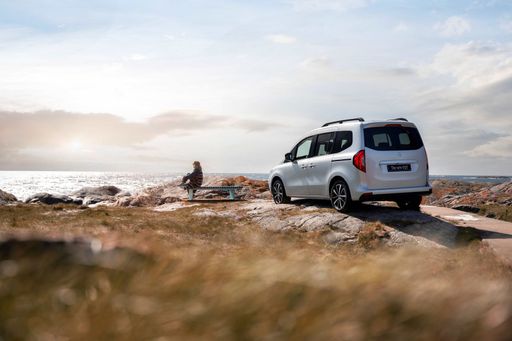
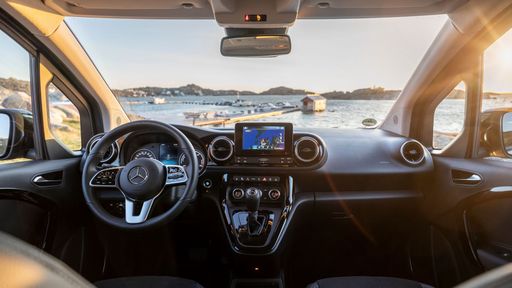
Mercedes EQT
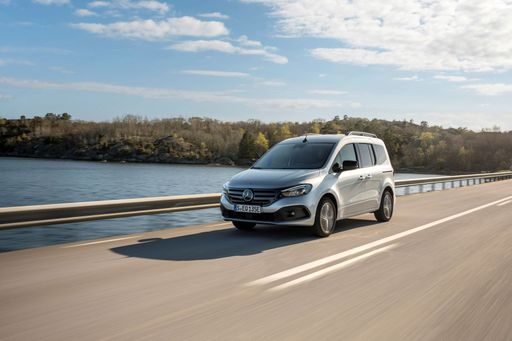
The Mercedes EQT is Mercedes‑Benz’s compact electric people carrier that grafts the brand’s usual refinement onto a practical, family‑friendly van body. It makes school runs feel a little more upscale — quietly electric, sensibly packaged and unexpectedly pleasant to live with, especially if you like your practicality with a touch of luxury.
details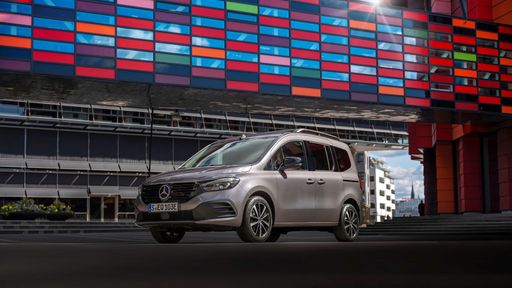
Ford Tourneo Custom
Mercedes EQT
Costs and Consumption |
|
|---|---|
|
Price
52,900 - 69,700 £
|
Price
27,800 - 32,100 £
|
|
Consumption L/100km
-
|
Consumption L/100km
-
|
|
Consumption kWh/100km
24.1 - 26.6 kWh/100km
|
Consumption kWh/100km
19.5 - 20.8 kWh/100km
|
|
Electric Range
310 - 339 km
|
Electric Range
265 - 278 km
|
|
Battery Capacity
-
|
Battery Capacity
45 kWh
|
|
co2
0 g/km
|
co2
0 g/km
|
|
Fuel tank capacity
-
|
Fuel tank capacity
-
|
Dimensions and Body |
|
|---|---|
|
Body Type
Bus
|
Body Type
High Roof Estate
|
|
Seats
8
|
Seats
5
|
|
Doors
-
|
Doors
5
|
|
Curb weight
2,660 - 2,707 kg
|
Curb weight
1,925 - 2,023 kg
|
|
Trunk capacity
672 - 819 L
|
Trunk capacity
242 - 551 L
|
|
Length
-
|
Length
4,498 - 4,922 mm
|
|
Width
2,032 mm
|
Width
1,859 mm
|
|
Height
-
|
Height
1,819 - 1,830 mm
|
|
Max trunk capacity
-
|
Max trunk capacity
1,979 L
|
|
Payload
620 - 690 kg
|
Payload
457 - 531 kg
|
Engine and Performance |
|
|---|---|
|
Engine Type
Electric
|
Engine Type
Electric
|
|
Transmission
Automatic
|
Transmission
Automatic
|
|
Transmission Detail
Reduction Gearbox
|
Transmission Detail
Reduction Gearbox
|
|
Drive Type
Rear-Wheel Drive, All-Wheel Drive
|
Drive Type
Front-Wheel Drive
|
|
Power HP
218 - 286 HP
|
Power HP
122 HP
|
|
Acceleration 0-100km/h
-
|
Acceleration 0-100km/h
12.6 s
|
|
Max Speed
-
|
Max Speed
132 km/h
|
|
Torque
415 - 630 Nm
|
Torque
245 Nm
|
|
Number of Cylinders
-
|
Number of Cylinders
-
|
|
Power kW
160 - 210 kW
|
Power kW
90 kW
|
|
Engine capacity
-
|
Engine capacity
-
|
General |
|
|---|---|
|
Model Year
2025
|
Model Year
2,023 - 2,024
|
|
CO2 Efficiency Class
A
|
CO2 Efficiency Class
A
|
|
Brand
Ford
|
Brand
Mercedes-Benz
|
DriveDuel uses data analysis and artificial intelligence to evaluate vehicle data and create content. Content is regularly reviewed and improved.
The displayed prices are estimates based on German list prices, adjusted to the respective country’s VAT. Country-specific registration taxes are not included. This information is not legally binding.