VS

Ford Transit Connect vs Peugeot Rifter comparison

Compare performance (122 HP vs 130 HP), boot space and price (30,800 £ vs 22,900 £ ) at a glance. Find out which car is the better choice for you – Ford Transit Connect or Peugeot Rifter?

Ford Transit Connect vs Peugeot Rifter: Key differences

Ford Transit Connect

details

Peugeot Rifter

4.7 (1 Reviews)
rate
  • noticeably cheaper
  • very slightly more power
  • barely quicker 0–100 km/h
  • only slightly lighter
details

By Achim Sedelmaier

Transit Connect

In the ever-evolving world of commercial vehicles, businesses are constantly searching for options that blend functionality, efficiency, and innovation. Two strong contenders that stand out in this regard are the Ford Transit Connect and the Peugeot Rifter. Both models cater to the needs of businesses and families alike, but they come with unique features and specifications that set them apart. In this article, we’ll compare the two, focusing on their technical aspects and innovations.
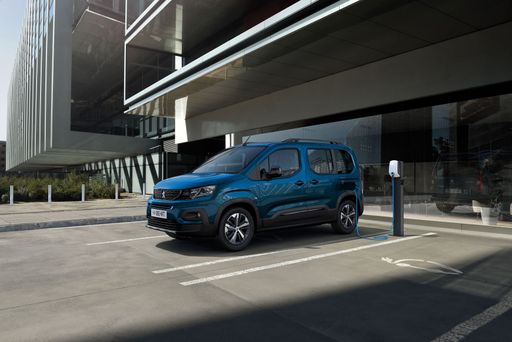
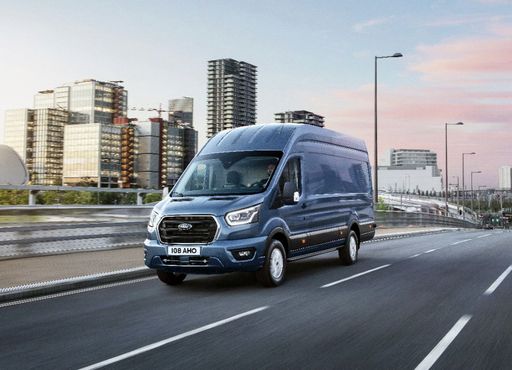
Rifter

Design and Dimensions

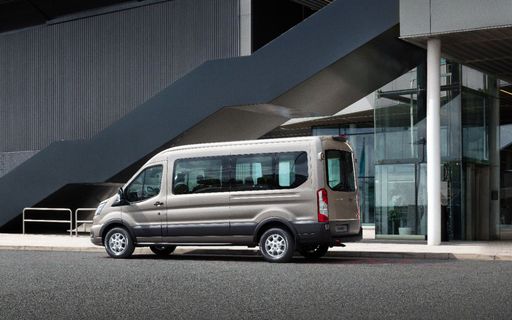
The Ford Transit Connect is a versatile cargo van, measuring between 4500 mm to 4868 mm in length, 1855 mm in width, and a height of 1860 mm. This design makes it a suitable choice for transporting goods while still providing adequate passenger seating for up to five individuals. Its robust build stems from its intent to serve commercial purposes effectively.

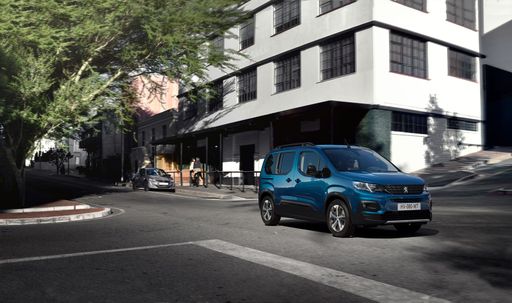
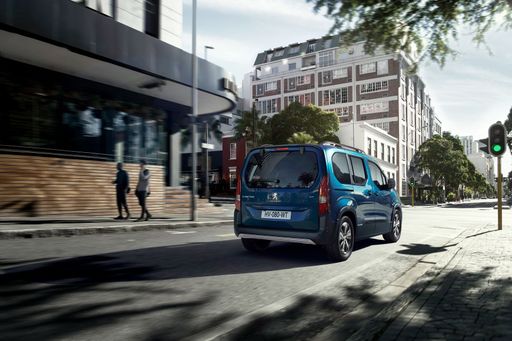
In contrast, the Peugeot Rifter is classified as a high roof wagon, measuring 4405 mm to 4755 mm in length and 1848 mm in width. With a height range of 1818 mm to 1837 mm, the Rifter is designed for both spacious passenger transport—including options for seven seats—and accommodating cargo needs. This makes it more versatile for family trips while also being practical for businesses.

Transit Connect

Engine Options and Performance

Ford offers a robust lineup of engines for the Transit Connect, including diesel options and a plug-in hybrid variant. The power output ranges from 102 to 150 HP, with a maximum torque of up to 350 Nm. This engine versatility ensures that the Transit Connect can manage a range of driving conditions efficiently. It also boasts a fuel tank capacity of 50 liters, allowing for long journeys without frequent refuels.

On the other hand, the Peugeot Rifter showcases a diverse engine range including electric, petrol, and diesel options. Power output varies from 102 to 136 HP while maintaining torque levels between 205 Nm and 300 Nm. The electric variant also offers an impressive range of up to 340 km on a single charge, catering to the growing demand for eco-friendly vehicles. Its larger fuel tank capacity of 60 liters underscores its suitability for longer trips.

Rifter

Transmission and Drivetrain

The Transit Connect is fitted with either a manual or dual-clutch automatic transmission, both providing smooth gear transitions suitable for city driving and long-distance travel. Its front-wheel-drive configuration enhances stability, offering improved grip in various road and weather conditions.

The Peugeot Rifter similarly features a range of transmission options including manual and automatic configurations. The inclusion of a reduction gearbox in its ranges gives drivers the benefit of better torque control, especially when carrying heavier loads. Like the Transit Connect, it also employs a front-wheel-drive system, contributing to its reliability.

Transit Connect

Safety and Technological Innovations

When it comes to safety, the Ford Transit Connect impresses with options like advanced driver assistance systems to enhance the driving experience. Features such as lane-keeping assist and blind-spot monitoring are particularly useful for commercial drivers who spend extensive time on the roads. The 2024 model also comes equipped with improved infotainment options, making it user-friendly.

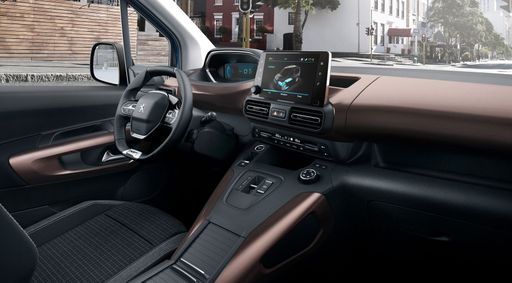
The Peugeot Rifter doesn’t fall short in this department either. Packed with modern safety features, it includes innovative technology such as automatic emergency braking and adaptive cruise control. Furthermore, its interior is designed for comfort with smart storage solutions and connectivity options, making it ideal for both family and commercial use.

Rifter

Conclusion: Which One to Choose?

In the battle of the Ford Transit Connect versus the Peugeot Rifter, the choice ultimately hinges on the specific needs of the buyer. The Transit Connect is ideal for businesses prioritizing cargo capacity and diesel efficiency, while the Rifter appeals to families and businesses looking for versatility and an eco-friendly alternative with its electric option.

Both vehicles represent a commitment to innovation and reliability in the commercial vehicle segment. Whether you opt for the rugged Transit Connect or the spacious Rifter, you're sure to find a vehicle that meets your transportation needs effectively.

Here’s where it gets real: The technical differences in detail

Transit Connect

Costs and Efficiency:

Price and efficiency are often the first things buyers look at. Here it becomes clear which model has the long-term edge – whether at the pump, the plug, or in purchase price.

Peugeot Rifter is noticeably cheaper – starting at 22,900 £ , while the Ford Transit Connect costs 30,800 £ . That’s a price difference of around 7,944 £.

Rifter

Engine and Performance:

Power, torque and acceleration say a lot about how a car feels on the road. This is where you see which model delivers more driving dynamics.

When it comes to engine power, the Peugeot Rifter offers very slightly more power – delivering 130 HP compared to 122 HP. That’s roughly 8 HP more horsepower.

When accelerating from 0 to 100 km/h, the Peugeot Rifter is barely quicker – completing the sprint in 11.3 s, while the Ford Transit Connect takes 11.4 s. That’s about 0.1 s quicker.

There’s also a difference in torque: the Ford Transit Connect delivers marginally more torque with 320 Nm compared to 300 Nm. That’s about 20 Nm more.

Transit Connect

Space and Everyday Use:

Cabin size, boot volume and payload all play a role in everyday practicality. Here, comfort and flexibility make the difference.

Seats: Peugeot Rifter offers more seats – 7 vs 2.

In terms of curb weight, Peugeot Rifter is only slightly lighter – 1,498 kg compared to 1,575 kg. The difference is around 77 kg.

When it comes to payload, the Peugeot Rifter carries only slightly more – 814 kg compared to 780 kg. That’s a difference of about 34 kg.

Who wins the race in the data check?

The Peugeot Rifter is decisively ahead in the objective data comparison.
This result only shows which model scores more points on paper – not which of the two cars feels right for you.

from £22,900
Rifter

Peugeot Rifter

  • Engine Type : Petrol, Diesel
  • Transmission : Manuel, Automatic
  • Drive Type : Front-Wheel Drive
  • Power HP : 102 - 130 HP
  • Consumption L/100km : 5.4 - 6.5 L/100km
Ford Transit Connect
Peugeot Rifter

Costs and Consumption

View detailed analysis

Engine and Performance

View detailed analysis

Dimensions and Body

View detailed analysis

Ford Transit Connect

The Ford Transit Connect is the go-to compact workhorse for urban professionals who need cargo space without driving a full-size van. It balances practicality and everyday manners with clever storage ideas and a surprisingly comfortable ride, making it a sensible choice for small businesses and families who value function over flair.

details

Peugeot Rifter

The Peugeot Rifter is a practical, family-friendly people carrier that makes everyday errands and weekend escapes feel effortless thanks to its airy cabin and clever, flexible interior. With chunky, purposeful styling and storage solutions everywhere, the Rifter manages to be both unashamedly useful and unexpectedly likeable.

details
Ford Transit Connect
Peugeot Rifter

Costs and Consumption

Price
30,800 - 35,300 £
Price
22,900 - 30,100 £
Consumption L/100km
-
Consumption L/100km
5.4 - 6.5 L/100km
Consumption kWh/100km
-
Consumption kWh/100km
-
Electric Range
-
Electric Range
-
Battery Capacity
-
Battery Capacity
-
co2
-
co2
142 - 157 g/km
Fuel tank capacity
-
Fuel tank capacity
-

Dimensions and Body

Body Type
Cargo Van
Body Type
High Roof Estate
Seats
2
Seats
5 - 7
Doors
-
Doors
-
Curb weight
1,575 - 1,620 kg
Curb weight
1,498 - 1,694 kg
Trunk capacity
-
Trunk capacity
-
Length
-
Length
-
Width
1,855 mm
Width
1,848 mm
Height
-
Height
-
Max trunk capacity
-
Max trunk capacity
-
Payload
775 - 780 kg
Payload
518 - 814 kg

Engine and Performance

Engine Type
Diesel
Engine Type
Petrol, Diesel
Transmission
Manuel
Transmission
Manuel, Automatic
Transmission Detail
Manual Gearbox
Transmission Detail
Manual Gearbox, Automatic Gearbox
Drive Type
All-Wheel Drive
Drive Type
Front-Wheel Drive
Power HP
122 HP
Power HP
102 - 130 HP
Acceleration 0-100km/h
11.4 - 11.8 s
Acceleration 0-100km/h
11.3 - 13.5 s
Max Speed
-
Max Speed
-
Torque
320 Nm
Torque
205 - 300 Nm
Number of Cylinders
4
Number of Cylinders
3 - 4
Power kW
90 kW
Power kW
75 - 96 kW
Engine capacity
1,968 cm3
Engine capacity
1,199 - 1,499 cm3

General

Model Year
2025
Model Year
2026
CO2 Efficiency Class
-
CO2 Efficiency Class
E, F
Brand
Ford
Brand
Peugeot
DriveDuel uses data analysis and artificial intelligence to evaluate vehicle data and create content. Content is regularly reviewed and improved. The displayed prices are estimates based on German list prices, adjusted to the respective country’s VAT. Country-specific registration taxes are not included. This information is not legally binding.