
 Deutschland
 France
 Nederland
 Great Britain
 Sverige
 Danmark
 Suomi
Suomi Italia
 Polska
 España
VS
Genesis GV60 vs XPeng G9 comparison
Compare performance (490 HP vs 575 HP), boot space and price (46900 £ vs 51100 £ ) at a glance. Find out which car is the better choice for you – Genesis GV60 or XPeng G9?
GV60
Costs and Efficiency:
When it comes to price and running costs, the biggest differences usually appear. This is often where you see which car fits your budget better in the long run.
Genesis GV60 has a minimal advantage in terms of price – it starts at 46900 £ , while the XPeng G9 costs 51100 £ . That’s a price difference of around 4217 £.
In terms of energy consumption, the advantage goes to the Genesis GV60: with 16.70 kWh per 100 km, it’s slightly more efficient than the XPeng G9 with 18.40 kWh. That’s a difference of about 1.70 kWh.
As for electric range, the XPeng G9 performs hardly perceptible better – achieving up to 585 km, about 24 km more than the Genesis GV60.
G9
Engine and Performance:
Power, torque and acceleration are the classic benchmarks for car enthusiasts – and here, some clear differences start to show.
When it comes to engine power, the XPeng G9 has a a bit edge – offering 575 HP compared to 490 HP. That’s roughly 85 HP more horsepower.
In acceleration from 0 to 100 km/h, the Genesis GV60 is hardly perceptible quicker – completing the sprint in 4 s, while the XPeng G9 takes 4.20 s. That’s about 0.20 s faster.
There’s also a difference in torque: Genesis GV60 pulls hardly perceptible stronger with 700 Nm compared to 695 Nm. That’s about 5 Nm difference.
GV60
Space and Everyday Use:
Cabin size, boot volume and payload all play a role in everyday practicality. Here, comfort and flexibility make the difference.
Both vehicles offer seating for 5 people.
In terms of boot space, the Genesis GV60 offers hardly perceptible more room – 680 L compared to 660 L. That’s a difference of about 20 L.
Who wins the race in the data check?
The XPeng G9 is barely ahead in the objective data comparison.
This result only shows which model scores more points on paper – not which of the two cars feels right for you.
Genesis GV60
XPeng G9
Costs and Consumption
View detailed analysis
View detailed analysis
Engine and Performance
View detailed analysis
View detailed analysis
Dimensions and Body
View detailed analysis
View detailed analysis
from about £51,100
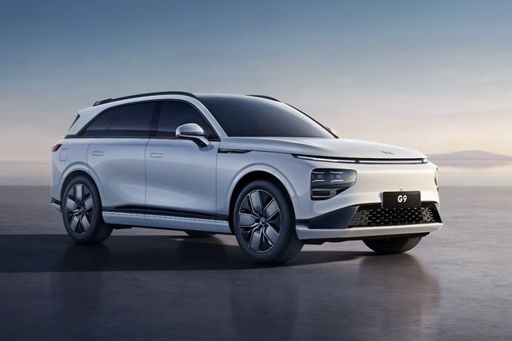
XPeng G9
Genesis GV60
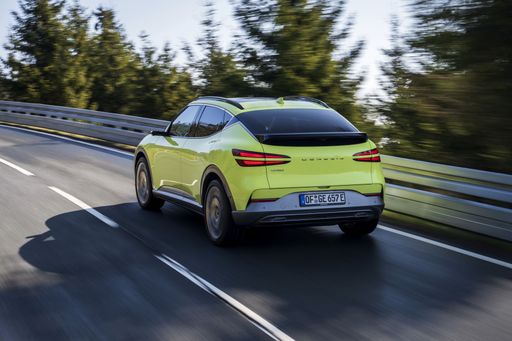
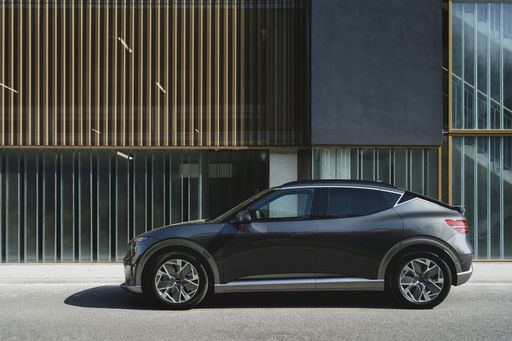
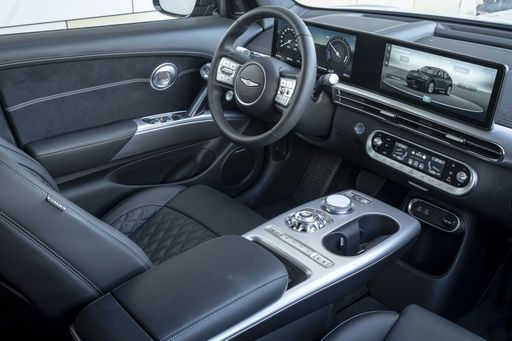
The Genesis GV60 arrives like a fashionably sharp electric crossover, its jewel-like lighting and coupe-ish silhouette giving it presence that feels more boutique than showroom. It pairs playful, immediate acceleration with a serene, well-appointed cabin and slick tech, making it a tempting choice for buyers who want luxury with a cheeky electric twist.
details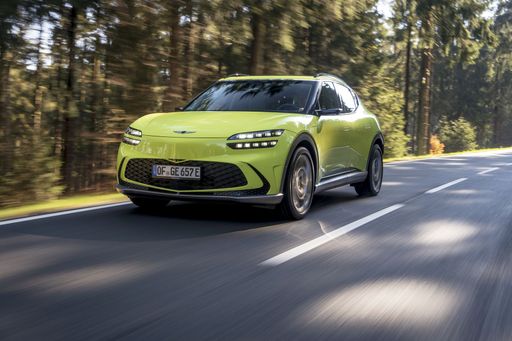
XPeng G9
4.6 (3 Reviews)
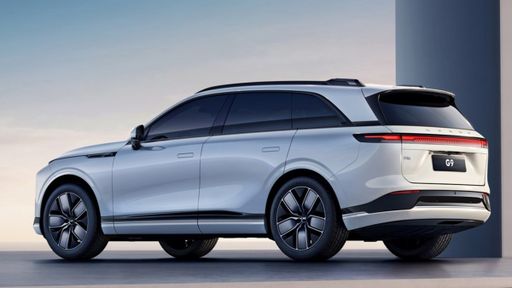
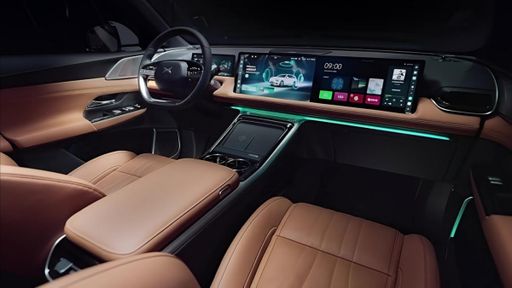
The XPeng G9 feels like a confident leap into the electric SUV world, with sleek, purposeful styling and an interior that mixes modern tech with everyday comfort. On the road it’s calm and composed, serving up effortless pace and hushed refinement that turns long commutes into something you might actually enjoy — a strong pick for buyers who want electric convenience without compromise.
details
Genesis GV60
XPeng G9
Costs and Consumption |
|
|---|---|
|
Price
46900 - 63800 £
|
Price
51100 - 62200 £
|
|
Consumption L/100km
-
|
Consumption L/100km
-
|
|
Consumption kWh/100km
16.7 - 19 kWh
|
Consumption kWh/100km
18.4 - 20.1 kWh
|
|
Electric Range
501 - 561 km
|
Electric Range
502 - 585 km
|
|
Battery Capacity
84 kWh
|
Battery Capacity
-
|
|
co2
0 g/km
|
co2
0 g/km
|
|
Fuel tank capacity
-
|
Fuel tank capacity
-
|
Dimensions and Body |
|
|---|---|
|
Body Type
SUV
|
Body Type
SUV
|
|
Seats
5
|
Seats
5
|
|
Doors
5
|
Doors
-
|
|
Curb weight
-
|
Curb weight
2210 - 2395 kg
|
|
Trunk capacity
680 L
|
Trunk capacity
660 L
|
|
Length
4545 mm
|
Length
-
|
|
Width
1890 mm
|
Width
1937 mm
|
|
Height
1580 mm
|
Height
-
|
|
Max trunk capacity
1460 L
|
Max trunk capacity
-
|
|
Payload
-
|
Payload
515 - 520 kg
|
Engine and Performance |
|
|---|---|
|
Engine Type
Electric
|
Engine Type
Electric
|
|
Transmission
Automatic
|
Transmission
Automatic
|
|
Transmission Detail
Reduction Gearbox
|
Transmission Detail
Reduction Gearbox
|
|
Drive Type
Rear-Wheel Drive, All-Wheel Drive
|
Drive Type
Rear-Wheel Drive, All-Wheel Drive
|
|
Power HP
229 - 490 HP
|
Power HP
351 - 575 HP
|
|
Acceleration 0-100km/h
4 - 7.8 s
|
Acceleration 0-100km/h
4.2 - 6.6 s
|
|
Max Speed
185 - 235 km/h
|
Max Speed
-
|
|
Torque
350 - 700 Nm
|
Torque
465 - 695 Nm
|
|
Number of Cylinders
-
|
Number of Cylinders
-
|
|
Power kW
168 - 360 kW
|
Power kW
258 - 423 kW
|
|
Engine capacity
-
|
Engine capacity
-
|
General |
|
|---|---|
|
Model Year
2025
|
Model Year
2025
|
|
CO2 Efficiency Class
A
|
CO2 Efficiency Class
A
|
|
Brand
Genesis
|
Brand
XPeng
|
What drive types are available for the Genesis GV60?
The Genesis GV60 is available as Rear-Wheel Drive or All-Wheel Drive.
The prices shown are estimates based on German list prices, adjusted for local VAT. Local registration taxes (e.g. NoVA, BPM or CO2 malus) are not included. This information is not legally binding.