VS

Genesis GV80 vs Honda CR-V comparison

Compare performance (304 HP vs 184 HP), boot space and price (59,400 £ vs 40,200 £ ) at a glance. Find out which car is the better choice for you – Genesis GV80 or Honda CR-V?

Genesis GV80 vs Honda CR-V: Key differences

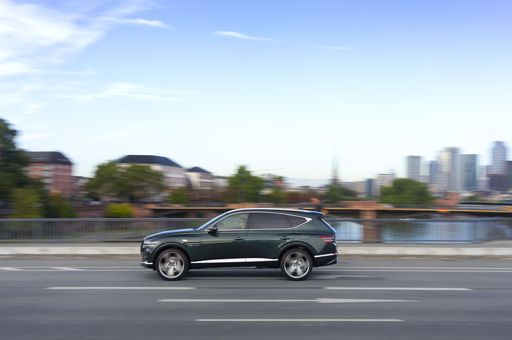
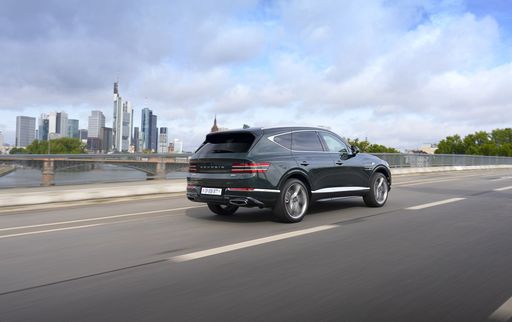
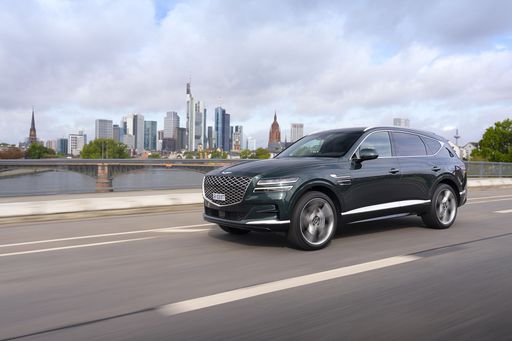
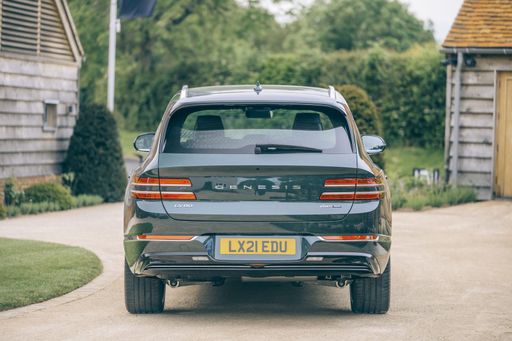
Genesis GV80

  • clearly more power
  • noticeably quicker 0–100 km/h
  • somewhat more trunk space
details

Honda CR-V

4.7 (6 Reviews)
rate
  • substantially cheaper
  • substantially more efficient
  • a bit lighter
details

All details on performance, efficiency, range and trunk space can be found in the technical comparison below – including user reviews for both models.

By Achim Sedelmaier

GV80

Honda CR-V vs. Genesis GV80: A Comprehensive Comparison

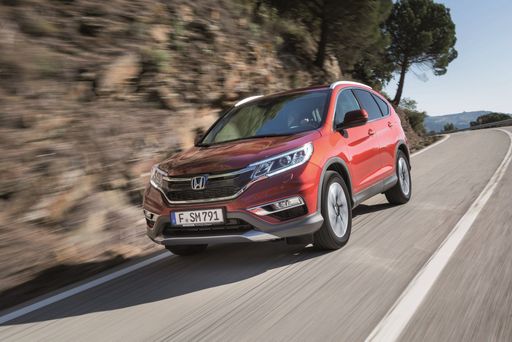
In the world of SUVs, the Honda CR-V and Genesis GV80 stand as compelling contenders, each offering a unique blend of performance, luxury, and technological innovations. While the CR-V is synonymous with practicality and reliability, the GV80 emerges as a luxury SUV tailored for comfort and performance. This article dives into the technical nuances that set these two vehicles apart, helping you make an informed choice.
CR-V

Engine Performance and Powertrain

The Honda CR-V is available with a range of engine options, including a full hybrid and plug-in hybrid variant, both powered by a 2.0L 4-cylinder engine that delivers up to 184 hp and 335 Nm of torque. The CR-V's continuous variable transmission (CVT) ensures a smooth driving experience, with the all-wheel-drive and front-wheel-drive variants providing flexibility for different driving conditions. With a top speed of approximately 187 km/h and impressive fuel consumption rates of 6.0 - 6.7 L/100 km, the CR-V excels in efficiency.

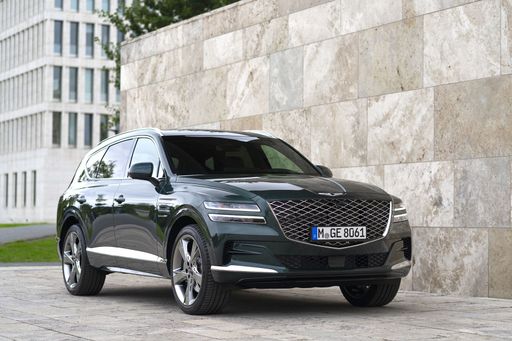
On the other hand, the Genesis GV80 takes a different approach. Available with petrol and diesel engines, the GV80 offers more power with options of 272 hp for the diesel and up to 304 hp for the petrol variant. Its 3.0L V6 engine produces a staggering 588 Nm of torque, and the vehicle can accelerate from 0 to 100 km/h in just 6.9 seconds. The GV80’s automatic gearbox and all-wheel-drive system enhance its dynamic performance, while it reaches an impressive top speed of 237 km/h.

GV80

Dimensions and Comfort

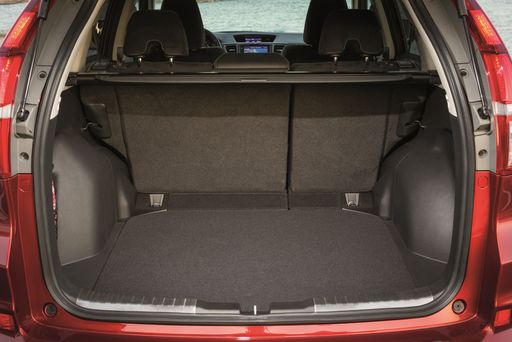
When comparing dimensions, the Honda CR-V measures 4706 mm in length, 1866 mm in width, and a height of 1684 mm, providing ample space for five passengers and a trunk capacity ranging from 579 to 617 liters. In contrast, the Genesis GV80, which is larger at 4945 mm in length and 1975 mm in width, accommodates up to seven passengers, depending on the chosen configuration. Its trunk space varies between 727 to 735 liters, making it ideal for families or those needing extra cargo capacity.

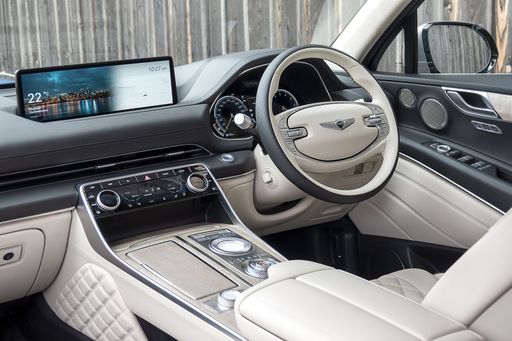
The added size of the GV80 translates to a more spacious interior, enhancing passenger comfort. Its upscale materials and premium features define the luxury experience, while the CR-V focuses on functionality without sacrificing comfort.

CR-V

Technological Innovations

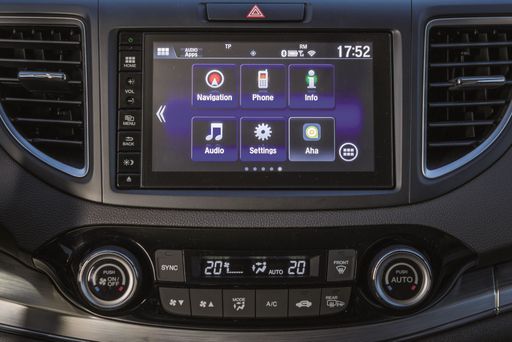
Both SUVs are properly equipped with technological innovations aimed at enhancing the driving experience. The Honda CR-V comes with a host of safety features, including Honda Sensing, which encompasses adaptive cruise control, collision mitigation braking, and lane-keeping assist, all geared towards providing a secure environment for drivers and passengers.

On the luxury front, the Genesis GV80 showcases an array of cutting-edge technology features, including a 14.5-inch infotainment screen, a 21-speaker surround sound system, and advanced driver-assistance systems that make daily commuting a breeze. The GV80 also offers a unique “smart cruise control” that adapts to traffic conditions, further emphasizing its luxurious and sophisticated nature.

GV80

Fuel Efficiency and Environmental Impact

Fuel efficiency is a core consideration for any SUV buyer. The Honda CR-V's hybrid variants are particularly efficient, with consumption ratings between 6.0 and 6.7 L/100 km, and CO2 emissions as low as 135 g/km, making it an environmentally friendly option. The electric-only range of the hybrid variant extends up to 79 km, providing a versatile driving experience.

Conversely, the Genesis GV80's fuel consumption ranges from 8.8 to 10.8 L/100 km with CO2 emissions reaching up to 241 g/km. While the GV80 offers more power and luxury, buyers may need to consider the impact on their fuel budgets and environmental footprint.

CR-V

Conclusion

Ultimately, the decision between the Honda CR-V and Genesis GV80 hinges on personal preferences and priorities. If practicality, fuel efficiency, and a proven track record are at the forefront of your needs, the CR-V is a strong contender. However, for those who prioritize luxury, performance, and advanced technology, the Genesis GV80 stands out as an exceptional choice. Understanding the intricacies of each model will pave the way to making an educated decision suited to your lifestyle.

Here’s where it gets real: The technical differences in detail

GV80

Costs and Efficiency:

Price and efficiency are often the first things buyers look at. Here it becomes clear which model has the long-term edge – whether at the pump, the plug, or in purchase price.

Honda CR-V is substantially cheaper – starting at 40,200 £ , while the Genesis GV80 costs 59,400 £ . That’s a price difference of around 19,182 £.

Fuel consumption also shows a difference: the Honda CR-V uses 2.6 L/100km and is substantially more efficient than the Genesis GV80 with 8.8 L/100km. The difference is about 6.2 L/100km.

CR-V

Engine and Performance:

Under the bonnet, it becomes clear which model is tuned for sportiness and which one takes the lead when you hit the accelerator.

When it comes to engine power, the Genesis GV80 offers clearly more power – delivering 304 HP compared to 184 HP. That’s roughly 120 HP more horsepower.

When accelerating from 0 to 100 km/h, the Genesis GV80 is noticeably quicker – completing the sprint in 6.9 s, while the Honda CR-V takes 9 s. That’s about 2.1 s quicker.

There’s also a difference in torque: the Genesis GV80 delivers significantly more torque with 588 Nm compared to 335 Nm. That’s about 253 Nm more.

GV80

Space and Everyday Use:

Beyond pure performance, interior space and usability matter most in daily life. This is where you see which car is more practical and versatile.

Seats: Genesis GV80 offers more seats – 7 vs 5.

In terms of curb weight, Honda CR-V is a bit lighter – 1,821 kg compared to 2,155 kg. The difference is around 334 kg.

Looking at boot space, the Genesis GV80 offers somewhat more boot space – 735 L compared to 617 L. That’s a difference of about 118 L.

When it comes to payload, the Genesis GV80 carries noticeably more – 690 kg compared to 475 kg. That’s a difference of about 215 kg.

Who wins the race in the data check?

The Honda CR-V is decisively ahead in the objective data comparison.
This result only shows which model scores more points on paper – not which of the two cars feels right for you.

from £40,200
CR-V

Honda CR-V

  • Engine Type Full Hybrid, Plugin Hybrid
  • Transmission Automatic
  • Drive Type Front-Wheel Drive, All-Wheel Drive
  • Power HP 184 HP
  • Consumption L/100km 2.6 - 6.7 L/100km
  • Electric Range 78 km
Genesis GV80
Honda CR-V

Costs and Consumption

View detailed analysis

Engine and Performance

View detailed analysis

Dimensions and Body

View detailed analysis

Genesis GV80

The Genesis GV80 feels like a boutique hotel on wheels, with striking looks and an interior that wraps you in plush materials and thoughtful details. It pairs a serenely composed ride with clever tech, making it the kind of luxury SUV that lets you enjoy the good life without shouting about the badge.

details

Honda CR-V

The Honda CR-V blends sensible practicality with a polished feel, offering roomy interiors and a confident ride that keeps commutes and weekend escapes equally comfortable. Its unshowy styling and reliable reputation make it a smart, low‑drama choice for buyers who want versatility without fuss — the kind of car that quietly makes everyday life a little easier.

details
Genesis GV80
Honda CR-V

Costs and Consumption

Price
59,400 - 75,600 £
Price
40,200 - 48,800 £
Consumption L/100km
8.8 - 10.8 L/100km
Consumption L/100km
2.6 - 6.7 L/100km
Consumption kWh/100km
-
Consumption kWh/100km
-
Electric Range
-
Electric Range
78 km
Battery Capacity
-
Battery Capacity
-
co2
231 - 241 g/km
co2
59 - 152 g/km
Fuel tank capacity
80 L
Fuel tank capacity
-

Dimensions and Body

Body Type
SUV
Body Type
SUV
Seats
5 - 7
Seats
5
Doors
5
Doors
-
Curb weight
2,155 - 2,325 kg
Curb weight
1,821 - 1,988 kg
Trunk capacity
727 - 735 L
Trunk capacity
579 - 617 L
Length
4,945 mm
Length
-
Width
1,975 mm
Width
1,866 mm
Height
1,715 mm
Height
-
Max trunk capacity
2,144 - 2,152 L
Max trunk capacity
-
Payload
660 - 690 kg
Payload
439 - 475 kg

Engine and Performance

Engine Type
Petrol, Diesel
Engine Type
Full Hybrid, Plugin Hybrid
Transmission
Automatic
Transmission
Automatic
Transmission Detail
Automatic Gearbox
Transmission Detail
Automatic Gearbox
Drive Type
All-Wheel Drive
Drive Type
Front-Wheel Drive, All-Wheel Drive
Power HP
272 - 304 HP
Power HP
184 HP
Acceleration 0-100km/h
6.9 s
Acceleration 0-100km/h
9 - 9.5 s
Max Speed
230 - 237 km/h
Max Speed
-
Torque
422 - 588 Nm
Torque
335 Nm
Number of Cylinders
4 - 6
Number of Cylinders
4
Power kW
200 - 224 kW
Power kW
135 kW
Engine capacity
2,497 - 2,996 cm3
Engine capacity
1,993 cm3

General

Model Year
2,021 - 2,022
Model Year
2025
CO2 Efficiency Class
G
CO2 Efficiency Class
D, E, B
Brand
Genesis
Brand
Honda
DriveDuel uses data analysis and artificial intelligence to evaluate vehicle data and create content. Content is regularly reviewed and improved. The displayed prices are estimates based on German list prices, adjusted to the respective country’s VAT. Country-specific registration taxes are not included. This information is not legally binding.