VS

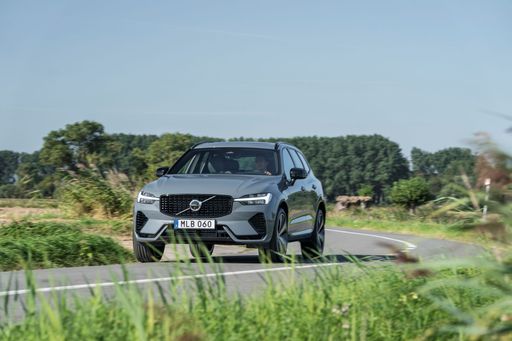
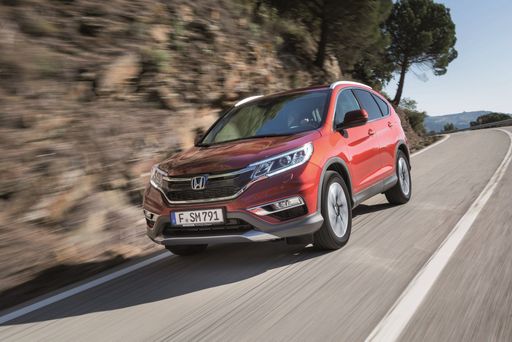
Honda CR-V vs Volvo XC60 comparison

Compare performance (184 HP vs 455 HP), boot space and price (42,800 £ vs 49,200 £ ) at a glance. Find out which car is the better choice for you – Honda CR-V or Volvo XC60?

Honda CR-V vs Volvo XC60: Key differences

Honda CR-V

4.8 (2 Reviews)
rate
  • moderately cheaper
  • only slightly more efficient
  • barely lighter
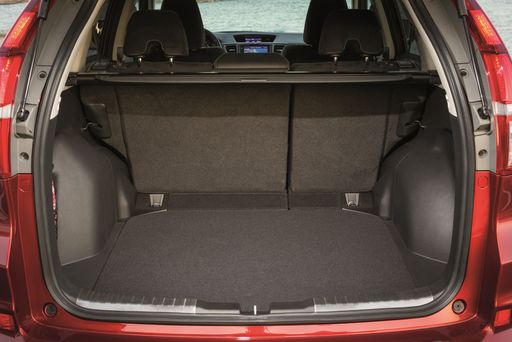
  • clearly more trunk space
details

Volvo XC60

4.7 (7 Reviews)
rate
  • considerably more power
  • barely more electric range
  • significantly quicker 0–100 km/h
details

All details on performance, efficiency, range and trunk space can be found in the technical comparison below – including user reviews for both models.

By Achim Sedelmaier

CR-V

Honda CR-V vs. Volvo XC60: A Clash of Titans in the SUV Segment

The battle in the midsize SUV arena is fiercer than ever, with the Honda CR-V and the Volvo XC60 both bringing innovative features and impressive performance to the table. These two 2024 models represent a blend of versatility, technology, and engineering prowess making it difficult for prospective buyers to decide which to park in their garages. Let's delve into the technical details and see how these models stack up against each other.

XC60

Engine Performance and Efficiency

Both the Honda CR-V and the Volvo XC60 offer hybrid variants catering to the increasing demand for greener vehicles. The 2024 Honda CR-V is available with both full hybrid and plug-in hybrid options. With a power output of 184 HP and torque of 335 Nm, it promises a reliable and efficient driving experience. The CR-V's fuel efficiency stands out, offering consumption as low as 6.7 L/100km for the hybrid and an impressive electric range of up to 79 km, ensuring fewer stops at the fuel station.

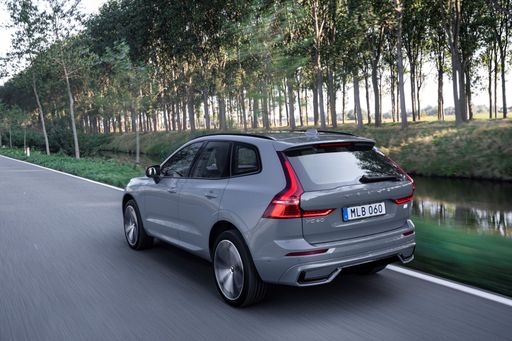
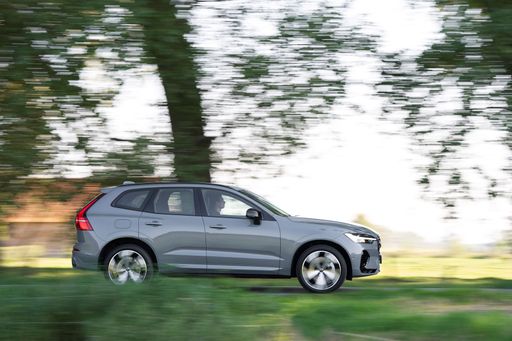
On the other hand, the Volvo XC60 provides more robust engine options, boasting up to a thrilling 455 HP for its plug-in hybrid variant. The XC60 accelerates from 0 to 100km/h in as little as 4.9 seconds, a testament to its powerful 659 Nm torque with a CO2 efficiency that varies strikingly between F and B class efficiency ratings, depending on the choice of engine. Its electric range mirrors that of the CR-V at 80 km, allowing for efficient short-distance rides.

CR-V

Transmission and Drive

The Honda CR-V employs a Continuously Variable Transmission (CVT) which is praised for its smooth acceleration and seamless shifting, contributing to its efficient fuel consumption. Additionally, prospective buyers have the choice between All-Wheel Drive and Front-Wheel Drive layouts, providing flexibility depending on driving conditions and personal preference.

Volvo, conversely, equips the XC60 with an automatic gearbox that enhances its refined driving dynamics. Its commitment to performance is demonstrated through the standard All-Wheel Drive option, offering a stable and controlled driving experience across various terrains.

XC60

Size, Capacity, and Utility

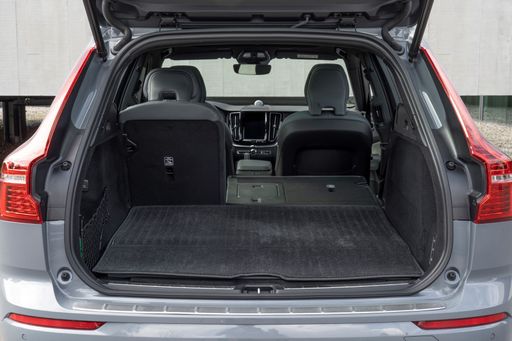
Size-wise, the Honda CR-V and Volvo XC60 offer similar dimensions, with only subtle variations. The CR-V measures 4706 mm in length, marginally longer than the XC60's 4688 mm. The CR-V further provides a more spacious trunk capacity ranging from 579 to 617 liters, compared to the XC60's 468 to 483 liters, making the CR-V slightly more versatile for cargo.

Although slightly heavier, the XC60's robust build affords a more substantial payload capacity of up to 550 kg, compared to the CR-V's maximum of 475 kg, which could be pivotal for users requiring increased hauling capabilities.

CR-V

Luxury, Comfort, and Innovation

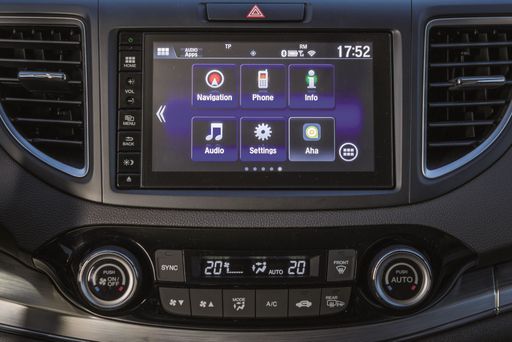
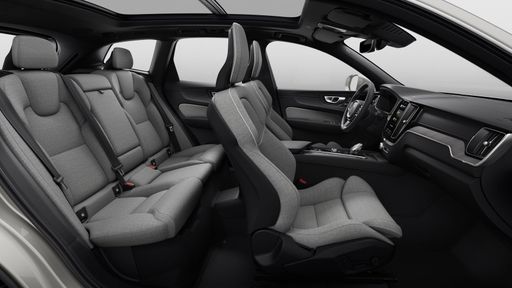
Both vehicles shine in interior comfort and innovative technologies, offering seating for five. Honda's CR-V focuses on delivering utility and reliability, incorporating a comfortable interior space enhanced by modern infotainment systems. Volvo’s XC60 takes a step further, typically incorporating an array of luxury features and advanced safety technologies, staying true to its reputation for putting driver and passenger comfort at the forefront, with options for premium sound systems and cutting-edge driver-assistance technologies.

XC60

Conclusion

Choosing between the Honda CR-V and Volvo XC60 boils down to individual preferences for power, utility, and brand value. The Honda CR-V is well-suited for those who prioritize efficiency and practicality, while the Volvo XC60 is an ideal choice for drivers seeking luxury, performance, and cutting-edge technology. Both models are remarkable; the right choice will depend on what prospective buyers value most in their SUV experience.

Here’s where it gets real: The technical differences in detail

CR-V

Costs and Efficiency:

Price and efficiency are often the first things buyers look at. Here it becomes clear which model has the long-term edge – whether at the pump, the plug, or in purchase price.

Honda CR-V is moderately cheaper – starting at 42,800 £ , while the Volvo XC60 costs 49,200 £ . That’s a price difference of around 6,420 £.

Fuel consumption also shows a difference: the Honda CR-V uses 2.6 L/100km and is only slightly more efficient than the Volvo XC60 with 2.8 L/100km. The difference is about 0.2 L/100km.

As for electric range, the Volvo XC60 offers barely more range – reaching up to 82 km, about 4 km more than the Honda CR-V.

XC60

Engine and Performance:

Power, torque and acceleration say a lot about how a car feels on the road. This is where you see which model delivers more driving dynamics.

When it comes to engine power, the Volvo XC60 offers considerably more power – delivering 455 HP compared to 184 HP. That’s roughly 271 HP more horsepower.

When accelerating from 0 to 100 km/h, the Volvo XC60 is significantly quicker – completing the sprint in 4.9 s, while the Honda CR-V takes 9 s. That’s about 4.1 s quicker.

There’s also a difference in torque: the Volvo XC60 delivers substantially more torque with 709 Nm compared to 335 Nm. That’s about 374 Nm more.

CR-V

Space and Everyday Use:

Whether family car or daily driver – which one offers more room, flexibility and comfort?

Both vehicles offer seating for 5 people.

In terms of curb weight, Honda CR-V is barely lighter – 1,821 kg compared to 1,900 kg. The difference is around 79 kg.

Looking at boot space, the Honda CR-V offers clearly more boot space – 617 L compared to 483 L. That’s a difference of about 134 L.

When it comes to payload, the Volvo XC60 carries somewhat more – 550 kg compared to 475 kg. That’s a difference of about 75 kg.

Who wins the race in the data check?

The Volvo XC60 is clearly superior overall in the objective data comparison.
This result only shows which model scores more points on paper – not which of the two cars feels right for you.

from £49,200
XC60

Volvo XC60

  • Engine Type : Petrol MHEV, Plugin Hybrid
  • Transmission : Automatic
  • Drive Type : All-Wheel Drive
  • Power HP : 250 - 455 HP
  • Consumption L/100km : 2.8 - 7.5 L/100km
  • Electric Range : 74 - 82 km
Honda CR-V
Volvo XC60

Costs and Consumption

View detailed analysis

Engine and Performance

View detailed analysis

Dimensions and Body

View detailed analysis

Honda CR-V

The Honda CR-V blends sensible practicality with a polished feel, offering roomy interiors and a confident ride that keeps commutes and weekend escapes equally comfortable. Its unshowy styling and reliable reputation make it a smart, low‑drama choice for buyers who want versatility without fuss — the kind of car that quietly makes everyday life a little easier.

details

Volvo XC60

The Volvo XC60 blends Scandinavian calm with confident presence, offering a cabin that feels plush without shouting for attention. It’s a smart pick for buyers after a composed ride, clever practicality and thoughtful safety touches — it even makes running the family shuttle feel almost serene, which is a small miracle.

details
Honda CR-V
Volvo XC60

Costs and Consumption

Price
42,800 - 52,100 £
Price
49,200 - 75,100 £
Consumption L/100km
2.6 - 6.7 L/100km
Consumption L/100km
2.8 - 7.5 L/100km
Consumption kWh/100km
-
Consumption kWh/100km
-
Electric Range
78 km
Electric Range
74 - 82 km
Battery Capacity
-
Battery Capacity
-
co2
59 - 152 g/km
co2
64 - 169 g/km
Fuel tank capacity
-
Fuel tank capacity
71 L

Dimensions and Body

Body Type
SUV
Body Type
SUV
Seats
5
Seats
5
Doors
-
Doors
5
Curb weight
1,821 - 1,988 kg
Curb weight
1,900 - 2,150 kg
Trunk capacity
579 - 617 L
Trunk capacity
468 - 483 L
Length
-
Length
4,708 mm
Width
1,866 mm
Width
1,902 mm
Height
-
Height
1,655 mm
Max trunk capacity
-
Max trunk capacity
1,543 L
Payload
439 - 475 kg
Payload
510 - 550 kg

Engine and Performance

Engine Type
Full Hybrid, Plugin Hybrid
Engine Type
Petrol MHEV, Plugin Hybrid
Transmission
Automatic
Transmission
Automatic
Transmission Detail
CVT
Transmission Detail
Automatic Gearbox
Drive Type
Front-Wheel Drive, All-Wheel Drive
Drive Type
All-Wheel Drive
Power HP
184 HP
Power HP
250 - 455 HP
Acceleration 0-100km/h
9 - 9.5 s
Acceleration 0-100km/h
4.9 - 6.9 s
Max Speed
-
Max Speed
180 km/h
Torque
335 Nm
Torque
350 - 709 Nm
Number of Cylinders
4
Number of Cylinders
4
Power kW
135 kW
Power kW
184 - 335 kW
Engine capacity
1,993 cm3
Engine capacity
1,969 cm3

General

Model Year
2025
Model Year
2025
CO2 Efficiency Class
D, E, B
CO2 Efficiency Class
F, B
Brand
Honda
Brand
Volvo
DriveDuel uses data analysis and artificial intelligence to evaluate vehicle data and create content. Content is regularly reviewed and improved. The displayed prices are estimates based on German list prices, adjusted to the respective country’s VAT. Country-specific registration taxes are not included. This information is not legally binding.